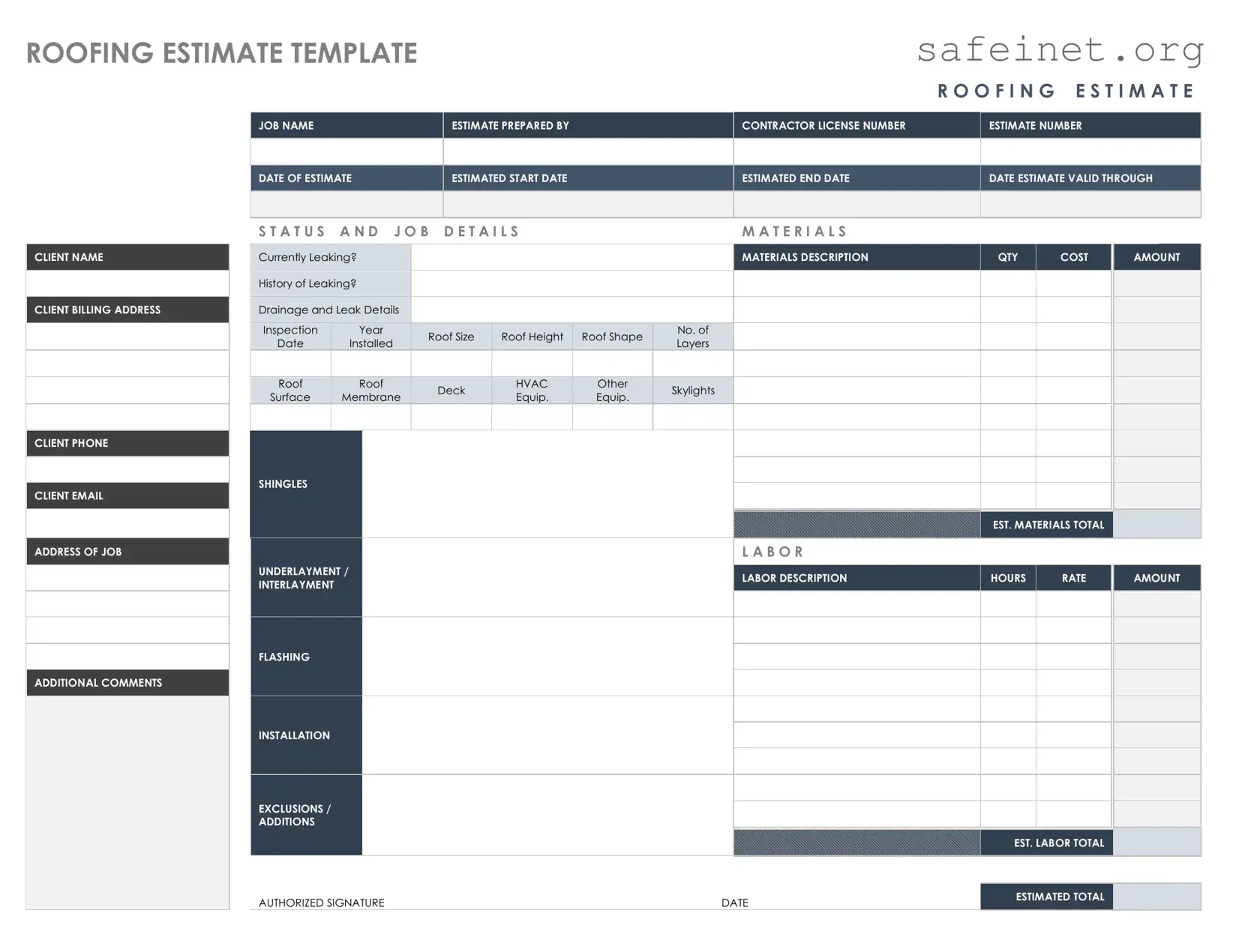
When planning a roofing project, obtaining a comprehensive roofing estimate is essential. This form serves as a crucial tool for homeowners and contractors alike, outlining the scope of work, materials needed, and associated costs. It typically includes details such as the type of roofing material, labor charges, and any additional services like removal of old roofing or installation of new gutters. Clear communication is key; thus, the form often requests specific measurements and descriptions of the existing roof condition. Additionally, it may provide space for the contractor to outline warranties or guarantees on workmanship and materials. By carefully reviewing this estimate, homeowners can make informed decisions, ensuring their roofing project aligns with their budget and expectations.

ROOFING ESTIMATE TEMPLATE
R O O F I N G E S T I M A T E
CLIENT NAME
CLIENT BILLING ADDRESS
CLIENT PHONE
CLIENT EMAIL
ADDRESS OF JOB
ADDITIONAL COMMENTS
|
JOB NAME |
|
|
|
|
|
|
|
|
ESTIMATE PREPARED BY |
|
|
|
|
|
|
|
CONTRACTOR LICENSE NUMBER |
|
|
ESTIMATE NUMBER |
|
|
|
|
||||||||||
|
|
|
|
|
|
|
|
|
|
|
|
|
|
|
|
|
|
|
|
|
|
||||||||||||||
|
|
|
|
|
|
|
|
|
|
|
|
|
|
|
|
|
|
|
|
|
|
|
|
|
|
|
|
|
|
|
|
|
|
|
|
|
|
|
|
|
|
|
|
|
|
|
|
|
|
|
|
|
|
|
|
|
|
|
|
|
|
|
|
|
|
|
|
|
|||
|
DATE OF ESTIMATE |
|
|
|
|
ESTIMATED START DATE |
|
|
|
|
|
|
|
ESTIMATED END DATE |
|
|
DATE ESTIMATE VALID THROUGH |
|
|||||||||||||||||
|
|
|
|
|
|
|
|
|
|
|
|
|
|
|
|
|
|
|
|
|
|
|
|
|
|
|
|
|
|
|
|
|
|
|
|
|
|
|
|
|
|
|
|
|
|
|
|
|
|
|
|
|
|
|
|
|
|
|
|
|
|
|
|
|
|
|
|
|
|
|
|
|
S T A T U S A N D J O B D E T A I L S |
|
|
|
|
|
|
|
M A T E R I A L S |
|
|
|
|
|
|
|
|
|
|
||||||||||||||||
|
|
|
|
|
|
|
|
|
|
|
|
|
|
|
|
|
|
|
|
|
|
|
|
|
|
|
|
|
|
|
|
|
|||
|
Currently Leaking? |
|
|
|
|
|
|
|
|
|
|
|
|
|
|
|
|
|
MATERIALS DESCRIPTION |
|
|
QTY |
|
|
COST |
|
|
AMOUNT |
|
||||||
|
|
|
|
|
|
|
|
|
|
|
|
|
|
|
|
|
|
|
|
|
|
|
|
|
|
|
|
|
|
|
|
|
|
|
|
|
History of Leaking? |
|
|
|
|
|
|
|
|
|
|
|
|
|
|
|
|
|
|
|
|
|
|
|
|
|
|
|
|
|
|||||
|
|
|
|
|
|
|
|
|
|
|
|
|
|
|
|
|
|
|
|
|
|
|
|
|
|
|
|
|
|
|
|
|
|
|
|
|
Drainage and Leak Details |
|
|
|
|
|
|
|
|
|
|
|
|
|
|
|
|
|
|
|
|
|
|
|
|
|
|
|
|
|
|||||
|
|
|
|
|
|
|
|
|
|
|
|
|
|
|
|
|
|
|
|
|
|
|
|
|
|
|
|
|
|
|
|
|
|
|
|
|
Inspection |
|
|
|
Year |
|
|
Roof Size |
|
|
Roof Height |
|
|
Roof Shape |
|
|
No. of |
|
|
|
|
|
|
|
|
|
|
|
|
||||||
|
Date |
|
|
Installed |
|
|
|
|
|
|
|
|
Layers |
|
|
|
|
|
|
|
|
|
|
|
|
|
|
||||||||
|
|
|
|
|
|
|
|
|
|
|
|
|
|
|
|
|
|
|
|
|
|
|
|
|
|
|
|
|
|||||||
|
|
|
|
|
|
|
|
|
|
|
|
|
|
|
|
|
|
|
|
|
|
|
|
|
|
|
|
|
|
|
|
|
|
|
|
|
Roof |
|
|
|
Roof |
|
|
|
Deck |
|
|
HVAC |
|
|
Other |
|
|
Skylights |
|
|
|
|
|
|
|
|
|
|
|
|
|
|
|||
|
Surface |
|
|
Membrane |
|
|
|
|
|
Equip. |
|
|
Equip. |
|
|
|
|
|
|
|
|
|
|
|
|
|
|
||||||||
|
|
|
|
|
|
|
|
|
|
|
|
|
|
|
|
|
|
|
|
|
|
|
|
|
|
|
|
|
|
||||||
|
|
|
|
|
|
|
|
|
|
|
|
|
|
|
|
|
|
|
|
|
|
|
|
|
|
|
|
|
|
|
|
|
|
|
|
|
SHINGLES |
|
|
|
|
|
|
|
|
|
|
|
|
|
|
|
|
|
|
|
|
|
|
|
|
|
|
|
|
|
|
|
|
||
|
|
|
|
|
|
|
|
|
|
|
|
|
|
|
|
|
|
|
|
|
|
|
|
|
|
|
|
|
|
|
|
|
|||
|
|
|
|
|
|
|
|
|
|
|
|
|
|
|
|
|
|
|
|
|
|
|
|
|
|
|
|
|
|
|
|
|
|||
|
|
|
|
|
|
|
|
|
|
|
|
|
|
|
|
|
|
|
|
|
|
|
|
|
|
|
|
|
|
|
|
|
|
|
|
|
|
|
|
|
|
|
|
|
|
|
|
|
|
|
|
|
|
|
|
|
|
|
|
|
|
|
EST. MATERIALS TOTAL |
|
|
|
|
|
|||
|
|
|
|
|
|
|
|
|
|
|
|
|
|
|
|
|
|
|
|
|
|
|
|
|
|
|
|
|
|
|
|
|
|
|
|
|
|
|
|
|
|
|
|
|
|
|
|
|
|
|
|
|
|
|
|
|
|
|
|
L A B O R |
|
|
|
|
|
|
|
|
|
|
|
|
UNDERLAYMENT / |
|
|
|
|
|
|
|
|
|
|
|
|
|
|
|
|
|
|
|
|
|
|
|
|
|
|
|
|
|
|
||||
|
|
|
|
|
|
|
|
|
|
|
|
|
|
|
|
|
|
|
|
LABOR DESCRIPTION |
|
|
HOURS |
|
|
RATE |
|
|
AMOUNT |
|
|||||
|
INTERLAYMENT |
|
|
|
|
|
|
|
|
|
|
|
|
|
|
|
|
|
|
|
|
|
|
|
|
|
|
|
|||||||
|
|
|
|
|
|
|
|
|
|
|
|
|
|
|
|
|
|
|
|
|
|
|
|
|
|
|
|
|
|
|
|
|
|||
|
|
|
|
|
|
|
|
|
|
|
|
|
|
|
|
|
|
|
|
|
|
|
|
|
|
|
|
|
|
|
|
|
|
|
|
|
FLASHING |
|
|
|
|
|
|
|
|
|
|
|
|
|
|
|
|
|
|
|
|
|
|
|
|
|
|
|
|
|
|
|
|
||
|
|
|
|
|
|
|
|
|
|
|
|
|
|
|
|
|
|
|
|
|
|
|
|
|
|
|
|
|
|
|
|
|
|||
|
|
|
|
|
|
|
|
|
|
|
|
|
|
|
|
|
|
|
|
|
|
|
|
|
|
|
|
|
|
|
|
|
|
|
|
|
|
|
|
|
|
|
|
|
|
|
|
|
|
|
|
|
|
|
|
|
|
|
|
|
|
|
|
|
|
|
|
|
|
|
|
|
INSTALLATION |
|
|
|
|
|
|
|
|
|
|
|
|
|
|
|
|
|
|
|
|
|
|
|
|
|
|
|
|
|
|
|
|
||
|
|
|
|
|
|
|
|
|
|
|
|
|
|
|
|
|
|
|
|
|
|
|
|
|
|
|
|
|
|
|
|
|
|||
|
|
|
|
|
|
|
|
|
|
|
|
|
|
|
|
|
|
|
|
|
|
|
|
|
|
|
|
|
|
|
|
|
|
|
|
|
|
|
|
|
|
|
|
|
|
|
|
|
|
|
|
|
|
|
|
|
|
|
|
|
|
|
|
|
|
|
|
|
|
|
|
|
EXCLUSIONS / |
|
|
|
|
|
|
|
|
|
|
|
|
|
|
|
|
|
|
|
|
|
|
|
|
|
|
|
|
|
|
|
|
||
|
|
|
|
|
|
|
|
|
|
|
|
|
|
|
|
|
|
|
|
|
|
|
|
|
|
|
|
|
|
|
|
|
|||
|
ADDITIONS |
|
|
|
|
|
|
|
|
|
|
|
|
|
|
|
|
|
|
|
|
|
|
|
|
|
|
|
|
|
|
|
|
||
|
|
|
|
|
|
|
|
|
|
|
|
|
|
|
|
|
|
|
|
|
|
|
|
|
|
|
EST. LABOR TOTAL |
|
|
|
|
|
|||
|
|
|
|
|
|
|
|
|
|
|
|
|
|
|
|
|
|
|
|
|
|
|
|
|
|
|
|
|
|
|
|
|
|
|
|
|
|
|
|
|
|
|
|
|
|
|
|
|
|
|
|
|
|
|
|
|
|
|
|
|
|
|
|
|
|
|
|
||||
|
AUTHORIZED SIGNATURE |
|
|
|
|
|
|
|
|
|
|
|
|
|
DATE |
|
ESTIMATED TOTAL |
|
|
|
|
|
|||||||||||||
|
|
|
|
|
|
|
|
|
|
|
|
|
|
|
|
|
|
|
|
|
|
|
|
||||||||||||
| Fact Name | Description |
|---|---|
| Purpose | The Roofing Estimate form is used to provide potential clients with a detailed estimate for roofing services. |
| Components | Typically includes information such as materials, labor costs, project timeline, and payment terms. |
| State-Specific Forms | Some states require specific forms to be used, which may vary in content and format. |
| Governing Laws | In California, for example, the form must comply with the California Business and Professions Code. |
| Client Signature | A signature from the client is often required to confirm acceptance of the estimate and terms. |
| Validity Period | Estimates typically have a validity period, often ranging from 30 to 90 days, after which the terms may change. |
| Dispute Resolution | The form may include clauses on how disputes will be handled, such as mediation or arbitration. |
Filling out the Roofing Estimate form is a straightforward process. By providing accurate information, you help ensure that the estimate reflects your needs and expectations. Follow these steps carefully to complete the form correctly.
What is the purpose of the Roofing Estimate form?
The Roofing Estimate form is designed to help homeowners and property managers obtain a clear and detailed estimate for roofing services. By filling out this form, you provide essential information that allows roofing contractors to assess your needs and offer an accurate quote for materials and labor.
Who should fill out the Roofing Estimate form?
Anyone in need of roofing services can fill out the Roofing Estimate form. This includes homeowners looking to replace or repair their roofs, property managers overseeing multiple buildings, or anyone interested in a new roofing installation. The form is accessible to all, regardless of the size or type of the property.
What information do I need to provide on the form?
The form typically requires basic information such as your name, contact details, and the address of the property. Additionally, you may need to provide details about the current roofing situation, including the type of roofing material, the size of the roof, and any specific issues you are facing, like leaks or damage.
Is there a cost associated with obtaining an estimate?
Most roofing contractors provide estimates for free. However, it’s important to confirm this when you submit your form. Some contractors might charge a fee for detailed inspections, especially if they need to climb onto the roof or conduct a thorough assessment of the property.
How long does it take to receive an estimate after submitting the form?
The time frame for receiving an estimate can vary. Generally, you can expect to hear back within a few days. Factors such as the contractor's workload and the complexity of your roofing needs can influence the response time. If you haven’t heard back within a week, consider following up with the contractor.
Can I request specific materials or services in the Roofing Estimate form?
Yes, you can specify any preferences for materials or services in the form. If you have a particular type of roofing material in mind, such as asphalt shingles, metal, or tile, be sure to mention that. Additionally, if you need services like roof inspection or maintenance, include those requests as well.
What happens after I receive the estimate?
Once you receive the estimate, review it carefully. It should outline the costs, materials, and timeline for the project. If you have questions or need clarification, reach out to the contractor. If everything looks good, you can proceed to discuss the next steps, including scheduling the work.
Can I compare estimates from different contractors?
Absolutely! It’s a good practice to obtain estimates from multiple contractors. This allows you to compare pricing, services, and materials offered. Make sure to consider the reputation and experience of each contractor as well, as the lowest price does not always equate to the best value.
What if I need to make changes after submitting the form?
If you need to make changes after submitting the Roofing Estimate form, contact the contractor directly. Most contractors will be happy to update your information or address any new concerns. Clear communication is key to ensuring that your needs are met effectively.
Incomplete Information: One of the most common mistakes is not providing all the necessary details. Missing information can lead to inaccurate estimates. Always double-check that you’ve filled out every section of the form.
Incorrect Measurements: Providing the wrong measurements for your roof can significantly affect the estimate. Ensure that you measure accurately and include the correct dimensions. If you’re unsure, consider consulting a professional for help.
Neglecting to Specify Materials: Different roofing materials come with varying costs and installation requirements. Failing to specify the type of material you wish to use can lead to unexpected expenses. Be clear about your preferences.
Ignoring Additional Features: Roofs often have features like chimneys, skylights, or vents. Forgetting to mention these can result in a misleading estimate. List all features to ensure the estimate reflects the true scope of work.
Not Asking Questions: If something on the form is unclear, do not hesitate to ask for clarification. Many people skip this step and submit the form with uncertainties. Engaging with the estimator can lead to a more accurate and tailored estimate.
When engaging in roofing projects, various forms and documents accompany the Roofing Estimate form to ensure clarity, compliance, and effective communication between all parties involved. Each document serves a specific purpose, contributing to the overall success of the project.
By utilizing these forms and documents alongside the Roofing Estimate form, homeowners and contractors can foster a clear understanding of expectations, responsibilities, and legal obligations, ultimately leading to a successful roofing project.
The Roofing Estimate form shares similarities with a Construction Contract. Both documents outline the scope of work to be performed, including specific details about materials and labor. A Construction Contract also includes terms regarding payment schedules, timelines, and responsibilities of each party involved. Just as a Roofing Estimate provides a preliminary assessment of costs, a Construction Contract formalizes the agreement and ensures that both parties have a clear understanding of their obligations and expectations.
Another document akin to the Roofing Estimate is the Work Order. A Work Order is typically used to authorize specific tasks to be completed, often following an estimate. It details the services to be rendered, similar to how a Roofing Estimate outlines the proposed work. While the Roofing Estimate provides a cost breakdown, the Work Order serves as a directive to proceed with the work, ensuring that all parties are aligned on what needs to be done and at what price.
The Invoice is yet another document that resembles the Roofing Estimate. An Invoice is issued after the completion of work, detailing the final costs incurred. Like the Roofing Estimate, it lists specific services and materials used. However, while the estimate gives an approximation before work begins, the invoice reflects the actual charges, which may differ based on changes in scope or additional work required.
A Proposal is also similar to the Roofing Estimate. Proposals are often used in competitive bidding situations and provide a detailed overview of the services a contractor intends to offer. They include pricing, timelines, and terms, much like a Roofing Estimate. However, proposals often aim to persuade the client to select a particular contractor, while estimates focus primarily on providing a cost assessment for the proposed work.
The Purchase Order (PO) can also be compared to the Roofing Estimate. A Purchase Order is a document issued by a buyer to a seller, indicating the types and quantities of goods or services required. While a Roofing Estimate provides a detailed cost breakdown for roofing services, a Purchase Order confirms the buyer's intent to purchase those services at the estimated price. Both documents help in establishing a clear understanding between the parties involved regarding what is being purchased.
Finally, the Scope of Work document is similar to the Roofing Estimate in that it outlines the specific tasks to be completed. The Scope of Work is often a more detailed description of the project requirements and expectations. While the Roofing Estimate provides a cost estimate based on these tasks, the Scope of Work serves as a guide for what exactly needs to be done, ensuring that everyone involved is on the same page regarding project deliverables.
When filling out a Roofing Estimate form, it’s important to ensure accuracy and clarity. Here’s a helpful list of things you should and shouldn't do:
Following these guidelines will help ensure that your roofing estimate is accurate and meets your needs.
Many homeowners have misunderstandings about the Roofing Estimate form. Here are ten common misconceptions, along with clarifications to help you better understand the process.
Each roofing contractor may provide different estimates based on materials, labor, and other factors. It's important to compare multiple estimates for a clear understanding of costs.
Choosing the cheapest option can lead to poor quality work. Consider the reputation and experience of the contractor, not just the price.
Some estimates may not cover additional costs like permits, disposal fees, or unexpected repairs. Always ask for a detailed breakdown.
An estimate is not a binding contract. It is a proposal that can change once you agree to the terms and sign a contract.
Estimates can also apply to repairs or maintenance. If your roof needs attention, request an estimate for that work as well.
Being present during the estimate allows you to ask questions and clarify details directly with the contractor.
Different materials have varying costs, durability, and warranties. Discuss your options with the contractor to find the best fit for your needs.
Weather conditions can impact the timing and cost of a roofing project. Discuss how weather may affect your estimate with the contractor.
While many estimates have expiration dates, some contractors may honor them longer. Always confirm how long your estimate is valid.
Some contractors may offer more detailed estimates than others. Look for clarity and thoroughness in the estimate you receive.
Understanding these misconceptions can help you navigate the roofing estimate process more effectively. Always communicate openly with your contractor to ensure you have the information you need.
Filling out and using a Roofing Estimate form can seem daunting at first, but understanding a few key points can make the process smoother and more effective. Here are some essential takeaways to keep in mind:
By keeping these takeaways in mind, you can navigate the roofing estimate process with confidence, ensuring you make informed decisions for your home.