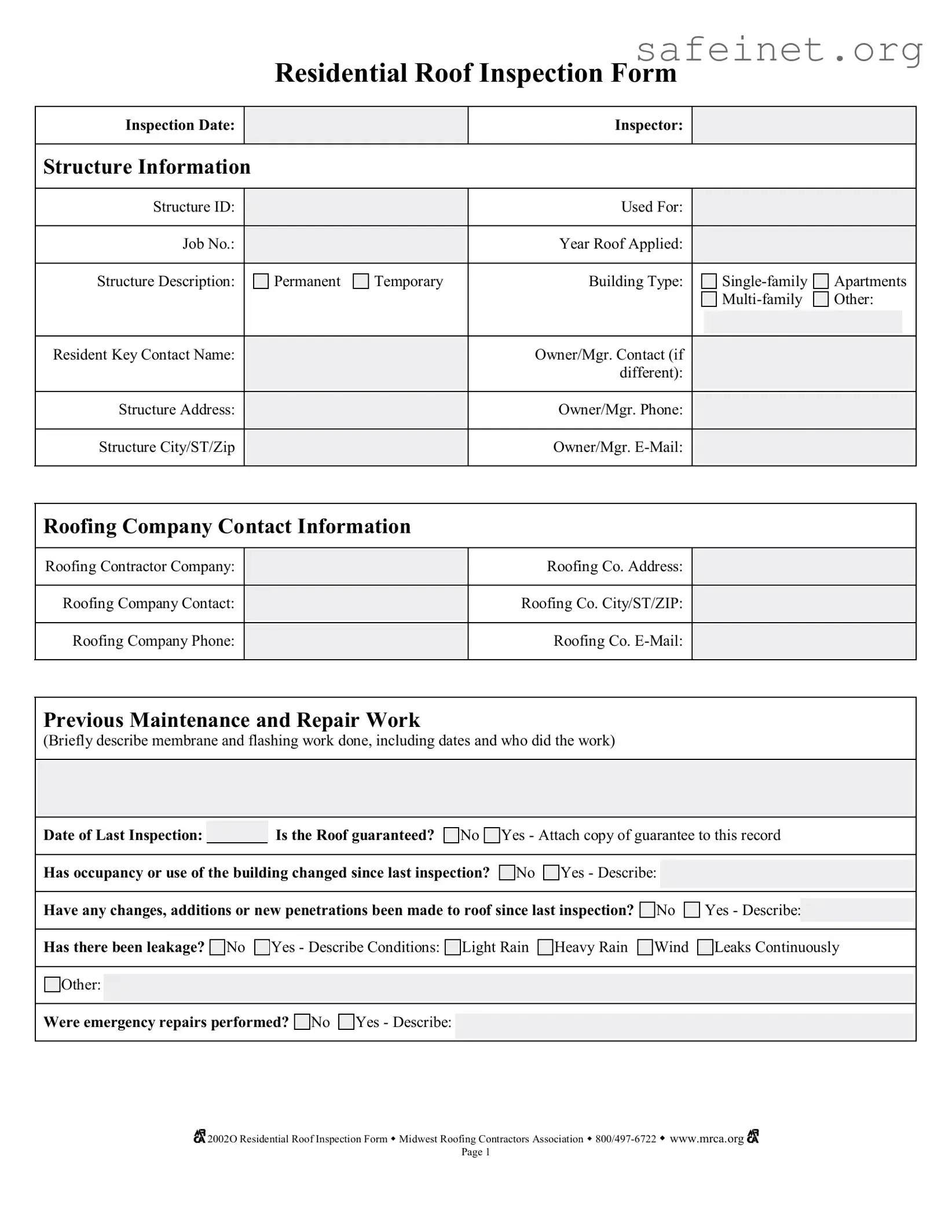
The Roof Inspection Form serves as a comprehensive tool for assessing the condition of residential roofing systems. It is designed to capture essential information, including the inspection date, inspector details, and structure specifics such as the type of building and its address. The form prompts the inspector to document the roofing company’s contact information, previous maintenance and repair work, and the date of the last inspection. Additionally, it inquires about any changes in occupancy or usage, as well as any modifications made to the roof since the last inspection. The form includes sections to note any leakage incidents and emergency repairs that may have been performed. Inspectors evaluate various components of the roof, such as the interior roof deck, exterior walls, drains, and penetrations, using a coding system to classify their condition as good, fair, or poor. This structured approach allows for a thorough assessment of the roof's current state, ensuring that any necessary actions are identified and documented. Furthermore, the form encourages the inclusion of photographic evidence to support the inspection findings, which can be invaluable for maintaining a historical record of the roof's condition over time.
Residential Roof Inspection Form
Inspection Date: |
|
Inspector: |
|
|
|
|
|
|
|
Structure Information
Structure ID: |
|
|
Used For: |
|
|
|
|
|
|
|
|
|
|
|
|
|
|
Job No.: |
|
|
Year Roof Applied: |
|
|
|
|
|
|
|
|
|
|
|
|
|
|
Structure Description: |
Permanent |
Temporary |
Building Type: |
|
Apartments |
|||
|
|
|
|
|
Other: |
|||
|
|
|
|
|
|
|
|
|
|
|
|
|
|
|
|
|
|
|
|
|
|
|
|
|
|
|
Resident Key Contact Name: |
|
|
Owner/Mgr. Contact (if |
|
|
|
|
|
|
|
|
|
|
|
|
||
|
|
|
different): |
|
|
|
|
|
|
|
|
|
|
|
|
|
|
|
|
|
|
|
|
|
|
|
Structure Address: |
|
|
Owner/Mgr. Phone: |
|
|
|
|
|
|
|
|
|
|
|
|
|
|
|
|
|
|
|
|
|
|
|
Structure City/ST/Zip |
|
|
Owner/Mgr. |
|
|
|
|
|
|
|
|
|
|
|
|
||
|
|
|
|
|
|
|
|
|
|
|
|
|
|
|
|
|
|
Roofing Company Contact Information
Roofing Contractor Company: |
|
Roofing Co. Address: |
|
|
|
|
|
|
|
Roofing Company Contact: |
|
Roofing Co. City/ST/ZIP: |
|
|
|
|
|
|
|
|
|
|
|
|
Roofing Company Phone: |
|
Roofing Co. |
|
|
|
|
|
||
|
|
|
|
|
|
|
|
|
|
Previous Maintenance and Repair Work
(Briefly describe membrane and flashing work done, including dates and who did the work)
Date of Last Inspection: |
|
Is the Roof guaranteed? |
No |
Yes - Attach copy of guarantee to this record |
||||||||
|
|
|
|
|
|
|
|
|
|
|||
|
|
|
|
|
|
|
||||||
Has occupancy or use of the building changed since last inspection? |
No |
Yes - Describe: |
|
|
|
|
||||||
|
|
|
|
|
|
|
|
|
||||
|
|
|
|
|
|
|
|
|
|
|
|
|
|
|
|
|
|||||||||
Have any changes, additions or new penetrations been made to roof since last inspection? |
No |
Yes - Describe: |
|
|
||||||||
|
|
|
|
|
|
|
|
|
|
|
|
|
Has there been leakage? No |
Yes - Describe Conditions: |
Light Rain |
Heavy Rain |
Wind |
Leaks Continuously |
|||||||
|
|
|
|
|
|
|
|
|
|
|
|
|
|
|
|
|
|
|
|
|
|
|
|
||
Other: |
|
|
|
|
|
|
|
|
|
|
|
|
|
|
|
|
|
|
|
|
|
|
|
|
|
|
|
|
|
|
|
|
|
|
|
|
|
|
Were emergency repairs performed? No |
Yes - Describe: |
|
|
|
|
|
|
|
|
|||
|
|
|
|
|
|
|
|
|||||
|
|
|
|
|
|
|
|
|
|
|
|
|
2002O Residential Roof Inspection Form w Midwest Roofing Contractors Association w
Page 1

Residential Roof Inspection Form
Code |
|
|
|
Condition |
|
||||
|
|
|
|
G = Good, No Action |
|
||||
|
|
|
|
F = Fair, Monitor Periodically |
|
||||
|
|
|
|
P = Poor, Immediate Action |
|
||||
|
|
|
|
|
|
|
|
|
|
|
|
|
|
G |
F |
P |
Location |
Action Taken |
|
|
|
|
|
|
|
|
|
|
|
|
Interior |
|
|
|
|
|
|
||
|
|
|
|
|
|
|
|
|
|
|
Roof Deck |
|
|
|
|
|
|
||
|
|
|
|
|
|
|
|
|
|
A1 |
Corrosion |
|
|
|
|
|
|
||
|
|
|
|
|
|
|
|
|
|
A2 |
Spalling (chipping or crumbling) |
|
|
|
|
|
|
||
|
|
|
|
|
|
|
|
|
|
A3 |
Cracking |
|
|
|
|
|
|
||
|
|
|
|
|
|
||||
|
|
|
|
|
|
|
|
|
|
A4 |
Buckling |
|
|
|
|
|
|
||
|
|
|
|
|
|
||||
|
|
|
|
|
|
|
|
|
|
A5 |
Sagging |
|
|
|
|
|
|
||
|
|
|
|
|
|
||||
|
|
|
|
|
|
|
|
|
|
|
|
|
|
|
|
|
|
|
|
A6 |
Open Joints |
|
|
|
|
|
|
||
|
|
|
|
|
|
||||
|
|
|
|
|
|
|
|
|
|
|
|
|
|
|
|
|
|
|
|
A7 |
General Deck Condition |
|
|
|
|
|
|
||
|
|
|
|
|
|
||||
|
|
|
|
|
|
|
|
|
|
|
|
|
|
|
|
|
|
|
|
A8 |
Stains/Drips |
|
|
|
|
|
|
||
|
|
|
|
|
|
||||
|
|
|
|
|
|
|
|
|
|
|
|
|
|
|
|
|
|
|
|
|
|
|
|
|
|
|
|
|
|
A100 |
Other: |
|
|
|
|
|
|
|
|
|
|
|
|
|
|
|
|
|
|
|
|
|
|
|
|
|
|
|
|
|
Walls |
|
|
|
|
|
|
||
|
|
|
|
|
|
|
|
|
|
B1 |
Movement |
|
|
|
|
|
|
||
|
|
|
|
|
|
|
|
|
|
B2 |
Settling |
|
|
|
|
|
|
||
|
|
|
|
|
|
|
|
|
|
B3 |
Cracks |
|
|
|
|
|
|
||
|
|
|
|
|
|
|
|
|
|
B4 |
Spalling (chipping or crumbling) |
|
|
|
|
|
|
||
|
|
|
|
|
|
|
|
|
|
|
|
|
|
|
|
|
|
|
|
B5 |
Paint Peeling |
|
|
|
|
|
|
||
|
|
|
|
|
|
|
|
|
|
B6 |
Water Stains |
|
|
|
|
|
|
||
|
|
|
|
|
|
|
|
|
|
B100 |
Other: |
|
|
|
|
|
|
|
|
|
|
|
|
|
|
|
|
|
|
|
|
|
|
|
|
|
|
|
|
|
Exterior |
|
|
|
|
|
|
||
|
|
|
|
|
|
|
|
|
|
|
Walls |
|
|
|
|
|
|
||
|
|
|
|
|
|
|
|
|
|
C1 |
Deteriorated Mortar Joints |
|
|
|
|
|
|
||
|
|
|
|
|
|
|
|
|
|
2002O Residential Roof Inspection Form w Midwest Roofing Contractors Association w
Page 2

Residential Roof Inspection Form
Code |
|
|
|
|
|
Condition |
|
|
|
||||
|
|
|
|
|
|
G = Good, No Action |
|
|
|
||||
|
|
|
|
|
|
F = Fair, Monitor Periodically |
|
|
|
||||
|
|
|
|
|
|
P = Poor, Immediate Action |
|
|
|
||||
|
|
|
|
|
|
|
|
|
|
|
|
|
|
|
|
|
|
|
|
G |
F |
P |
Location |
|
Action Taken |
||
|
|
|
|
|
|
|
|
|
|
|
|
|
|
C2 |
Settlement Cracks |
|
|
|
|
|
|
|
|
||||
|
|
|
|
|
|
|
|
|
|
|
|
|
|
C3 |
Stains |
|
|
|
|
|
|
|
|
||||
|
|
|
|
|
|
|
|
|
|
|
|
|
|
C4 |
Efflorescence |
|
|
|
|
|
|
|
|
||||
|
|
|
|
|
|
|
|
|
|
|
|
|
|
C5 |
Windows |
|
|
|
|
|
|
|
|
||||
|
|
|
|
|
|
|
|
|
|
|
|
|
|
C7 |
Fascia Displaced |
|
|
|
|
|
|
|
|
||||
|
|
|
|
|
|
|
|
|
|
|
|
|
|
|
|
|
|
|
|
|
|
|
|
|
|
|
|
|
Metal Flashings |
|
|
|
|
|
|
|
|
||||
|
|
|
|
|
|
|
|
|
|
|
|
|
|
|
Counter Flashing |
|
|
|
|
|
|
|
|
||||
|
|
|
|
|
|
|
|
|
|
|
|
|
|
E1 |
Loose/Missing Fasteners |
|
|
|
|
|
|
|
|
||||
|
|
|
|
|
|
|
|
||||||
|
|
|
|
|
|
|
|
|
|
|
|
|
|
|
|
|
|
|
|
|
|
|
|
|
|
|
|
E2 |
Loose/Displaced Metal |
|
|
|
|
|
|
|
|
||||
|
|
|
|
|
|
|
|
|
|
|
|
|
|
|
|
|
|
|
|
|
|
|
|
|
|
|
|
E3 |
Deformed Metal |
|
|
|
|
|
|
|
|
||||
|
|
|
|
|
|
|
|
|
|
|
|
|
|
|
|
|
|
|
|
|
|
|
|
|
|
|
|
E4 |
Corrosion |
|
|
|
|
|
|
|
|
||||
|
|
|
|
|
|
|
|
|
|
|
|
|
|
|
|
|
|
|
|
|
|
|
|
|
|
|
|
E6 |
Sealant Joints |
|
|
|
|
|
|
|
|
||||
|
|
|
|
|
|
|
|
||||||
|
|
|
|
|
|
|
|
|
|
|
|
|
|
|
|
|
|
|
|
|
|
|
|
|
|
|
|
E7 |
Punctures |
|
|
|
|
|
|
|
|
||||
|
|
|
|
|
|
|
|
||||||
|
|
|
|
|
|
|
|
|
|
|
|
|
|
E100 |
Other: |
|
|
|
|
|
|
|
|
|
|
|
|
|
|
|
|
|
|
|
|
|
|
|
|
|
|
|
|
|
|
|
|
|
|
|
|
|
|
|
|
|
Drains/Downspouts |
|
|
|
|
|
|
|
|
||||
|
|
|
|
|
|
|
|
|
|
|
|
|
|
L1 |
Strainers/Clamping Ring |
|
|
|
|
|
|
|
|
||||
|
|
|
|
|
|
|
|
||||||
|
|
|
|
|
|
|
|
|
|
|
|
|
|
|
|
|
|
|
|
|
|
|
|
|
|
|
|
L2 |
Clear of Debris |
|
|
|
|
|
|
|
|
||||
|
|
|
|
|
|
|
|
||||||
|
|
|
|
|
|
|
|
|
|
|
|
|
|
|
|
|
|
|
|
|
|
|
|
|
|
|
|
L3 |
Flashing |
|
|
|
|
|
|
|
|
||||
|
|
|
|
|
|
|
|
||||||
|
|
|
|
|
|
|
|
|
|
|
|
|
|
|
|
|
|
|
|
|
|
|
|
|
|
|
|
L4 |
Overall Cleanliness |
|
|
|
|
|
|
|
|
||||
|
|
|
|
|
|
|
|
|
|
|
|
|
|
|
|
|
|
|
|
|
|
|
|
|
|
|
|
L5 |
Gutter Anchors |
|
|
|
|
|
|
|
|
||||
|
|
|
|
|
|
|
|
|
|
|
|
|
|
|
|
|
|
|
|
|
|
|
|
|
|
|
|
L6 |
Drains/Downspouts |
|
|
|
|
|
|
|
|
||||
|
|
|
|
|
|
|
|
|
|
|
|
|
|
|
|
|
|
|
|
|
|
|
|
|
|
|
|
L7 |
Gutter General Condition |
|
|
|
|
|
|
|
|
||||
|
|
|
|
|
|
|
|
||||||
|
|
|
|
|
|
|
|
|
|
|
|
|
|
|
|
|
|
|
|
|
|
|
|
|
|
|
|
|
|
|
|
|
|
|
|
|
|
||||
L100 |
Other: |
|
|
|
|
|
|
|
|
|
|
||
|
|
|
|
|
|
|
|
|
|
|
|
|
|
|
|
|
|
|
|
|
|
|
|
|
|
|
|
2002O Residential Roof Inspection Form w Midwest Roofing Contractors Association w
Page 3

Residential Roof Inspection Form
Code |
|
|
|
|
|
|
Condition |
|
|
||||
|
|
|
|
|
|
|
G = Good, No Action |
|
|
||||
|
|
|
|
|
|
|
F = Fair, Monitor Periodically |
|
|
||||
|
|
|
|
|
|
|
P = Poor, Immediate Action |
|
|
||||
|
|
|
|
|
|
|
|
|
|
|
|
|
|
|
|
|
|
|
|
|
G |
F |
P |
Location |
Action Taken |
||
|
|
|
|
|
|
|
|
|
|
|
|
|
|
|
Penetrations |
|
|
|
|
|
|
|
|||||
|
|
|
|
|
|
|
|
|
|
|
|
|
|
|
General |
|
|
|
|
|
|
|
|||||
|
|
|
|
|
|
|
|
|
|
|
|
|
|
K1 |
Pitch Pocket Sealant |
|
|
|
|
|
|
|
|||||
|
|
|
|
|
|
|
|||||||
|
|
|
|
|
|
|
|
|
|
|
|
|
|
|
|
|
|
|
|
|
|
|
|
|
|
|
|
K2 |
Loose Flashing |
|
|
|
|
|
|
|
|||||
|
|
|
|
|
|
|
|
|
|
|
|
|
|
|
|
|
|
|
|
|
|
|
|
|
|
|
|
K3 |
Drawbands |
|
|
|
|
|
|
|
|||||
|
|
|
|
|
|
|
|
|
|
|
|
|
|
|
|
|
|
|
|
|
|
|
|
|
|
|
|
|
|
|
|
|
|
|
|
|
|
|
|||
K100 |
Other: |
|
|
|
|
|
|
|
|
|
|
|
|
|
|
|
|
|
|
|
|
|
|
|
|
|
|
|
|
|
|
|
|
|
|
|
|
|
|
|
|
|
Conduit or Pipe |
|
|
|
|
|
|
|
|||||
|
|
|
|
|
|
|
|
|
|
|
|
|
|
N1 |
Sagging |
|
|
|
|
|
|
|
|||||
|
|
|
|
|
|
|
|
|
|
|
|
|
|
N2 |
Supports Moving |
|
|
|
|
|
|
|
|||||
|
|
|
|
|
|
|
|
|
|
|
|
|
|
N3 |
Joints |
|
|
|
|
|
|
|
|||||
|
|
|
|
|
|
|
|
|
|
|
|
|
|
|
|
|
|
|
|
|
|
|
|
|
|
|
|
N4 |
Corrosion |
|
|
|
|
|
|
|
|||||
|
|
|
|
|
|
|
|
|
|
|
|
|
|
|
|
|
|
|
|
|
|
|
|
|
|
|
|
N100 |
Other: |
|
|
|
|
|
|
|
|
|
|
||
|
|
|
|
|
|
|
|
|
|
|
|
|
|
|
|
|
|
|
|
|
|
|
|
|
|
|
|
|
|
|
|
|
|
|
|
|
|
|
|
|
|
|
Membrane/Shingle |
|
|
|
|
|
|
|
|||||
|
|
|
|
|
|
|
|
|
|
|
|
|
|
|
General |
|
|
|
|
|
|
|
|||||
|
|
|
|
|
|
|
|
|
|
|
|
|
|
O1 |
Discoloration |
|
|
|
|
|
|
|
|||||
|
|
|
|
|
|
|
|
|
|
|
|
|
|
|
|
|
|
|
|
|
|
|
|
|
|
|
|
O2 |
Coating/Surfacing |
|
|
|
|
|
|
|
|||||
|
|
|
|
|
|
|
|||||||
|
|
|
|
|
|
|
|
|
|
|
|
|
|
O3 |
Cracking |
|
|
|
|
|
|
|
|||||
|
|
|
|
|
|
|
|
|
|
|
|
|
|
O4 |
Wrinkles |
|
|
|
|
|
|
|
|||||
|
|
|
|
|
|
|
|
|
|
|
|
|
|
O5 |
Punctures |
|
|
|
|
|
|
|
|||||
|
|
|
|
|
|
|
|
|
|
|
|
|
|
O9 |
Delamination |
|
|
|
|
|
|
|
|||||
|
|
|
|
|
|
|
|
|
|
|
|
|
|
|
|
|
|
|
|
|
|
|
|
|
|
|
|
O10 |
Alligatoring |
|
|
|
|
|
|
|
|||||
|
|
|
|
|
|
|
|||||||
|
|
|
|
|
|
|
|
|
|
|
|
|
|
|
|
|
|
|
|
|
|
|
|
|
|
|
|
O11 |
Granule Adhesion |
|
|
|
|
|
|
|
|||||
|
|
|
|
|
|
|
|||||||
|
|
|
|
|
|
|
|
|
|
|
|
|
|
|
|
|
|
|
|
|
|
|
|
|
|
|
|
O12 |
Standing Water |
|
|
|
|
|
|
|
|||||
|
|
|
|
|
|
|
|||||||
|
|
|
|
|
|
|
|
|
|
|
|
|
|
|
|
|
|
|
|
|
|
|
|
|
|
|
|
2002O Residential Roof Inspection Form w Midwest Roofing Contractors Association w
Page 4
| Fact Name | Details |
|---|---|
| Inspection Date | The date when the roof inspection is conducted must be recorded. |
| Inspector Information | The name of the individual conducting the inspection should be noted. |
| Structure Identification | A unique Structure ID is required to identify the building being inspected. |
| Roof Guarantee | Indicate whether the roof is guaranteed; if yes, a copy of the guarantee must be attached. |
| Change in Use | Note any changes in occupancy or use of the building since the last inspection. |
| Previous Repairs | A brief description of any past maintenance or repair work, including dates and contractors, is required. |
| Condition Codes | Conditions are rated as Good, Fair, or Poor, requiring immediate action if marked Poor. |
| State-Specific Laws | In some states, roof inspections are governed by specific building codes and regulations. |
After gathering the necessary information, you can begin filling out the Roof Inspection form. Ensure you have all relevant details at hand to complete each section accurately. This form is essential for documenting the condition of the roof and any maintenance or repairs that may be needed.
What is the purpose of the Roof Inspection form?
The Roof Inspection form serves to document the condition of a residential roof. It provides a structured way for inspectors to assess various aspects of the roof, including its materials, any previous maintenance, and the overall structural integrity. This documentation is crucial for ensuring safety and planning future maintenance or repairs.
Who should fill out the Roof Inspection form?
The Roof Inspection form should be completed by a qualified roofing inspector or contractor. This individual should have the necessary training and experience to accurately assess the roof's condition. Additionally, the property owner or manager may need to provide relevant information about the structure and any previous maintenance work.
What information is required on the Roof Inspection form?
The form requires various details, including the inspection date, inspector's name, structure information, roofing company contact details, and descriptions of any past maintenance or repairs. It also includes sections for noting the condition of different roof components, any changes since the last inspection, and the presence of leaks or emergency repairs.
How often should a roof inspection be conducted?
It is generally recommended to conduct a roof inspection at least once a year. However, inspections should also occur after severe weather events or if there are signs of potential issues, such as leaks or visible damage. Regular inspections help to identify problems early and can extend the lifespan of the roof.
What should I do if the inspection reveals poor conditions?
If the inspection indicates that the roof is in poor condition, immediate action is necessary. This may involve contacting a roofing contractor to discuss repairs or replacements. Addressing issues promptly can prevent further damage and more costly repairs down the line.
Is there a warranty for the roof, and how does it affect the inspection?
The Roof Inspection form includes a section to indicate whether the roof is guaranteed. If a warranty exists, it’s essential to attach a copy to the inspection record. A warranty may influence decisions regarding repairs or maintenance, as it could cover certain issues that arise.
What types of conditions are assessed during the inspection?
Inspectors assess various conditions, including the roof deck, walls, drains, penetrations, and the overall membrane or shingle condition. Each section of the form uses a coding system to categorize the condition as good, fair, or poor. This systematic approach helps in identifying specific areas that require attention.
Can I use the Roof Inspection form for commercial properties?
While the Roof Inspection form is designed for residential roofs, many of the principles and assessment techniques can apply to commercial properties as well. However, it may be beneficial to consult a professional who specializes in commercial roofing to ensure all relevant factors are considered.
Incomplete Information: Failing to fill out all required fields can lead to delays in processing the inspection. Ensure that every section, such as the structure description and contact information, is completed fully.
Incorrect Dates: Providing the wrong inspection date or dates of previous maintenance can create confusion. Double-check all dates to ensure accuracy.
Missing Descriptions: Neglecting to describe any changes, repairs, or issues can hinder the inspection process. Be thorough in detailing any leaks, repairs, or changes made since the last inspection.
Not Attaching Required Documents: If the roof is guaranteed, remember to attach a copy of the guarantee. Failing to do so may result in incomplete records.
Ignoring Condition Codes: Misunderstanding or misapplying the condition codes can lead to incorrect assessments. Familiarize yourself with the codes (G, F, P) and apply them accurately to each location.
Neglecting Contact Information: Providing outdated or incorrect contact information for the roofing contractor can complicate follow-up communications. Ensure that all contact details are current and accurate.
The Roof Inspection form serves as a vital tool for assessing the condition of a roof. However, several other documents are often utilized in conjunction with it to provide a comprehensive understanding of the roof's status and any necessary actions. Below is a list of these related documents, along with a brief description of each.
Utilizing these documents alongside the Roof Inspection form enhances the understanding of the roof's condition and ensures that all necessary maintenance and repairs are documented effectively. This comprehensive approach contributes to better roof management and longevity.
The Roof Inspection form shares similarities with a Home Inspection Report. Both documents assess the condition of a property, focusing on critical areas like the roof, foundation, and structural integrity. A Home Inspection Report typically includes details about various systems, such as plumbing and electrical, while the Roof Inspection form zeroes in on roofing materials and potential issues. Both documents serve to inform homeowners and prospective buyers about the state of the property, helping them make informed decisions.
Another document akin to the Roof Inspection form is the Property Condition Assessment (PCA). A PCA evaluates the overall condition of a property, including its exterior and interior elements. Like the Roof Inspection form, it identifies any deficiencies that may require immediate attention. However, the PCA often covers a broader range of issues, such as environmental concerns and compliance with building codes, making it more comprehensive in scope.
The Maintenance Log is another similar document. This log records all maintenance activities performed on a property, including roofing work. Both the Roof Inspection form and the Maintenance Log track the history of repairs and inspections, which is essential for understanding the longevity and condition of the roof. While the Roof Inspection form provides a snapshot of the roof’s current condition, the Maintenance Log offers a timeline of its upkeep.
A Warranty Document is also comparable. This document outlines the terms of coverage for roofing materials or installation. Like the Roof Inspection form, it emphasizes the importance of proper maintenance and inspections to keep the warranty valid. Both documents aim to protect the property owner’s investment by ensuring that any issues are addressed promptly.
The Insurance Claim Form is similar in that it documents damages and repairs related to roofing. After a storm or other incident, property owners may need to file a claim for roof damage. Both forms require detailed descriptions of the condition and any previous issues, helping insurance adjusters assess the validity of the claim and the extent of the damage.
The Building Permit Application also shares similarities. This document is required before making significant changes to a property, including roofing work. Both the Roof Inspection form and the Building Permit Application require detailed information about the structure and any planned work. They ensure that any modifications comply with local building codes and regulations.
The Roof Maintenance Checklist is another related document. This checklist outlines routine tasks that should be performed to maintain a roof’s condition. Similar to the Roof Inspection form, it focuses on identifying potential problems before they escalate. Both documents emphasize the importance of regular upkeep to prolong the life of the roof.
The Energy Audit Report is also comparable. This report assesses a property’s energy efficiency, which can include an evaluation of the roof’s insulation and ventilation. Both the Roof Inspection form and the Energy Audit Report provide insights into how the roof impacts the overall efficiency of the home. They help homeowners understand how to improve their property’s performance and reduce energy costs.
The Roof Replacement Estimate is another document that resembles the Roof Inspection form. This estimate provides a cost breakdown for replacing a roof based on its current condition. Both documents assess the roof's state, but the estimate focuses on financial implications, while the Roof Inspection form centers on identifying issues. Together, they guide homeowners in making informed decisions about repairs or replacements.
Lastly, the Roof Plan Drawing is similar in that it provides a visual representation of the roof's layout. This drawing often accompanies the Roof Inspection form to illustrate specific areas of concern. Both documents work together to offer a comprehensive understanding of the roof's condition, aiding in effective communication between property owners and contractors.
When filling out the Roof Inspection form, consider the following guidelines:
Additionally, avoid these common mistakes:
Understanding the Roof Inspection Form can be crucial for homeowners and property managers alike. However, several misconceptions can lead to confusion. Here are seven common myths debunked:
This is not true. The form is designed for both new and existing roofs. Regular inspections help maintain the integrity of any roof, regardless of its age.
While storms can cause damage, inspections should occur regularly, not just after severe weather. Routine checks can catch issues before they escalate.
Leaks may not always be apparent. Hidden damage can occur, so it’s essential to conduct a thorough inspection to identify potential problems.
While the form may seem detailed, it is structured to guide the inspector through the process. Each section serves a purpose in assessing the roof's condition.
Homeowners can certainly assist in providing information, such as contact details and previous maintenance records. Collaboration can enhance the inspection process.
This form is equally important for residential properties. Homeowners should take roof inspections seriously to protect their investment.
Keeping a copy of the inspection form is essential. It serves as a historical record that can be invaluable for future maintenance or insurance claims.
By dispelling these misconceptions, homeowners and property managers can better understand the importance of roof inspections and ensure their properties remain safe and well-maintained.
Filling out the Roof Inspection form accurately and thoroughly is crucial for maintaining the integrity of a building's roof. Here are some key takeaways to keep in mind:
By adhering to these guidelines, you can ensure that the Roof Inspection form serves its purpose effectively, helping to maintain the safety and longevity of the building.