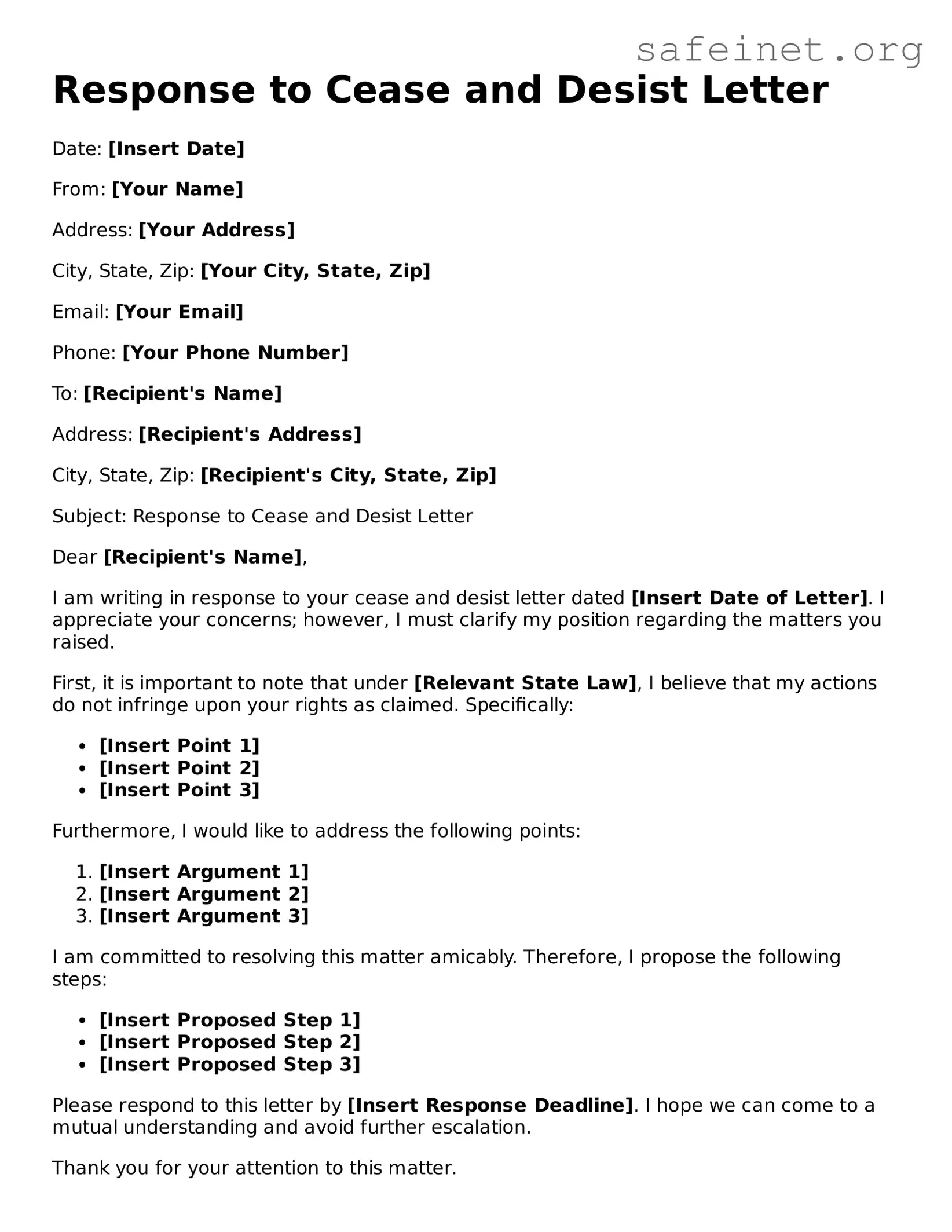
Receiving a cease and desist letter can be a daunting experience, as it often signifies a serious dispute or potential legal action. Understanding how to respond appropriately is crucial. The Response to a Cease and Desist Letter form serves as a structured way to address the claims made against you. This form typically includes sections for identifying the sender and recipient, outlining the specific allegations, and providing a detailed rebuttal or acknowledgment of the claims. Additionally, it may offer an opportunity to clarify your position or assert any defenses you may have. By carefully crafting your response, you can effectively communicate your stance and potentially resolve the issue without escalating it further. The importance of a well-prepared response cannot be overstated, as it may influence the outcome of any future legal proceedings.
Response to Cease and Desist Letter
Date: [Insert Date]
From: [Your Name]
Address: [Your Address]
City, State, Zip: [Your City, State, Zip]
Email: [Your Email]
Phone: [Your Phone Number]
To: [Recipient's Name]
Address: [Recipient's Address]
City, State, Zip: [Recipient's City, State, Zip]
Subject: Response to Cease and Desist Letter
Dear [Recipient's Name],
I am writing in response to your cease and desist letter dated [Insert Date of Letter]. I appreciate your concerns; however, I must clarify my position regarding the matters you raised.
First, it is important to note that under [Relevant State Law], I believe that my actions do not infringe upon your rights as claimed. Specifically:
Furthermore, I would like to address the following points:
I am committed to resolving this matter amicably. Therefore, I propose the following steps:
Please respond to this letter by [Insert Response Deadline]. I hope we can come to a mutual understanding and avoid further escalation.
Thank you for your attention to this matter.
Sincerely,
[Your Name]
| Fact Name | Description |
|---|---|
| Purpose | The Response to a Cease and Desist Letter form is used to formally reply to a request to stop certain actions or behaviors. |
| Legal Basis | This form may be governed by state-specific laws regarding cease and desist orders, such as California Civil Code Section 3344. |
| Content Requirements | A complete response should address the claims made in the cease and desist letter, providing any necessary evidence or explanations. |
| Filing Process | Typically, this response is sent directly to the party that issued the cease and desist letter, often via certified mail for tracking purposes. |
| Consequences of Non-Response | Failing to respond may result in legal action, including a potential lawsuit or further enforcement of the original cease and desist request. |
After receiving a cease and desist letter, responding appropriately is crucial. This response will outline your position and clarify any misunderstandings. Completing the form accurately will help ensure that your side of the story is communicated effectively.
What is a cease and desist letter?
A cease and desist letter is a formal request to stop engaging in a specific activity. It is often sent when someone believes their rights are being violated, such as copyright infringement or trademark misuse. The letter serves as a warning and may outline the consequences of not complying with the request.
Why would I need to respond to a cease and desist letter?
Responding to a cease and desist letter is important to protect your rights and interests. Ignoring the letter can lead to legal action against you. A thoughtful response can clarify your position, resolve misunderstandings, or negotiate a settlement. It shows that you take the matter seriously and are willing to engage in dialogue.
What should I include in my response?
Your response should address the claims made in the letter. Clearly state your position, whether you agree or disagree with the allegations. If you believe the claims are unfounded, provide evidence to support your stance. It may also be beneficial to propose a resolution or request more information if needed.
Is it necessary to hire a lawyer to respond?
While it is not mandatory to hire a lawyer, it is often advisable. An attorney can help you understand the legal implications of the letter and craft a more effective response. They can also represent you if the situation escalates. If you are unsure about your rights or the best course of action, consulting a lawyer may save you time and trouble in the long run.
What happens if I ignore the cease and desist letter?
If you ignore the letter, the sender may take further action, such as filing a lawsuit against you. This could lead to costly legal battles and potential damages. It is crucial to take the letter seriously and respond appropriately to avoid escalation and protect your interests.
Can I negotiate the terms of the cease and desist letter?
Yes, negotiation is possible. If you believe that the terms of the letter are too strict or unreasonable, you can propose alternative solutions. Open communication can lead to a mutually agreeable resolution. Both parties may benefit from finding common ground rather than resorting to legal action.
Ignoring the Deadline: Many individuals fail to respond within the specified time frame. This can lead to further legal action or the assumption that the claims in the cease and desist letter are valid.
Failure to Address the Claims: Some people do not directly respond to the specific allegations made in the cease and desist letter. A vague or generic response can undermine the effectiveness of their reply.
Admitting Guilt: Inadvertently admitting to the claims in the cease and desist letter is a common mistake. This can weaken one's position and may have legal repercussions.
Not Seeking Legal Advice: Many individuals attempt to handle the response on their own without consulting a legal professional. This can lead to misinterpretations of the law and potential pitfalls in their response.
Using Emotional Language: Some responses contain emotional or confrontational language rather than sticking to factual and objective statements. This can detract from the seriousness of the response and may escalate tensions.
When responding to a cease and desist letter, it's essential to be prepared with various supporting documents. These forms can help clarify your position and protect your rights. Below is a list of commonly used documents that may accompany your response.
Being equipped with these documents can significantly enhance your response to a cease and desist letter. Take the time to gather and prepare these forms to ensure your rights are adequately protected.
A Demand Letter serves as a formal request for action or payment from one party to another. It typically outlines the sender's grievances and specifies what is required to remedy the situation. Like a Response to a Cease and Desist Letter, a Demand Letter seeks to resolve a dispute without escalating to litigation. Both documents aim to clarify the issues at hand and encourage communication between the parties involved.
An Answer to a Complaint is a legal document filed in response to a lawsuit. This document addresses each allegation made in the complaint and provides the defendant’s side of the story. Similar to a Response to a Cease and Desist Letter, it is a critical opportunity to assert defenses and counterclaims. Both documents require careful consideration of the claims made and serve as a platform for the recipient to articulate their position.
A Settlement Agreement outlines the terms under which parties agree to resolve a dispute outside of court. This document can include financial compensation, changes in behavior, or other obligations. Much like a Response to a Cease and Desist Letter, it seeks to prevent further legal action by establishing a mutually acceptable resolution. The goal is to ensure that both parties can move forward without ongoing conflict.
A Letter of Intent (LOI) expresses the intention of parties to enter into a formal agreement in the future. While it is not legally binding, it sets the stage for negotiations and clarifies the key points of agreement. Similar to a Response to a Cease and Desist Letter, an LOI can demonstrate a willingness to engage and resolve issues amicably, paving the way for future collaboration.
An Affidavit is a written statement confirmed by oath or affirmation, used as evidence in court. Although it serves a different purpose, it shares the commonality of being a formal document that articulates facts. Both an Affidavit and a Response to a Cease and Desist Letter require accuracy and clarity, as they can significantly impact the outcome of a dispute.
A Memorandum of Understanding (MOU) outlines an agreement between parties but is generally not legally binding. It details the intentions and expectations of the parties involved. In this way, it resembles a Response to a Cease and Desist Letter by establishing a framework for cooperation and understanding, often aimed at preventing disputes before they escalate.
A Notice of Claim is a document filed to inform a party of a legal claim against them, often required before pursuing litigation. It outlines the basis for the claim and the relief sought. Similar to a Response to a Cease and Desist Letter, a Notice of Claim serves as a formal notification, prompting the recipient to take action to resolve the matter before it progresses to court.
When responding to a cease and desist letter, it's important to approach the situation carefully. Here are seven things to consider, both what you should and shouldn't do:
There are several misconceptions surrounding the Response to a Cease and Desist Letter form. Understanding these misconceptions is crucial for individuals and businesses who may find themselves in a situation involving such letters. Below is a list of common misunderstandings:
It is important to address a cease and desist letter thoughtfully and promptly. Misunderstanding the nature of such letters can lead to unnecessary complications.
When responding to a cease and desist letter, it’s important to approach the situation carefully and thoughtfully. Here are some key takeaways to keep in mind:
By following these key points, you can effectively navigate the complexities of responding to a cease and desist letter while protecting your interests.