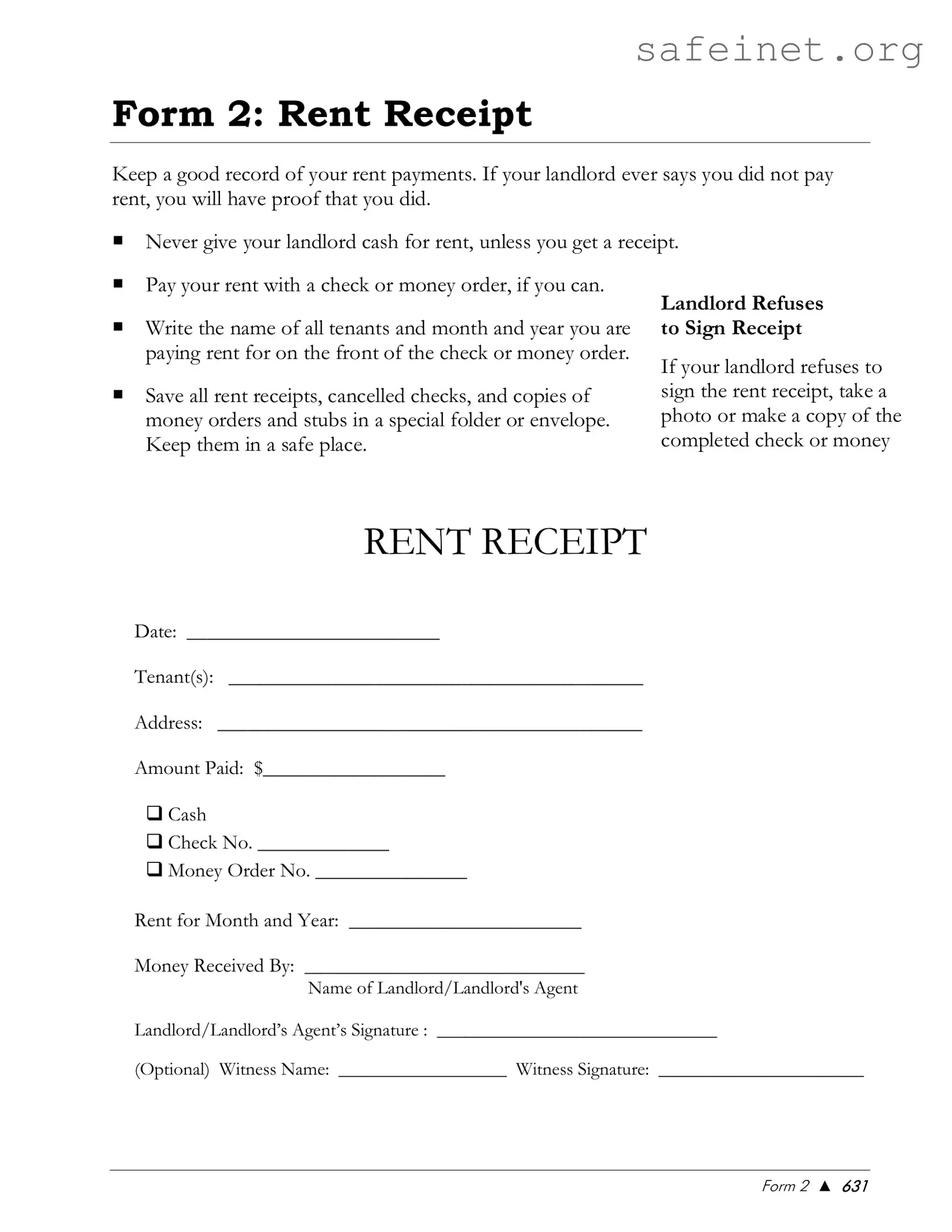
When renting a property, clear communication between landlords and tenants is crucial. A Rental Receipt form serves as a vital document in this relationship, providing proof of payment for rent. This form captures essential details, including the date of payment, tenant names, and property address, ensuring that both parties have a record of the transaction. It specifies the amount paid, along with the method of payment—whether cash, check, or money order. Additionally, the form includes the month and year for which the rent is being paid, reinforcing clarity on the payment period. The landlord or their agent must sign the receipt, confirming that they have received the funds. For added authenticity, a witness can also sign the document, further solidifying its validity. By using this form, both landlords and tenants can maintain accurate records and avoid potential disputes in the future.
RENT RECEIPT
Date: _________________________
Tenant(s): _________________________________________
Address: __________________________________________
Amount Paid: $__________________
Cash
Check No. _____________
Money Order No. _______________
Rent for Month and Year: _______________________
Money Received By: ______________________________
Name of Landlord/Landlord's Agent Landlord/Landlord’s Agent’s Signature : ______________________________
(Optional) Witness Name: __________________ Witness Signature: ______________________
| Fact Name | Description |
|---|---|
| Date of Payment | The receipt must include the date when the rent payment was made. |
| Tenant Information | Tenant(s) name(s) should be clearly stated on the receipt. |
| Property Address | The address of the rental property must be included for clarity. |
| Amount Paid | The total amount of rent paid should be specified in dollars. |
| Payment Method | Indicate the method of payment, such as cash, check, or money order. |
| Check or Money Order Number | If applicable, include the check or money order number for reference. |
| Rent Period | The receipt must specify the month and year for which the rent is paid. |
| Received By | The name of the landlord or their agent who received the payment should be noted. |
| Signature | The landlord or agent's signature is optional but recommended for validation. |
| Witness Information | Including a witness name and signature can add an extra layer of verification. |
Filling out the Rental Receipt form is a straightforward process that ensures both the landlord and tenant have a record of the transaction. Follow these steps carefully to complete the form accurately.
What is a Rental Receipt form?
A Rental Receipt form is a document that serves as proof of payment for rent. It is typically issued by a landlord or their agent to a tenant after receiving rent for a specific period. This form includes important details such as the date of payment, the amount paid, the method of payment (cash, check, or money order), and the names of both the tenant and landlord. Having this receipt is beneficial for both parties, as it provides a record of transactions and can help prevent disputes regarding rent payments.
Why is it important to keep a Rental Receipt?
Keeping a Rental Receipt is crucial for several reasons. First, it acts as proof that you have paid your rent, which can be important if any disputes arise. If a landlord claims that you have not paid, you can present the receipt as evidence. Additionally, receipts can help tenants track their payments over time, making it easier to manage finances. For landlords, maintaining a record of receipts can simplify accounting and tax reporting processes.
What information should be included in a Rental Receipt?
A Rental Receipt should include several key pieces of information to be considered complete and valid. This includes the date of payment, the names of the tenant(s) and landlord or landlord's agent, the address of the rental property, the amount paid, and the method of payment (indicated by checkboxes for cash, check, or money order). Additionally, it may include the name and signature of the person receiving the payment, which adds an extra layer of verification.
Can a Rental Receipt be issued for partial payments?
Yes, a Rental Receipt can be issued for partial payments. If a tenant pays only a portion of the rent due, the landlord can provide a receipt that specifies the amount received and notes that it is a partial payment. This is important for record-keeping purposes and helps clarify the remaining balance owed. Both parties should keep a copy of this receipt to avoid any misunderstandings in the future.
Failing to include the date: The date is crucial for tracking payment history. Omitting it can lead to disputes over when the payment was made.
Not specifying the payment method: Choosing a payment method is important. If you do not check the appropriate box for cash, check, or money order, it can create confusion about how the payment was made.
Leaving out the tenant's name or address: The tenant's information must be complete. Incomplete details can hinder communication and lead to issues in identifying who made the payment.
Neglecting to obtain a signature: A signature from the landlord or their agent confirms the receipt of payment. Without it, the receipt lacks validity and may not hold up in disputes.
When renting a property, having the right forms and documents is essential for both landlords and tenants. These documents help clarify the terms of the rental agreement and protect everyone's rights. Here’s a list of forms commonly used alongside the Rental Receipt form.
Having these forms readily available can streamline the rental process and ensure that both landlords and tenants are on the same page. Understanding and utilizing these documents can lead to a smoother rental experience for everyone involved.
The first document similar to a Rental Receipt form is a Lease Agreement. A Lease Agreement outlines the terms and conditions under which a tenant rents property from a landlord. Like the Rental Receipt, it includes essential details such as the names of the parties involved, the property address, and the rental amount. However, while the Rental Receipt serves as proof of payment, the Lease Agreement establishes the legal framework for the rental relationship.
Another comparable document is the Security Deposit Receipt. This receipt provides evidence that a tenant has paid a security deposit to the landlord. It typically includes the amount paid, the date of payment, and the property address, similar to the Rental Receipt. Both documents serve to protect the interests of both parties, ensuring clarity regarding financial transactions related to the rental property.
The Payment History Report is also akin to a Rental Receipt. This report details all payments made by a tenant over a specified period, including dates and amounts. While the Rental Receipt focuses on individual transactions, the Payment History Report offers a broader overview, helping tenants and landlords track payment patterns and outstanding balances.
A Rent Ledger is another document that shares similarities with the Rental Receipt. A Rent Ledger is a record maintained by the landlord that lists all rent payments made by the tenant, along with any late fees or adjustments. Like the Rental Receipt, it serves as a financial record, but it provides ongoing documentation rather than a single transaction proof.
The Move-In Inspection Report is also relevant. This document details the condition of the rental property at the time of the tenant's move-in. While it does not serve as a payment confirmation like the Rental Receipt, it is essential for establishing the state of the property and can help resolve disputes regarding security deposits and damages.
A Tenant Ledger is similar in that it tracks all financial transactions between the tenant and landlord. This document includes rent payments, fees, and other charges. While the Rental Receipt confirms a specific payment, the Tenant Ledger provides a comprehensive overview of the tenant's financial history with the landlord.
The Utility Payment Receipt is another document that resembles the Rental Receipt. This receipt confirms payment for utilities associated with the rental property. Like the Rental Receipt, it includes details such as the date, amount paid, and service address. Both documents serve as proof of payment, though they pertain to different types of charges.
The Lease Termination Agreement can also be considered similar. This document formalizes the end of a rental agreement and often includes details about final payments, such as last month's rent or any outstanding balances. While the Rental Receipt confirms a payment, the Lease Termination Agreement wraps up the financial obligations associated with the rental period.
A Maintenance Request Form may also share some similarities. This document allows tenants to request repairs or maintenance on the property. While it does not involve payment directly, it is part of the rental process and can lead to financial transactions, such as deductions from the security deposit for repairs. Both documents play vital roles in the landlord-tenant relationship.
Lastly, a Pet Deposit Receipt is akin to the Rental Receipt in that it confirms payment for a pet deposit. This document includes the amount paid and the property address, similar to the Rental Receipt. Both serve as proof of financial transactions related to renting a property, ensuring clarity and accountability for both parties involved.
When filling out the Rental Receipt form, it is important to follow certain guidelines to ensure accuracy and clarity. Below is a list of things to do and avoid.
Understanding the Rental Receipt form is essential for both landlords and tenants. However, several misconceptions can lead to confusion. Here are ten common misunderstandings about this important document:
By clarifying these misconceptions, both landlords and tenants can navigate their rental agreements with greater confidence and understanding.
When it comes to filling out and using the Rental Receipt form, there are several important points to keep in mind. Understanding these can help ensure that both landlords and tenants are protected and that all transactions are documented properly.