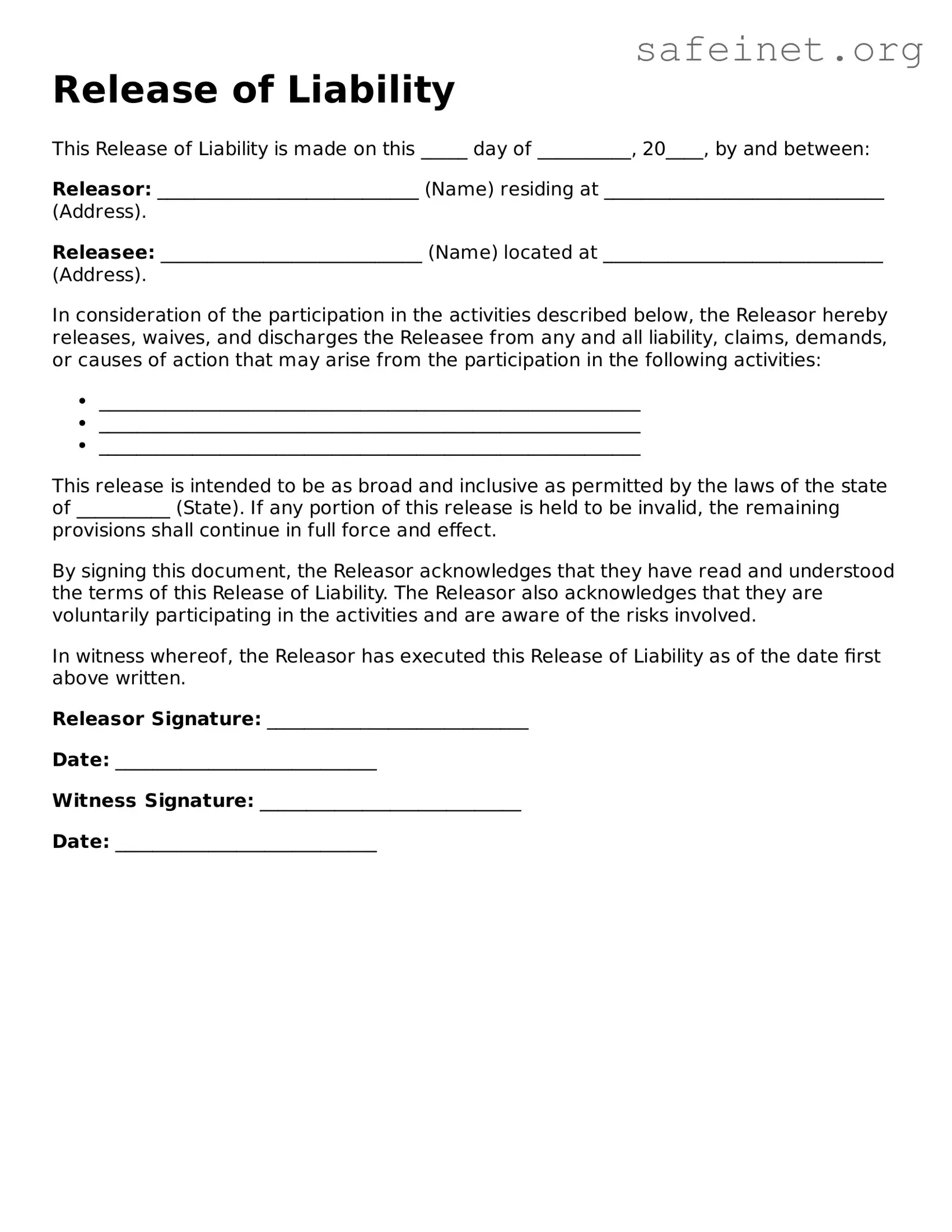
Engaging in activities that involve risk, whether it's sports, recreational events, or even certain types of employment, often requires participants to acknowledge the potential dangers involved. A Release of Liability form serves as a crucial tool in this context. This document is designed to protect organizations and individuals from legal claims arising from injuries or damages that may occur during these activities. By signing the form, participants voluntarily relinquish their right to sue for negligence, thereby accepting the inherent risks associated with the activity. Key elements of the form typically include a clear statement of the risks involved, a declaration of understanding by the participant, and a signature line that confirms their agreement. It’s important to note that while these forms can provide significant legal protection, they must be crafted carefully to ensure enforceability. The clarity of language and the comprehensiveness of the information provided can make a substantial difference in their effectiveness. Understanding the nuances of a Release of Liability form is essential for both organizers and participants alike, as it fosters informed consent and promotes safety in potentially hazardous environments.
Release of Liability
This Release of Liability is made on this _____ day of __________, 20____, by and between:
Releasor: ____________________________ (Name) residing at ______________________________ (Address).
Releasee: ____________________________ (Name) located at ______________________________ (Address).
In consideration of the participation in the activities described below, the Releasor hereby releases, waives, and discharges the Releasee from any and all liability, claims, demands, or causes of action that may arise from the participation in the following activities:
This release is intended to be as broad and inclusive as permitted by the laws of the state of __________ (State). If any portion of this release is held to be invalid, the remaining provisions shall continue in full force and effect.
By signing this document, the Releasor acknowledges that they have read and understood the terms of this Release of Liability. The Releasor also acknowledges that they are voluntarily participating in the activities and are aware of the risks involved.
In witness whereof, the Releasor has executed this Release of Liability as of the date first above written.
Releasor Signature: ____________________________
Date: ____________________________
Witness Signature: ____________________________
Date: ____________________________
| Fact Name | Description |
|---|---|
| Definition | A Release of Liability form is a legal document that protects one party from being held liable for any injuries or damages that may occur during an activity. |
| Purpose | This form is often used in recreational activities, sports, and events to ensure that participants understand the risks involved and agree not to hold the organizer responsible. |
| State-Specific Forms | Different states may have specific requirements for these forms. For example, California law requires clear language and specific disclosures in the release. |
| Enforceability | The enforceability of a Release of Liability form can vary by state. Courts may consider factors such as clarity, voluntary consent, and whether the activity involves inherent risks. |
After obtaining the Release of Liability form, the next step involves carefully completing it to ensure all necessary information is provided. This process is straightforward but requires attention to detail. Following these steps will help you fill out the form accurately.
What is a Release of Liability form?
A Release of Liability form is a legal document that protects one party from being held liable for injuries or damages that may occur during a specific activity or event. By signing this form, the participant acknowledges the risks involved and agrees not to hold the other party responsible for any accidents or injuries that may arise.
When should I use a Release of Liability form?
This form is typically used in situations where there is a risk of injury, such as sports events, recreational activities, or any situation involving physical exertion. It’s also common in contracts for services, like personal training or adventure sports, where the provider wants to limit their liability.
Who needs to sign a Release of Liability form?
Generally, anyone participating in an activity that carries risk should sign this form. This includes participants, guardians of minors, or anyone else involved. It’s important that all parties understand the risks and agree to the terms outlined in the document.
Is a Release of Liability form legally binding?
Yes, a properly drafted Release of Liability form is legally binding, provided it meets certain legal requirements. These can include clear language, voluntary consent, and an understanding of the risks involved. However, enforceability can vary by state, so it’s wise to consult legal counsel to ensure compliance.
Can I still sue if I sign a Release of Liability form?
In most cases, signing this form limits your ability to sue for injuries related to the activity. However, there are exceptions. If negligence or misconduct can be proven, or if the form was not properly executed, you may still have grounds for a lawsuit.
What should I look for in a Release of Liability form?
When reviewing a Release of Liability form, ensure it clearly states the risks involved, identifies the parties, and outlines what rights you are waiving. It should also be written in straightforward language. Avoid forms that are overly complex or vague, as these may not hold up in court.
Can minors sign a Release of Liability form?
Minors cannot legally sign contracts, including a Release of Liability form. Instead, a parent or legal guardian must sign on their behalf. This signature indicates that they understand the risks and agree to the terms for their child.
Do I need a lawyer to create a Release of Liability form?
While it’s possible to find templates online, having a lawyer draft or review your Release of Liability form is recommended. They can ensure that the document complies with state laws and adequately protects your interests.
What happens if the form is not signed?
If a participant does not sign the Release of Liability form, they may not be allowed to participate in the activity. The form serves as a crucial part of the risk management process, and without it, the organizing party may be exposed to liability.
Can a Release of Liability form be revoked?
Once signed, a Release of Liability form generally cannot be revoked unless there are specific circumstances, such as fraud or misrepresentation involved in the signing process. It’s essential to read and understand the document fully before signing to avoid any future complications.
Not Reading the Form Carefully: Many individuals rush through the Release of Liability form without fully understanding its content. This can lead to unintended consequences. Take your time to read each section and ensure you comprehend what you are signing.
Failing to Provide Accurate Information: It's crucial to fill out the form with correct details. Incorrect names, dates, or other personal information can invalidate the release. Double-check all entries before submitting.
Ignoring Instructions: Each Release of Liability form may come with specific instructions. Neglecting these can result in incomplete submissions. Follow the guidelines provided to ensure the form is accepted.
Not Seeking Clarification: If something is unclear, don’t hesitate to ask questions. Many people skip this step, which can lead to misunderstandings about the implications of the release. Reach out for help if needed.
Signing Without a Witness: Some forms require a witness signature for validity. Forgetting this step can render the release ineffective. Ensure you have a witness if it’s required by the form.
A Release of Liability form is often used in various situations to protect parties from legal claims. However, it is usually accompanied by other important documents that help clarify terms and conditions. Here are some common forms and documents that may be used alongside a Release of Liability:
Using these documents in conjunction with a Release of Liability form can help create a comprehensive legal framework that protects all parties involved. It is important to ensure that each document is clear and tailored to the specific situation to avoid any misunderstandings in the future.
The Waiver of Liability form is closely related to the Release of Liability form. Both documents serve to protect an individual or organization from legal claims arising from injuries or damages. By signing a Waiver of Liability, a participant acknowledges the risks involved in an activity and agrees not to hold the provider accountable for any resulting harm. This mutual understanding is key in both documents, as they aim to limit liability and clarify responsibilities.
Another similar document is the Indemnity Agreement. This agreement often accompanies a Release of Liability form. While the Release of Liability focuses on waiving claims against a party, the Indemnity Agreement requires one party to compensate another for any losses or damages incurred. Together, these documents create a comprehensive risk management strategy, ensuring that all parties understand their obligations and potential liabilities.
The Consent to Participate form also shares similarities with the Release of Liability. This document is commonly used in recreational or sporting events. By signing, participants acknowledge the inherent risks involved in the activity. Although it does not explicitly release a party from liability, it does inform participants of the risks, thereby limiting potential claims. Both forms aim to ensure informed consent while protecting the organizing entity.
The Hold Harmless Agreement is another document akin to the Release of Liability. This agreement specifically states that one party will not hold the other responsible for any claims or damages that may arise. It is often used in contracts between businesses and service providers. Like the Release of Liability, it emphasizes the importance of understanding the risks involved and the limitations of liability, thereby fostering a clearer understanding between the parties involved.
The Participant Agreement is similar in that it outlines the terms and conditions under which an individual agrees to engage in an activity. This document often includes clauses related to liability, risk acknowledgment, and the responsibilities of both parties. By signing, participants agree to abide by the terms, which can include waiving certain rights. This alignment with the Release of Liability form helps ensure that all parties are on the same page regarding expectations and risks.
The Medical Release form also bears resemblance to the Release of Liability. While it primarily focuses on the permission to disclose medical information, it often includes language that limits liability for medical providers in case of adverse outcomes during treatment. Both documents underscore the importance of informed consent and the understanding of potential risks associated with participation in activities or treatments.
The Safety Agreement is another document that aligns with the principles of the Release of Liability. This agreement typically outlines safety protocols and procedures that participants must follow. By signing, individuals acknowledge their understanding of the safety measures in place and agree to adhere to them. This proactive approach to risk management complements the liability release, as it reinforces the importance of safety in reducing potential claims.
The Acknowledgment of Risk form is similar in purpose to the Release of Liability. This document explicitly details the risks associated with a particular activity. By signing, participants confirm their awareness of these risks and agree to proceed despite them. This acknowledgment serves to reinforce the idea that participants are taking responsibility for their own safety, which is a key aspect of the Release of Liability.
The Event Participation Agreement often includes a Release of Liability clause. This document outlines the terms under which an individual may participate in an event. It typically covers liability waivers, safety protocols, and participant responsibilities. By signing, individuals agree to the terms, which can include waiving their right to sue for injuries sustained during the event, similar to the Release of Liability.
Finally, the Rental Agreement can also share similarities with the Release of Liability. When renting equipment or facilities, these agreements often contain clauses that limit the liability of the rental company. Renters acknowledge the risks involved in using the equipment or space and agree to take responsibility for any damages or injuries that may occur. This aspect aligns with the purpose of the Release of Liability in protecting the provider from claims related to usage.
When filling out a Release of Liability form, it’s crucial to approach the process with care. Here are some important dos and don’ts to keep in mind:
There are several misconceptions regarding the Release of Liability form that can lead to confusion. Understanding these can help clarify its purpose and limitations.
This is not true. While the form can protect against certain claims, it does not shield a party from all legal actions, especially those involving gross negligence or intentional harm.
While signing the form indicates an understanding of the risks, it does not completely eliminate the right to pursue legal action. There are exceptions, particularly if the form is deemed unenforceable.
Many people believe that only high-risk activities require a Release of Liability form. In reality, it can be beneficial for a variety of events, including sports, recreational activities, and even certain professional services.
The specific language used in a Release of Liability form is crucial. Ambiguous or poorly worded clauses can lead to disputes over its enforceability. Clear and precise language is essential for the form to be effective.
Understanding the Release of Liability form is crucial for anyone engaging in activities that carry potential risks. Here are some key takeaways to consider:
By keeping these points in mind, individuals and organizations can better navigate the complexities of the Release of Liability form, ensuring that all parties are informed and protected.