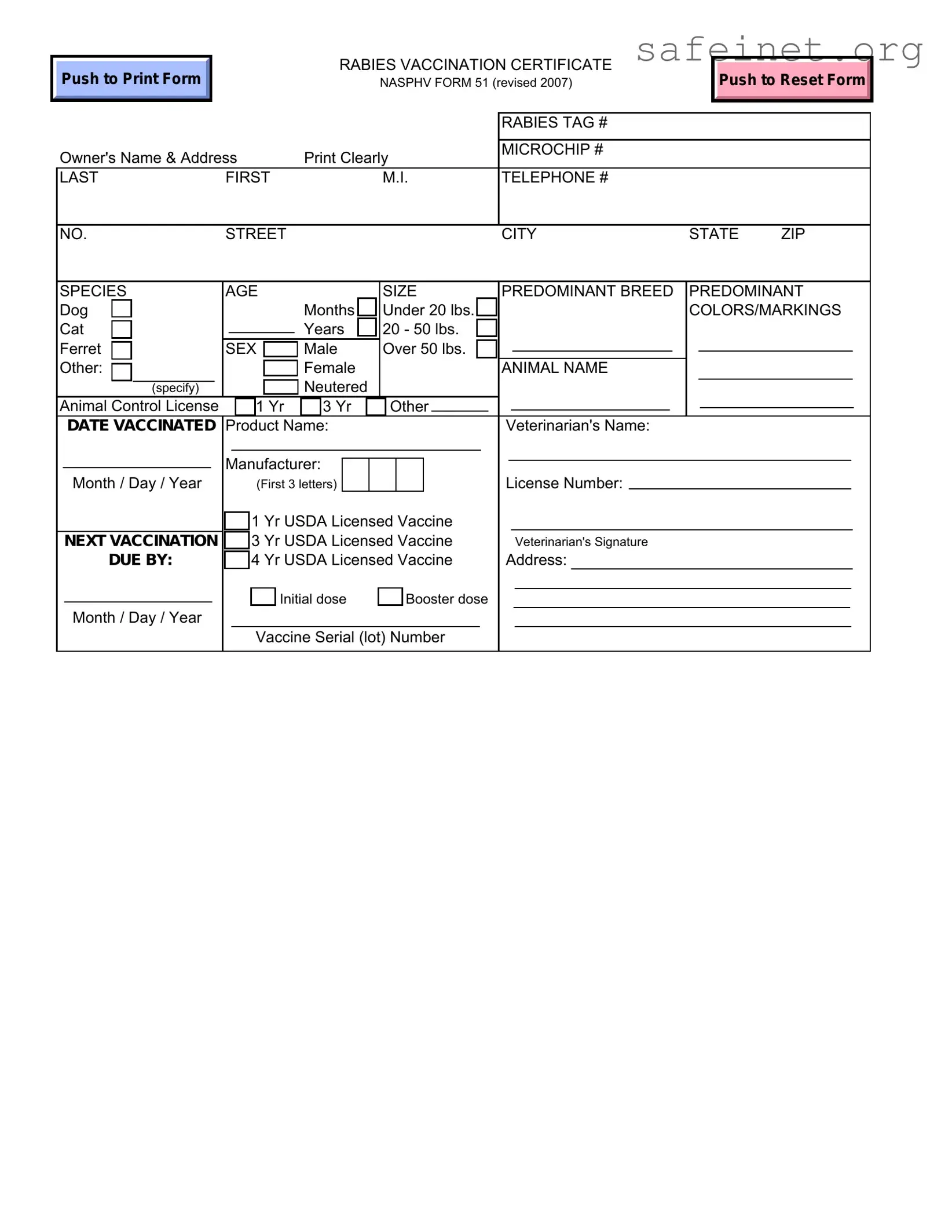
The Rabies Certificate form is an essential document for pet owners, especially those who travel or participate in activities where proof of vaccination is required. This form provides critical information about the animal, including the owner's name and contact details, as well as specifics about the pet, such as species, age, size, and predominant breed. It also includes important identifiers like the rabies tag number and microchip number, which help in tracking and verifying the animal's vaccination history. The form captures details about the vaccination itself, including the product name, manufacturer, and the veterinarian who administered the vaccine. Additionally, it specifies the vaccination duration—whether it is for one year or three years—and outlines the due date for the next vaccination. Proper completion of this form is crucial, as it not only serves as proof of compliance with local laws but also plays a vital role in public health and safety.

|
|
|
RABIES VACCINATION CERTIFICATE |
|
|
|
Push to Print Form |
|
Push to Reset Form |
||
|
|
NASPHV FORM 51 (revised 2007) |
|||
|
|
|
|
|
|
|
|
|
|
|
|
|
|
|
|
RABIES TAG # |
|
|
|
|
|
|
|
|
Owner's Name & Address |
Print Clearly |
MICROCHIP # |
|
|
|
|
|
|||
|
LAST |
FIRST |
M.I. |
TELEPHONE # |
|
NO.STREET
CITY |
STATE |
ZIP |
SPECIES |
AGE |
|
|
|
|
|
|
|
|
SIZE |
PREDOMINANT BREED |
PREDOMINANT |
|||||||||||||||||||||||||||||||||
Dog |
|
|
|
|
|
|
|
|
|
|
Months |
Under 20 lbs. |
|
|
|
|
|
|
|
|
COLORS/MARKINGS |
||||||||||||||||||||||||
Cat |
|
|
|
|
|
|
|
|
|
|
|
|
|
|
Years |
|
|
20 - 50 lbs. |
|
|
|
|
|
|
|
|
|
|
|
|
|
|
|||||||||||||
|
|
|
|
|
|
|
|
|
|
|
|
|
|
|
|
|
|
|
|
|
|
|
|
||||||||||||||||||||||
|
|
|
|
|
|
|
|
|
|
|
|
|
|
|
|
|
|
|
|
|
|
|
|
||||||||||||||||||||||
Ferret |
|
|
|
|
SEX |
|
|
Male |
Over 50 lbs. |
|
|
|
|
|
|
|
|
|
|
|
|
|
|
||||||||||||||||||||||
|
|
|
|
|
|
|
|
|
|
|
|
|
|
|
|
||||||||||||||||||||||||||||||
|
|
|
|
|
|
|
|
|
|
|
|
||||||||||||||||||||||||||||||||||
|
|
|
|
|
|
|
|
|
|
|
|
|
|
|
|
||||||||||||||||||||||||||||||
Other: |
|
|
|
|
|
|
|
|
|
|
|
|
|
|
Female |
|
|
|
|
|
|
|
|
|
|
ANIMAL NAME |
|
|
|
|
|||||||||||||||
|
|
|
|
|
|
|
|
|
|
|
|
|
|
|
|
|
|
|
|
|
|
|
|
|
|||||||||||||||||||||
|
|
|
|
|
|
|
|
|
|
|
|
|
|
|
|
|
|
|
|
|
|
|
|
|
|||||||||||||||||||||
|
|
|
|
|
|
|
|
|
|
|
|
|
|
|
|
Neutered |
|
|
|
|
|
|
|
|
|
|
|
|
|
|
|
|
|
|
|
|
|
|
|||||||
|
|
|
|
(specify) |
|
|
|
|
|
|
|
|
|
|
|
|
|
|
|
|
|
|
|
|
|
|
|
|
|
|
|
|
|
|
|
||||||||||
|
|
|
|
|
|
|
|
|
|
|
|
|
|
|
|
|
|
|
|
|
|
|
|
|
|
|
|
|
|
|
|
|
|
|
|
|
|||||||||
|
|
|
|
|
|
|
|
|
|
|
|
|
|
|
|
|
|
|
|
|
|
|
|
|
|
|
|
|
|
|
|
|
|
|
|
|
|||||||||
Animal Control License |
|
|
|
|
|
1 Yr |
|
|
|
3 Yr |
|
|
Other |
|
|
|
|
|
|
|
|
|
|
|
|
|
|
|
|
|
|
||||||||||||||
|
|
|
|
|
|
|
|
|
|
|
|
|
|
|
|
|
|
|
|
|
|
|
|||||||||||||||||||||||
|
|
|
|
|
|
|
|
|
|
|
|
|
|||||||||||||||||||||||||||||||||
|
|
|
|
|
|
|
|
|
|
|
|
|
|
|
|
|
|
|
|
|
|
|
|||||||||||||||||||||||
|
DATE VACCINATED |
Product Name: |
|
|
|
|
|
|
|
|
|
|
Veterinarian's Name: |
|
|
|
|
||||||||||||||||||||||||||||
|
|
|
|
|
|
|
|
|
|
|
|
|
|
|
|
|
|
|
|
|
|
|
|
|
|
|
|
|
|
|
|
|
|
|
|
|
|
|
|
|
|
|
|
|
|
|
|
|
|
|
|
|
Manufacturer: |
|
|
|
|
|
|
|
|
|
|
|
|
|
|
|
|
|
|
|
|
|
|
|
|
|
|
||||||||||||
|
Month / Day / Year |
|
|
|
|
|
|
|
|
|
|
|
|
|
|
License Number: |
|
|
|
|
|
|
|
||||||||||||||||||||||
|
|
|
|
|
|
(First 3 letters) |
|
|
|
|
|
|
|
|
|
|
|
|
|
|
|
|
|
||||||||||||||||||||||
|
|
|
|
|
|
|
|
|
|
|
|
|
|
|
|
|
|
|
|
|
|
|
|
|
|
|
|
|
|
|
|
|
|
|
|
|
|
|
|
||||||
|
|
|
|
|
|
|
|
|
|
|
|
1 Yr USDA Licensed Vaccine |
|
|
|
|
|
|
|
|
|
|
|
|
|||||||||||||||||||||
|
|
|
|
|
|
|
|
|
|
|
|
|
|
|
|
|
|
|
|
|
|
||||||||||||||||||||||||
|
|
|
|
|
|
|
|
|
|
|
|
|
|
|
|
|
|
|
|
|
|
||||||||||||||||||||||||
|
NEXT VACCINATION |
|
|
|
|
|
3 Yr USDA Licensed Vaccine |
|
|
|
Veterinarian's Signature |
||||||||||||||||||||||||||||||||||
|
|
|
|
|
|
|
|||||||||||||||||||||||||||||||||||||||
|
|
|
|
|
|
|
|||||||||||||||||||||||||||||||||||||||
|
DUE BY: |
|
|
|
|
|
4 Yr USDA Licensed Vaccine |
Address: |
|||||||||||||||||||||||||||||||||||||
|
|
|
|
||||||||||||||||||||||||||||||||||||||||||
|
|
|
|
||||||||||||||||||||||||||||||||||||||||||
|
|
|
|
|
|
|
|
|
|
|
|
|
|
Initial dose |
|
|
Booster dose |
|
|
|
|
|
|
|
|
|
|
|
|
||||||||||||||||
|
|
|
|
|
|
|
|
|
|
|
|
|
|
|
|
|
|
|
|
|
|
|
|
|
|
|
|
||||||||||||||||||
|
|
|
|
|
|
|
|
|
|
|
|
|
|
|
|
|
|
|
|
|
|
|
|
|
|
|
|
||||||||||||||||||
|
Month / Day / Year |
|
|
|
|
|
|
|
|
|
|
|
|
|
|
||||||||||||||||||||||||||||||
|
|
|
|
|
|
|
|
|
|
|
|
|
|
|
|
|
|
|
|
|
|
|
|
|
|
|
|
|
|
|
|
|
|
|
|
|
|
|
|
||||||
|
|
|
|
|
|
|
|
|
|
|
|
|
|
|
|
|
|
|
|
|
|
|
|
|
|
|
|
|
|
|
|
|
|
|
|
|
|
|
|
||||||
|
|
|
|
|
|
|
|
|
|
|
|
|
|
|
|
|
|
|
|
|
|
|
|
|
|
|
|
|
|
|
|
|
|
|
|
|
|
|
|
||||||
|
|
|
|
|
|
|
|
|
|
|
|
Vaccine Serial (lot) Number |
|
|
|
|
|
|
|
|
|
|
|
|
|
|
|
||||||||||||||||||
|
|
|
|
|
|
|
|
|
|
|
|
|
|
|
|
|
|
|
|
|
|
|
|
|
|
|
|
|
|
|
|
|
|
|
|
|
|
|
|
|
|
|
|
|
|
| Fact Name | Description |
|---|---|
| Form Title | This is the Rabies Vaccination Certificate, specifically NASPHV Form 51, revised in 2007. |
| Owner Information | The form requires the owner's name, address, and telephone number to ensure proper identification and contact. |
| Animal Details | Details about the animal, such as species, age, size, and breed, must be provided to accurately document the vaccination. |
| Vaccination Information | The form includes sections for the vaccination date, product name, veterinarian's name, and license number, ensuring compliance with health regulations. |
| State-Specific Laws | Each state has its own laws regarding rabies vaccination. For example, in California, Health and Safety Code Section 121690 governs rabies vaccination requirements. |
Completing the Rabies Certificate form requires careful attention to detail to ensure all necessary information is accurately provided. Once the form is filled out, it can be submitted to the appropriate authorities or kept for personal records.
What is the purpose of the Rabies Certificate form?
The Rabies Certificate form serves as official documentation that an animal has received a rabies vaccination. This certificate is important for compliance with local laws and regulations regarding pet ownership. It helps ensure public health and safety by verifying that pets are vaccinated against rabies, a serious and often fatal disease.
What information is required on the Rabies Certificate form?
The form requires several pieces of information. This includes the owner's name and address, the animal's species, age, size, and predominant breed. Additionally, details such as the microchip number, rabies tag number, and the veterinarian's information must be included. The vaccination date and product name, along with the vaccine's manufacturer and serial number, are also necessary for proper documentation.
How often does my pet need to be vaccinated for rabies?
The frequency of rabies vaccinations depends on the type of vaccine administered. Generally, pets may receive a rabies vaccine valid for one year or three years. It is essential to follow the veterinarian's recommendations and local regulations regarding vaccination schedules to maintain compliance and ensure the health of your pet.
What should I do if I lose my Rabies Certificate?
If the Rabies Certificate is lost, it is advisable to contact the veterinarian who administered the vaccination. They can often provide a replacement certificate or a copy of the vaccination record. Keeping a digital copy or storing the certificate in a safe place can help prevent future loss.
Can I use the Rabies Certificate for travel purposes?
Yes, the Rabies Certificate is often required for traveling with pets, especially when crossing state lines or entering certain countries. It is important to check the specific requirements of your destination, as some places may have additional vaccination or health documentation requirements.
What should I do if my pet is not vaccinated for rabies?
If your pet has not been vaccinated for rabies, it is crucial to schedule an appointment with a licensed veterinarian. Vaccination is not only a legal requirement in many areas, but it also protects your pet and the community from the risks associated with rabies. The veterinarian will provide guidance on the vaccination process and any necessary follow-up care.
Illegible handwriting: Ensure that all information is printed clearly. Illegible writing can lead to misunderstandings or errors in processing.
Missing owner information: Include the owner's full name, address, and telephone number. Omitting any of these details can delay the certification process.
Incorrect species selection: Make sure to select the correct species for the animal (Dog, Cat, Ferret, or Other). This is crucial for accurate record-keeping.
Omitting vaccination dates: Fill in the date vaccinated accurately. Missing this information can invalidate the certificate.
Incorrect product name: Verify the product name of the vaccine used. Errors here can lead to complications in future vaccinations.
Not specifying neuter status: Indicate whether the animal is neutered. This information is often required for licensing.
Missing veterinarian details: Provide the veterinarian's name and license number. This ensures that the vaccination is authenticated.
Ignoring the rabies tag number: Include the rabies tag number if applicable. This is important for tracking and identification purposes.
Not checking for expiration: Be aware of the vaccination's validity period. Ensure that the next vaccination date is noted correctly.
Failure to sign the certificate: The veterinarian's signature is essential for validation. Without it, the certificate cannot be considered legitimate.
The Rabies Certificate is an essential document for pet owners, particularly when traveling or moving to new locations. However, several other forms and documents often accompany it to ensure compliance with local regulations and to provide comprehensive health information about the animal. Below is a list of these documents, each serving a unique purpose.
Understanding these documents and their purposes can help pet owners navigate the responsibilities of pet ownership more effectively. Keeping all necessary paperwork organized ensures a smooth experience when traveling or relocating with your furry friends.
The Health Certificate is a document that verifies an animal's health status before travel or entry into certain facilities. Similar to the Rabies Certificate, it includes essential information about the animal, such as its vaccination history and owner details. This certificate often requires a veterinarian's signature, confirming that the animal is free from contagious diseases. Both documents serve to protect public health and ensure the safety of animals in various environments.
The Vaccination Record is another important document that tracks an animal's vaccination history. Like the Rabies Certificate, it details the types of vaccines administered, dates of administration, and the veterinarian responsible for the vaccinations. This record helps pet owners keep track of their pets' health needs and ensures compliance with local regulations regarding vaccinations. It is crucial for maintaining the overall health of the animal and preventing outbreaks of preventable diseases.
The Animal Control License is a permit required by many municipalities for pet ownership. This document often includes information about the pet, such as its breed and vaccination status, much like the Rabies Certificate. Obtaining an Animal Control License ensures that pet owners are following local laws and regulations, promoting responsible pet ownership. Both documents work together to ensure that pets are healthy and accounted for within the community.
The Microchip Registration form is essential for pet identification and recovery. Similar to the Rabies Certificate, it contains vital information about the pet and its owner, including a unique microchip number. This document helps reunite lost pets with their owners and provides peace of mind for pet owners. Both forms emphasize the importance of responsible pet ownership and the need for proper identification and health documentation.
The Spay/Neuter Certificate is a document that confirms an animal has been spayed or neutered. Like the Rabies Certificate, it includes details about the animal and the procedure performed. This certificate helps control the pet population and ensures that pets are not bred irresponsibly. Both documents contribute to responsible pet ownership and the overall welfare of animals in the community.
When filling out the Rabies Certificate form, accuracy and attention to detail are crucial. Here’s a helpful list of things to do and avoid to ensure your form is completed correctly.
By following these guidelines, you can help ensure that your Rabies Certificate form is filled out correctly and processed smoothly. Remember, clarity and completeness are key!
Understanding the Rabies Certificate form is essential for pet owners and veterinarians alike. Unfortunately, there are several misconceptions surrounding this important document. Here’s a list of common misunderstandings:
By clearing up these misconceptions, pet owners can ensure they comply with regulations and keep their furry friends safe and healthy.
When filling out and using the Rabies Certificate form, keep these key points in mind:
Completing the Rabies Certificate accurately is crucial for public health and compliance with local regulations.