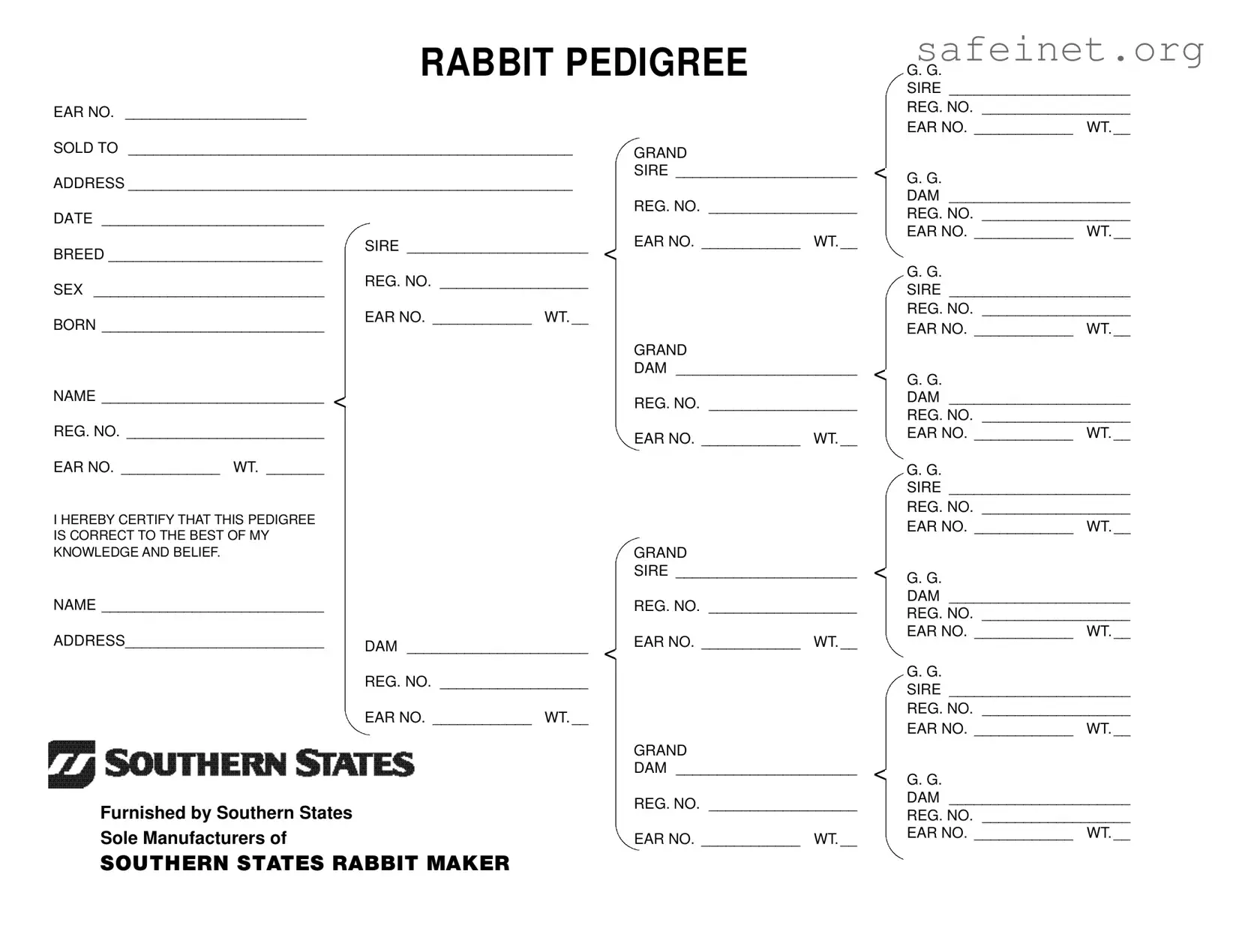
The Rabbit Pedigree form is an essential tool for breeders who want to keep track of their rabbits' lineage. This form captures vital information about each rabbit, including details about the sire and dam, as well as their grandparents. Each section of the form is designed to provide a clear picture of a rabbit's ancestry, which is crucial for maintaining breed standards and ensuring genetic health. Key elements include the registration numbers and ear numbers of the rabbits, which help in identifying them accurately. The form also includes spaces for weight, breed, and date of birth, allowing breeders to record important data that can influence breeding decisions. Additionally, the certification statement at the bottom emphasizes the importance of honesty and accuracy in reporting pedigree information. By using this form, breeders can not only document their rabbits' heritage but also contribute to the overall improvement of the breed.

RABBIT PEDIGREE
G. G.
SIRE ______________________
EAR NO. ______________________
SOLD TO ______________________________________________________
ADDRESS ______________________________________________________
GRAND
SIRE ______________________ <
REG. NO. __________________
REG. NO. __________________
EAR NO. ____________ WT. __
G. G.
DAM ______________________
DATE ___________________________
BREED __________________________
SEX ____________________________
BORN ___________________________
SIRE ______________________
REG. NO. __________________
EAR NO. ____________ WT. __
<
EAR NO. ____________ WT. __
REG. NO. __________________
EAR NO. ____________ WT. __
G. G.
SIRE ______________________
REG. NO. __________________
EAR NO. ____________ WT. __
NAME ___________________________ <
REG. NO. ________________________
EAR NO. ____________ WT. _______
I HEREBY CERTIFY THAT THIS PEDIGREE IS CORRECT TO THE BEST OF MY KNOWLEDGE AND BELIEF.
GRAND
DAM ______________________ <
REG. NO. __________________
EAR NO. ____________ WT. __
GRAND
SIRE ______________________ <
G. G.
DAM ______________________
REG. NO. __________________
EAR NO. ____________ WT. __
G. G.
SIRE ______________________
REG. NO. __________________
EAR NO. ____________ WT. __
G. G.
NAME ___________________________ |
REG. NO. __________________
DAM ______________________
REG. NO. __________________
ADDRESS________________________ |
DAM ______________________ |
|
|
|
REG. NO. __________________ |
<
EAR NO. ____________ WT. __
EAR NO. ____________ WT. __
G. G.
SIRE ______________________
EAR NO. ____________ |
WT. __ |
|
|
GRAND |
|
|
DAM ______________________ |
< |
|
|
|
Furnished by Southern States |
REG. NO. __________________ |
|
|
|
|
Sole Manufacturers of |
EAR NO. ____________ WT. __ |
|
REG. NO. __________________
EAR NO. ____________ WT. __
G. G.
DAM ______________________
REG. NO. __________________
EAR NO. ____________ WT. __
SOUTHERN STATES RABBIT MAKER
| Fact Name | Description |
|---|---|
| Purpose | The Rabbit Pedigree form is used to document the lineage and breeding details of rabbits for registration and sales. |
| Key Information | This form captures essential details such as sire and dam information, registration numbers, and ear numbers. |
| Certification | The form includes a certification statement, ensuring that the provided information is accurate to the best of the seller's knowledge. |
| Ownership Transfer | It contains a section to document the buyer's name and address, facilitating the transfer of ownership. |
| Governing Law | In states like California, the sale and registration of rabbits may be governed by the California Food and Agricultural Code. |
| Breed Information | The form requires the breed of the rabbit to be specified, which is vital for breeders and buyers alike. |
| Weight Measurement | Weight fields are included for both the sire and dam, which can be important for assessing the health and size of the rabbits. |
| Record Keeping | This document serves as an important record for breeders to maintain accurate breeding histories and lineage. |
| Manufacturer | The form is furnished by Southern States, which is noted as the sole manufacturer of the Rabbit Maker. |
| Additional Details | It provides space for additional information, such as registration numbers for multiple generations, enhancing the pedigree's completeness. |
Completing the Rabbit Pedigree form requires careful attention to detail. This form captures essential information about the lineage of your rabbit. Follow the steps outlined below to ensure that you fill out the form accurately.
What is the Rabbit Pedigree form used for?
The Rabbit Pedigree form is a document that provides detailed lineage information about a rabbit. It is essential for breeders to establish the ancestry and genetic background of their rabbits. This information helps in breeding decisions and maintaining breed standards.
What information is required on the Rabbit Pedigree form?
The form requires several key details, including the names and registration numbers of the sire and dam, ear numbers, weights, and information about the grandparents. Each rabbit's lineage is documented to ensure accurate pedigree records.
How do I fill out the Rabbit Pedigree form?
To fill out the form, start with the sire and dam's information at the top. Enter their names, registration numbers, ear numbers, and weights. Proceed to fill in the grand sires and grand dams below. Ensure all details are accurate and complete to maintain the integrity of the pedigree.
Is the Rabbit Pedigree form necessary for all breeders?
While not mandatory for all breeders, using the Rabbit Pedigree form is highly recommended for those looking to establish a reputable breeding program. It provides transparency and helps track genetic traits, which can be crucial for health and performance.
What should I do if I make a mistake on the form?
If you make a mistake while filling out the Rabbit Pedigree form, it is best to cross out the incorrect information neatly and write the correct details next to it. Ensure that any changes are clear to avoid confusion later on.
How can I certify the accuracy of the pedigree?
At the end of the form, you will find a certification statement. By signing this statement, you affirm that the information provided is correct to the best of your knowledge. It is crucial to be honest and thorough when certifying the pedigree.
Where can I obtain a Rabbit Pedigree form?
You can obtain a Rabbit Pedigree form from various sources, including local rabbit clubs, breeders' associations, or online resources. Ensure you are using the most current version of the form to comply with any updated requirements.
Can I use the Rabbit Pedigree form for different rabbit breeds?
Yes, the Rabbit Pedigree form can be used for various rabbit breeds. However, it is essential to ensure that the information you provide aligns with the specific standards and requirements of the breed you are documenting.
What happens if I lose the Rabbit Pedigree form?
If you lose the Rabbit Pedigree form, it is advisable to contact the breeder or organization that provided it to request a replacement. Keeping accurate records is vital, so consider making copies of the form for your records in the future.
Leaving required fields blank is a common mistake. Each section of the Rabbit Pedigree form contains essential information that must be filled out completely. Missing details can lead to inaccuracies in the pedigree.
Another frequent error is inaccurate registration numbers. It’s crucial to double-check these numbers for accuracy. An incorrect registration number can invalidate the pedigree and cause confusion down the line.
Some individuals fail to provide complete ear numbers. Each rabbit should have a unique ear number that helps identify them. Omitting this information can complicate tracking and verification.
Finally, not signing the certification statement at the bottom is a significant oversight. This signature confirms that the information provided is correct to the best of your knowledge. Without it, the form may be considered incomplete.
The Rabbit Pedigree form is essential for documenting the lineage of rabbits. However, several other forms and documents complement this pedigree, ensuring a comprehensive understanding of the rabbit's background and health. Below is a list of these documents, each serving a unique purpose in the breeding and registration process.
Each of these documents plays a critical role in the responsible breeding and ownership of rabbits. Together, they provide a framework for maintaining high standards in rabbit care and breeding practices.
The Rabbit Pedigree form shares similarities with a Dog Pedigree Certificate. Both documents serve to trace the lineage of the animal, providing details about its ancestors. The Dog Pedigree Certificate includes information such as the names of the sire and dam, registration numbers, and other identifying features. Like the Rabbit Pedigree form, it certifies the lineage and is often used for breeding purposes, ensuring that potential buyers or breeders can verify the animal's heritage.
Another comparable document is the Horse Registration Certificate. This certificate outlines the horse's lineage, including its sire and dam, along with their registration details. It typically includes physical characteristics, performance records, and ownership history. Just as the Rabbit Pedigree form is crucial for breeding decisions, the Horse Registration Certificate plays an essential role in maintaining breed standards and enhancing the quality of future generations.
The Cat Pedigree Certificate is also similar in function. This document details the ancestry of a cat, including its parents and grandparents, along with their registration numbers. It is used to establish the cat's breed purity and is often required for participation in cat shows. Both the Cat Pedigree Certificate and the Rabbit Pedigree form help breeders make informed decisions about breeding practices to improve lineage quality.
The Livestock Registration Certificate shares a common purpose with the Rabbit Pedigree form. This certificate provides a record of an animal's lineage, including its parents' details and registration information. It is often used in livestock breeding to ensure genetic diversity and quality. Like the Rabbit Pedigree form, it serves as proof of the animal’s heritage and can influence breeding decisions.
A similar document is the Exotic Animal Pedigree Certificate. This certificate outlines the ancestry of exotic pets, such as reptiles or birds. It includes information on the animal's lineage, registration numbers, and sometimes even health records. Just as with the Rabbit Pedigree form, this certificate is crucial for breeders and owners who wish to maintain or enhance specific traits in their animals.
The Poultry Breeding Certificate is another document that resembles the Rabbit Pedigree form. This certificate provides a detailed account of a bird's lineage, including its sire and dam. It helps breeders track genetic traits and ensure the quality of their poultry stock. Both documents are essential for breeders looking to produce high-quality offspring that meet specific breed standards.
The Fish Breeding Record serves a similar purpose as well. This document tracks the lineage of fish species, detailing the parent fish and their characteristics. It is particularly important for aquaculture and breeding programs aimed at producing fish with desirable traits. Just like the Rabbit Pedigree form, it helps ensure that breeders are aware of the genetic background of their stock.
Lastly, the Goat Registration Certificate is akin to the Rabbit Pedigree form. This certificate provides detailed information about a goat's lineage, including its sire and dam, registration numbers, and physical characteristics. It is used to maintain breed standards and is essential for breeders who want to improve their stock. Both documents emphasize the importance of lineage in breeding practices, ensuring that animals meet specific criteria for quality and health.
When filling out the Rabbit Pedigree form, attention to detail is crucial. Here are five essential do's and don'ts to consider:
Understanding the Rabbit Pedigree form is essential for breeders and enthusiasts. However, several misconceptions can lead to confusion. Here are seven common misconceptions:
Being aware of these misconceptions can help rabbit breeders make informed decisions and maintain accurate records for their animals.
When filling out and using the Rabbit Pedigree form, consider the following key takeaways: