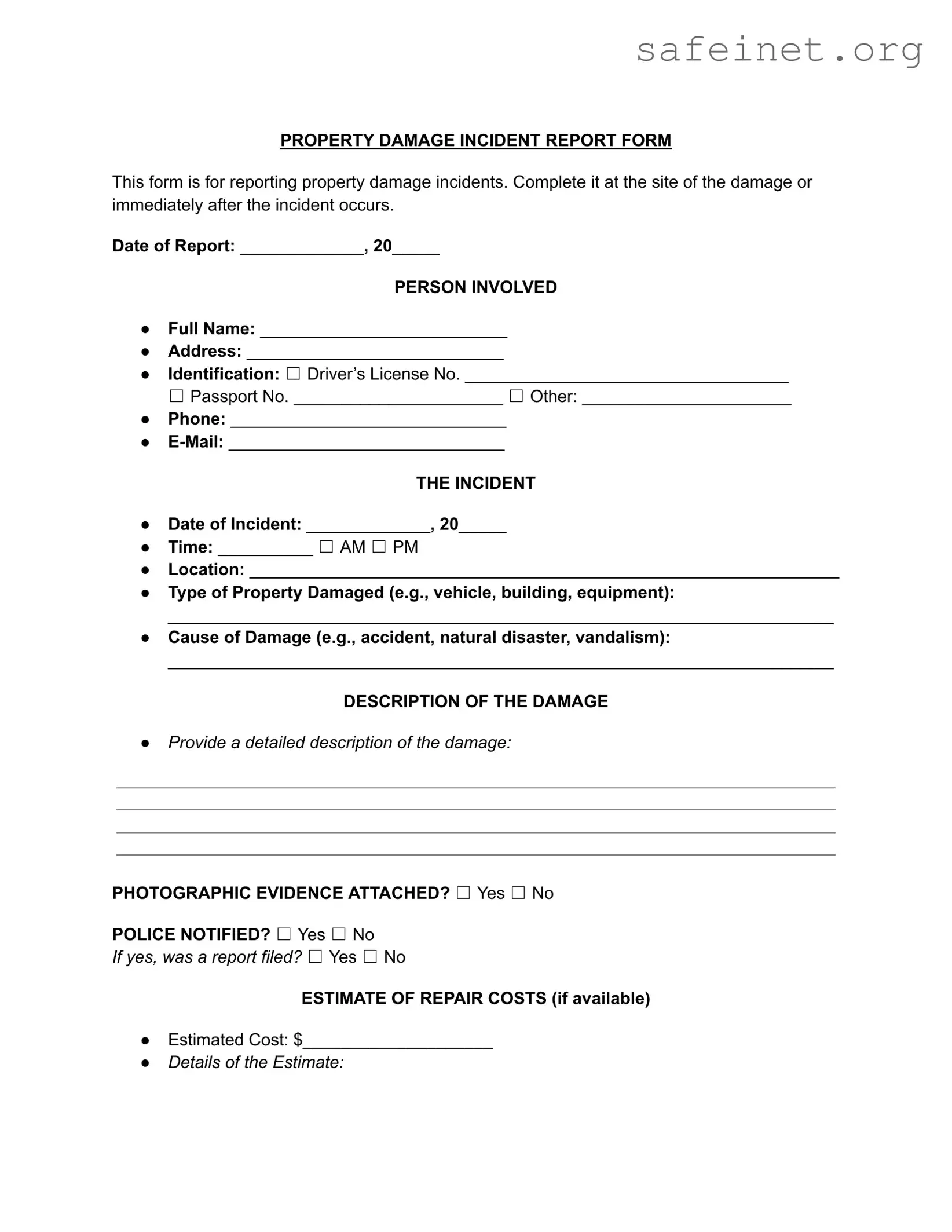
The Property Damage Incident Report form serves as a crucial tool for documenting incidents that result in damage to property. This form captures essential information such as the date, time, and location of the incident, as well as details about the individuals involved and any witnesses present. It also provides space for a description of the damage incurred and the circumstances surrounding the event. By systematically collecting this information, the form facilitates a clear understanding of what occurred, which can be vital for insurance claims and legal proceedings. Additionally, the report may require the signatures of the parties involved, ensuring accountability and clarity. The structured format of the form helps to streamline the reporting process, making it easier for individuals and organizations to address property damage efficiently and effectively.

PROPERTY DAMAGE INCIDENT REPORT FORM
This form is for reporting property damage incidents. Complete it at the site of the damage or immediately after the incident occurs.
Date of Report: _____________, 20_____
PERSON INVOLVED
●Full Name: __________________________
●Address: ___________________________
●Identification: ☐ Driver’s License No. __________________________________
☐ Passport No. ______________________ ☐ Other: ______________________
●Phone: _____________________________
●
THE INCIDENT
●Date of Incident: _____________, 20_____
●Time: __________ ☐ AM ☐ PM
●Location: ______________________________________________________________
●Type of Property Damaged (e.g., vehicle, building, equipment):
______________________________________________________________________
●Cause of Damage (e.g., accident, natural disaster, vandalism):
______________________________________________________________________
DESCRIPTION OF THE DAMAGE
●Provide a detailed description of the damage:
PHOTOGRAPHIC EVIDENCE ATTACHED? ☐ Yes ☐ No
POLICE NOTIFIED? ☐ Yes ☐ No
If yes, was a report filed? ☐ Yes ☐ No
ESTIMATE OF REPAIR COSTS (if available)
●Estimated Cost: $____________________
●Details of the Estimate:

WITNESSES
●Were there witnesses to the incident? ☐ Yes ☐ No
●If yes, enter the witnesses’ names and contact info:
1.Full Name: ________________________
Phone: ___________________________
2.Full Name: ________________________
Phone: ___________________________
3.Full Name: ________________________
Phone: ___________________________
INSURANCE INFORMATION (if applicable)
●Insurance Provider: ________________________
●Policy Number: ___________________________
PERSON FILING REPORT
●Full Name: _____________________________
●Title/Role: ______________________________
●Signature: ______________________________
OFFICE USE ONLY
●Report received by: __________________________
●Date: _____________, 20_____
●
| Fact Name | Description |
|---|---|
| Purpose | The Property Damage Incident Report form is used to document incidents that result in property damage, providing a clear record for insurance claims and legal proceedings. |
| Information Required | The form typically requires details such as the date and time of the incident, location, description of the damage, and contact information for involved parties. |
| Submission Process | After completing the form, individuals should submit it to their insurance company or relevant authorities as per the specific guidelines provided by their state. |
| State-Specific Requirements | Each state may have its own version of the form and specific governing laws that dictate how property damage incidents should be reported. |
| Legal Implications | Completing the form accurately is crucial, as it can affect insurance claims and any potential legal actions stemming from the incident. |
Completing the Property Damage Incident Report form is an essential step in documenting any damage that has occurred. Once the form is filled out accurately, it will be submitted to the appropriate parties for review and action. This process ensures that all necessary details are captured for further investigation or insurance claims.
What is the Property Damage Incident Report form?
The Property Damage Incident Report form is a document used to report any damage to property. This includes damage caused by accidents, natural disasters, or vandalism. The form helps in documenting the incident for insurance claims and internal records.
Who should fill out the Property Damage Incident Report form?
The form should be completed by anyone who witnesses or is involved in an incident that causes property damage. This includes employees, visitors, or contractors. Accurate information is crucial for processing claims and addressing the situation effectively.
What information do I need to provide on the form?
You will need to include details such as the date and time of the incident, location, a description of the damage, and any individuals involved. Additionally, providing photographs or diagrams can be helpful in illustrating the situation.
Is there a deadline for submitting the form?
Where do I submit the completed form?
What happens after I submit the form?
After submission, the report will be reviewed by the appropriate personnel. They will assess the situation, determine any necessary actions, and initiate the claims process if applicable. You may be contacted for further information.
Can I report an incident anonymously?
What if I need help filling out the form?
If you need assistance, don’t hesitate to reach out to your supervisor or the designated contact person in your organization. They can guide you through the process and ensure that all necessary information is captured accurately.
Will my report be kept confidential?
What if I notice damage after the initial report?
Incomplete Information: One of the most common mistakes is leaving sections of the form blank. Every detail matters, from your name and contact information to the specifics of the incident. Omitting even a single piece of information can lead to delays in processing your report.
Vague Descriptions: Providing unclear or ambiguous descriptions of the incident can create confusion. It's essential to be as detailed as possible. Instead of saying "there was damage," describe what happened, how it occurred, and the extent of the damage.
Failure to Document Evidence: Not including supporting evidence, such as photographs or witness statements, can weaken your report. Visual evidence can clarify the situation and substantiate your claims, making it easier for authorities to understand the context.
Ignoring Deadlines: Many people overlook the importance of submitting the report promptly. Delays can result in complications or even denial of your claim. Always be aware of any deadlines associated with the report to ensure your case is handled efficiently.
Neglecting to Review: After filling out the form, some individuals forget to review their entries. Simple mistakes, such as typos or incorrect dates, can lead to misunderstandings. Taking a moment to double-check your work can save you from potential issues down the line.
When dealing with property damage incidents, various forms and documents are essential for a comprehensive understanding of the situation. Each document serves a specific purpose and helps facilitate the process of reporting, assessing, and resolving the incident. Below is a list of commonly used forms that complement the Property Damage Incident Report form.
Utilizing these documents effectively can streamline the process of addressing property damage incidents. Each form contributes valuable information that aids in resolution and ensures that all parties are informed and engaged in the process.
The Incident Report form is similar to the Property Damage Incident Report form in that both documents serve to document events that result in harm or loss. The Incident Report form typically covers a wider range of incidents, including injuries and accidents, not just property damage. It provides a structured way to record the details of the incident, including who was involved, what happened, and when it occurred. Both forms aim to create a clear record that can be used for insurance claims or legal purposes.
The Insurance Claim Form is another document that shares similarities with the Property Damage Incident Report form. This form is used to formally request compensation for damages sustained. Like the Property Damage Incident Report, it requires detailed information about the incident, including the nature of the damage, the date it occurred, and any relevant witness statements. Both documents are essential for processing claims and ensuring that the affected party receives appropriate compensation.
The Accident Report form is closely related to the Property Damage Incident Report form as it captures details surrounding accidents that may involve vehicles or other forms of transportation. This report includes information about the parties involved, the circumstances of the accident, and any damages incurred. Both forms are used to provide a clear account of events, which is crucial for legal and insurance purposes.
The Loss Report form is another document that resembles the Property Damage Incident Report. This form is specifically designed to report losses, whether they are related to property, theft, or other incidents. Like the Property Damage Incident Report, it requires specifics about the incident, including the date, time, and description of the loss. Both documents help in tracking incidents and can support claims or investigations.
The Fire Incident Report is similar to the Property Damage Incident Report in that it specifically addresses incidents involving fire damage. This report typically includes details about the cause of the fire, the extent of the damage, and any injuries sustained. Both forms aim to provide a comprehensive account of the incident, which is vital for insurance claims and safety investigations.
The Police Report is another document that parallels the Property Damage Incident Report. When law enforcement is involved, a Police Report is generated to document the details of the incident. This report includes witness statements, evidence collected, and the officer's observations. Both reports serve as official records that can be used in legal proceedings or insurance claims.
Finally, the Maintenance Request form can be seen as similar in context to the Property Damage Incident Report. While it focuses on requesting repairs or maintenance, it often documents issues that may lead to property damage if not addressed. Both forms require a clear description of the problem, the location, and any urgency involved, highlighting the importance of timely action to prevent further damage.
When filling out a Property Damage Incident Report form, it is essential to follow certain guidelines to ensure accuracy and completeness. Below is a list of things you should and shouldn't do:
Misconceptions about the Property Damage Incident Report form can lead to confusion and improper use of the document. Below is a list of common misunderstandings, along with explanations to clarify each point.
This is not true. While insurance companies often request the form for claims, it is also useful for property owners, law enforcement, and other parties involved in the incident.
Many believe that only significant damage warrants a report. However, even minor incidents should be documented to provide a complete record.
In many cases, especially when insurance claims are involved, completing the report is essential. Failing to do so may result in complications during the claims process.
While timely reporting is important, it is not always feasible to complete the form right after an incident. It is acceptable to take some time to gather accurate information.
This is a misconception. Anyone involved in the incident, including witnesses or tenants, can complete the form to provide their perspective.
Different jurisdictions may have their own versions of the report. It is crucial to use the correct form specific to the location of the incident.
While the report is an important part of the claims process, it does not guarantee that compensation will be awarded. Insurance companies evaluate claims based on various factors.
On the contrary, accurate and detailed information is vital. The specifics can significantly influence the outcome of any investigations or claims.
It is possible to amend a report if new information arises or if errors are discovered. However, it is essential to follow the proper procedures for making changes.
While the primary focus is on property damage, the report can also include information about injuries or other relevant incidents that occurred during the event.
When dealing with property damage, filling out the Property Damage Incident Report form accurately is crucial. This document serves as an official record of the incident and can be vital for insurance claims or legal purposes. Here are some key takeaways to consider:
Filling out the Property Damage Incident Report form thoughtfully can help ensure that your rights are protected and that you have the necessary documentation for any subsequent steps you may need to take.