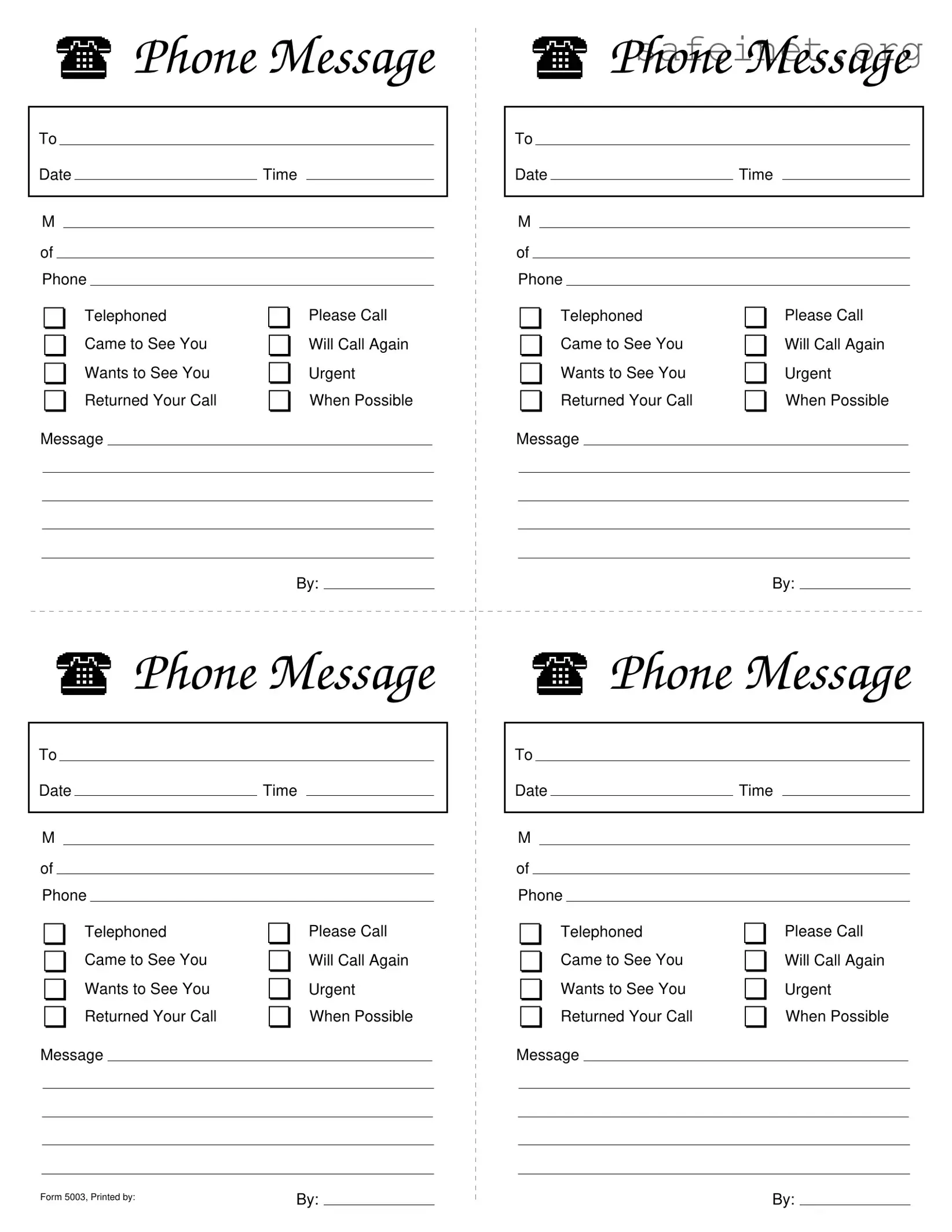
The Phone Message Slips form serves as a vital communication tool within organizations, ensuring that messages are accurately recorded and conveyed. This form captures essential details such as the recipient's name, the date and time of the call, and the nature of the message. Users can indicate various scenarios, including whether the caller telephoned, requested a return call, or visited in person. Additionally, options for urgency and follow-up actions are clearly outlined, allowing for efficient prioritization of messages. The structured layout of the form facilitates quick completion and easy understanding, making it an indispensable resource for maintaining effective communication in busy environments. By streamlining the message-taking process, this form enhances organizational efficiency and ensures that no important communication slips through the cracks.
|
|
|
|
|
Phone Message |
||||
|
|
|
|
|
|
|
|
|
|
To |
|
|
|
|
|
||||
Date |
|
|
Time |
|
|
|
|||
|
|
|
|
|
|
|
|
|
|
M |
|
|
|
|
|
||||
of |
|
|
|
|
|
||||
Phone |
|
|
|
|
|
||||
❏ Telephoned |
❏ Please Call |
||||||||
❏ Came to See You |
❏ Will Call Again |
||||||||
❏ Wants to See You |
❏ Urgent |
||||||||
❏ Returned Your Call |
❏ When Possible |
||||||||
Message
|
|
|
|
|
|
By: |
|
|
|
|
|
|
|
|
|
Phone Message |
|
||||
|
|
|
|
|
|
|
|
|
|
|
To |
|
|
|
|
|
|
||||
Date |
|
|
Time |
|
|
|
||||
|
|
|
|
|
|
|
|
|
|
|
M |
|
|
|
|
|
|
||||
of |
|
|
|
|
|
|
||||
Phone |
|
|
|
|
|
|
||||
❏ Telephoned |
❏ Please Call |
|
||||||||
❏ Came to See You |
❏ Will Call Again |
|
||||||||
❏ Wants to See You |
❏ Urgent |
|
||||||||
❏ Returned Your Call |
❏ When Possible |
|
||||||||
Message
|
|
|
|
|
Phone Message |
||||
|
|
|
|
|
|
|
|
|
|
To |
|
|
|
|
|
||||
Date |
|
|
Time |
|
|
|
|||
|
|
|
|
|
|
|
|
|
|
M |
|
|
|
|
|
||||
of |
|
|
|
|
|
|
|||
Phone |
|
|
|
|
|
||||
❏ Telephoned |
❏ Please Call |
||||||||
❏ Came to See You |
❏ Will Call Again |
||||||||
❏ Wants to See You |
❏ Urgent |
||||||||
❏ Returned Your Call |
❏ When Possible |
||||||||
Message
|
|
|
|
|
|
By: |
|
|
|
|
|
|
|
|
|
Phone Message |
|
||||
|
|
|
|
|
|
|
|
|
|
|
To |
|
|
|
|
|
|
||||
Date |
|
|
Time |
|
|
|
||||
|
|
|
|
|
|
|
|
|
|
|
M |
|
|
|
|
|
|
||||
of |
|
|
|
|
|
|
||||
Phone |
|
|
|
|
|
|
||||
❏ Telephoned |
❏ Please Call |
|
||||||||
❏ Came to See You |
❏ Will Call Again |
|
||||||||
❏ Wants to See You |
❏ Urgent |
|
||||||||
❏ Returned Your Call |
❏ When Possible |
|
||||||||
Message
Form 5003, Printed by: |
By: |
|
By: |
|
|
|
| Fact Name | Details |
|---|---|
| Purpose | The Phone Message Slips form is designed to efficiently record and communicate important messages when direct contact is not possible. |
| Key Features | The form includes sections for the date, time, and various message options, such as "Telephoned" and "Urgent," ensuring clarity in communication. |
| Usage | This form is commonly used in professional settings, such as offices and clinics, to keep track of messages for staff and clients. |
| Governing Law | In some states, the use of message forms may be governed by communication and record-keeping laws, ensuring compliance with privacy regulations. |
Filling out the Phone Message Slips form is straightforward. Follow these steps to ensure all necessary information is accurately recorded. This will help maintain clear communication and ensure messages are delivered effectively.
What is the purpose of the Phone Message Slips form?
The Phone Message Slips form is designed to help individuals and businesses efficiently record and communicate messages received via phone calls. It serves as a structured way to note important details such as the caller's name, the date and time of the call, and the nature of the message. This ensures that no important information is overlooked and can be easily referenced later.
What information do I need to fill out on the form?
When completing the Phone Message Slips form, you will need to provide several key pieces of information. This includes the name of the person to whom the message is directed, the date and time of the call, and the method of communication (e.g., telephoned, came to see you, etc.). Additionally, you will need to indicate the urgency of the message and any specific notes or instructions from the caller.
How do I indicate the urgency of a message on the form?
The form includes an option to mark the urgency of the message. You can select the checkbox labeled "Urgent" if the message requires immediate attention. This visual cue helps prioritize messages, ensuring that urgent matters are addressed promptly.
Can I use the Phone Message Slips form for both personal and professional purposes?
Yes, the Phone Message Slips form is versatile and can be utilized in both personal and professional contexts. Whether you are a business managing client communications or an individual keeping track of personal calls, this form provides a clear and organized way to document messages.
What should I do if I run out of space on the form?
If you find that you need more space than what the Phone Message Slips form provides, consider using additional slips or a separate notepad. It is essential to ensure that all details are recorded accurately, so having extra space can be beneficial for longer messages or additional notes.
Is there a specific format for the messages recorded on the form?
While there is no strict format for the content of the messages, it is advisable to be clear and concise. Summarizing the key points of the conversation will help anyone reviewing the message slip understand the context quickly. Use bullet points or short sentences to enhance clarity.
Who is responsible for filling out the Phone Message Slips form?
Typically, the person who receives the call is responsible for filling out the Phone Message Slips form. This could be a receptionist, an assistant, or even the individual themselves. Ensuring accurate completion of the form is crucial, as it serves as a record of communication that may be referenced later.
Not filling in the Date and Time sections. These details are crucial for tracking messages.
Leaving the Phone field blank. This makes it difficult to return calls or follow up.
Choosing multiple options in the Message Type section. It’s best to select only one to avoid confusion.
Failing to include a clear Message. A vague note can lead to misunderstandings later on.
Not signing the Message By section. This is important for accountability and follow-up.
Using abbreviations or shorthand that others may not understand. Clarity is key.
Neglecting to check for errors before submitting the form. Mistakes can lead to miscommunication.
In a busy office environment, effective communication is crucial. Alongside the Phone Message Slips form, several other documents help streamline communication and ensure that important information is recorded and conveyed accurately. Below is a list of commonly used forms that complement the Phone Message Slips.
These forms work together to create a cohesive communication system within the office. By utilizing them, staff can maintain clarity and efficiency in their interactions, ultimately supporting the needs of clients and the overall operation of the firm.
The first document similar to the Phone Message Slips form is the Visitor Log. This form records details about individuals who visit a workplace or facility. It typically includes the visitor's name, date, time of arrival, and purpose of the visit. Like the Phone Message Slips, the Visitor Log serves to track interactions and ensure that important communications are documented. Both forms help maintain a record of engagements, making it easier to follow up when necessary.
Another comparable document is the Email Notification Template. This template is used to inform individuals about important messages or updates via email. It usually includes fields for the recipient's name, subject, and message body. Similar to the Phone Message Slips, it aims to convey information clearly and efficiently, ensuring that recipients understand the urgency or importance of the message being communicated.
The Meeting Notes form also shares similarities with the Phone Message Slips. This document captures the key points discussed during meetings, including attendees, date, time, and action items. Both forms are designed to provide a concise summary of communications, allowing for easy reference and follow-up. The Meeting Notes help ensure that everyone is on the same page, just as the Phone Message Slips do for phone interactions.
Another relevant document is the Task Assignment Sheet. This form outlines tasks assigned to team members, including deadlines and responsible parties. It functions similarly to the Phone Message Slips by documenting important information that needs to be communicated to specific individuals. Both documents facilitate accountability and clarity in communication, helping teams stay organized and informed about their responsibilities.
Lastly, the Incident Report form is akin to the Phone Message Slips in its purpose of documenting significant events or communications. This form typically includes details such as the date, time, individuals involved, and a description of the incident. Like the Phone Message Slips, the Incident Report serves as an official record that can be referenced later, ensuring that all relevant information is captured and can be acted upon as needed.
When filling out the Phone Message Slips form, consider the following guidelines:
Understanding the Phone Message Slips form can be crucial for effective communication in any office setting. However, several misconceptions can lead to confusion. Here are eight common myths about this form:
By dispelling these misconceptions, you can better utilize the Phone Message Slips form to enhance communication and efficiency in your workplace.
When it comes to using the Phone Message Slips form, there are some important points to keep in mind. This form helps you communicate effectively and ensures that messages are conveyed clearly. Here are some key takeaways:
By following these tips, you can ensure that your use of the Phone Message Slips form is effective and efficient. Clear communication is vital in any setting, and these slips can help you achieve that.