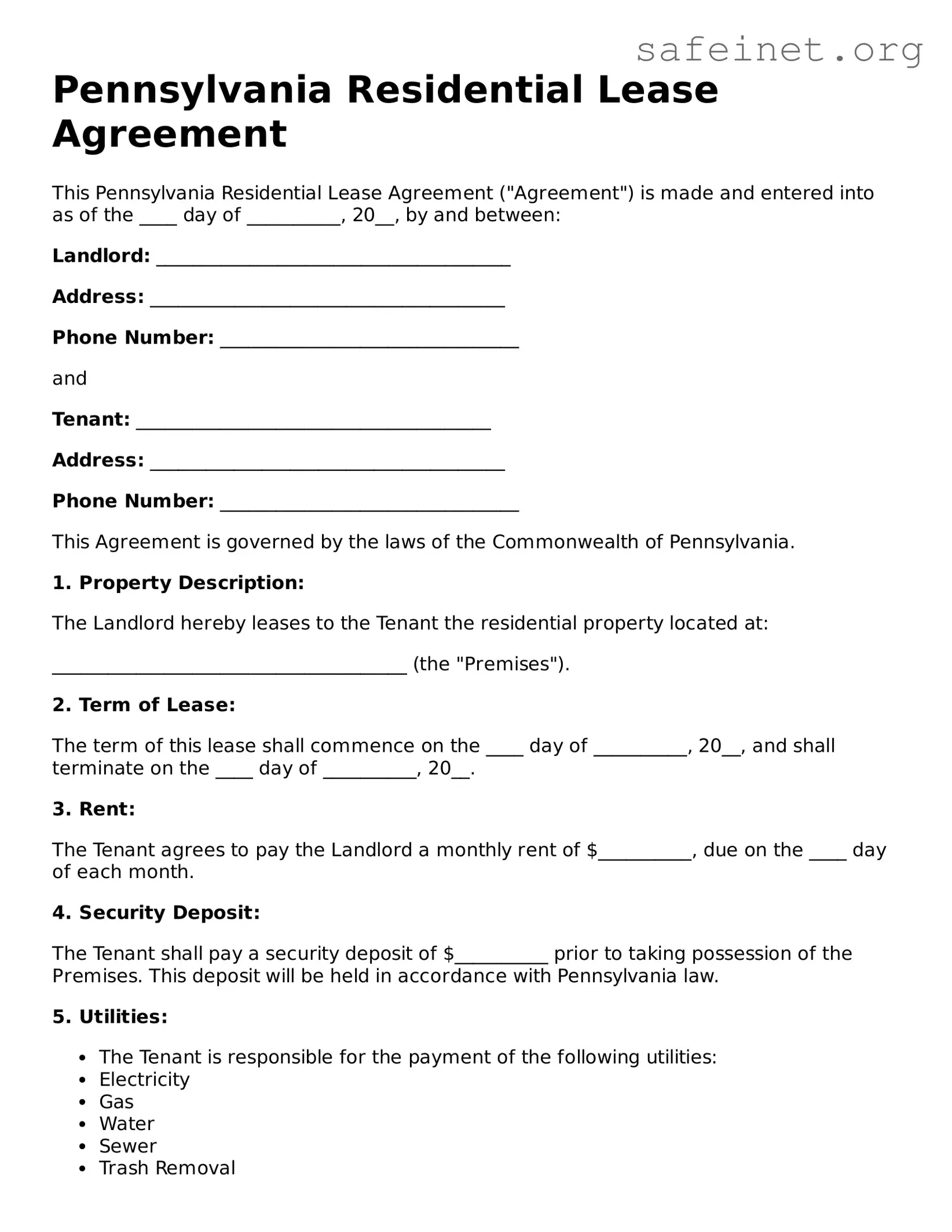
The Pennsylvania Residential Lease Agreement form is a crucial document for both landlords and tenants, serving as the foundation for their rental relationship. This agreement outlines essential details such as the rental property's address, the duration of the lease, and the monthly rent amount. It also specifies the security deposit requirements and the responsibilities of both parties regarding maintenance and repairs. In addition, the form addresses important topics like late fees, utilities, and the process for terminating the lease. By clearly defining the rights and obligations of each party, this document helps prevent misunderstandings and disputes, ensuring a smoother rental experience for everyone involved.
Pennsylvania Residential Lease Agreement
This Pennsylvania Residential Lease Agreement ("Agreement") is made and entered into as of the ____ day of __________, 20__, by and between:
Landlord: ______________________________________
Address: ______________________________________
Phone Number: ________________________________
and
Tenant: ______________________________________
Address: ______________________________________
Phone Number: ________________________________
This Agreement is governed by the laws of the Commonwealth of Pennsylvania.
1. Property Description:
The Landlord hereby leases to the Tenant the residential property located at:
______________________________________ (the "Premises").
2. Term of Lease:
The term of this lease shall commence on the ____ day of __________, 20__, and shall terminate on the ____ day of __________, 20__.
3. Rent:
The Tenant agrees to pay the Landlord a monthly rent of $__________, due on the ____ day of each month.
4. Security Deposit:
The Tenant shall pay a security deposit of $__________ prior to taking possession of the Premises. This deposit will be held in accordance with Pennsylvania law.
5. Utilities:
6. Maintenance and Repairs:
The Tenant shall keep the Premises in good condition and shall promptly notify the Landlord of any needed repairs.
7. Use of Premises:
The Premises shall be used solely for residential purposes and shall not be used for any unlawful activities.
8. Termination:
Upon expiration of the lease term, the Tenant shall vacate the Premises unless a new lease is executed.
9. Governing Law:
This Agreement shall be governed by and construed in accordance with the laws of the Commonwealth of Pennsylvania.
IN WITNESS WHEREOF, the parties hereto have executed this Residential Lease Agreement as of the day and year first above written.
Landlord Signature: ___________________________
Date: ______________________________________
Tenant Signature: ____________________________
Date: ______________________________________
| Fact Name | Details |
|---|---|
| Governing Law | The Pennsylvania Residential Lease Agreement is governed by Title 68, Chapter 250 of the Pennsylvania Consolidated Statutes. |
| Duration | Lease agreements can vary in duration, typically ranging from one year to month-to-month arrangements. |
| Security Deposit | Landlords may collect a security deposit, which cannot exceed two months' rent for leases longer than one year. |
| Termination Notice | For month-to-month leases, either party must provide at least 15 days' notice before termination. |
| Habitability Requirements | Landlords are required to maintain the rental property in a habitable condition, ensuring it meets health and safety standards. |
Completing the Pennsylvania Residential Lease Agreement form is an important step in establishing a rental relationship. This document outlines the rights and responsibilities of both the landlord and tenant, ensuring that everyone is on the same page. It is essential to fill out the form accurately to avoid any misunderstandings in the future.
Once the form is completed, review it carefully to ensure all information is accurate. Both parties should keep a signed copy for their records. This will help maintain a clear understanding of the lease terms throughout the rental period.
What is a Pennsylvania Residential Lease Agreement?
A Pennsylvania Residential Lease Agreement is a legal document that outlines the terms and conditions under which a landlord rents a residential property to a tenant. This agreement typically includes details such as the duration of the lease, rent amount, security deposit requirements, and the responsibilities of both parties. It's essential for protecting the rights of both the landlord and the tenant throughout the rental period.
What should be included in a Pennsylvania Residential Lease Agreement?
Key components of a Pennsylvania Residential Lease Agreement include the names of the landlord and tenant, property address, lease term (start and end dates), rent amount and payment due dates, security deposit details, maintenance responsibilities, and rules regarding pets or smoking. Additionally, it may cover procedures for terminating the lease and handling disputes. Including clear and comprehensive terms helps avoid misunderstandings later on.
How long does a Pennsylvania Residential Lease Agreement typically last?
Residential lease agreements in Pennsylvania can vary in duration. Most commonly, they are for one year, but they can also be month-to-month or longer, depending on the agreement between the landlord and tenant. A longer lease often provides stability for both parties, while a shorter lease offers more flexibility. It's important to choose a term that aligns with your housing needs and plans.
Can a Pennsylvania Residential Lease Agreement be modified?
Yes, a Pennsylvania Residential Lease Agreement can be modified, but any changes must be agreed upon by both the landlord and tenant. Modifications should be documented in writing and signed by both parties to ensure clarity and enforceability. Verbal agreements are not legally binding, so it’s best to keep everything in writing to avoid future disputes.
What happens if a tenant breaks the lease in Pennsylvania?
If a tenant breaks the lease in Pennsylvania, the landlord may have the right to pursue legal action for any unpaid rent or damages. However, the landlord is typically required to make reasonable efforts to re-rent the property to mitigate losses. Tenants should be aware of the specific terms in their lease regarding early termination, as some agreements may include penalties or specific procedures to follow.
Incomplete Tenant Information: Many individuals neglect to provide complete names and contact details for all tenants. Ensure that every tenant's full name, phone number, and email address are included. This prevents confusion and ensures that all parties are properly identified in the agreement.
Missing Property Details: Failing to accurately describe the rental property is a common oversight. Include the full address, unit number (if applicable), and any specific details about the property. This clarity helps avoid disputes about which property is being leased.
Not Specifying Lease Term: Some people forget to clearly define the duration of the lease. Indicate the start and end dates of the lease term. This information is crucial for both parties to understand their obligations and the timeline of the rental agreement.
Ignoring Rent Payment Details: It's essential to outline the amount of rent, payment due dates, and acceptable payment methods. Omitting this information can lead to misunderstandings about when and how rent should be paid.
Neglecting Security Deposit Terms: Many lease agreements fail to address the amount of the security deposit and the conditions for its return. Clearly state the deposit amount and any terms related to its use or refund to avoid future disputes.
Overlooking Maintenance Responsibilities: It's important to specify who is responsible for maintenance and repairs. Clearly outline the obligations of both the landlord and tenant regarding property upkeep. This can prevent disagreements later on about who should handle specific issues.
Not Including Pet Policies: If pets are allowed or prohibited, this must be clearly stated in the lease. Specify any pet-related fees, deposits, or restrictions. This helps set expectations and avoid potential conflicts.
Failing to Address Termination Conditions: The lease should include conditions under which either party may terminate the agreement. Clearly outline the notice period and any penalties for early termination. This helps protect both parties in the event of unforeseen circumstances.
Not Reviewing the Entire Agreement: Lastly, some individuals rush through the lease without reading it thoroughly. Take the time to review the entire document to ensure all terms are understood and accurately reflect the agreement between both parties.
When entering into a rental agreement in Pennsylvania, several additional forms and documents can help clarify the relationship between landlords and tenants. These documents not only provide essential information but also protect the rights and responsibilities of both parties. Below are some commonly used forms that complement the Pennsylvania Residential Lease Agreement.
Understanding these documents can significantly enhance the rental experience for both landlords and tenants. By being informed, parties can foster a more harmonious and legally sound relationship throughout the duration of the lease.
The Pennsylvania Residential Lease Agreement is similar to the Commercial Lease Agreement, which governs the rental of business properties. Both documents outline the terms of occupancy, including rent amount, lease duration, and responsibilities of both parties. However, while the residential lease focuses on living spaces, the commercial lease is tailored for business operations, often including clauses related to zoning laws and business hours.
Another comparable document is the Month-to-Month Rental Agreement. This agreement allows tenants to rent on a flexible basis without a fixed term. Like the Pennsylvania Residential Lease Agreement, it specifies rental rates and obligations but differs in its termination provisions. Either party can typically end the agreement with a short notice period, providing more flexibility than a traditional lease.
The Sublease Agreement also shares similarities with the Pennsylvania Residential Lease Agreement. This document allows a tenant to rent out their leased property to another individual. It includes terms regarding rent payment and responsibilities, much like the original lease, but it must also address the relationship between the original tenant and the subtenant, as well as the landlord's consent.
The Roommate Agreement is another relevant document. It outlines the terms of cohabitation among multiple tenants in a single rental unit. While the Pennsylvania Residential Lease Agreement covers the relationship between landlord and tenant, the Roommate Agreement focuses on the dynamics among roommates, including shared expenses, responsibilities, and house rules.
A Lease Option Agreement is similar in that it provides a tenant with the option to purchase the property at the end of the lease term. This document combines elements of a lease and a purchase agreement, offering tenants the right to buy the property while living in it. The Pennsylvania Residential Lease Agreement does not typically include purchase options, making this a distinct but related document.
The Rent-to-Own Agreement shares characteristics with both the lease and the purchase option. This document allows tenants to rent a property with the intention of buying it after a certain period. It details rental payments and purchase terms, mirroring aspects of the Pennsylvania Residential Lease Agreement while adding financial incentives for tenants to eventually buy the property.
The Lease Purchase Agreement is closely related to the Rent-to-Own Agreement. It allows tenants to lease a property with the obligation to purchase it at the end of the lease term. This document includes provisions for rent credits that can be applied toward the purchase price, similar to the Pennsylvania Residential Lease Agreement in its structure but different in its ultimate goal of transferring ownership.
The Commercial Sublease Agreement is another document that resembles the Pennsylvania Residential Lease Agreement. It allows a tenant of a commercial property to lease part or all of their space to another business. While it maintains the same essential elements as a residential sublease, it also incorporates terms relevant to commercial activities, such as operating hours and maintenance responsibilities.
The Lease Termination Agreement is similar in that it outlines the conditions under which a lease can be ended. This document specifies the notice period and any penalties for early termination. While the Pennsylvania Residential Lease Agreement includes termination provisions, a separate Lease Termination Agreement can provide clarity and mutual understanding between landlord and tenant.
Finally, the Tenant Application Form is related to the Pennsylvania Residential Lease Agreement in that it is often a precursor to signing the lease. This document collects personal information, rental history, and financial details from prospective tenants. Although it does not govern the terms of occupancy, it plays a critical role in the leasing process by helping landlords evaluate potential tenants.
When filling out the Pennsylvania Residential Lease Agreement form, it’s important to be thorough and accurate. Here’s a list of things to do and things to avoid:
Many people have misunderstandings about the Pennsylvania Residential Lease Agreement form. Here are seven common misconceptions and clarifications for each:
While it is highly recommended to have a written lease, verbal agreements can also be legally binding in Pennsylvania. However, proving the terms of a verbal lease can be challenging.
Leases can vary significantly based on the property, landlord, and specific terms negotiated. It is crucial to read and understand the lease before signing.
Landlords must provide reasonable notice before entering a tenant's unit, typically 24 hours, unless there is an emergency.
Security deposits can be refundable if the property is returned in good condition, barring normal wear and tear. Landlords must return the deposit within a specified timeframe after the lease ends.
Tenants may make changes, such as painting or minor renovations, but they must typically obtain the landlord's permission first.
Many leases are for a fixed term and do not automatically renew. It is essential to review the lease for renewal terms or to discuss options with the landlord.
Landlords must follow legal procedures and provide valid reasons for eviction, such as non-payment of rent or violation of lease terms.
Understanding these misconceptions can help both landlords and tenants navigate their rights and responsibilities more effectively.
When filling out and using the Pennsylvania Residential Lease Agreement form, it is crucial to understand the following key points:
Understanding these key takeaways will facilitate a smoother leasing process and help protect the rights of both landlords and tenants.