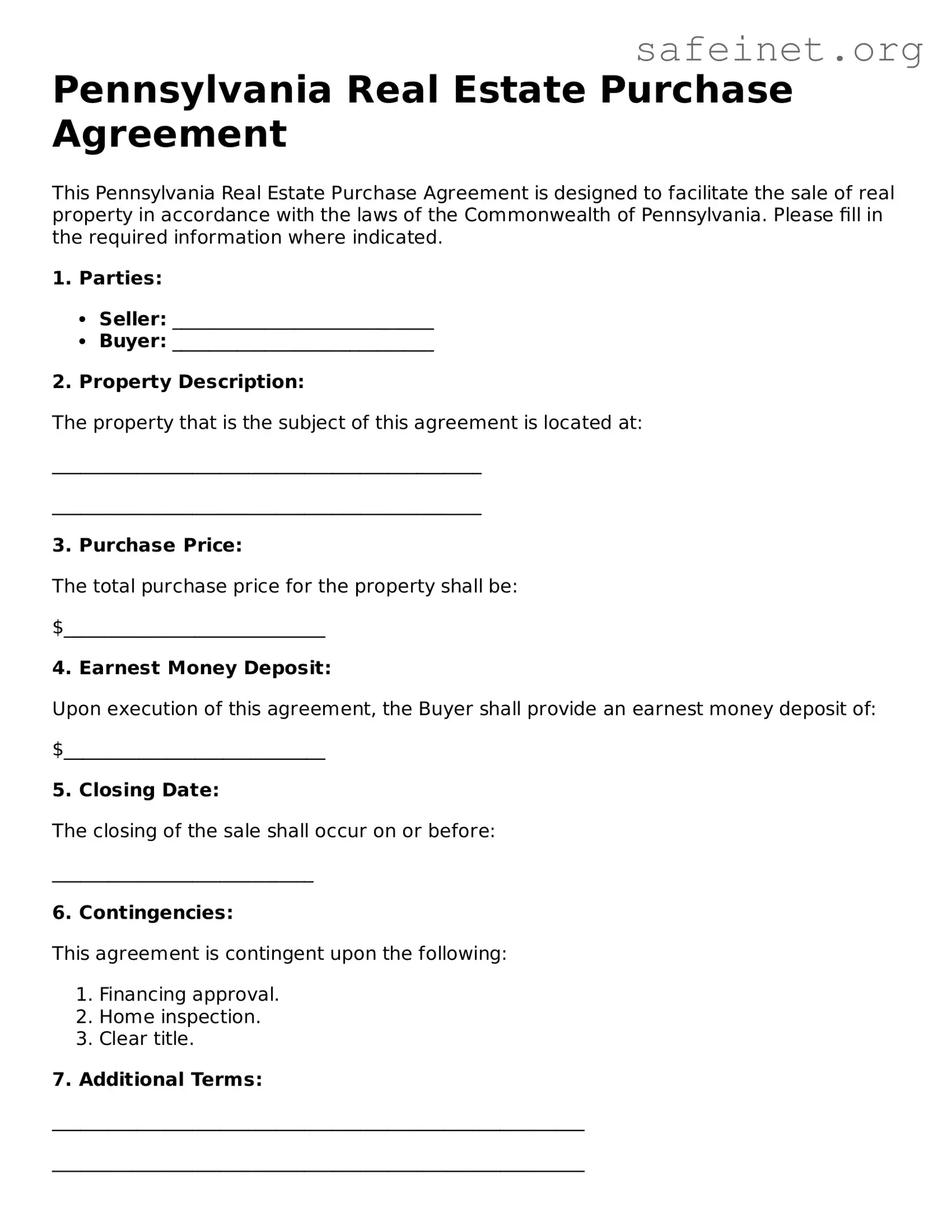
The Pennsylvania Real Estate Purchase Agreement form serves as a crucial document in the home buying process, outlining the terms and conditions under which a property is sold. This form typically includes essential details such as the purchase price, the closing date, and the responsibilities of both the buyer and the seller. Additionally, it specifies any contingencies that must be met for the sale to proceed, such as inspections, financing, and appraisal conditions. The agreement also addresses the earnest money deposit, which demonstrates the buyer's commitment to the transaction. By clearly delineating the rights and obligations of each party, the form helps to prevent misunderstandings and disputes. It is important for both buyers and sellers to understand each section, as it lays the groundwork for a successful real estate transaction in Pennsylvania.
Pennsylvania Real Estate Purchase Agreement
This Pennsylvania Real Estate Purchase Agreement is designed to facilitate the sale of real property in accordance with the laws of the Commonwealth of Pennsylvania. Please fill in the required information where indicated.
1. Parties:
2. Property Description:
The property that is the subject of this agreement is located at:
______________________________________________
______________________________________________
3. Purchase Price:
The total purchase price for the property shall be:
$____________________________
4. Earnest Money Deposit:
Upon execution of this agreement, the Buyer shall provide an earnest money deposit of:
$____________________________
5. Closing Date:
The closing of the sale shall occur on or before:
____________________________
6. Contingencies:
This agreement is contingent upon the following:
7. Additional Terms:
_________________________________________________________
_________________________________________________________
8. Signatures:
By signing below, both parties agree to the terms and conditions outlined in this agreement.
Seller's Signature: ____________________________ Date: ______________
Buyer's Signature: ____________________________ Date: ______________
This agreement is governed by the laws of the Commonwealth of Pennsylvania. Please ensure all information is accurate before signing.
| Fact Name | Details |
|---|---|
| Governing Law | The Pennsylvania Real Estate Purchase Agreement is governed by Pennsylvania state law. |
| Parties Involved | The agreement typically involves a buyer and a seller of real estate. |
| Property Description | The form requires a detailed description of the property being sold, including address and parcel number. |
| Purchase Price | The purchase price must be clearly stated in the agreement. |
| Earnest Money | The agreement usually specifies the amount of earnest money to be deposited by the buyer. |
| Contingencies | Common contingencies include financing, inspections, and appraisal conditions. |
| Closing Date | The agreement will specify a closing date, which is the date when the property transfer occurs. |
| Signatures Required | Both the buyer and seller must sign the agreement for it to be legally binding. |
Once you have the Pennsylvania Real Estate Purchase Agreement form in hand, you will need to complete it accurately to ensure a smooth transaction. This form is essential for outlining the terms of the sale between the buyer and seller. Follow these steps carefully to fill it out correctly.
After completing the form, review it carefully for accuracy. Both the buyer and seller should retain copies for their records. Once all parties have signed, the next steps involve fulfilling any contingencies and preparing for the closing process.
What is a Pennsylvania Real Estate Purchase Agreement?
A Pennsylvania Real Estate Purchase Agreement is a legal document that outlines the terms and conditions under which a buyer agrees to purchase real estate from a seller. This agreement serves as a binding contract that details the rights and obligations of both parties involved in the transaction.
What essential elements are included in this agreement?
The agreement typically includes the names of the buyer and seller, a description of the property, the purchase price, financing terms, and any contingencies. It may also outline the closing date and any additional terms that both parties have agreed upon.
Is the Pennsylvania Real Estate Purchase Agreement standardized?
Yes, while the agreement can be customized to fit the specific needs of the transaction, there are standardized forms provided by the Pennsylvania Association of Realtors. These forms are widely used and ensure that all necessary legal elements are included.
What are contingencies in the agreement?
Contingencies are conditions that must be met for the sale to proceed. Common contingencies include home inspections, financing approval, and appraisal requirements. If these conditions are not satisfied, the buyer may have the right to withdraw from the agreement without penalties.
Can the agreement be modified after it is signed?
Yes, the agreement can be modified, but both parties must agree to any changes. Modifications should be documented in writing and signed by both the buyer and the seller to ensure clarity and enforceability.
What happens if either party breaches the agreement?
If either party fails to uphold their end of the agreement, it is considered a breach. The non-breaching party may seek legal remedies, which could include enforcing the contract or seeking damages. Mediation or arbitration may also be options to resolve disputes.
Is it necessary to have an attorney review the agreement?
While it is not legally required to have an attorney review the agreement, it is highly recommended. An attorney can help ensure that the terms are fair, legal, and in the best interest of the parties involved, reducing the risk of future disputes.
How is the purchase price determined?
The purchase price is typically negotiated between the buyer and seller. Factors influencing the price include the property’s market value, condition, and location. Comparable sales in the area may also play a significant role in determining an appropriate price.
What should I do if I have questions about the agreement?
If you have questions about the Pennsylvania Real Estate Purchase Agreement, consider reaching out to a real estate agent or attorney. They can provide guidance specific to your situation and help clarify any terms or conditions that may be confusing.
Are there any fees associated with the purchase agreement?
Yes, there may be fees associated with the purchase agreement, including closing costs, inspection fees, and appraisal fees. Both parties should discuss these costs upfront to avoid surprises later in the transaction process.
Incomplete Information: One of the most common mistakes is failing to fill out all required fields. This can lead to delays or even the invalidation of the agreement.
Incorrect Property Description: Accurately describing the property is crucial. Errors in the address or legal description can cause confusion and potential legal issues later on.
Missing Signatures: All parties involved must sign the agreement. Omitting a signature can render the contract unenforceable.
Failure to Specify Contingencies: Buyers often forget to include contingencies, such as financing or inspection clauses. These are essential for protecting the buyer's interests.
Ignoring Deadlines: The agreement includes various deadlines for actions like inspections and closing. Missing these dates can jeopardize the transaction.
Not Understanding Terms: Some individuals may sign the agreement without fully understanding its terms. This can lead to unexpected obligations or rights.
Inaccurate Pricing: Listing the wrong purchase price or failing to include earnest money can complicate negotiations and lead to mistrust.
Overlooking Addendums: Buyers and sellers sometimes forget to attach necessary addendums, such as disclosures or additional agreements, which can be critical to the transaction.
Not Consulting Professionals: Many people attempt to complete the agreement without legal or real estate advice. This can result in costly mistakes or missed opportunities.
When engaging in a real estate transaction in Pennsylvania, several important documents accompany the Pennsylvania Real Estate Purchase Agreement. Each of these forms serves a specific purpose, ensuring that both buyers and sellers are protected and informed throughout the process. Below is a list of common documents that you may encounter.
Understanding these documents can empower both buyers and sellers, making the real estate transaction smoother and more transparent. Each form plays a vital role in ensuring that all parties are aware of their rights and responsibilities, ultimately fostering a successful property transfer.
The Pennsylvania Real Estate Purchase Agreement is similar to the Residential Purchase Agreement commonly used in many states. Both documents serve as a contract between a buyer and seller for the purchase of residential property. They outline essential terms such as the purchase price, contingencies, and closing date. In both agreements, the buyer typically has the right to conduct inspections and secure financing, ensuring that their interests are protected throughout the transaction process.
Another document akin to the Pennsylvania Real Estate Purchase Agreement is the Commercial Purchase Agreement. While focused on commercial properties, this document shares many structural similarities with its residential counterpart. Both agreements delineate the terms of sale, including price and property description. However, the Commercial Purchase Agreement may include additional clauses related to zoning laws, tenant rights, and potential income from the property, reflecting the complexities of commercial transactions.
The Option to Purchase Agreement is also comparable to the Pennsylvania Real Estate Purchase Agreement. This document grants a buyer the right, but not the obligation, to purchase a property within a specified timeframe. Like the Purchase Agreement, it outlines the purchase price and terms, but it introduces an option fee that the buyer pays for this privilege. This flexibility can be advantageous for buyers who need time to secure financing or conduct due diligence before making a final commitment.
A Lease Purchase Agreement shares similarities with the Pennsylvania Real Estate Purchase Agreement as well. This document combines elements of a lease and a purchase agreement, allowing tenants to rent a property with the option to buy it later. It includes terms regarding rent payments, purchase price, and timelines, much like a traditional Purchase Agreement. This arrangement can benefit buyers who wish to test a property before committing to a purchase.
The Seller Financing Agreement is another document that aligns with the Pennsylvania Real Estate Purchase Agreement. In this scenario, the seller acts as the lender, allowing the buyer to make payments directly to them instead of a bank. While it serves a different financial purpose, it still includes key elements found in a Purchase Agreement, such as the purchase price, payment terms, and any contingencies. This type of financing can be particularly useful for buyers who may face challenges obtaining traditional loans.
Lastly, the Counteroffer form is relevant when discussing the Pennsylvania Real Estate Purchase Agreement. When a seller receives an offer that does not meet their expectations, they can issue a counteroffer, proposing new terms for the buyer's consideration. This document, while not a purchase agreement itself, operates within the same negotiation framework. It allows both parties to engage in discussions about price and conditions, ultimately leading to a mutually acceptable agreement.
When filling out the Pennsylvania Real Estate Purchase Agreement form, attention to detail is crucial. Here are six important dos and don'ts to keep in mind:
Following these guidelines will help ensure a smoother transaction. Make every effort to double-check your work for accuracy and completeness.
When dealing with the Pennsylvania Real Estate Purchase Agreement form, several misconceptions can arise. Understanding these can help buyers and sellers navigate the process more smoothly.
By clarifying these misconceptions, buyers and sellers can approach the Pennsylvania Real Estate Purchase Agreement with a better understanding of its implications and requirements.
When dealing with the Pennsylvania Real Estate Purchase Agreement form, there are several important points to keep in mind. Understanding these can help ensure a smooth transaction process. Here are key takeaways:
By paying attention to these elements, both buyers and sellers can navigate the real estate transaction process more effectively.