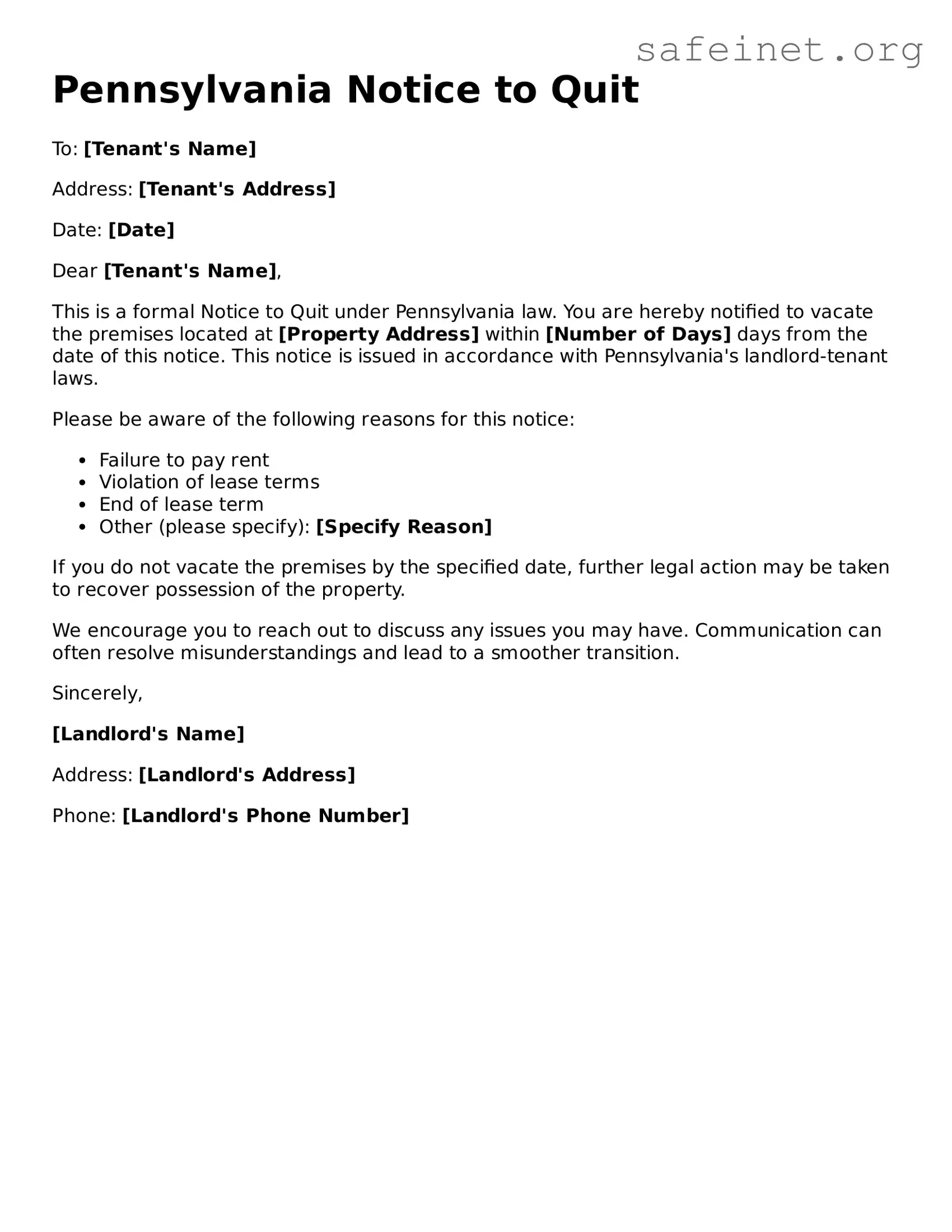
The Pennsylvania Notice to Quit form plays a crucial role in the landlord-tenant relationship, serving as a formal communication tool that initiates the process of eviction. This document is typically issued by landlords when a tenant has violated the terms of their lease or has failed to pay rent. The form outlines the specific reasons for the eviction, providing tenants with clear information about their situation. It also includes important details such as the time frame within which the tenant must vacate the premises, which is generally ten days from receipt of the notice. Understanding the contents and implications of this form is essential for both landlords and tenants, as it sets the stage for potential legal proceedings. Additionally, the Notice to Quit must comply with Pennsylvania law to ensure that it is enforceable in court. By adhering to the proper procedures, landlords can protect their rights while tenants are afforded the opportunity to rectify their situation or prepare for relocation.
Pennsylvania Notice to Quit
To: [Tenant's Name]
Address: [Tenant's Address]
Date: [Date]
Dear [Tenant's Name],
This is a formal Notice to Quit under Pennsylvania law. You are hereby notified to vacate the premises located at [Property Address] within [Number of Days] days from the date of this notice. This notice is issued in accordance with Pennsylvania's landlord-tenant laws.
Please be aware of the following reasons for this notice:
If you do not vacate the premises by the specified date, further legal action may be taken to recover possession of the property.
We encourage you to reach out to discuss any issues you may have. Communication can often resolve misunderstandings and lead to a smoother transition.
Sincerely,
[Landlord's Name]
Address: [Landlord's Address]
Phone: [Landlord's Phone Number]
| Fact Name | Description |
|---|---|
| Purpose | The Pennsylvania Notice to Quit form is used by landlords to inform tenants of their intent to terminate a lease or rental agreement. |
| Governing Law | This form is governed by the Pennsylvania Landlord-Tenant Act, specifically 68 P.S. § 250.501. |
| Notice Period | Landlords must provide a notice period of at least 10 days for non-payment of rent and 15 days for lease violations. |
| Delivery Methods | The notice can be delivered in person, by certified mail, or posted on the tenant's door. |
| Tenant Response | Tenants may respond to the notice, but failure to do so can lead to eviction proceedings. |
| Form Requirements | The notice must include the reason for termination and the date by which the tenant must vacate. |
| Legal Consequences | Failure to comply with the notice may result in legal action for eviction. |
After you have gathered all necessary information, you are ready to fill out the Pennsylvania Notice to Quit form. This document is crucial for initiating the process of terminating a lease agreement. Follow these steps carefully to ensure accuracy.
Once you have completed the form, it is important to deliver it to the tenant according to Pennsylvania law. Make sure to keep a record of how and when the notice was delivered, as this may be needed for any future proceedings.
What is a Pennsylvania Notice to Quit form?
The Pennsylvania Notice to Quit form is a legal document used by landlords to formally notify tenants that they must vacate the rental property. This notice typically serves as a precursor to eviction proceedings and outlines the reasons for the request to leave, such as non-payment of rent or lease violations.
Who can issue a Notice to Quit in Pennsylvania?
In Pennsylvania, a landlord or property owner has the right to issue a Notice to Quit. This document is often used when a tenant has violated the terms of the lease agreement or has failed to pay rent. It’s important for landlords to follow the correct procedures to ensure the notice is valid and enforceable.
How much notice must be given to tenants?
The amount of notice required can vary based on the reason for the eviction. Generally, landlords must provide tenants with a minimum of 10 days' notice for non-payment of rent. For other lease violations, a 15-day notice may be required. Always check local regulations, as they can differ.
What should be included in a Notice to Quit?
A Notice to Quit should clearly state the reason for the eviction, the date by which the tenant must vacate, and any relevant lease terms. Including the tenant's name, the property address, and the landlord's contact information can also help clarify the situation and avoid confusion.
Can a tenant dispute a Notice to Quit?
Yes, tenants have the right to dispute a Notice to Quit. If a tenant believes the notice is unjust or that they have rectified the issue (like paying overdue rent), they can communicate with the landlord or seek legal advice. It's often beneficial for tenants to document any communications regarding the notice.
What happens if a tenant does not leave by the deadline?
If a tenant does not vacate the property by the specified deadline in the Notice to Quit, the landlord may proceed with eviction proceedings. This typically involves filing a complaint in the local court and attending a hearing. Tenants may be able to present their case during this process.
Is a Notice to Quit the same as an eviction notice?
No, a Notice to Quit is not the same as an eviction notice. The Notice to Quit is the initial step that informs tenants they must leave the property. If the tenant does not comply, the landlord can then file for eviction, which is a legal process that may result in the tenant being removed from the property.
Where can I find a Pennsylvania Notice to Quit form?
A Pennsylvania Notice to Quit form can often be found online through legal aid websites, local court websites, or property management resources. It's important to use a form that complies with Pennsylvania laws and regulations to ensure it is valid and enforceable.
Incomplete Information: One of the most common mistakes is not filling out all required fields. Ensure that you provide complete names, addresses, and dates. Missing even one piece of information can delay the process.
Incorrect Dates: Double-check the dates you enter. Using the wrong date can lead to confusion and may invalidate your notice. Always ensure the date you provide aligns with the required notice period.
Failure to Specify Grounds: Clearly state the reason for the notice. Whether it’s non-payment of rent or lease violations, being specific helps clarify the situation and supports your case.
Not Keeping Copies: After submitting the form, it’s vital to keep copies for your records. This helps you track your actions and provides proof if disputes arise later.
Ignoring Local Laws: Each county may have different regulations regarding notices. Familiarize yourself with local laws to ensure compliance and avoid potential pitfalls.
Improper Delivery: Simply mailing the notice may not be sufficient. Some jurisdictions require personal delivery or specific methods of service. Make sure you follow the correct procedure.
Neglecting to Sign: A signature is crucial! Forgetting to sign the form can render it invalid. Always review your document before submission to ensure everything is in order.
The Pennsylvania Notice to Quit form is an essential document in the eviction process, signaling the landlord's intent to terminate a lease. However, several other forms and documents are often used in conjunction with it to ensure that the eviction process is handled correctly and legally. Below is a list of these related documents.
Using these documents appropriately can help ensure a smoother eviction process while adhering to Pennsylvania's legal requirements. Each form plays a specific role in protecting the rights of both landlords and tenants.
The Pennsylvania Notice to Quit form is similar to the Eviction Notice used in many states. Both documents serve as a formal communication from a landlord to a tenant, indicating that the tenant must vacate the premises. They typically outline the reasons for the eviction, such as non-payment of rent or lease violations. The Eviction Notice often includes a specific timeframe within which the tenant must leave, similar to the Notice to Quit's requirements. This clarity helps ensure that tenants understand their obligations and the potential consequences of failing to comply.
An Unlawful Detainer Notice is another document comparable to the Pennsylvania Notice to Quit. This notice is filed when a landlord seeks to regain possession of the property through legal means. Like the Notice to Quit, it informs the tenant of the landlord's intent to evict and provides a deadline for vacating. The primary difference lies in the stage of the eviction process; the Unlawful Detainer Notice typically follows the Notice to Quit and is part of the legal proceedings to remove a tenant from a rental property.
A Rent Demand Notice is another relevant document. It is often issued when a tenant has failed to pay rent on time. This notice demands payment and can serve as a precursor to the Notice to Quit. Both documents aim to communicate the landlord's expectations and the consequences of non-compliance, although the Rent Demand Notice specifically addresses the issue of unpaid rent rather than overall tenancy termination.
The Notice of Default is a document commonly used in mortgage situations but shares similarities with the Notice to Quit. It notifies the borrower that they are in default on their mortgage payments, giving them a chance to rectify the situation. Both notices serve as warnings and outline the potential consequences of failing to take corrective action. They aim to prompt a response from the recipient, whether it be a tenant or a homeowner.
The 30-Day Notice to Vacate is another document that bears a resemblance to the Pennsylvania Notice to Quit. This notice is typically used in month-to-month rental agreements, providing tenants with a formal request to vacate the property within 30 days. Both documents establish a clear timeline for moving out and are designed to protect the rights of both landlords and tenants. The main difference lies in the specific timeframes and the context of the tenancy.
Finally, the Notice of Lease Violation is similar in that it addresses issues related to a tenant's behavior or actions that violate the lease terms. This document informs the tenant of the specific violation and provides an opportunity to correct the issue before further action is taken. While the Notice to Quit focuses on ending the tenancy, the Notice of Lease Violation aims to resolve disputes and maintain the rental agreement, albeit with the potential for eviction if the violation is not addressed.
When filling out the Pennsylvania Notice to Quit form, it is essential to approach the task with care. Here are some key dos and don'ts to keep in mind:
When it comes to the Pennsylvania Notice to Quit form, there are several misconceptions that can lead to confusion. Understanding these myths is essential for both landlords and tenants. Here’s a breakdown of nine common misconceptions:
By dispelling these misconceptions, both landlords and tenants can navigate the rental process more effectively. Understanding the purpose and implications of a Notice to Quit is vital for maintaining a healthy landlord-tenant relationship.
When dealing with the Pennsylvania Notice to Quit form, it’s essential to understand its purpose and how to use it effectively. Here are some key takeaways to keep in mind:
Understanding these points can help ensure a smoother process when navigating tenant issues in Pennsylvania.