When it comes to managing motor vehicle transactions in Pennsylvania, having the right legal tools at your disposal can make all the difference. The Pennsylvania Motor Vehicle Power of Attorney form is a crucial document that allows one person to authorize another to act on their behalf regarding vehicle-related matters. This form is particularly useful for those who may be unable to handle their vehicle transactions due to time constraints, health issues, or geographical distance. With this power of attorney, you can delegate responsibilities such as signing title transfers, registering vehicles, or obtaining necessary documents from the Department of Transportation. It’s important to ensure that the form is filled out correctly and that both parties understand the scope of the authority being granted. By using this form, you can simplify the process of managing your vehicle affairs while ensuring that your interests are protected.
Pennsylvania Motor Vehicle Power of Attorney
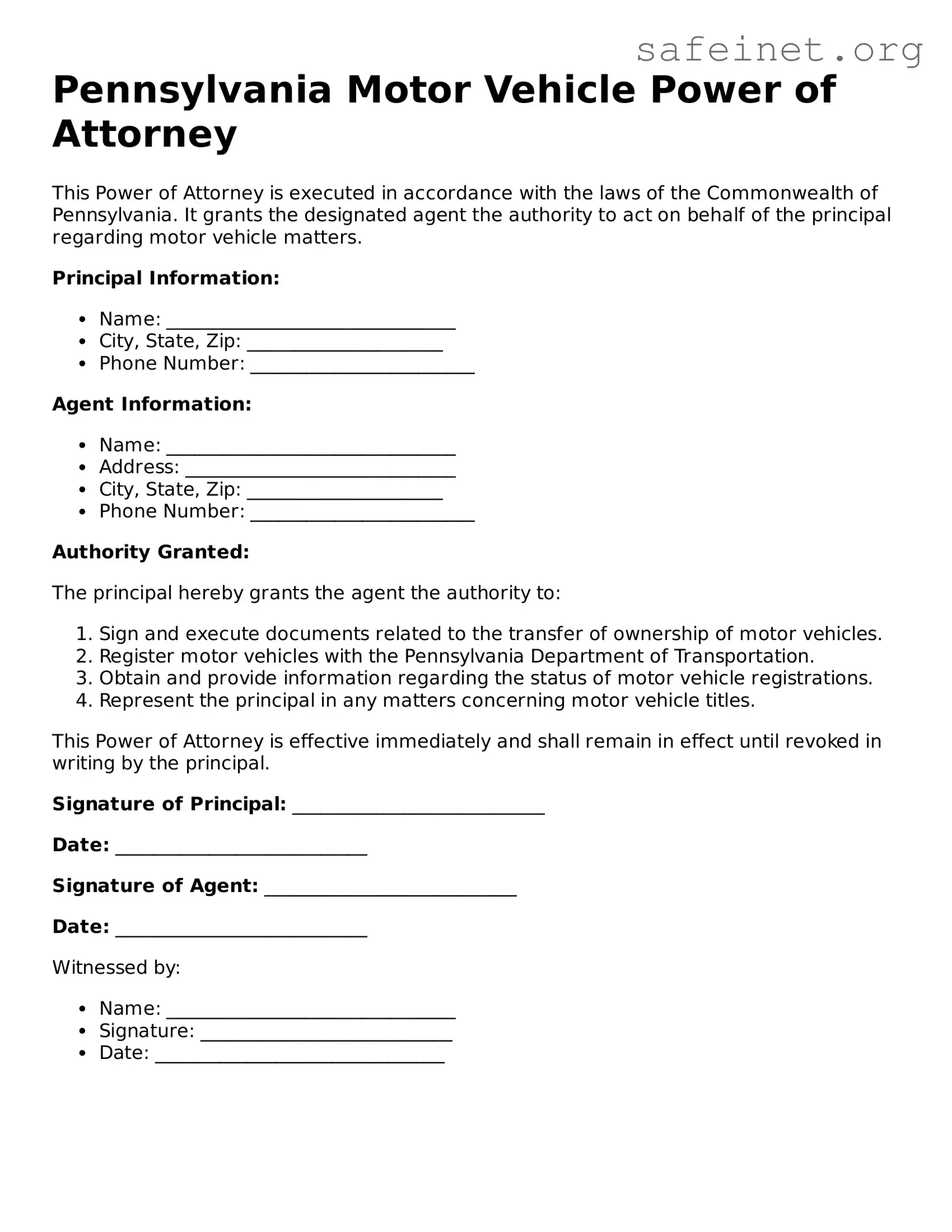
This Power of Attorney is executed in accordance with the laws of the Commonwealth of Pennsylvania. It grants the designated agent the authority to act on behalf of the principal regarding motor vehicle matters.
Principal Information:
Agent Information:
Authority Granted:
The principal hereby grants the agent the authority to:
This Power of Attorney is effective immediately and shall remain in effect until revoked in writing by the principal.
Signature of Principal: ___________________________
Date: ___________________________
Signature of Agent: ___________________________
Date: ___________________________
Witnessed by:
| Fact Name | Details |
|---|---|
| Purpose | The Pennsylvania Motor Vehicle Power of Attorney form allows an individual to authorize another person to handle motor vehicle transactions on their behalf. |
| Governing Law | This form is governed by the Pennsylvania Consolidated Statutes, Title 20, Chapter 56. |
| Eligibility | Any adult resident of Pennsylvania can create this power of attorney to delegate authority regarding motor vehicle matters. |
| Revocation | The power of attorney can be revoked at any time by the principal, provided proper notice is given to the agent. |
| Signature Requirement | The form must be signed by the principal in the presence of a notary public to be valid. |
| Duration | This power of attorney remains effective until revoked or until the principal's death. |
| Common Uses | It is commonly used for tasks like transferring vehicle titles, registering vehicles, or applying for license plates. |
Filling out the Pennsylvania Motor Vehicle Power of Attorney form is a straightforward process. Once completed, this form will allow you to designate someone to act on your behalf regarding motor vehicle matters. Follow these steps carefully to ensure the form is filled out correctly.
After completing these steps, you will be ready to submit the form as needed. Ensure that both you and your appointed representative understand the responsibilities involved.
What is a Pennsylvania Motor Vehicle Power of Attorney form?
The Pennsylvania Motor Vehicle Power of Attorney form is a legal document that allows an individual (the principal) to designate another person (the agent) to act on their behalf regarding motor vehicle transactions. This can include signing documents, transferring titles, and handling registration matters with the Pennsylvania Department of Transportation (PennDOT).
Who can be designated as an agent in this form?
Any competent adult can be designated as an agent in the Pennsylvania Motor Vehicle Power of Attorney form. This includes family members, friends, or professionals like attorneys or auto dealers. The key requirement is that the agent must be trustworthy and capable of handling the responsibilities assigned to them.
What types of transactions can the agent handle?
The agent can handle various motor vehicle-related transactions, such as transferring ownership of a vehicle, applying for a duplicate title, registering a vehicle, or obtaining a vehicle's history report. The form can be tailored to specify which powers the agent has, allowing for flexibility based on the principal's needs.
Do I need to have the form notarized?
Yes, the Pennsylvania Motor Vehicle Power of Attorney form must be notarized to be valid. This means that the principal must sign the document in the presence of a notary public, who will then affix their seal to confirm the authenticity of the signature. This step helps prevent fraud and ensures that the document is legally binding.
Is there a specific format for the form?
While there is no officially mandated format for the Pennsylvania Motor Vehicle Power of Attorney, it is important to use a clear and comprehensive template that includes all necessary details. This includes the names and addresses of both the principal and the agent, a description of the powers granted, and the notarization section. Many resources are available online to help you find a suitable template.
How long is the Power of Attorney valid?
The validity of a Pennsylvania Motor Vehicle Power of Attorney generally lasts until the principal revokes it or until the principal passes away. If the principal wants to terminate the authority granted to the agent, they must do so in writing and notify the agent and any relevant parties, such as PennDOT.
Can I revoke a Power of Attorney once it is in effect?
Yes, you can revoke a Power of Attorney at any time as long as you are mentally competent. To do this, you must create a written notice of revocation and provide it to the agent and any relevant institutions, like PennDOT. It’s a good idea to keep a copy for your records as well.
Where can I find this form?
The Pennsylvania Motor Vehicle Power of Attorney form can typically be found on the official website of the Pennsylvania Department of Transportation (PennDOT) or through various legal resource websites. Additionally, local legal offices or libraries may have copies available. Always ensure you are using the most current version of the form.
Not specifying the powers granted: Many individuals forget to clearly outline the specific powers they are granting to their agent. This can lead to confusion and potential disputes later on.
Failing to sign and date: A common oversight is neglecting to sign and date the form. Without a signature and date, the document may be considered invalid.
Not including the agent's information: Some people leave out critical details about the agent, such as their full name and address. This information is essential for identification purposes.
Using outdated forms: It's important to ensure that you are using the most current version of the Power of Attorney form. Using an outdated form can lead to legal complications.
Ignoring witness and notarization requirements: Depending on the situation, some forms may need to be witnessed or notarized. Failing to meet these requirements can invalidate the document.
Not reviewing the completed form: After filling out the form, it's crucial to review it for any errors or omissions. A simple mistake can render the document ineffective.
The Pennsylvania Motor Vehicle Power of Attorney form allows an individual to authorize someone else to handle specific vehicle-related tasks on their behalf. This document is often accompanied by other forms and documents that facilitate various aspects of vehicle ownership and transactions. Below are some commonly used forms that complement the Power of Attorney.
Understanding these documents can streamline the process of managing vehicle ownership in Pennsylvania. Each form plays a vital role in ensuring that transactions are conducted smoothly and legally.
The Pennsylvania Motor Vehicle Power of Attorney form is similar to a General Power of Attorney. Both documents grant authority to an individual to act on behalf of another person. In the case of a General Power of Attorney, the scope of authority can be broad, covering various aspects of financial and legal matters. This flexibility allows the appointed agent to manage multiple responsibilities, whereas the Motor Vehicle Power of Attorney is specifically tailored for vehicle-related transactions.
Another similar document is the Durable Power of Attorney. Like the Motor Vehicle Power of Attorney, a Durable Power of Attorney allows someone to make decisions on behalf of another individual. The key difference lies in the durability aspect; this document remains effective even if the principal becomes incapacitated. This feature is particularly important for long-term planning, ensuring that vehicle-related decisions can still be made when necessary.
The Limited Power of Attorney shares similarities with the Motor Vehicle Power of Attorney in that it restricts the authority granted to specific tasks. This document allows the agent to perform designated actions, such as selling a car or transferring a title, without giving them broader powers. This specificity makes it a useful option for individuals who want to limit the scope of authority while still addressing particular needs.
The Vehicle Title Transfer form is another document closely related to the Motor Vehicle Power of Attorney. While the Power of Attorney allows someone to act on behalf of another in vehicle matters, the Vehicle Title Transfer form is used to officially change ownership of a vehicle. The Power of Attorney can facilitate the signing of this form, enabling the agent to complete the transfer process smoothly.
In addition, the Bill of Sale is relevant when discussing vehicle transactions. A Bill of Sale serves as a legal document that records the sale of a vehicle between a buyer and a seller. The Motor Vehicle Power of Attorney can empower an agent to sign this document on behalf of the seller, ensuring that the sale is executed properly and legally.
The Affidavit of Heirship can also be considered similar, particularly in situations involving inherited vehicles. This document is used to establish the rightful ownership of a vehicle after the original owner has passed away. If the heir is unable to handle the transfer themselves, a Power of Attorney can authorize someone else to manage the process, thereby simplifying the transfer of ownership.
Lastly, the Release of Liability form is pertinent in the context of vehicle transactions. This document protects the seller from future claims related to the vehicle after it has been sold. The Motor Vehicle Power of Attorney can allow an agent to sign this form on behalf of the seller, ensuring that all necessary steps are taken to finalize the transaction and mitigate potential liabilities.
When filling out the Pennsylvania Motor Vehicle Power of Attorney form, it's essential to approach the task with care and attention to detail. Here are some guidelines to follow:
Following these guidelines will help ensure that the Power of Attorney form is filled out correctly, making the process smoother for everyone involved.
Understanding the Pennsylvania Motor Vehicle Power of Attorney form is crucial for anyone looking to delegate authority related to vehicle transactions. However, several misconceptions may lead to confusion. Here are five common misconceptions:
Being aware of these misconceptions can help individuals navigate the process more effectively and ensure they are making informed decisions regarding their vehicle transactions in Pennsylvania.
When filling out and using the Pennsylvania Motor Vehicle Power of Attorney form, consider the following key takeaways: