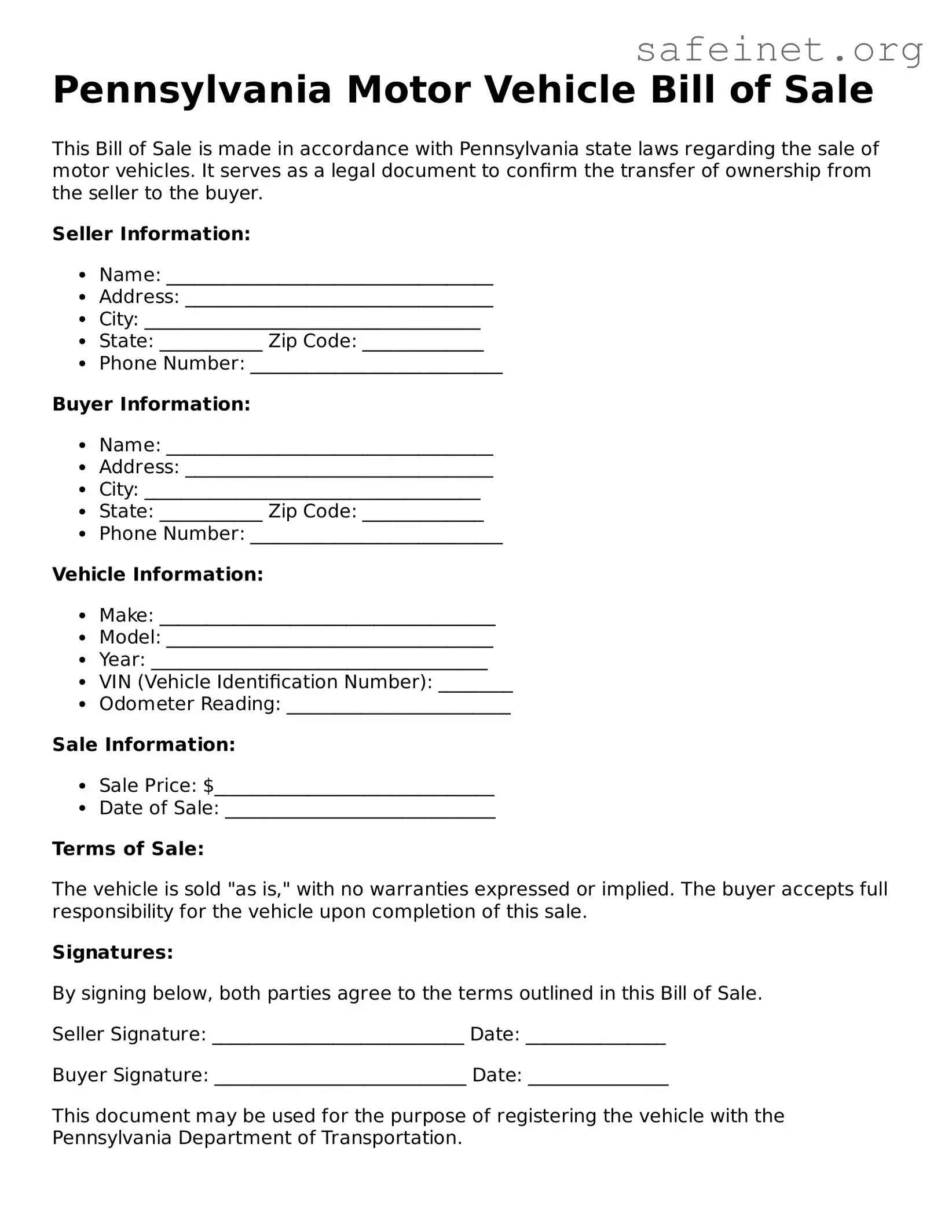
The Pennsylvania Motor Vehicle Bill of Sale form serves as an essential document in the process of transferring ownership of a vehicle. This form captures key details about the transaction, including the names and addresses of both the buyer and the seller, along with the vehicle's identification number (VIN), make, model, and year. It also specifies the sale price, which is important for tax purposes. By providing a written record of the sale, this document helps protect the interests of both parties involved. Additionally, it may include information about any warranties or representations made by the seller regarding the vehicle's condition. Completing this form accurately is crucial, as it not only facilitates the transfer of title but also serves as proof of the transaction for both the buyer and the seller. Understanding the components of this form is vital for anyone engaged in the buying or selling of a vehicle in Pennsylvania.
Pennsylvania Motor Vehicle Bill of Sale
This Bill of Sale is made in accordance with Pennsylvania state laws regarding the sale of motor vehicles. It serves as a legal document to confirm the transfer of ownership from the seller to the buyer.
Seller Information:
Buyer Information:
Vehicle Information:
Sale Information:
Terms of Sale:
The vehicle is sold "as is," with no warranties expressed or implied. The buyer accepts full responsibility for the vehicle upon completion of this sale.
Signatures:
By signing below, both parties agree to the terms outlined in this Bill of Sale.
Seller Signature: ___________________________ Date: _______________
Buyer Signature: ___________________________ Date: _______________
This document may be used for the purpose of registering the vehicle with the Pennsylvania Department of Transportation.
| Fact Name | Description |
|---|---|
| Purpose | The Pennsylvania Motor Vehicle Bill of Sale form is used to document the sale of a vehicle between a buyer and a seller. |
| Governing Law | This form is governed by Pennsylvania state law, specifically under Title 75 of the Pennsylvania Consolidated Statutes. |
| Required Information | Essential details include the vehicle's make, model, year, VIN, and the sale price. |
| Signatures | Both the seller and buyer must sign the form to validate the transaction. |
| Notarization | While notarization is not mandatory, it can provide additional protection for both parties. |
| Record Keeping | Both the buyer and seller should keep a copy of the Bill of Sale for their records. |
| Transfer of Ownership | The Bill of Sale serves as proof of ownership transfer and may be required for vehicle registration. |
| Sales Tax | The buyer is responsible for paying sales tax based on the purchase price when registering the vehicle. |
| Additional Conditions | Parties can include specific conditions or warranties regarding the vehicle in the Bill of Sale. |
After gathering the necessary information, you can begin filling out the Pennsylvania Motor Vehicle Bill of Sale form. This document is important for transferring ownership of a vehicle. Make sure to have all relevant details on hand to ensure accuracy.
Once completed, keep a copy for your records. The buyer should also retain a copy for their own documentation. This will help ensure a smooth transfer of ownership.
What is a Pennsylvania Motor Vehicle Bill of Sale?
The Pennsylvania Motor Vehicle Bill of Sale is a legal document that serves as proof of the sale and transfer of ownership of a motor vehicle between a seller and a buyer. This form includes essential details such as the vehicle's make, model, year, Vehicle Identification Number (VIN), and the sale price. It protects both parties by providing a record of the transaction, which can be useful for future reference, especially if any disputes arise regarding the sale. It is important to note that while the Bill of Sale is not required for every vehicle transaction in Pennsylvania, it is highly recommended for clarity and legal protection.
Do I need to have the Bill of Sale notarized?
In Pennsylvania, notarization of the Bill of Sale is not a legal requirement. However, having the document notarized can add an extra layer of security and authenticity to the transaction. A notarized Bill of Sale may be beneficial if the buyer or seller wishes to have a verified record of the agreement, especially in cases where the vehicle's title is not immediately available. It is always a good practice to keep a signed copy of the Bill of Sale for both parties, regardless of whether it is notarized.
What information should be included in the Bill of Sale?
A comprehensive Bill of Sale should contain specific information to ensure it is valid and useful. Essential details include the names and addresses of both the seller and the buyer, the vehicle's description (make, model, year, VIN), the sale price, and the date of the transaction. Additionally, both parties should sign the document to indicate their agreement. Including any warranties or conditions of the sale can also help clarify expectations and responsibilities, thus reducing the likelihood of misunderstandings.
How do I use the Bill of Sale when registering the vehicle?
Once the sale is complete and the Bill of Sale has been signed by both parties, the buyer must present this document when registering the vehicle with the Pennsylvania Department of Transportation (PennDOT). The Bill of Sale serves as proof of ownership and is often required along with the vehicle title. The buyer should also ensure that they have any other necessary documents, such as proof of identification and payment for registration fees. Completing this process promptly after the sale is crucial to avoid any legal complications or delays in obtaining the vehicle's registration and title.
Failing to include all required information. The form asks for specific details about the vehicle, such as the VIN, make, model, and year. Omitting any of this information can lead to complications.
Not providing accurate vehicle identification. Misstating the VIN or other identifying details can result in legal issues or disputes over ownership.
Overlooking the date of sale. This date is crucial for record-keeping and legal purposes. Ensure that it is clearly marked on the form.
Neglecting to sign the document. Both the seller and buyer must sign the Bill of Sale for it to be legally binding. A missing signature can invalidate the transaction.
Using incorrect pricing information. Listing an inaccurate sale price can lead to tax issues or complications with the Department of Motor Vehicles.
Failing to provide the buyer's information. The buyer's name and address must be included to ensure proper ownership transfer.
Not keeping a copy of the completed form. It is essential for both parties to retain a copy for their records. This serves as proof of the transaction.
When buying or selling a vehicle in Pennsylvania, the Motor Vehicle Bill of Sale form is an essential document. However, it’s often accompanied by several other forms and documents that help ensure a smooth transaction. Below is a list of commonly used documents that you may encounter during this process.
Having these documents ready can streamline the buying or selling process, making it easier for both parties involved. Always double-check that you have everything you need to avoid any hiccups during the transaction. Being well-prepared ensures a smoother experience and helps you focus on enjoying your new vehicle.
The Pennsylvania Motor Vehicle Bill of Sale form shares similarities with the Vehicle Title Transfer form. Both documents serve as proof of ownership transfer for a vehicle. When a vehicle is sold, the title must be signed over to the new owner, indicating that the seller relinquishes all rights to the vehicle. The Bill of Sale complements this process by providing a detailed account of the transaction, including the sale price, date, and identification of both parties. Together, these documents ensure a clear and legal transfer of ownership.
Another document closely related to the Motor Vehicle Bill of Sale is the Odometer Disclosure Statement. This statement is often required during the sale of a vehicle to disclose the accurate mileage at the time of transfer. Like the Bill of Sale, it helps protect both the buyer and seller by preventing fraud. It ensures that the buyer is fully informed about the vehicle's condition, which can significantly affect its value.
The Purchase Agreement is another document that aligns with the Motor Vehicle Bill of Sale. This agreement outlines the terms of the sale, including payment details, warranties, and any conditions that must be met before the transaction is finalized. While the Bill of Sale serves as a receipt and proof of ownership, the Purchase Agreement provides a more comprehensive overview of the sale, detailing the obligations of both parties.
Similarly, the Vehicle Registration Application is related to the Bill of Sale as it is necessary for the new owner to register the vehicle in their name after purchase. This document typically requires information from both the Bill of Sale and the Vehicle Title. The registration process ensures that the vehicle is legally recognized by the state and that the new owner is accountable for any taxes or fees associated with ownership.
The Affidavit of Vehicle Ownership can also be compared to the Motor Vehicle Bill of Sale. This document is used when the original title is lost or unavailable. It allows the seller to declare their ownership of the vehicle and facilitate the transfer without the title. Both documents function to verify ownership, but the Affidavit serves as a substitute when the title cannot be produced.
The Release of Liability form is another important document that works in conjunction with the Bill of Sale. This form is used to notify the state’s Department of Motor Vehicles that the seller is no longer responsible for the vehicle after the sale. It protects the seller from any future liabilities related to the vehicle, such as traffic violations or accidents, which may occur after the transfer of ownership.
The Vehicle History Report, while not a legal document like the Bill of Sale, is often utilized during the buying process. This report provides a comprehensive history of the vehicle, including previous accidents, title issues, and odometer readings. Buyers often request this report to ensure they are making an informed decision, similar to how the Bill of Sale provides essential transaction details.
Lastly, the Insurance Policy Declaration page is relevant to the Motor Vehicle Bill of Sale in that it outlines the coverage details for the vehicle. After purchasing a vehicle, the new owner must obtain insurance, and this document serves as proof of coverage. While the Bill of Sale confirms the sale and transfer of ownership, the Insurance Declaration ensures that the vehicle is adequately protected under the new owner's policy.
When filling out the Pennsylvania Motor Vehicle Bill of Sale form, it's important to follow certain guidelines to ensure the process goes smoothly. Here are some dos and don'ts to keep in mind:
Following these guidelines will help ensure that your Bill of Sale is valid and accepted by the necessary authorities.
When dealing with the Pennsylvania Motor Vehicle Bill of Sale form, it's easy to encounter misconceptions. Here are nine common misunderstandings that people often have:
Many believe that a Bill of Sale is only required for dealership transactions. However, it's crucial for private sales as well. This document serves as proof of ownership transfer and protects both the buyer and seller.
While notarization can add an extra layer of security, it is not a requirement for the Pennsylvania Bill of Sale. As long as both parties sign the document, it is valid.
This form is not limited to cars. It is applicable to any motor vehicle, including trucks, motorcycles, and even trailers. If it has wheels and is registered, a Bill of Sale is beneficial.
While it is possible to handwrite a Bill of Sale, using a standardized form is recommended. This ensures that all necessary information is included and reduces the risk of errors.
Although it is best to ensure all details are correct before signing, if a mistake is made, both parties can agree to amend the document. This should be done in writing and signed by both parties.
The Bill of Sale protects both parties. It provides the seller with proof that the vehicle was sold, which can be important for liability issues and tax purposes.
Unlike some other states, Pennsylvania does not require the Bill of Sale to be filed with the state. However, it should be kept as a record by both parties for their own documentation.
While both documents are important, they serve different purposes. The Bill of Sale transfers ownership, while the title is the official document that proves ownership with the state.
Even new vehicles can benefit from a Bill of Sale, especially in private transactions. It helps clarify the terms of the sale and can be useful for tax purposes.
Understanding these misconceptions can help ensure a smoother transaction when buying or selling a vehicle in Pennsylvania. Always take the time to prepare and review the Bill of Sale carefully.
When it comes to buying or selling a vehicle in Pennsylvania, the Motor Vehicle Bill of Sale form is a crucial document. Here are some key takeaways to keep in mind when filling it out and using it:
Understanding these key points will help ensure a smooth transaction when buying or selling a vehicle in Pennsylvania.