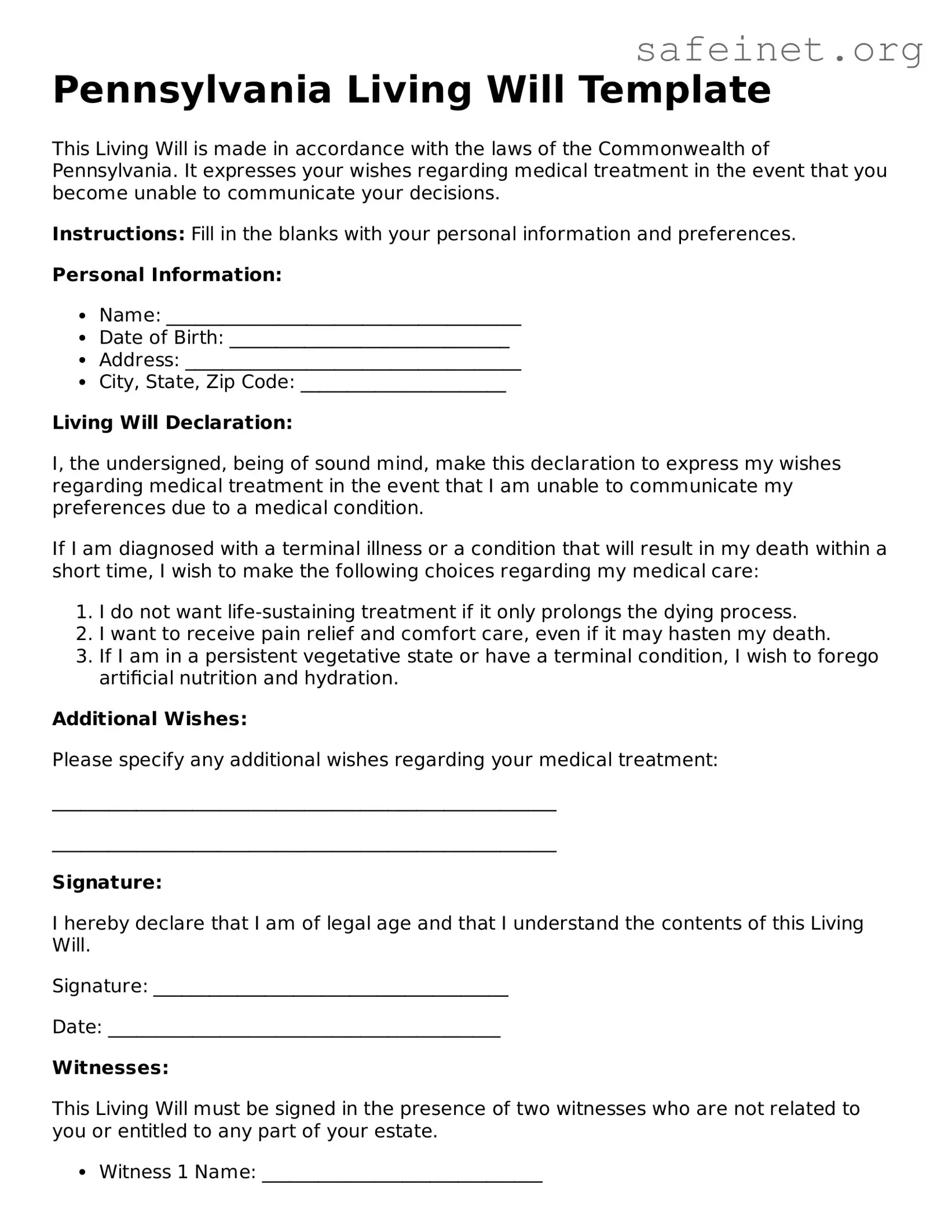
In Pennsylvania, the Living Will form serves as a crucial tool for individuals wishing to express their healthcare preferences in the event they become unable to communicate their wishes. This document allows individuals to articulate their desires regarding medical treatment, particularly in situations involving terminal illness or irreversible conditions. By completing a Living Will, a person can specify whether they wish to receive life-sustaining treatment, such as resuscitation or artificial nutrition and hydration, or to forgo such interventions. The form ensures that healthcare providers and loved ones understand the individual's values and choices, thereby alleviating the burden of decision-making during emotionally challenging times. Importantly, the Pennsylvania Living Will must be signed and dated in the presence of two witnesses, who cannot be beneficiaries or involved in the individual's care, to ensure its validity. As society continues to grapple with complex medical decisions, the Living Will stands as a testament to the importance of personal autonomy and dignity in healthcare planning.
Pennsylvania Living Will Template
This Living Will is made in accordance with the laws of the Commonwealth of Pennsylvania. It expresses your wishes regarding medical treatment in the event that you become unable to communicate your decisions.
Instructions: Fill in the blanks with your personal information and preferences.
Personal Information:
Living Will Declaration:
I, the undersigned, being of sound mind, make this declaration to express my wishes regarding medical treatment in the event that I am unable to communicate my preferences due to a medical condition.
If I am diagnosed with a terminal illness or a condition that will result in my death within a short time, I wish to make the following choices regarding my medical care:
Additional Wishes:
Please specify any additional wishes regarding your medical treatment:
______________________________________________________
______________________________________________________
Signature:
I hereby declare that I am of legal age and that I understand the contents of this Living Will.
Signature: ______________________________________
Date: __________________________________________
Witnesses:
This Living Will must be signed in the presence of two witnesses who are not related to you or entitled to any part of your estate.
It is recommended that you keep a copy of this Living Will in a safe place and provide copies to your healthcare provider and family members.
| Fact Name | Details |
|---|---|
| Governing Law | The Pennsylvania Living Will is governed by the Pennsylvania Consolidated Statutes, Title 20, Chapter 54. |
| Purpose | This document allows individuals to express their wishes regarding medical treatment in the event they become incapacitated. |
| Eligibility | Any adult who is at least 18 years old can create a Living Will in Pennsylvania. |
| Witness Requirements | The Living Will must be signed in the presence of two witnesses, who cannot be related to the individual or entitled to any portion of their estate. |
| Revocation | Individuals can revoke their Living Will at any time, either verbally or in writing. |
| Healthcare Proxy | A Living Will can be combined with a Healthcare Power of Attorney to designate someone to make medical decisions on behalf of the individual. |
| Storage | It is recommended to keep the Living Will in a safe place and provide copies to healthcare providers and family members. |
Filling out a Pennsylvania Living Will form is a significant step in ensuring your healthcare preferences are known and respected. After completing the form, it is advisable to share copies with your healthcare providers and loved ones to ensure everyone is aware of your wishes.
What is a Pennsylvania Living Will?
A Pennsylvania Living Will is a legal document that allows individuals to express their wishes regarding medical treatment in the event they become unable to communicate their preferences. This document typically outlines the types of medical interventions a person would or would not want if they are facing a terminal illness or are in a persistent vegetative state. It helps guide healthcare providers and family members in making decisions that align with the individual's values and desires.
Who can create a Living Will in Pennsylvania?
Any adult who is at least 18 years old and is of sound mind can create a Living Will in Pennsylvania. There are no specific requirements regarding the individual’s health status at the time of creating the document. It is important for the person creating the Living Will to clearly understand their wishes and communicate them effectively.
How do I create a Living Will in Pennsylvania?
To create a Living Will in Pennsylvania, you can either use a standard form or draft your own document. It is recommended to include specific instructions about the types of medical treatments you wish to receive or refuse. Once the document is completed, it must be signed and dated in the presence of two witnesses who are not related to you and do not stand to gain from your estate. Alternatively, you may choose to have the document notarized for added legal validity.
Can I change or revoke my Living Will?
Yes, you can change or revoke your Living Will at any time as long as you are competent to do so. To revoke the document, you can simply destroy it or create a new Living Will that states your current wishes. It is advisable to inform your healthcare providers and family members of any changes to ensure they are aware of your updated preferences.
Not clearly stating their wishes. It's crucial to be specific about medical treatments and interventions you want or do not want.
Forgetting to sign and date the document. A Living Will is not valid unless it is signed and dated by the person creating it.
Neglecting to have witnesses. In Pennsylvania, at least two witnesses must sign the form to confirm that you are of sound mind and not under duress.
Using outdated forms. Always ensure you have the most current version of the Living Will form, as laws and requirements can change.
Not discussing the Living Will with family or healthcare providers. Communication can prevent confusion and ensure your wishes are honored.
Failing to review and update the document regularly. Life circumstances change, and so might your preferences regarding medical care.
Creating a Pennsylvania Living Will is an important step in planning for your healthcare preferences. However, it is often beneficial to consider additional documents that can complement your Living Will. These forms can help ensure your wishes are respected and provide clarity in various situations. Below is a list of other commonly used forms and documents that you might want to include in your advance care planning.
Incorporating these documents into your advance care planning can provide peace of mind for you and your loved ones. By clearly outlining your wishes, you can help ensure that your healthcare decisions align with your values and preferences, even when you are not able to communicate them yourself.
A durable power of attorney for healthcare allows individuals to designate someone to make medical decisions on their behalf if they become unable to do so. Like a living will, this document addresses healthcare preferences but focuses more on appointing an agent to act in medical situations. Both documents work together to ensure that a person's wishes regarding medical treatment are honored, even when they cannot communicate those wishes themselves.
A healthcare proxy is similar to a durable power of attorney for healthcare, as it appoints someone to make healthcare decisions for an individual. The key difference is that a healthcare proxy is specifically focused on medical decisions, while a durable power of attorney can cover a broader range of financial and legal matters. Both documents emphasize the importance of having a trusted individual advocate for one's healthcare choices.
A do-not-resuscitate (DNR) order is a specific directive that instructs medical personnel not to perform CPR if a person's heart stops or they stop breathing. This document complements a living will by providing clear instructions about resuscitation efforts. While a living will outlines broader healthcare preferences, a DNR focuses solely on resuscitation, ensuring that an individual's wishes are respected in critical situations.
An advance directive combines elements of both a living will and a durable power of attorney for healthcare. It allows individuals to specify their healthcare preferences and appoint someone to make decisions on their behalf. This document serves as a comprehensive guide for healthcare providers and family members, ensuring that both treatment preferences and decision-making authority are clearly defined.
A physician's orders for life-sustaining treatment (POLST) form is designed for individuals with serious health conditions. It translates a person's wishes regarding life-sustaining treatments into actionable medical orders. Similar to a living will, a POLST form ensures that medical staff are aware of a patient’s preferences. However, POLST is more specific and is intended for immediate use in clinical settings.
A financial power of attorney allows someone to make financial decisions on behalf of an individual. While it is not directly related to healthcare, it is similar in that it empowers a designated person to act in the best interest of someone else. Both documents emphasize the importance of having trusted individuals in place to manage critical decisions when a person is unable to do so.
A guardian designation is a legal document that appoints someone to make decisions for an individual who is unable to care for themselves. This is similar to a living will in that it addresses the need for someone to act in the best interest of a person who cannot advocate for themselves. However, a guardian designation typically encompasses broader aspects of personal care and life decisions, not limited to healthcare alone.
A surrogate decision-maker designation allows individuals to name someone who can make medical decisions on their behalf if they are incapacitated. This document is similar to a healthcare proxy but may be used in situations where a formal healthcare proxy is not in place. Both documents ensure that someone is available to advocate for a person's healthcare preferences when they cannot do so themselves.
When filling out the Pennsylvania Living Will form, it is important to follow specific guidelines to ensure your wishes are clearly communicated. Below is a list of things to do and avoid.
Things You Should Do:
Things You Shouldn't Do:
When it comes to the Pennsylvania Living Will form, there are several misconceptions that can lead to confusion. Understanding these common myths can help ensure that your wishes regarding medical treatment are clearly expressed and respected. Here’s a breakdown of nine misconceptions:
This is not true. A Living Will can be beneficial for anyone, regardless of age. It allows individuals to express their medical treatment preferences in case they become unable to communicate those wishes later.
While both documents relate to medical decisions, they serve different purposes. A Living Will outlines your preferences for medical treatment in various situations, whereas a DNR specifically instructs healthcare providers not to perform CPR if your heart stops.
This is false. You can update or revoke your Living Will at any time, as long as you are mentally competent. It’s important to review your document periodically to ensure it still reflects your wishes.
This misconception can lead to oversights. A Living Will is useful for anyone who wants to clarify their medical preferences, regardless of their current health status.
Each state has its own laws regarding Living Wills. While Pennsylvania recognizes Living Wills, the requirements and enforceability may differ in other states. It’s essential to understand your state’s specific regulations.
In Pennsylvania, your Living Will is intended to guide healthcare providers and family members in making decisions that align with your wishes. While family can sometimes influence decisions, your documented preferences should be prioritized.
While consulting a lawyer can be helpful, it is not a requirement. Pennsylvania provides templates and guidelines that allow individuals to create a Living Will on their own, ensuring their wishes are documented.
This is a limited view. A Living Will can address a range of medical situations, including preferences for life-sustaining treatments and other interventions in the event of severe illness or injury.
In fact, you can have multiple copies of your Living Will. It’s wise to provide copies to your healthcare provider, family members, and anyone else who may need to be aware of your wishes.
By debunking these myths, individuals can make informed decisions about their healthcare preferences and ensure their wishes are honored when it matters most.
Filling out and using the Pennsylvania Living Will form is an important step in ensuring that your healthcare preferences are respected. Here are some key takeaways to consider:
Understanding these key points can help ensure that your healthcare preferences are honored and that your loved ones are clear about your wishes.