When entering into a rental agreement in Pennsylvania, understanding the Pennsylvania Lease Agreement form is crucial for both landlords and tenants. This legally binding document outlines the terms and conditions of the rental arrangement, ensuring that both parties are on the same page regarding their rights and responsibilities. Key aspects of the form include the duration of the lease, which can be short-term or long-term, and the monthly rent amount, along with details about payment methods and due dates. Security deposits are also addressed, specifying how much is required and the conditions for its return at the end of the lease. Additionally, the agreement covers maintenance responsibilities, pet policies, and rules regarding property use, which help prevent misunderstandings. By familiarizing themselves with this form, both landlords and tenants can foster a more harmonious rental experience, minimizing disputes and enhancing communication throughout the lease term.
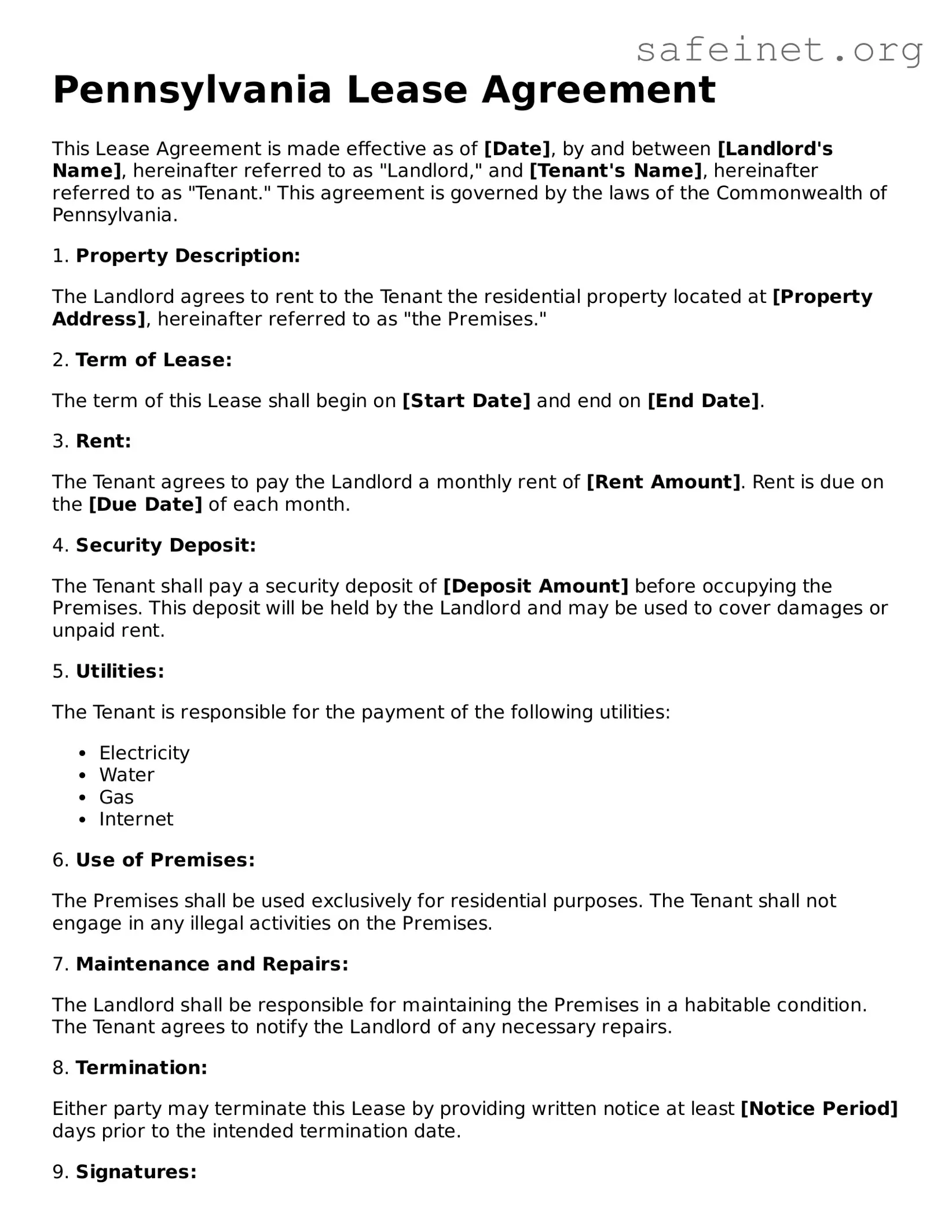
Pennsylvania Lease Agreement
This Lease Agreement is made effective as of [Date], by and between [Landlord's Name], hereinafter referred to as "Landlord," and [Tenant's Name], hereinafter referred to as "Tenant." This agreement is governed by the laws of the Commonwealth of Pennsylvania.
1. Property Description:
The Landlord agrees to rent to the Tenant the residential property located at [Property Address], hereinafter referred to as "the Premises."
2. Term of Lease:
The term of this Lease shall begin on [Start Date] and end on [End Date].
3. Rent:
The Tenant agrees to pay the Landlord a monthly rent of [Rent Amount]. Rent is due on the [Due Date] of each month.
4. Security Deposit:
The Tenant shall pay a security deposit of [Deposit Amount] before occupying the Premises. This deposit will be held by the Landlord and may be used to cover damages or unpaid rent.
5. Utilities:
The Tenant is responsible for the payment of the following utilities:
6. Use of Premises:
The Premises shall be used exclusively for residential purposes. The Tenant shall not engage in any illegal activities on the Premises.
7. Maintenance and Repairs:
The Landlord shall be responsible for maintaining the Premises in a habitable condition. The Tenant agrees to notify the Landlord of any necessary repairs.
8. Termination:
Either party may terminate this Lease by providing written notice at least [Notice Period] days prior to the intended termination date.
9. Signatures:
By signing below, both parties agree to the terms of this Lease Agreement.
Landlord Signature: ___________________________ Date: ______________
Tenant Signature: ____________________________ Date: ______________
| Fact Name | Details |
|---|---|
| Governing Law | The Pennsylvania Lease Agreement is governed by the Pennsylvania Uniform Commercial Code and relevant state laws. |
| Parties Involved | The lease agreement involves a lessor (landlord) and a lessee (tenant). |
| Duration | The lease can specify a fixed term, such as one year, or be month-to-month. |
| Rent Payment | The agreement must outline the amount of rent, payment due dates, and acceptable payment methods. |
| Security Deposit | Landlords may require a security deposit, which is typically limited to two months' rent. |
| Utilities | The lease should specify which utilities are included and which are the tenant's responsibility. |
| Maintenance Responsibilities | Both parties' responsibilities regarding property maintenance and repairs should be clearly defined. |
| Termination Clause | The lease should include conditions under which either party may terminate the agreement. |
| Dispute Resolution | The agreement may outline procedures for resolving disputes, including mediation or arbitration options. |
Filling out the Pennsylvania Lease Agreement form is an important step in establishing a clear understanding between the landlord and tenant. This form outlines the terms of the rental arrangement and protects the rights of both parties. Properly completing the form ensures that everyone involved is aware of their responsibilities and obligations.
What is a Pennsylvania Lease Agreement?
A Pennsylvania Lease Agreement is a legal document between a landlord and a tenant. It outlines the terms and conditions of renting a property. This agreement specifies the duration of the lease, the amount of rent, and the responsibilities of both parties. It helps protect the rights of both the landlord and the tenant during the rental period.
What should be included in a Pennsylvania Lease Agreement?
Several key elements should be included in a Pennsylvania Lease Agreement. These include the names of the landlord and tenant, the property address, the lease term (length of the rental period), the rental amount, and the due date for rent payments. Additionally, it should outline security deposit details, maintenance responsibilities, and rules regarding pets or smoking. Clear terms help prevent misunderstandings later on.
How can I terminate a Pennsylvania Lease Agreement?
Terminating a Pennsylvania Lease Agreement typically requires notice. The amount of notice needed depends on the lease type. For a month-to-month lease, either party usually needs to provide at least 30 days' notice. For a fixed-term lease, the agreement may specify conditions for termination. It’s important to follow the terms outlined in the lease to avoid potential legal issues.
What happens if a tenant breaks a Pennsylvania Lease Agreement?
If a tenant breaks a Pennsylvania Lease Agreement, several consequences may follow. The landlord may keep the security deposit and could seek additional damages. The tenant might be responsible for paying rent until a new tenant is found or until the lease term ends, depending on the agreement. Open communication between both parties can sometimes lead to a resolution without legal action.
Failing to include all required personal information. Tenants and landlords must provide accurate names, addresses, and contact details. Missing any of this information can lead to misunderstandings later on.
Not specifying the lease term. It is essential to clearly state the duration of the lease, whether it is month-to-month or for a fixed period. Leaving this out can create confusion about the rental period.
Overlooking rental payment details. The amount of rent, payment due dates, and acceptable payment methods should be clearly outlined. Ambiguity in these areas can lead to disputes.
Ignoring security deposit terms. Landlords should specify the amount of the security deposit and the conditions under which it may be withheld. Tenants should understand their rights regarding this deposit.
Not addressing maintenance responsibilities. Both parties should know who is responsible for repairs and maintenance. This can prevent conflicts over property upkeep.
Failing to outline rules regarding pets. If pets are allowed, the agreement should specify any restrictions or additional fees. Clarity on this issue can avoid future disagreements.
Neglecting to include termination procedures. The lease should detail how either party can terminate the agreement. This includes notice periods and acceptable reasons for termination.
Not reviewing local laws. Pennsylvania has specific regulations that govern lease agreements. Failing to comply with these can render the lease unenforceable.
When entering into a rental agreement in Pennsylvania, several other forms and documents may accompany the Lease Agreement to ensure clarity and protection for both landlords and tenants. Each of these documents serves a specific purpose and can help facilitate a smoother rental experience.
Understanding these accompanying documents is crucial for both landlords and tenants. They provide a framework that helps protect the rights and responsibilities of each party, ultimately fostering a positive rental relationship.
A Rental Agreement is similar to a Lease Agreement in that both documents outline the terms under which a tenant may occupy a property. While a Lease Agreement typically covers a longer duration, often a year or more, a Rental Agreement usually pertains to a shorter timeframe, such as month-to-month. Both documents detail responsibilities regarding rent payment, maintenance, and rules for the property, ensuring that both landlords and tenants understand their rights and obligations.
A Sublease Agreement is another document that shares similarities with a Lease Agreement. In a Sublease Agreement, the original tenant rents out the property to another person, known as the subtenant. This agreement must align with the original lease terms, as the primary tenant remains responsible to the landlord. Both agreements protect the interests of the parties involved and establish expectations regarding rent, duration, and property care.
A Rental Application is also related to the Lease Agreement. Before a Lease Agreement is signed, landlords often require potential tenants to fill out a Rental Application. This document gathers essential information, such as employment history and references, allowing landlords to screen applicants. While the Lease Agreement formalizes the rental terms, the Rental Application helps determine who qualifies to enter into that agreement.
An Eviction Notice is another document that can be compared to a Lease Agreement. While the Lease Agreement sets the terms for tenancy, the Eviction Notice serves as a formal communication from the landlord to the tenant, indicating a breach of those terms. This document outlines the reasons for eviction and the steps the tenant must take to rectify the situation. Both documents are crucial in the landlord-tenant relationship, as they define rights and procedures for maintaining or terminating occupancy.
A Move-In Checklist is similar to a Lease Agreement in that it documents the condition of the property at the start of a tenancy. This checklist helps both landlords and tenants agree on the state of the property before the tenant moves in. It can prevent disputes over damages when the lease ends. While the Lease Agreement establishes the terms of the rental, the Move-In Checklist serves as a practical tool for maintaining the property’s condition throughout the lease term.
When filling out the Pennsylvania Lease Agreement form, it’s important to follow certain guidelines to ensure accuracy and compliance. Here are five things to do and five things to avoid.
Things You Should Do:
Things You Shouldn't Do:
Understanding the Pennsylvania Lease Agreement form is essential for both landlords and tenants. However, several misconceptions can lead to confusion. Below is a list of common misunderstandings regarding this form.
Clarifying these misconceptions can help both landlords and tenants navigate their responsibilities and rights more effectively.
When it comes to filling out and using the Pennsylvania Lease Agreement form, there are several important aspects to keep in mind. Understanding these key points can help ensure a smooth rental experience for both landlords and tenants.
By keeping these key takeaways in mind, both landlords and tenants can navigate the leasing process with greater confidence and clarity.