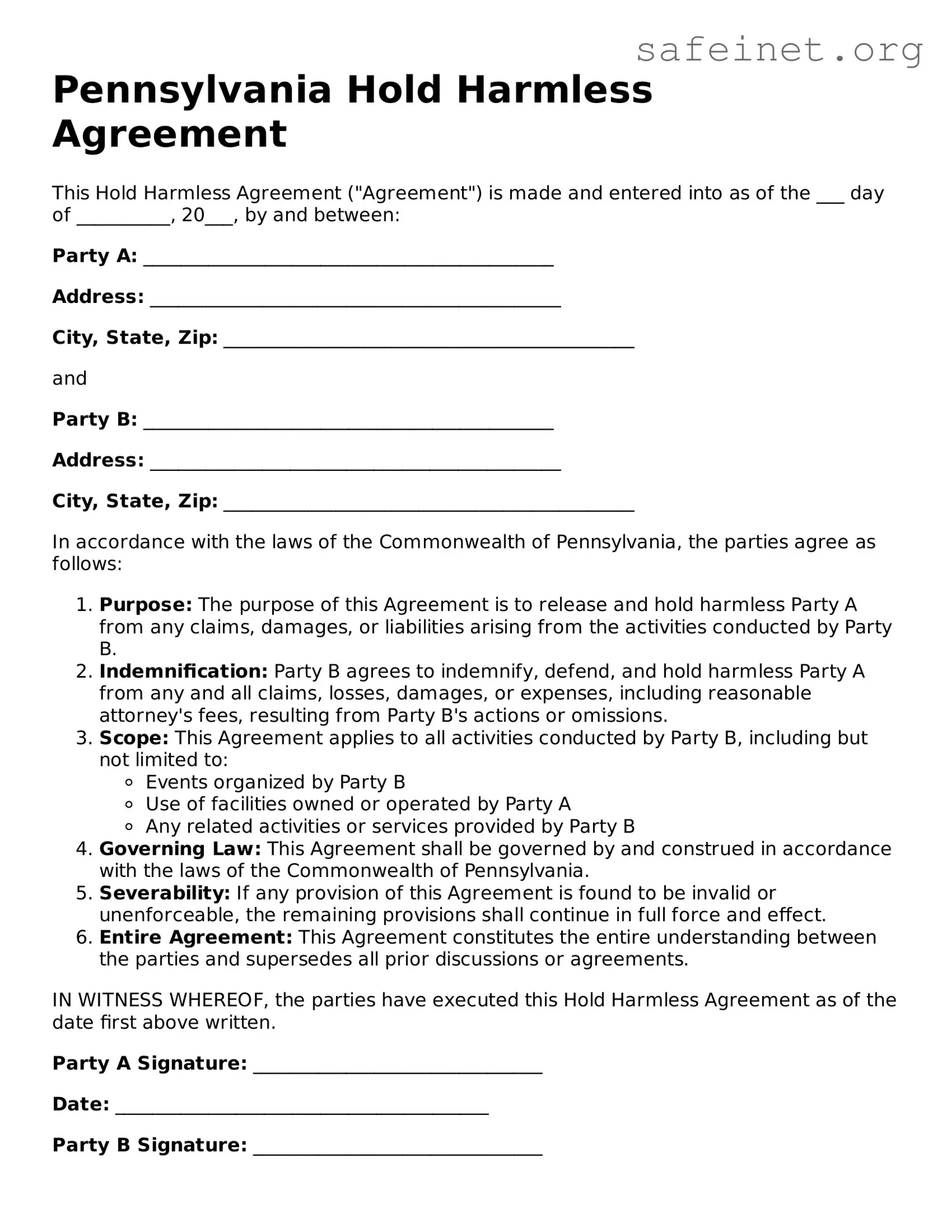
The Pennsylvania Hold Harmless Agreement form serves as a vital tool for individuals and organizations looking to mitigate potential liabilities associated with various activities. This form is designed to protect one party from legal claims or damages that may arise during specific events or interactions. Typically used in contexts such as rentals, events, or construction projects, it outlines the responsibilities and expectations of the parties involved. By signing this agreement, one party agrees to assume the risks associated with the activity while the other party is shielded from legal repercussions. The clarity and specificity of the terms within the form play a crucial role in ensuring that both parties understand their rights and obligations. Additionally, the agreement can be tailored to fit different scenarios, making it a versatile option for various situations. Understanding the nuances of this form is essential for anyone looking to navigate potential legal challenges effectively.
Pennsylvania Hold Harmless Agreement
This Hold Harmless Agreement ("Agreement") is made and entered into as of the ___ day of __________, 20___, by and between:
Party A: ____________________________________________
Address: ____________________________________________
City, State, Zip: ____________________________________________
and
Party B: ____________________________________________
Address: ____________________________________________
City, State, Zip: ____________________________________________
In accordance with the laws of the Commonwealth of Pennsylvania, the parties agree as follows:
IN WITNESS WHEREOF, the parties have executed this Hold Harmless Agreement as of the date first above written.
Party A Signature: _______________________________
Date: ________________________________________
Party B Signature: _______________________________
Date: ________________________________________
| Fact Name | Details |
|---|---|
| Definition | A Hold Harmless Agreement is a legal document where one party agrees not to hold another party liable for any damages or injuries that may occur. |
| Purpose | This agreement is often used to protect one party from legal claims that arise from the actions of another party. |
| Common Uses | These agreements are frequently utilized in contracts involving construction, events, and rental agreements. |
| Governing Law | The laws governing Hold Harmless Agreements in Pennsylvania include the Pennsylvania Uniform Commercial Code and relevant case law. |
| Enforceability | For a Hold Harmless Agreement to be enforceable, it must be clear, specific, and not violate public policy. |
| Limitations | Some Hold Harmless Agreements may not protect against gross negligence or willful misconduct. |
| Mutual Agreements | Parties can agree to mutual Hold Harmless provisions, where both sides agree to protect each other from liability. |
| Legal Review | It is advisable to have a legal professional review the agreement to ensure it meets all necessary legal requirements. |
Filling out the Pennsylvania Hold Harmless Agreement form is a straightforward process that requires careful attention to detail. After completing the form, it will need to be submitted to the appropriate party or organization. Ensure all information is accurate to avoid any delays or issues.
What is a Hold Harmless Agreement in Pennsylvania?
A Hold Harmless Agreement is a legal document that protects one party from liability for any damages or injuries that may occur during a specified activity or event. In Pennsylvania, these agreements are commonly used in various contexts, such as construction projects, events, or recreational activities. By signing this agreement, one party agrees not to hold the other party responsible for any claims or damages that may arise, thereby minimizing legal risks for the party being held harmless.
Who typically uses a Hold Harmless Agreement?
Hold Harmless Agreements are frequently utilized by businesses, event organizers, property owners, and contractors. For instance, a property owner may require a contractor to sign this agreement before beginning work on their property. Similarly, an event organizer might ask participants to sign a Hold Harmless Agreement to protect against potential injuries or damages during the event. Essentially, anyone looking to mitigate liability in a specific situation may find this agreement beneficial.
Are Hold Harmless Agreements enforceable in Pennsylvania?
Yes, Hold Harmless Agreements are generally enforceable in Pennsylvania, provided they meet certain legal requirements. The agreement must be clear and unambiguous, outlining the specific risks being assumed. Additionally, it should be signed voluntarily by both parties. However, there are limitations. For example, these agreements may not protect a party from liability resulting from gross negligence or intentional misconduct. Courts will carefully evaluate the language and circumstances surrounding the agreement to determine its enforceability.
How do I create a Hold Harmless Agreement?
Creating a Hold Harmless Agreement involves several key steps. First, clearly identify the parties involved and the specific activity or event for which the agreement is being made. Next, outline the scope of liability being waived and any exceptions that may apply. It is crucial to use straightforward language to avoid ambiguity. Once drafted, both parties should review the document carefully and sign it. While it is possible to find templates online, consulting with a legal professional can help ensure that the agreement is tailored to your specific needs and complies with Pennsylvania law.
Not Reading the Entire Agreement: Many people skim through the Hold Harmless Agreement without fully understanding its terms. This can lead to unintended consequences later on. It's crucial to read every section carefully to grasp what you are agreeing to.
Incomplete Information: Failing to provide all necessary information can render the agreement invalid. Ensure that you fill in all required fields accurately, including names, dates, and descriptions of the activities involved.
Missing Signatures: Some individuals forget to sign the agreement or overlook the need for a witness signature. Always double-check that all required signatures are present before submitting the form.
Assuming It's Standard: Treating the Hold Harmless Agreement as a generic form can be a mistake. Each agreement may have specific clauses tailored to the situation. Customizing the agreement to fit your particular circumstances is essential.
Not Seeking Legal Advice: Many people fill out the form without consulting a legal expert. If you have any doubts or questions, it's wise to seek guidance. A legal professional can help clarify any confusing terms and ensure your rights are protected.
A Pennsylvania Hold Harmless Agreement is a legal document that protects one party from liability for certain risks or damages. When using this agreement, you may also encounter several other forms and documents that serve related purposes. Here’s a brief overview of those documents.
Understanding these documents can help clarify the responsibilities and protections involved in various activities. Always consider consulting with a legal professional when navigating these forms to ensure proper use and compliance with Pennsylvania laws.
The Pennsylvania Hold Harmless Agreement is similar to a Liability Waiver. Both documents aim to protect one party from legal claims arising from the actions or negligence of another party. A Liability Waiver typically requires the participant to acknowledge the risks involved in an activity and agree not to hold the organization responsible for any injuries. While the Hold Harmless Agreement can be broader in scope, both serve to limit liability and ensure that participants understand the risks they are taking on.
Another document that shares similarities is the Indemnity Agreement. Like the Hold Harmless Agreement, an Indemnity Agreement involves one party agreeing to compensate another for certain damages or losses. However, while the Hold Harmless Agreement often protects against third-party claims, the Indemnity Agreement can also cover direct losses suffered by the indemnified party. Both documents are essential for managing risk in various contractual relationships.
The Release of Liability form also bears resemblance to the Hold Harmless Agreement. This document is commonly used in recreational activities, where participants agree to release the organizer from any liability for injuries sustained during the event. Similar to the Hold Harmless Agreement, it emphasizes the importance of understanding risks and relinquishing the right to sue for negligence. Both forms seek to create a safer environment by ensuring that participants are aware of and accept potential dangers.
A Participant Agreement can be compared to the Hold Harmless Agreement as well. This document often outlines the terms and conditions under which an individual participates in an event or activity. It may include clauses that limit liability and require participants to assume certain risks. While the focus of a Participant Agreement is broader, encompassing various aspects of participation, the Hold Harmless Agreement specifically targets liability issues, making both documents essential for event organizers.
The Non-Disclosure Agreement (NDA) shares a common goal with the Hold Harmless Agreement in protecting parties from potential harm. While an NDA primarily focuses on safeguarding confidential information, it can also include clauses that limit liability related to the disclosure of sensitive data. Both agreements are crucial in business settings, where protecting interests and minimizing risk is paramount. They ensure that parties understand their responsibilities and the consequences of their actions.
The Service Agreement is another document that resembles the Hold Harmless Agreement. This contract outlines the terms under which services are provided, often including clauses that limit liability for the service provider. While the primary focus of a Service Agreement is on the relationship between the service provider and the client, it often contains provisions that echo the protective nature of a Hold Harmless Agreement, ensuring that both parties are aware of their rights and obligations.
Lastly, the Rental Agreement can be compared to the Hold Harmless Agreement. When renting property, landlords often include clauses that limit their liability for injuries occurring on the premises. Similar to the Hold Harmless Agreement, these clauses aim to protect the landlord from claims arising from tenant or guest actions. Both documents serve to clarify responsibilities and establish a clear understanding of liability, fostering a safer rental environment.
When filling out the Pennsylvania Hold Harmless Agreement form, it's important to follow certain guidelines to ensure accuracy and clarity. Here are some dos and don'ts to consider:
By following these guidelines, you can help ensure that your Hold Harmless Agreement is filled out properly and serves its intended purpose.
The Pennsylvania Hold Harmless Agreement form is often misunderstood. Here are eight common misconceptions that can lead to confusion:
Understanding these misconceptions can help individuals and businesses navigate the complexities of hold harmless agreements more effectively.
When dealing with the Pennsylvania Hold Harmless Agreement form, it is important to keep several key points in mind. This form is designed to protect one party from legal liability for any damages or injuries that may occur during a specific activity. Here are some essential takeaways:
By following these guidelines, you can navigate the process of filling out and using the Pennsylvania Hold Harmless Agreement form with greater confidence and clarity.