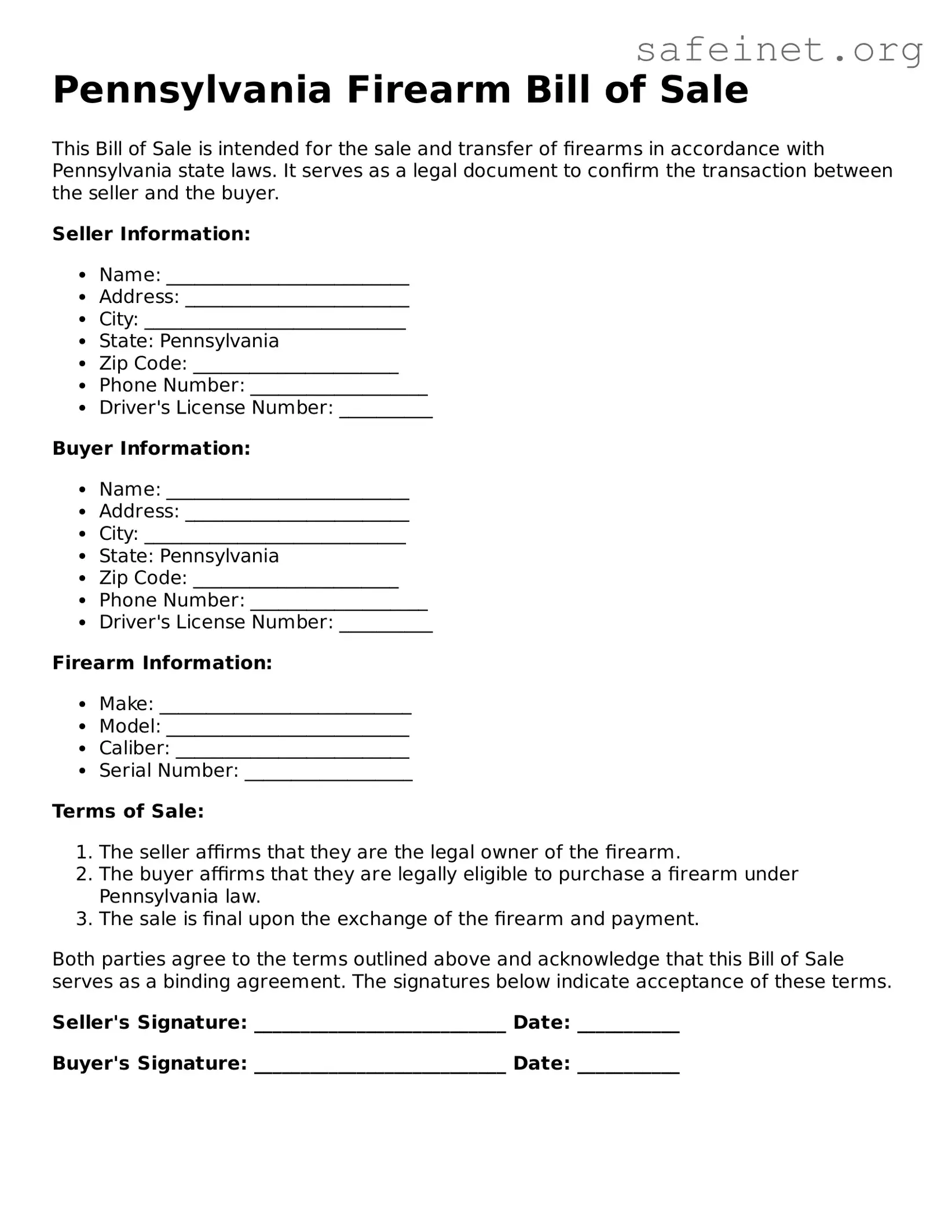
In Pennsylvania, the process of buying or selling a firearm involves important documentation to ensure a smooth and legal transaction. One key document is the Firearm Bill of Sale form. This form serves as a written record of the transfer of ownership between the seller and the buyer. It typically includes essential details such as the names and addresses of both parties, the date of the transaction, and a description of the firearm being sold, including its make, model, and serial number. Additionally, it may outline any conditions of the sale, such as payment terms or warranties. Having this form completed and signed helps protect both the buyer and seller, providing proof of the transaction and demonstrating compliance with state laws. Understanding the significance of this document is crucial for anyone involved in firearm transactions in Pennsylvania.
Pennsylvania Firearm Bill of Sale
This Bill of Sale is intended for the sale and transfer of firearms in accordance with Pennsylvania state laws. It serves as a legal document to confirm the transaction between the seller and the buyer.
Seller Information:
Buyer Information:
Firearm Information:
Terms of Sale:
Both parties agree to the terms outlined above and acknowledge that this Bill of Sale serves as a binding agreement. The signatures below indicate acceptance of these terms.
Seller's Signature: ___________________________ Date: ___________
Buyer's Signature: ___________________________ Date: ___________
| Fact Name | Description |
|---|---|
| Purpose | The Pennsylvania Firearm Bill of Sale form serves as a legal document that records the transfer of ownership of a firearm between a seller and a buyer. |
| Governing Law | This form is governed by Pennsylvania state law, specifically under Title 18, Chapter 61 of the Pennsylvania Consolidated Statutes, which covers firearms and other dangerous articles. |
| Parties Involved | The form includes spaces for both the seller and the buyer to provide their names, addresses, and signatures, ensuring accountability in the transaction. |
| Firearm Description | It requires a detailed description of the firearm being sold, including make, model, caliber, and serial number, to clearly identify the item in question. |
| Transaction Date | The form must include the date of the transaction, which is important for record-keeping and legal purposes. |
| Witness Requirement | While not mandatory, having a witness sign the form can provide additional validation and may help resolve any disputes in the future. |
| Record Keeping | Both parties should retain a copy of the completed Bill of Sale for their records, as it serves as proof of the transaction and can be useful in case of future legal inquiries. |
| Legal Implications | Filling out this form does not exempt either party from adhering to federal, state, and local laws regarding firearm ownership and transfers. |
Filling out the Pennsylvania Firearm Bill of Sale form is a straightforward process. It involves providing specific information about the buyer, seller, and the firearm being sold. Once completed, this form serves as a record of the transaction.
What is a Pennsylvania Firearm Bill of Sale?
A Pennsylvania Firearm Bill of Sale is a legal document that records the sale or transfer of a firearm between two parties. It serves as proof of ownership and details the terms of the transaction, including the buyer and seller's information, the firearm's description, and the sale price.
Is a Bill of Sale required for firearm transfers in Pennsylvania?
No, Pennsylvania law does not require a Bill of Sale for private firearm transfers. However, having one is highly recommended. It provides a written record of the transaction, which can be useful for both parties in case of future disputes or legal issues.
What information should be included in the Bill of Sale?
The Bill of Sale should include the names and addresses of both the buyer and seller, the date of the transaction, a detailed description of the firearm (including make, model, caliber, and serial number), and the sale price. Both parties should sign the document to validate the transaction.
Can I create my own Bill of Sale?
Yes, you can create your own Bill of Sale. Ensure that it contains all the necessary information to make it legally binding. There are also templates available online that you can use to simplify the process.
Do I need to have the Bill of Sale notarized?
While notarization is not required in Pennsylvania, it can add an extra layer of legitimacy to the document. Having a notary public witness the signing can help prevent disputes regarding the authenticity of the Bill of Sale.
What should I do if I lose my Bill of Sale?
If you lose your Bill of Sale, it is advisable to create a new one to document the transfer. Both parties can sign this new document, and it can serve as a replacement. However, keep in mind that having the original is always preferable.
How long should I keep the Bill of Sale?
It is wise to keep the Bill of Sale for as long as you own the firearm. If you decide to sell or transfer the firearm again, having the original document can help establish your ownership history.
Can I use a Bill of Sale for a firearm purchased from a dealer?
When purchasing a firearm from a licensed dealer, a Bill of Sale is typically not necessary. Dealers usually provide a receipt or other documentation that serves as proof of purchase. However, retaining this documentation is essential for your records.
What are the legal implications of not having a Bill of Sale?
Without a Bill of Sale, proving ownership can become complicated if disputes arise. In the event of a legal issue, such as a theft or an investigation, lacking documentation may hinder your ability to assert your rights over the firearm.
Incomplete Information: Individuals often forget to fill out all required fields on the form. Missing details such as the buyer's or seller's name, address, or the firearm's serial number can lead to complications. Ensuring that every section is filled out completely is essential for a valid transaction.
Incorrect Dates: Another common mistake involves entering the wrong date. This can create confusion about when the sale took place. Double-checking the date before submitting the form can help prevent any misunderstandings.
Failure to Sign: Some individuals neglect to sign the document. A signature is crucial as it indicates agreement to the terms of the sale. Without it, the bill of sale may not hold up if questioned later.
Not Keeping Copies: After completing the form, individuals sometimes forget to make copies for their records. Retaining a copy of the bill of sale is important for both the buyer and seller. This serves as proof of the transaction and can be useful for future reference.
When engaging in the sale or transfer of firearms in Pennsylvania, it is essential to have the appropriate documentation to ensure compliance with state laws. Along with the Pennsylvania Firearm Bill of Sale form, several other forms and documents may be necessary or beneficial in facilitating a smooth transaction. Here is a list of commonly used forms that can accompany the Bill of Sale.
Understanding and utilizing these documents can provide clarity and protection for both parties involved in the firearm transaction. By ensuring all paperwork is in order, individuals can navigate the sale process with confidence and adhere to Pennsylvania’s legal requirements.
The Pennsylvania Firearm Bill of Sale form is similar to a standard Bill of Sale, which is used in various transactions to document the sale of personal property. Like the firearm bill of sale, a standard Bill of Sale outlines the details of the transaction, including the buyer and seller's names, the description of the item being sold, and the sale price. Both documents serve as proof of transfer of ownership and can be useful for tax purposes or disputes that may arise in the future.
Another similar document is the Vehicle Bill of Sale. This form is used when buying or selling a motor vehicle and includes details such as the vehicle identification number (VIN), make, model, and year of the vehicle. Much like the firearm bill of sale, it requires the signatures of both the buyer and seller to validate the transaction. Both documents ensure that the transfer of ownership is legally recognized and provide a record for both parties.
A Lease Agreement shares similarities with the Pennsylvania Firearm Bill of Sale in that it outlines the terms under which one party is allowed to use property owned by another. While a lease typically pertains to real estate or rental property, both documents establish clear expectations and responsibilities for each party. They serve as legal proof of the agreement and can be referenced in case of disputes.
The Equipment Bill of Sale is another document akin to the firearm bill of sale. This form is used for the sale of equipment, such as machinery or tools. It includes information about the equipment being sold, similar to how the firearm bill of sale details the firearm. Both documents protect the interests of the buyer and seller by providing a written record of the transaction.
In addition, a Personal Property Bill of Sale is comparable to the Pennsylvania Firearm Bill of Sale. This document is used for the sale of items that do not fall under specific categories like vehicles or real estate. It includes the item description, sale price, and signatures of both parties. Both documents serve to confirm the transfer of ownership and can be used in legal contexts if necessary.
The Boat Bill of Sale is another relevant document. It is specifically designed for the sale of boats and includes details such as the boat's registration number, make, model, and year. Like the firearm bill of sale, it requires signatures from both the buyer and seller. Both documents are essential for ensuring that ownership is legally transferred and can be important for future registrations or disputes.
Lastly, the Firearm Transfer Record is similar to the Pennsylvania Firearm Bill of Sale in that it is specifically used to document the transfer of firearms. This form is often required by law to ensure compliance with regulations surrounding firearm sales. Both documents aim to provide a clear record of the transaction, though the Firearm Transfer Record may include additional regulatory information that the Pennsylvania Firearm Bill of Sale does not.
When completing the Pennsylvania Firearm Bill of Sale form, it is essential to approach the task with care and attention to detail. Here are some key dos and don'ts to consider:
Understanding the Pennsylvania Firearm Bill of Sale form is essential for anyone involved in the buying or selling of firearms in the state. Unfortunately, several misconceptions surround this form, which can lead to confusion. Here are six common misconceptions:
Many people believe that a Bill of Sale is mandatory for all firearm transactions in Pennsylvania. While it is a good practice to use one for documentation, it is not legally required for private sales between individuals.
Another common myth is that the Bill of Sale must be notarized to be valid. In Pennsylvania, notarization is not necessary. However, having a notarized document can add an extra layer of security and authenticity.
Some individuals think that only licensed dealers can utilize a Bill of Sale. In reality, private sellers and buyers can also create and use this document to outline the terms of their transaction.
While a Bill of Sale can provide some protection, it does not fully shield the seller from liability if the firearm is used in a crime after the sale. Sellers should be aware of their responsibilities and consider conducting background checks.
It is a misconception that all private firearm sales in Pennsylvania require a background check. In private transactions, this is not always the case, although it is highly recommended to ensure safety and legality.
Some people mistakenly believe that the Bill of Sale applies only to handgun transactions. In fact, it can be used for all types of firearms, including rifles and shotguns, providing a clear record of the sale.
By addressing these misconceptions, individuals can navigate the process of buying and selling firearms in Pennsylvania more effectively and responsibly.
When filling out and using the Pennsylvania Firearm Bill of Sale form, it’s important to understand several key aspects. Here are ten essential takeaways:
Understanding these points can help facilitate a smooth and legal transfer of firearm ownership in Pennsylvania.