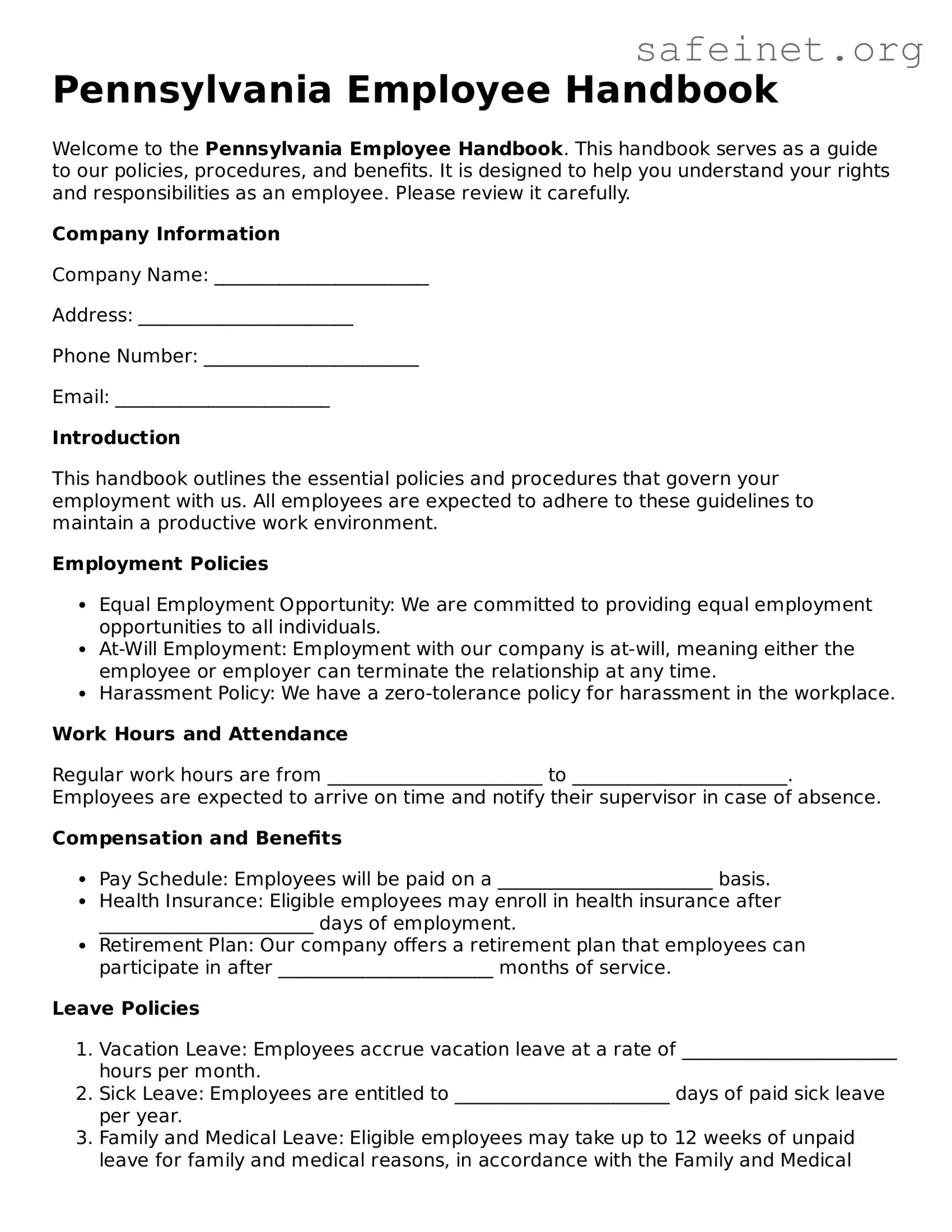
Creating a comprehensive employee handbook is an essential step for businesses in Pennsylvania. This document serves as a guide for employees, outlining company policies, expectations, and benefits. It typically includes sections on workplace conduct, attendance policies, and disciplinary procedures. Additionally, the handbook addresses employee rights, including anti-discrimination policies and workplace safety regulations. By providing clear information on topics such as leave policies, health benefits, and performance evaluations, the handbook fosters a positive work environment. It also helps ensure that employees understand their responsibilities and the resources available to them. Having a well-structured employee handbook not only supports compliance with state and federal laws but also enhances communication between employers and employees.
Pennsylvania Employee Handbook
Welcome to the Pennsylvania Employee Handbook. This handbook serves as a guide to our policies, procedures, and benefits. It is designed to help you understand your rights and responsibilities as an employee. Please review it carefully.
Company Information
Company Name: _______________________
Address: _______________________
Phone Number: _______________________
Email: _______________________
Introduction
This handbook outlines the essential policies and procedures that govern your employment with us. All employees are expected to adhere to these guidelines to maintain a productive work environment.
Employment Policies
Work Hours and Attendance
Regular work hours are from _______________________ to _______________________. Employees are expected to arrive on time and notify their supervisor in case of absence.
Compensation and Benefits
Leave Policies
Employee Conduct
Employees are expected to maintain a professional demeanor at all times. This includes:
Conclusion
This handbook is not a contract of employment, and it may be amended at any time. Please feel free to reach out to your supervisor or the HR department with any questions regarding the policies outlined in this handbook.
Thank you for being a part of our team!
| Fact Name | Description |
|---|---|
| Purpose | The Pennsylvania Employee Handbook serves to inform employees about company policies, procedures, and expectations. |
| Governing Laws | This handbook is governed by Pennsylvania labor laws, including the Pennsylvania Wage Payment and Collection Law. |
| Mandatory Content | Employers must include information on workplace safety, anti-discrimination policies, and employee rights. |
| Distribution Requirement | Employers are encouraged to distribute the handbook to all employees and obtain acknowledgment of receipt. |
| Updates | Handbooks should be reviewed and updated regularly to reflect changes in laws or company policies. |
| Legal Protection | A well-drafted handbook can help protect employers from legal claims by clearly outlining expectations and procedures. |
| Employee Acknowledgment | Employees should sign an acknowledgment form to confirm they have received and understood the handbook. |
Filling out the Pennsylvania Employee Handbook form is an important step in ensuring that you understand your rights and responsibilities as an employee. Once you have completed the form, it will be submitted to your employer for review. They will then provide you with a copy of the handbook, which contains essential information about workplace policies and procedures.
What is the Pennsylvania Employee Handbook form?
The Pennsylvania Employee Handbook form is a document designed to outline the policies, procedures, and expectations of an employer towards its employees. It serves as a guide for both employers and employees, ensuring clarity on various workplace issues, including conduct, benefits, and legal rights.
Why is an Employee Handbook important?
An Employee Handbook is crucial because it helps establish a clear understanding of workplace policies. It protects both the employer and employee by providing a reference point for acceptable behavior, grievance procedures, and company expectations. Furthermore, it can mitigate legal risks by ensuring compliance with state and federal laws.
Who should have access to the Employee Handbook?
All employees should have access to the Employee Handbook. It is essential for new hires to receive a copy during orientation. Current employees should also have easy access to the handbook to reference policies as needed. Employers may choose to provide a physical copy or make it available digitally.
What should be included in the Pennsylvania Employee Handbook?
The handbook should include various sections such as an introduction to the company, employment policies, workplace conduct, anti-discrimination policies, benefits and compensation, leave policies, and termination procedures. Additionally, it should outline the grievance process and any state-specific laws relevant to employees in Pennsylvania.
How often should the Employee Handbook be updated?
The Employee Handbook should be reviewed and updated regularly, at least annually. Changes in laws, company policies, or workplace culture may necessitate updates. Regular reviews ensure that the handbook remains relevant and compliant with current regulations.
What is the process for employees to acknowledge receipt of the Employee Handbook?
Employees typically acknowledge receipt of the Employee Handbook by signing a form that indicates they have received, read, and understood the policies outlined. This acknowledgment should be kept on file by the employer as proof of compliance and understanding.
Can an Employee Handbook be used as a legal document?
While an Employee Handbook can provide guidance and outline policies, it is not a legally binding contract unless explicitly stated. However, it can serve as evidence in legal disputes if it demonstrates that the employer has established certain policies and practices.
What should an employer do if an employee violates a policy in the Handbook?
If an employee violates a policy outlined in the Employee Handbook, the employer should follow the disciplinary procedures specified in the handbook. This may involve a verbal warning, written reprimand, or further disciplinary action, depending on the severity of the violation and the company’s established protocols.
How can employees provide feedback on the Employee Handbook?
Employees should be encouraged to provide feedback on the Employee Handbook. This can be done through formal channels such as surveys or suggestion boxes, or informally during meetings. Employers should consider this feedback seriously, as it can help improve the handbook and address employee concerns.
Not Reading the Handbook Thoroughly: Many employees skip over important sections, leading to misunderstandings about policies and procedures.
Missing Required Signatures: Some individuals forget to sign the form, which can delay the onboarding process.
Providing Inaccurate Information: Mistakes in personal details, such as names or contact information, can create issues later on.
Ignoring Deadlines: Failing to submit the form by the specified deadline may result in penalties or complications.
Overlooking Policy Changes: Employees often miss updates or changes made to the handbook, which can affect their rights and responsibilities.
Not Asking Questions: Some individuals hesitate to seek clarification on confusing sections, which can lead to misinterpretations.
Neglecting to Keep a Copy: Failing to retain a personal copy of the signed form can result in a lack of reference for future questions or disputes.
The Pennsylvania Employee Handbook serves as a vital resource for both employers and employees, outlining workplace policies, procedures, and expectations. In addition to the Employee Handbook, several other forms and documents are commonly utilized to ensure clarity and compliance within the workplace. Below is a list of these important documents.
These documents, alongside the Employee Handbook, play a crucial role in establishing a structured and transparent workplace environment. Together, they help facilitate effective communication and set clear expectations for all employees.
The Pennsylvania Employee Handbook form shares similarities with the Employee Manual, a comprehensive document that outlines company policies, procedures, and expectations for employees. Like the Employee Handbook, the Employee Manual serves as a guide to workplace conduct, detailing everything from attendance and dress code to disciplinary actions. Both documents aim to create a clear understanding of the employer's expectations, ensuring that employees are informed about their rights and responsibilities within the organization.
Another document that resembles the Pennsylvania Employee Handbook is the Orientation Guide. This guide is often provided to new hires during their onboarding process. It typically includes essential information about the company culture, benefits, and key policies, much like the Employee Handbook. The Orientation Guide serves as an introduction to the workplace, helping new employees acclimate to their roles while reinforcing the same core values and policies found in the Employee Handbook.
The Policy Manual is also similar to the Pennsylvania Employee Handbook, as it contains detailed information about specific policies that govern workplace behavior and procedures. While the Employee Handbook provides a broad overview, the Policy Manual delves deeper into particular topics, such as harassment, leave policies, and safety regulations. Both documents are essential for ensuring compliance with labor laws and fostering a respectful workplace environment.
Additionally, the Code of Conduct shares common ground with the Pennsylvania Employee Handbook. This document outlines the ethical standards and expected behaviors for employees. It emphasizes integrity, respect, and accountability, similar to the values promoted in the Employee Handbook. By providing a framework for acceptable conduct, both documents work together to cultivate a positive workplace culture.
Furthermore, the Benefits Summary is akin to the Pennsylvania Employee Handbook in that it outlines the various benefits available to employees, such as health insurance, retirement plans, and paid time off. While the Employee Handbook may touch on these topics, the Benefits Summary provides a more detailed breakdown of each benefit, helping employees understand their options and how to access them. Both documents are vital for ensuring that employees are aware of their entitlements and can make informed decisions about their benefits.
Lastly, the Training Manual is similar to the Pennsylvania Employee Handbook as it provides guidance on job-specific skills and company procedures. While the Employee Handbook addresses broader policies, the Training Manual focuses on the practical aspects of performing a job effectively. Both documents are essential for employee development, ensuring that staff members are equipped with the knowledge and skills necessary to succeed in their roles.
When filling out the Pennsylvania Employee Handbook form, it’s important to follow certain guidelines to ensure accuracy and completeness. Below is a list of things you should and shouldn't do.
Many people hold misconceptions about the Pennsylvania Employee Handbook form. Understanding the facts can help both employers and employees navigate workplace policies more effectively. Here are seven common misconceptions:
While not legally required, having an employee handbook is highly recommended. It provides clarity on company policies and expectations.
Each handbook should reflect the specific policies and culture of the organization. Customization is key to addressing unique workplace needs.
Policies and laws change. Regularly reviewing and updating the handbook is essential to ensure compliance and relevance.
Small businesses benefit greatly from having a handbook. It helps set clear guidelines for employees, regardless of company size.
Signing typically acknowledges receipt, not agreement to permanent terms. Policies can change, and employees should be informed of updates.
While a well-crafted handbook can mitigate risks, it does not provide absolute protection against legal claims. Compliance with laws is still necessary.
While employees should be encouraged to read the handbook, it is more important that they understand the key policies and know where to find information.
By addressing these misconceptions, both employers and employees can foster a more informed and productive workplace environment.
Filling out and using the Pennsylvania Employee Handbook form is an important process for both employers and employees. Here are some key takeaways to keep in mind:
By keeping these points in mind, both employees and employers can ensure that the Employee Handbook is a useful tool for maintaining a positive work environment.