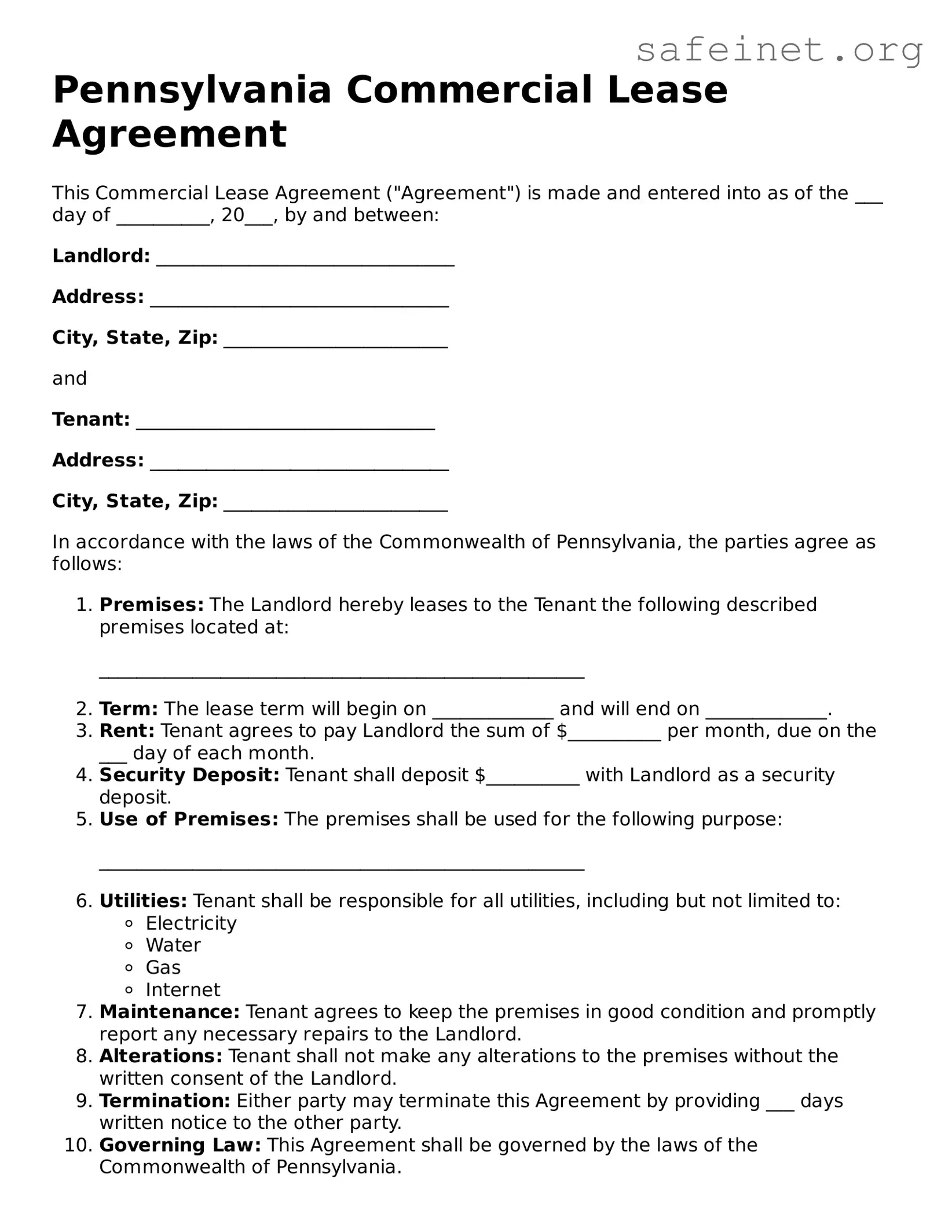
When renting commercial property in Pennsylvania, having a clear and comprehensive Commercial Lease Agreement is essential for both landlords and tenants. This document outlines the terms and conditions of the lease, ensuring that both parties understand their rights and responsibilities. Key aspects include the duration of the lease, rental payment details, and provisions for maintenance and repairs. Additionally, the agreement typically covers security deposits, allowed uses of the property, and terms for renewal or termination. Understanding these elements helps prevent misunderstandings and can protect both parties in the event of a dispute. A well-prepared lease agreement serves as a roadmap for the business relationship, promoting a smooth and successful tenancy.
Pennsylvania Commercial Lease Agreement
This Commercial Lease Agreement ("Agreement") is made and entered into as of the ___ day of __________, 20___, by and between:
Landlord: ________________________________
Address: ________________________________
City, State, Zip: ________________________
and
Tenant: ________________________________
Address: ________________________________
City, State, Zip: ________________________
In accordance with the laws of the Commonwealth of Pennsylvania, the parties agree as follows:
____________________________________________________
____________________________________________________
IN WITNESS WHEREOF, the parties have executed this Agreement as of the day and year first above written.
Landlord Signature: ________________________________
Date: ______________________
Tenant Signature: ________________________________
Date: ______________________
| Fact Name | Description |
|---|---|
| Governing Law | The Pennsylvania Commercial Lease Agreement is governed by Pennsylvania state law. |
| Parties Involved | The agreement involves a landlord and a tenant, both of whom must be clearly identified. |
| Lease Duration | The lease term can vary, typically ranging from one year to several years. |
| Rent Payment Terms | Specific details about rent amount, payment frequency, and methods must be included. |
| Security Deposit | A security deposit may be required, usually equivalent to one or two months' rent. |
| Property Use | The agreement should clearly outline the permitted uses of the commercial property. |
Filling out the Pennsylvania Commercial Lease Agreement form is an important step in securing a rental space for business use. This document outlines the terms and conditions agreed upon by both the landlord and tenant. Completing it accurately will help ensure a smooth leasing process.
What is a Pennsylvania Commercial Lease Agreement?
A Pennsylvania Commercial Lease Agreement is a legally binding document that outlines the terms and conditions under which a landlord rents commercial property to a tenant. This agreement typically includes details such as the rental amount, lease duration, maintenance responsibilities, and any specific rules regarding the use of the property. Both parties must understand their rights and obligations as outlined in the lease to avoid disputes in the future.
What are the key components of a Commercial Lease Agreement?
Key components of a Pennsylvania Commercial Lease Agreement often include the following: the names of the landlord and tenant, a description of the leased property, the lease term (length of the agreement), the rental amount and payment schedule, security deposit requirements, and maintenance responsibilities. Additionally, it may cover provisions for renewal, termination, and any restrictions on property use. Each of these elements plays a crucial role in defining the relationship between the landlord and tenant.
How long does a commercial lease typically last?
The duration of a commercial lease can vary significantly depending on the needs of the tenant and the landlord's preferences. Common lease terms range from one year to five years, but some agreements may extend for longer periods, such as ten years or more. Shorter leases may offer flexibility for tenants looking to test a location, while longer leases often provide stability for both parties. Negotiating the lease term is an important step in the leasing process.
Can a tenant modify a Commercial Lease Agreement?
Yes, tenants can request modifications to a Commercial Lease Agreement, but any changes must be mutually agreed upon by both the landlord and the tenant. This could include alterations to the lease term, rental amount, or specific clauses within the agreement. It is crucial to document any modifications in writing to ensure clarity and to avoid potential misunderstandings. Verbal agreements may not hold up in a legal context.
What happens if a tenant needs to break the lease early?
If a tenant needs to break a lease early, they should first review the lease agreement for any specific provisions related to early termination. Many leases include a clause that outlines the penalties or requirements for breaking the lease, such as providing notice or paying a fee. It is advisable for tenants to communicate openly with the landlord to discuss their situation, as some landlords may be willing to negotiate terms for early termination.
Is it necessary to have a lawyer review a Commercial Lease Agreement?
While it is not legally required to have a lawyer review a Commercial Lease Agreement, it is highly recommended. A legal professional can help identify potential issues, clarify complex terms, and ensure that the agreement complies with Pennsylvania laws. Having a lawyer's guidance can provide peace of mind and help protect the interests of both the landlord and the tenant, especially in commercial transactions where stakes can be higher.
Failing to provide accurate property details. It is essential to include the correct address and description of the leased property.
Not specifying the lease term. Clearly state the start and end dates of the lease to avoid confusion.
Overlooking the rent amount. The monthly rent should be clearly stated, along with any additional fees or deposits.
Neglecting to outline maintenance responsibilities. Both parties should understand who is responsible for repairs and maintenance.
Ignoring the renewal terms. Clearly define how the lease can be renewed or terminated to prevent future disputes.
Not including any special provisions. If there are unique terms or conditions, they should be explicitly mentioned in the agreement.
Failing to sign and date the document. Both parties must sign and date the lease for it to be legally binding.
When entering into a commercial lease agreement in Pennsylvania, several other documents may be required to ensure a smooth transaction. Each of these documents serves a specific purpose, helping both landlords and tenants understand their rights and responsibilities. Below is a list of common forms and documents associated with a Pennsylvania Commercial Lease Agreement.
Understanding these additional forms and documents can help both landlords and tenants navigate the complexities of commercial leasing in Pennsylvania. Each document plays a crucial role in protecting the interests of both parties and ensuring a clear understanding of the lease terms.
The Pennsylvania Commercial Lease Agreement is similar to a Residential Lease Agreement, but it is tailored for commercial properties. While a residential lease typically outlines the terms for renting a home or apartment, a commercial lease focuses on business-related spaces. This includes specific clauses about the use of the property for business purposes, maintenance responsibilities, and often longer lease terms. Both documents detail the rights and responsibilities of the landlord and tenant, but the commercial lease may include additional considerations such as zoning laws and business operation hours.
Another document that shares similarities with the Pennsylvania Commercial Lease Agreement is the Sublease Agreement. A sublease allows a tenant to lease out part or all of their rented space to another party. Like a commercial lease, a sublease agreement must specify the duration, rental amount, and responsibilities of both the original tenant and the subtenant. This document is essential for maintaining clear communication and expectations among all parties involved, ensuring that the original lease terms are respected while allowing flexibility for the tenant.
The Pennsylvania Commercial Lease Agreement also resembles a Property Management Agreement. This document outlines the relationship between a property owner and a management company. Both agreements involve the management of a property, but while the commercial lease focuses on the terms of leasing the space, the property management agreement details how the property will be maintained and operated. Responsibilities such as rent collection, property upkeep, and tenant relations are typically outlined in the management agreement, ensuring smooth operations for the landlord.
Lastly, the Pennsylvania Commercial Lease Agreement is akin to a Purchase and Sale Agreement, especially in scenarios where a business tenant may wish to buy the property they are renting. Both documents involve significant financial commitments and detail the terms of the transaction. While the commercial lease governs the rental relationship, a purchase agreement outlines the terms under which the property will be sold. This includes the purchase price, financing arrangements, and any contingencies that must be met before the sale is finalized, creating a comprehensive understanding of both leasing and buying processes.
When filling out the Pennsylvania Commercial Lease Agreement form, it is crucial to approach the task with care. Here are ten important do's and don'ts to consider:
Being diligent and informed while completing the Pennsylvania Commercial Lease Agreement can save you from potential disputes and ensure a smooth leasing experience.
When dealing with a Pennsylvania Commercial Lease Agreement, it's easy to encounter some common misconceptions. Understanding these can help you navigate the leasing process more effectively. Here’s a list of eight misconceptions:
By addressing these misconceptions, you can approach your commercial lease with greater confidence and awareness. Always remember that clarity and understanding are essential in any leasing situation.
When dealing with a Pennsylvania Commercial Lease Agreement, understanding the key elements can make a significant difference in ensuring a smooth leasing process. Here are some essential takeaways:
By keeping these points in mind, both landlords and tenants can navigate the complexities of a commercial lease more effectively.