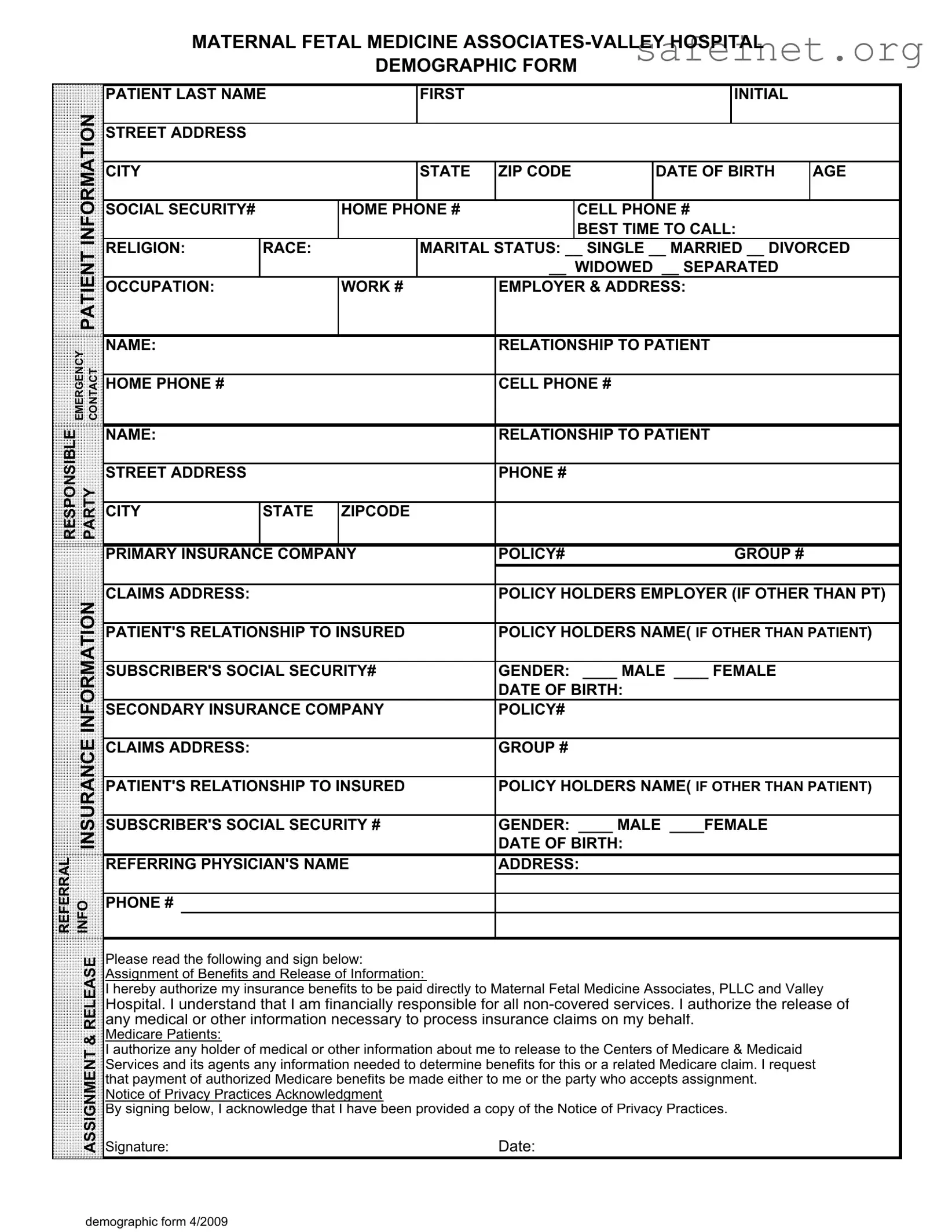
The Patient Demographics form is a crucial document that plays a significant role in the healthcare process. It collects essential information about patients, enabling healthcare providers to deliver personalized care. This form includes basic details such as the patient's name, address, and date of birth, which are vital for identifying individuals within the healthcare system. Additionally, it captures demographic data like race, religion, and marital status, which can help healthcare professionals understand and address the diverse needs of their patients. The form also requests contact information, including home and cell phone numbers, ensuring that communication remains open and effective. It further identifies emergency contacts and responsible parties, which is particularly important in critical situations. Insurance details are another key component, as they outline the patient's primary and secondary coverage, along with policy numbers and claims addresses. Lastly, the form includes sections for consent regarding the release of medical information and acknowledgment of privacy practices, emphasizing the importance of patient rights and confidentiality in healthcare. Overall, the Patient Demographics form serves as a foundational tool that streamlines administrative processes while fostering a supportive healthcare environment.

MATERNAL FETAL MEDICINE
DEMOGRAPHIC FORM
PATIENT LAST NAME |
FIRST |
INITIAL |
|
INFORMATION |
|
|
|
|
|
|
|
|
|
|
STREET ADDRESS |
|
|
|
|
|
|
|
||
|
|
|
|
|
|
|
|
|
||
|
|
|
|
|
|
|
|
|
|
|
|
|
CITY |
|
|
STATE |
ZIP CODE |
DATE OF BIRTH |
AGE |
||
|
|
|
|
|
|
|
|
|
|
|
|
|
SOCIAL SECURITY# |
|
HOME PHONE # |
|
CELL PHONE # |
|
|||
|
|
|
|
|
|
|
|
BEST TIME TO CALL: |
|
|
|
PATIENT |
RELIGION: |
RACE: |
|
MARITAL STATUS: __ SINGLE __ MARRIED __ DIVORCED |
|||||
|
|
|
|
|
|
__ WIDOWED __ SEPARATED |
|
|||
|
|
|
|
|
|
|
|
|||
|
|
OCCUPATION: |
|
WORK # |
EMPLOYER & ADDRESS: |
|
||||
|
|
|
|
|
|
|
|
|
|
|
EMERGENCY CONTACT |
NAME: |
|
|
|
RELATIONSHIP TO PATIENT |
|
||||
|
|
|
|
|
|
|
|
|
||
HOME PHONE # |
|
|
|
CELL PHONE # |
|
|
||||
|
|
|
|
|
|
|
||||
|
|
|
|
|
|
|
|
|
||
RESPONSIBLE |
|
NAME: |
|
|
|
RELATIONSHIP TO PATIENT |
|
|||
PARTY |
|
|
|
|
|
|
|
|
|
|
STREET ADDRESS |
|
|
|
PHONE # |
|
|
||||
|
|
|
|
|
|
|
||||
|
|
|
|
|
|
|
|
|
|
|
|
|
CITY |
STATE |
ZIPCODE |
|
|
|
|
||
|
|
|
|
|
|
|
|
|
|
|
|
|
PRIMARY INSURANCE COMPANY |
POLICY# |
GROUP # |
|
|||||
|
|
|
|
|
|
|
|
|||
|
INFORMATION |
CLAIMS ADDRESS: |
|
|
|
POLICY HOLDERS EMPLOYER (IF OTHER THAN PT) |
||||
|
|
|
|
|
|
|
|
|
|
|
|
PATIENT'S RELATIONSHIP TO INSURED |
POLICY HOLDERS NAME( IF OTHER THAN PATIENT) |
||||||||
|
|
|||||||||
|
|
|
|
|
|
|||||
|
|
SUBSCRIBER'S SOCIAL SECURITY# |
GENDER: ____ MALE ____ FEMALE |
|
||||||
|
|
|
|
|
|
|
DATE OF BIRTH: |
|
|
|
|
|
SECONDARY INSURANCE COMPANY |
POLICY# |
|
|
|||||
|
INSURANCE |
|
|
|
|
|
|
|
|
|
|
CLAIMS ADDRESS: |
|
|
|
DATE OF BIRTH: |
|
|
|||
|
|
|
|
|
GROUP # |
|
|
|||
|
|
PATIENT'S RELATIONSHIP TO INSURED |
POLICY HOLDERS NAME( IF OTHER THAN PATIENT) |
|||||||
|
|
|
|
|
|
|||||
|
|
SUBSCRIBER'S SOCIAL SECURITY # |
GENDER: ____ MALE ____FEMALE |
|
||||||
|
|
|
|
|
|
|
|
|
|
|
REFERRAL |
INFO |
REFERRING PHYSICIAN'S NAME |
ADDRESS: |
|
|
|||||
|
|
|
|
|||||||
|
|
|
|
|
|
|
|
|
|
|
|
|
PHONE # |
|
|
|
|
|
|
|
|
|
|
|
|
|
|
|
|
|
|
|
|
RELEASE |
Please read the following and sign below: |
|
|
|
|
||||
|
Assignment of Benefits and Release of Information: |
|
|
|
|
|||||
|
|
|
|
|
|
|||||
|
|
I hereby authorize my insurance benefits to be paid directly to Maternal Fetal Medicine Associates, PLLC and Valley |
||||||||
|
|
Hospital. I understand that I am financially responsible for all |
||||||||
|
|
any medical or other information necessary to process insurance claims on my behalf. |
|
|||||||
|
& |
Medicare Patients: |
|
|
|
|
|
|
|
|
|
I authorize any holder of medical or other information about me to release to the Centers of Medicare & Medicaid |
|
||||||||
|
ASSIGNMENT |
|
||||||||
|
Signature: |
|
|
|
Date: |
|
|
|||
|
|
Services and its agents any information needed to determine benefits for this or a related Medicare claim. I request |
||||||||
|
|
that payment of authorized Medicare benefits be made either to me or the party who accepts assignment. |
|
|||||||
|
|
Notice of Privacy Practices Acknowledgment |
|
|
|
|
||||
|
|
By signing below, I acknowledge that I have been provided a copy of the Notice of Privacy Practices. |
|
|||||||
demographic form 4/2009
| Fact Name | Description |
|---|---|
| Purpose | The Patient Demographics form collects essential information to provide appropriate medical care and facilitate billing. |
| Required Information | Patients must provide personal details such as name, address, date of birth, and insurance information. |
| Emergency Contact | An emergency contact's name and relationship to the patient are required to ensure proper communication in urgent situations. |
| Insurance Details | Patients must include primary and secondary insurance information, including policy numbers and claims addresses. |
| Governing Laws | In New York, the form adheres to the New York State Public Health Law, which mandates the collection of patient demographics. |
| Privacy Acknowledgment | Patients must acknowledge receipt of the Notice of Privacy Practices by signing the form. |
| Release of Information | By signing, patients authorize the release of medical information necessary for processing insurance claims. |
Filling out the Patient Demographics form is an important step in ensuring that your medical information is accurately recorded. After completing the form, it will be used to set up your patient profile and facilitate communication with your healthcare providers.
What information is required on the Patient Demographics form?
The Patient Demographics form requires essential personal information. This includes your last name, first initial, address, date of birth, age, and social security number. Additionally, you must provide contact numbers, your religion, race, marital status, occupation, and employer details. Emergency contact information is also necessary, along with insurance details, including primary and secondary insurance companies, policy numbers, and the relationship of the insured to you.
Why is my social security number needed on the form?
Your social security number helps to uniquely identify you in the healthcare system. It is used for insurance verification and to ensure accurate billing. This information is kept confidential and is only shared with authorized personnel involved in your care and insurance processing.
What should I do if I do not have insurance?
If you do not have insurance, please indicate this on the form where insurance information is requested. You may still receive care, but you will be responsible for payment of services rendered. Discuss any payment options or financial assistance programs with the office staff when you submit your form.
Can I update my information after submitting the form?
Yes, you can update your information at any time. If your personal details change, such as your address, phone number, or insurance information, inform the office staff during your next visit or contact them directly. Keeping your information current ensures that you receive timely communication and accurate billing.
What does the release section of the form mean?
The release section allows your insurance benefits to be paid directly to the healthcare provider. By signing this section, you authorize the release of your medical information necessary for processing insurance claims. It is essential to understand that you are financially responsible for any non-covered services. Review this section carefully before signing.
Failing to provide complete information in all required fields. Each section is crucial for accurate record-keeping and communication.
Not updating contact information when it changes. Keeping current phone numbers and addresses ensures timely communication from healthcare providers.
Leaving out emergency contact details. This information is vital in case of urgent situations where immediate decisions are needed.
Inaccurately reporting insurance information. Errors in policy numbers or group numbers can delay claims processing and lead to unexpected bills.
Neglecting to specify marital status. This can affect insurance coverage and billing, as well as the patient's legal rights.
Not providing race or religion information when requested. While optional, this data can be important for certain healthcare assessments and cultural considerations.
Forgetting to sign the release of information section. Without a signature, healthcare providers cannot process insurance claims or share necessary medical information.
Failing to indicate best times to call. This can lead to missed calls and delays in communication regarding appointments or test results.
Overlooking the signature and date on the form. An unsigned form is incomplete and may result in delays in care or billing issues.
When a patient visits a healthcare facility, several forms and documents may be required alongside the Patient Demographics form. These documents help ensure that the patient’s information is complete and accurate, allowing for efficient processing of their medical care and insurance claims. Below is a list of common forms that are often used in conjunction with the Patient Demographics form.
Each of these forms plays a vital role in the healthcare process. By completing them accurately, patients help ensure that their care is coordinated effectively and that their rights and responsibilities are clearly understood. Proper documentation not only facilitates better healthcare delivery but also protects the interests of both patients and providers.
The Patient Registration Form is similar to the Patient Demographics form in that it collects essential information about a patient before their first visit. This document typically includes fields for the patient’s name, address, contact information, and insurance details. Like the Patient Demographics form, it often asks for emergency contact information and may include sections for medical history. Both forms aim to ensure that healthcare providers have the necessary information to deliver appropriate care and facilitate billing processes.
The Medical History Form serves a similar purpose by gathering detailed information about a patient's past medical conditions, surgeries, and medications. This form complements the Patient Demographics form by providing a deeper understanding of the patient’s health background. Both documents are crucial for healthcare providers to assess risks and tailor treatment plans. While the Patient Demographics form focuses more on personal and insurance information, the Medical History Form dives into the specifics of the patient’s health journey.
The Insurance Information Form is another document that aligns closely with the Patient Demographics form. It specifically focuses on the patient’s insurance coverage, including policy numbers, group numbers, and the policyholder's information. This form is essential for verifying coverage and ensuring that claims are processed correctly. Just like the Patient Demographics form, it requires accurate information to facilitate billing and reimbursement from insurance companies.
The Consent to Treat Form is similar in that it requires the patient’s acknowledgment and permission for medical treatment. This document often accompanies the Patient Demographics form and ensures that patients understand their rights and the nature of the treatment they will receive. While the Patient Demographics form gathers personal and insurance details, the Consent to Treat Form emphasizes the patient’s agreement to the medical services provided.
The Financial Responsibility Form shares similarities with the Patient Demographics form by addressing the financial aspects of healthcare. It outlines the patient’s responsibility for any costs not covered by insurance. Both forms are designed to ensure transparency regarding financial obligations and to facilitate the billing process. Patients are required to provide accurate information to avoid any misunderstandings regarding payment responsibilities.
The Release of Information Form is another document that parallels the Patient Demographics form. It allows healthcare providers to share the patient’s medical information with other entities, such as insurance companies or other healthcare providers. This form is essential for coordinating care and processing claims. Like the Patient Demographics form, it requires the patient’s signature to authorize the release of their information.
The Emergency Contact Form serves a similar function by collecting information about who should be contacted in case of an emergency. This document is often included with the Patient Demographics form to ensure that healthcare providers can quickly reach someone if a patient requires urgent assistance. Both forms prioritize the safety and well-being of the patient by ensuring that there is a reliable contact available during emergencies.
The Referral Form is akin to the Patient Demographics form as it captures information about the referring physician and the purpose of the referral. This document is vital for ensuring that patients receive the appropriate care from specialists. While the Patient Demographics form focuses on personal and insurance information, the Referral Form emphasizes the relationship between the patient and their healthcare providers.
Lastly, the Authorization for Release of Medical Records Form is similar to the Patient Demographics form in that it allows patients to control who can access their medical records. This document is crucial for maintaining patient privacy while ensuring that necessary information is shared with authorized parties. Both forms require the patient’s consent and are essential for managing healthcare information effectively.
When filling out the Patient Demographics form, it's essential to ensure that the information provided is accurate and complete. Here are some key do's and don'ts to keep in mind:
By following these guidelines, you can help ensure that your information is processed smoothly and that your healthcare experience is as efficient as possible.
Understanding the Patient Demographics form is crucial for both patients and healthcare providers. However, several misconceptions can lead to confusion. Here are seven common misconceptions:
Being aware of these misconceptions can help patients navigate the Patient Demographics form more effectively. Accurate and complete information is essential for quality care and efficient administrative processes.
Filling out the Patient Demographics form accurately is essential for ensuring proper patient care and insurance processing. Here are some key takeaways to consider:
By following these guidelines, patients can help facilitate a smoother experience in their healthcare journey.