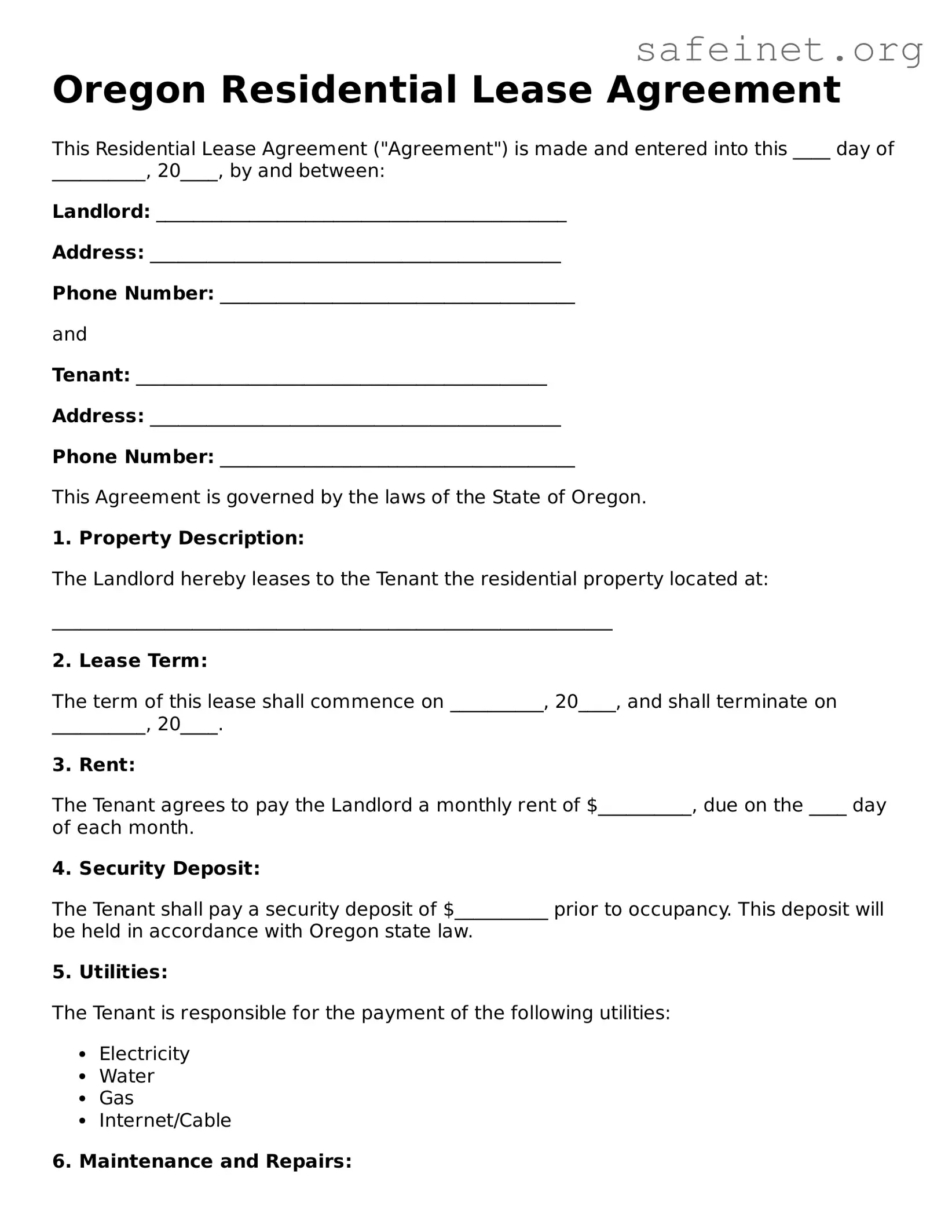
The Oregon Residential Lease Agreement form serves as a vital document for both landlords and tenants, outlining the terms and conditions of renting a residential property in the state. This form typically includes essential information such as the names of the parties involved, the property address, and the duration of the lease. It also specifies the rental amount, payment due dates, and acceptable methods of payment. Additionally, the agreement addresses security deposits, maintenance responsibilities, and rules regarding pets, ensuring that both parties understand their rights and obligations. Importantly, it may cover provisions for lease termination, renewal options, and the handling of disputes, providing a clear framework for a harmonious landlord-tenant relationship. By clearly defining these aspects, the Oregon Residential Lease Agreement helps prevent misunderstandings and disputes, fostering a respectful and lawful rental experience.
Oregon Residential Lease Agreement
This Residential Lease Agreement ("Agreement") is made and entered into this ____ day of __________, 20____, by and between:
Landlord: ____________________________________________
Address: ____________________________________________
Phone Number: ______________________________________
and
Tenant: ____________________________________________
Address: ____________________________________________
Phone Number: ______________________________________
This Agreement is governed by the laws of the State of Oregon.
1. Property Description:
The Landlord hereby leases to the Tenant the residential property located at:
____________________________________________________________
2. Lease Term:
The term of this lease shall commence on __________, 20____, and shall terminate on __________, 20____.
3. Rent:
The Tenant agrees to pay the Landlord a monthly rent of $__________, due on the ____ day of each month.
4. Security Deposit:
The Tenant shall pay a security deposit of $__________ prior to occupancy. This deposit will be held in accordance with Oregon state law.
5. Utilities:
The Tenant is responsible for the payment of the following utilities:
6. Maintenance and Repairs:
The Tenant agrees to keep the premises in good condition. The Landlord will be responsible for major repairs unless caused by Tenant negligence.
7. Pets:
Pets are allowed / not allowed on the premises. If allowed, a non-refundable pet deposit of $__________ is required.
8. Termination:
Either party may terminate this Agreement by providing written notice at least ____ days in advance.
9. Governing Law:
This Agreement shall be governed by the laws of the State of Oregon.
IN WITNESS WHEREOF, the parties hereto have executed this Agreement as of the day and year first above written.
Landlord Signature: ___________________________ Date: __________
Tenant Signature: ___________________________ Date: __________
| Fact Name | Description |
|---|---|
| Governing Law | The Oregon Residential Lease Agreement is governed by Oregon state law, specifically the Oregon Residential Landlord and Tenant Act. |
| Duration | Leases can be fixed-term or month-to-month, allowing flexibility for both landlords and tenants. |
| Security Deposit | Landlords may require a security deposit, which cannot exceed the equivalent of one month's rent, unless otherwise agreed. |
| Notice Requirements | Landlords must provide written notice for lease termination or rent increases, typically 30 days for month-to-month agreements. |
| Maintenance Responsibilities | Landlords are responsible for maintaining the property in a habitable condition, while tenants must keep the premises clean. |
| Fair Housing Compliance | The lease must comply with federal and state fair housing laws, prohibiting discrimination based on protected classes. |
Filling out the Oregon Residential Lease Agreement form requires careful attention to detail. Each section must be completed accurately to ensure clarity and compliance with the terms agreed upon by both parties. After completing the form, it will need to be signed by both the landlord and the tenant to finalize the agreement.
What is an Oregon Residential Lease Agreement?
The Oregon Residential Lease Agreement is a legal document that outlines the terms and conditions of renting a residential property in Oregon. It serves as a binding contract between the landlord and tenant, detailing rights, responsibilities, and expectations for both parties during the lease period.
What should be included in the lease agreement?
A comprehensive lease agreement typically includes the names of the landlord and tenant, property address, lease duration, rent amount, payment due dates, security deposit details, maintenance responsibilities, and rules regarding pets and smoking. It may also cover procedures for lease termination and eviction.
How long is a standard lease term in Oregon?
In Oregon, lease terms can vary. A standard lease is often for one year, but landlords and tenants can agree to shorter or longer terms. Month-to-month agreements are also common, allowing for greater flexibility in rental arrangements.
Can a landlord increase rent during a lease?
Generally, a landlord cannot increase rent during a fixed-term lease unless the lease agreement specifically allows for it. For month-to-month leases, landlords must provide proper notice, typically 30 days, before implementing a rent increase.
What is a security deposit, and how is it handled?
A security deposit is a sum of money collected by the landlord to cover potential damages or unpaid rent. In Oregon, the maximum amount a landlord can charge for a security deposit is typically equivalent to one month's rent. The landlord must return the deposit within 31 days after the tenant moves out, minus any deductions for damages or unpaid rent.
What are the tenant's rights regarding repairs?
Tenants in Oregon have the right to live in a safe and habitable environment. If repairs are needed, tenants should notify the landlord in writing. The landlord is required to address necessary repairs within a reasonable time frame, typically 14 days for urgent issues.
What happens if a tenant wants to break the lease early?
If a tenant wishes to break the lease early, they should review the lease agreement for any specific terms regarding early termination. Generally, tenants may be responsible for paying rent until a new tenant is found or until the lease term ends. Communication with the landlord is essential in these situations.
Are there any restrictions on pets in Oregon rental properties?
Pet policies vary by landlord. Some may allow pets, while others may prohibit them altogether. If pets are allowed, the lease should specify any restrictions, such as breed or size limitations, and whether an additional pet deposit is required.
What is the process for evicting a tenant in Oregon?
Eviction in Oregon requires a legal process. A landlord must provide a written notice to the tenant, stating the reason for eviction and allowing a specific time frame to resolve the issue. If the tenant does not comply, the landlord may file for eviction in court. It is important for landlords to follow the legal procedures to avoid complications.
Where can I find a template for the Oregon Residential Lease Agreement?
Templates for the Oregon Residential Lease Agreement can be found online through various legal websites, local housing authorities, or real estate associations. It is advisable to ensure that any template used complies with current Oregon laws and regulations.
Incomplete Information: One common mistake is leaving out important details. This can include the tenant's full name, the rental property's address, or the lease term. Each section must be filled out completely to avoid confusion later.
Incorrect Dates: Many people mistakenly write the wrong start or end dates for the lease. It's crucial to double-check these dates to ensure they align with both parties' expectations and plans.
Not Understanding Terms: Some individuals rush through the agreement without fully understanding the terms. It's essential to take the time to read and comprehend each clause, especially those related to security deposits and maintenance responsibilities.
Missing Signatures: A lease is not valid unless all required parties sign it. Forgetting to sign or having a co-tenant neglect to sign can lead to issues later on. Ensure that everyone involved has signed the document.
Ignoring Local Laws: Each state has its own rental laws. Failing to consider Oregon's specific regulations can lead to problems. Familiarizing oneself with local laws can help prevent mistakes and protect both the landlord's and tenant's rights.
When entering into a rental agreement in Oregon, several other forms and documents can be useful alongside the Oregon Residential Lease Agreement. These documents help clarify responsibilities, protect rights, and ensure a smooth rental experience for both landlords and tenants.
By utilizing these additional forms and documents, both landlords and tenants can foster a clearer understanding of their rights and responsibilities. This proactive approach can lead to a more positive rental experience for everyone involved.
The Oregon Residential Lease Agreement is similar to the standard Lease Agreement used in many states. Both documents outline the terms of renting a property, including the duration of the lease, rent amount, and responsibilities of both the landlord and tenant. They serve as a legal contract that protects the rights of both parties, ensuring clarity on what is expected during the rental period.
Another document that shares similarities is the Month-to-Month Rental Agreement. This agreement allows tenants to rent a property on a monthly basis without a long-term commitment. Like the Oregon Residential Lease Agreement, it specifies rent, security deposits, and notice periods for termination, but it provides more flexibility for tenants who may not want to commit to a longer lease.
The Commercial Lease Agreement is also comparable, as it governs the rental of commercial properties. While the Oregon Residential Lease focuses on residential properties, both documents detail the terms of the lease, including rent, maintenance responsibilities, and termination clauses. The main difference lies in the type of property and the specific needs of businesses versus residential tenants.
A Rental Application is another related document. While it does not govern the lease itself, it is often used in conjunction with the lease agreement. The rental application collects information about potential tenants, such as employment history and creditworthiness. This helps landlords make informed decisions before entering into a lease agreement.
The Lease Renewal Agreement is similar in that it extends the terms of an existing lease. When a tenant and landlord agree to continue their rental relationship, they may use this document to outline any changes in terms or conditions. It serves to formalize the continuation of the lease, ensuring both parties are on the same page.
The Sublease Agreement shares common elements with the Oregon Residential Lease Agreement. This document allows a tenant to rent out their leased property to another party. It includes terms regarding rent, duration, and responsibilities, similar to the original lease. Both agreements aim to protect the rights of all parties involved.
The Property Management Agreement is another document that resembles the Oregon Residential Lease Agreement. This agreement outlines the relationship between a property owner and a property management company. It includes terms for managing the property, collecting rent, and maintaining the premises, similar to how a lease agreement defines the landlord-tenant relationship.
Finally, the Eviction Notice is related to the Oregon Residential Lease Agreement as it addresses the consequences of lease violations. If a tenant fails to meet their obligations under the lease, the landlord may issue an eviction notice. This document outlines the reasons for eviction and the necessary steps for the tenant, ensuring that the process follows legal guidelines established in the lease.
When filling out the Oregon Residential Lease Agreement form, it is important to follow certain guidelines to ensure the process goes smoothly. Here are some dos and don'ts to keep in mind:
These guidelines can help ensure that both parties are clear on the terms of the lease and can prevent misunderstandings in the future.
Understanding the Oregon Residential Lease Agreement is crucial for both landlords and tenants. However, several misconceptions can lead to confusion. Here are eight common misconceptions:
Clarifying these misconceptions can lead to better relationships between landlords and tenants, ensuring a smoother rental experience for everyone involved.
When filling out and using the Oregon Residential Lease Agreement form, there are several important aspects to consider. Understanding these can help ensure a smooth leasing process for both landlords and tenants.
By paying attention to these key elements, both landlords and tenants can foster a positive rental experience and minimize potential conflicts.