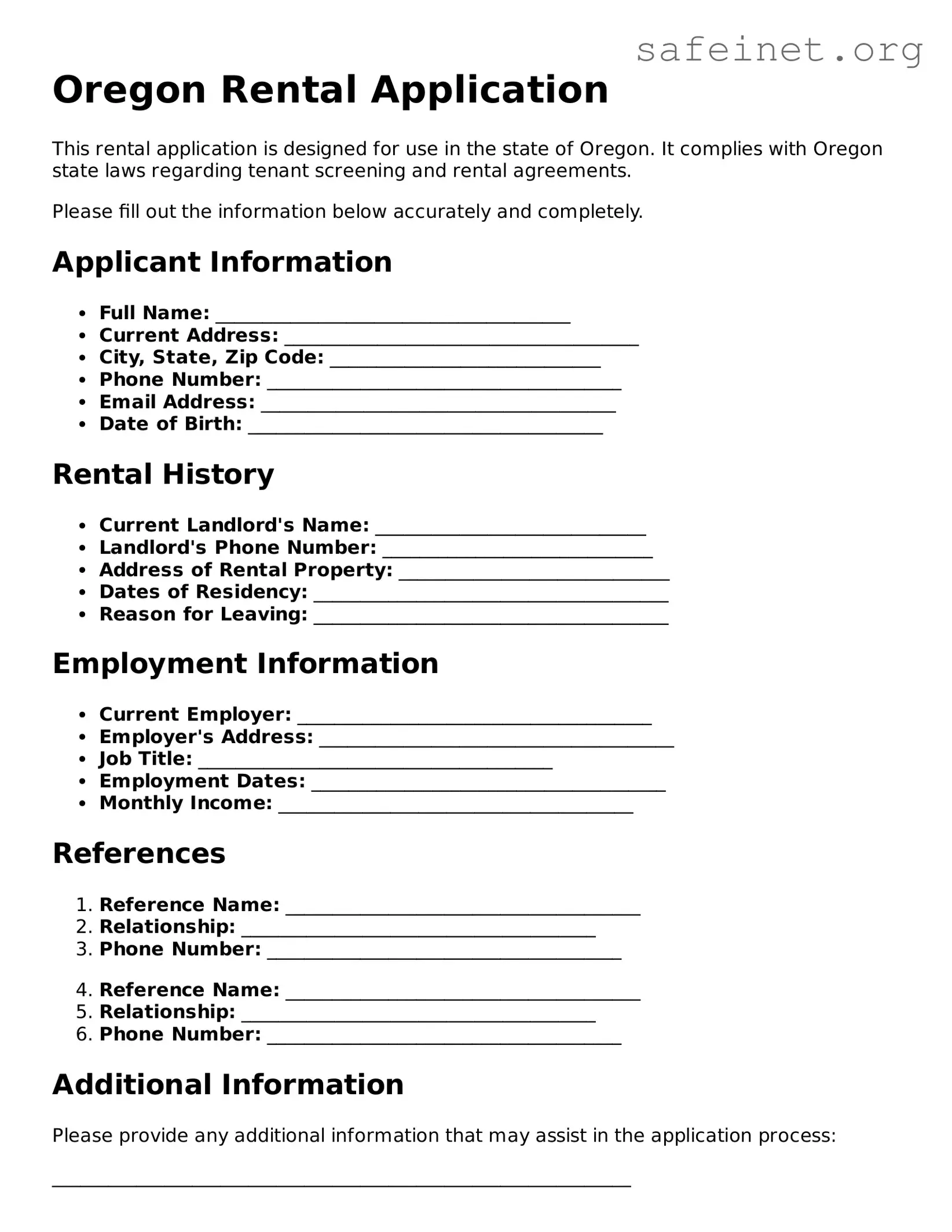
The Oregon Rental Application form serves as a crucial tool for both landlords and prospective tenants in the rental process. This document typically includes essential information such as the applicant's personal details, rental history, and employment status. Landlords use this form to assess the suitability of applicants, ensuring they can meet the financial obligations of the lease. Additionally, the application may require references and consent for background checks, which help landlords verify the applicant's reliability. It is important for applicants to provide accurate information, as any discrepancies could lead to denial of the application. Understanding the components of this form can empower tenants to present themselves effectively while also helping landlords make informed decisions. Overall, the Oregon Rental Application form plays a vital role in establishing a clear and fair rental relationship from the outset.
Oregon Rental Application
This rental application is designed for use in the state of Oregon. It complies with Oregon state laws regarding tenant screening and rental agreements.
Please fill out the information below accurately and completely.
Applicant Information
Rental History
Employment Information
References
Additional Information
Please provide any additional information that may assist in the application process:
______________________________________________________________
______________________________________________________________
Consent
By signing below, you consent to a background check and verification of the information provided in this application.
Applicant Signature: ________________________________
Date: ______________________________________
| Fact Name | Description |
|---|---|
| Governing Law | The Oregon Rental Application form is governed by the Oregon Revised Statutes, specifically ORS 90.100 to 90.465, which outline landlord-tenant relationships. |
| Application Fee | Landlords in Oregon can charge an application fee, but it must be reasonable and cannot exceed the actual costs incurred for screening the applicant. |
| Disclosure Requirements | Landlords are required to disclose the criteria used for tenant screening, including credit history and rental history, to applicants. |
| Screening Criteria | The application must clearly state the screening criteria, which may include income requirements, credit score minimums, and rental history. |
| Application Processing Time | Once an application is submitted, landlords must process it within a reasonable time frame, typically not exceeding 14 days. |
| Denial Notice | If an application is denied, the landlord must provide a written notice to the applicant, explaining the reasons for the denial. |
Once you have the Oregon Rental Application form in front of you, it is important to fill it out carefully. This document will collect necessary information that a landlord or property manager needs to evaluate your application. Ensure that all sections are completed accurately to avoid any delays in the application process.
What is the Oregon Rental Application form?
The Oregon Rental Application form is a document used by landlords and property managers to collect information from potential tenants. It helps assess the suitability of applicants based on their rental history, income, creditworthiness, and personal references. This form is crucial for making informed decisions about who to rent to.
What information do I need to provide on the application?
Applicants typically need to provide personal details such as their name, address, and contact information. Additionally, employment history, income details, rental history, and references are often required. Some landlords may also ask for consent to conduct a background check or credit report.
Is there a fee associated with the rental application?
Many landlords charge a non-refundable application fee to cover the costs of processing the application, including background checks. This fee can vary widely, so it’s important to ask the landlord or property manager about their specific policies regarding fees.
Can I apply for multiple rental properties using the same application?
Generally, each rental property may require a separate application. However, some landlords might allow you to use the same application for multiple properties if they are managed by the same company. Always check with the landlord to clarify their specific requirements.
What happens after I submit my rental application?
Once submitted, the landlord will review your application. This process often includes verifying your employment, checking your credit history, and contacting your references. Depending on the landlord's timeline, you may receive a response within a few days to a week.
Can I be denied rental based on my application?
Yes, landlords can deny applications for various reasons, including poor credit history, insufficient income, or negative rental history. If denied, landlords are typically required to provide a reason, and you may request a copy of your credit report if it was used in the decision-making process.
How can I improve my chances of being approved?
To enhance your chances of approval, ensure that your application is complete and accurate. Providing references from previous landlords and proof of income can strengthen your application. Additionally, being upfront about any potential issues, such as past evictions, can help build trust with the landlord.
What rights do I have regarding my rental application?
Applicants have the right to fair treatment under the Fair Housing Act, which prohibits discrimination based on race, color, religion, sex, national origin, familial status, or disability. If you believe you have been discriminated against, you can file a complaint with the appropriate authorities.
Can I appeal a denial of my rental application?
If your application is denied, you can ask the landlord for clarification on the reasons for the denial. While there is no formal appeal process, discussing the situation with the landlord may provide you with insights or even a second chance, especially if you can address their concerns directly.
Inaccurate Personal Information: Many applicants fail to provide accurate personal details, such as their full name, current address, or social security number. This can lead to delays in processing the application or even disqualification.
Incomplete Employment History: Some individuals neglect to include their complete employment history. Omitting past jobs or failing to provide contact information for previous employers can raise red flags for landlords.
Neglecting to Disclose Rental History: It is crucial to disclose all previous rental experiences. Failing to mention past landlords or any evictions can result in a lack of trust from potential landlords.
Not Reviewing the Application Thoroughly: A common mistake is submitting the application without a thorough review. Typos, missing signatures, or incorrect dates can undermine the applicant’s credibility.
When applying for a rental property in Oregon, the rental application form is just one piece of the puzzle. Several other documents and forms may accompany the application to help landlords make informed decisions. Below is a list of common forms that are often used alongside the Oregon Rental Application.
Each of these forms plays a crucial role in the rental process, providing essential information to both landlords and tenants. Understanding these documents can help applicants prepare more effectively and navigate the rental landscape with greater confidence.
The Oregon Rental Application form shares similarities with the Tenant Screening Report. Both documents are designed to gather essential information about potential tenants. The Tenant Screening Report typically includes details such as credit history, rental history, and background checks. This helps landlords make informed decisions about whom to rent to. Just like the rental application, it aims to ensure that the tenant is a good fit for the property and can meet their financial obligations.
Another document that resembles the Oregon Rental Application is the Lease Agreement. While the rental application is a preliminary step in the rental process, the lease agreement formalizes the relationship between the landlord and tenant. Both documents require personal information, such as the tenant's name, contact details, and rental history. However, the lease agreement goes further by outlining the terms and conditions of the rental, including payment schedules, maintenance responsibilities, and rules regarding the property.
Lastly, the Employment Verification form parallels the Oregon Rental Application in its purpose to assess a tenant's financial stability. This document is used to confirm a tenant's employment status, income level, and job stability. Just like the rental application, it requires specific details about the applicant’s job history and income sources. This verification is crucial for landlords to ensure that potential tenants have the means to pay rent consistently and on time.
When filling out the Oregon Rental Application form, it's essential to approach the process thoughtfully. Here are some key dos and don'ts to keep in mind:
By following these guidelines, you can enhance your chances of a successful rental application in Oregon.
Understanding the Oregon Rental Application form is essential for both landlords and tenants. However, several misconceptions can lead to confusion. Here are six common misconceptions:
Many people assume that rental applications across different states or even different landlords are identical. In reality, each application may have unique requirements and questions tailored to the specific property or landlord's preferences.
Some individuals believe that submitting an application guarantees they will secure the rental unit. However, landlords have the discretion to approve or deny applications based on various factors, including credit history and rental references.
While personal information is a component of the application, many forms also require financial details, rental history, and sometimes even employment verification. This comprehensive approach helps landlords assess a potential tenant's suitability.
Some applicants think that charging an application fee is against the law. In Oregon, landlords can charge a reasonable fee to cover the costs of processing the application, but they must disclose this fee upfront.
It is a common misconception that landlords can request any information they desire on the application. In Oregon, there are restrictions on what can be asked to protect applicants' privacy and prevent discrimination.
Some applicants believe that once they submit their application, they cannot make any changes. In fact, applicants can often update their information or clarify any inaccuracies before the landlord makes a decision.
Awareness of these misconceptions can lead to a smoother rental process for both tenants and landlords in Oregon.
When filling out and using the Oregon Rental Application form, keep these key takeaways in mind: