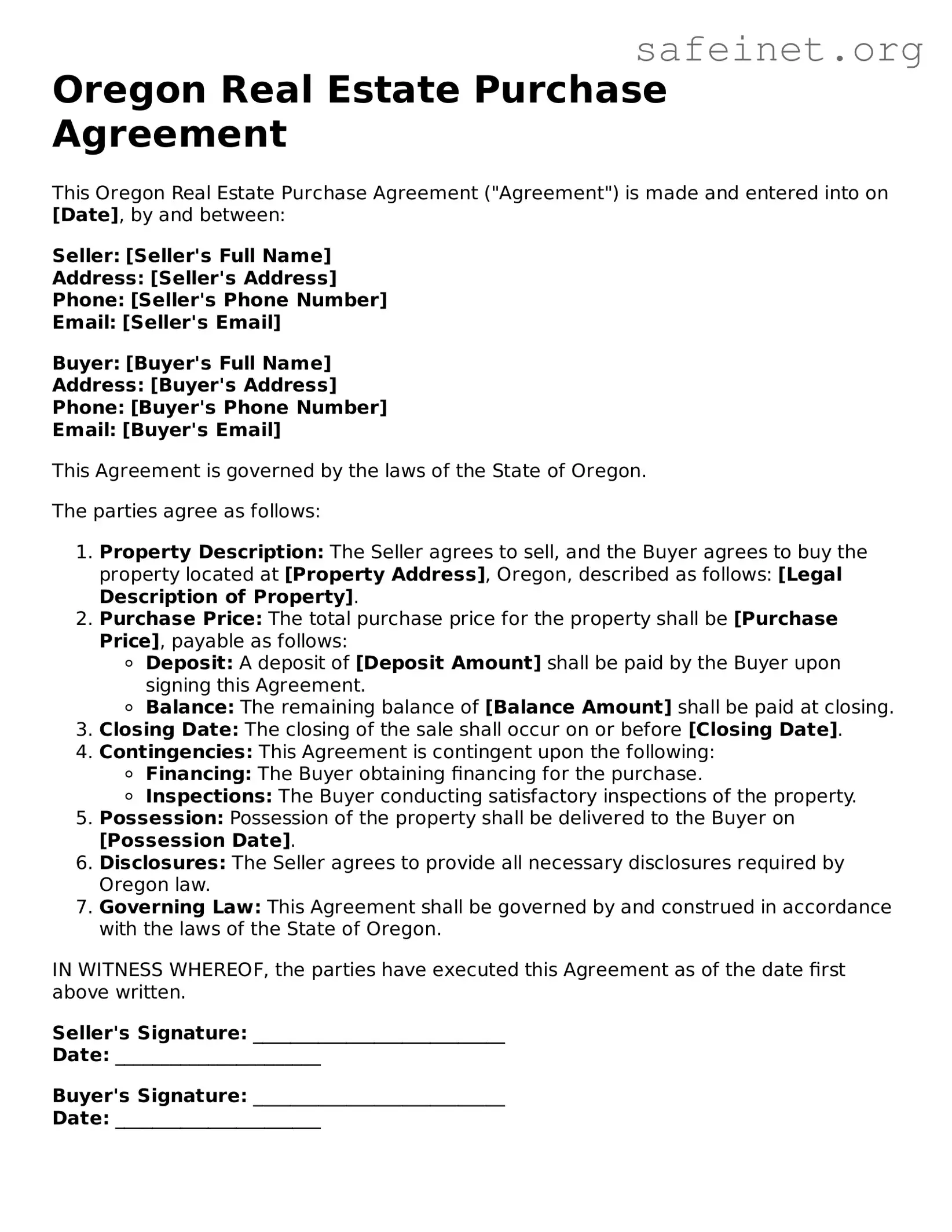
The Oregon Real Estate Purchase Agreement form serves as a vital tool for both buyers and sellers in the real estate market, facilitating the often complex process of property transactions. This comprehensive document outlines the essential terms and conditions of the sale, ensuring that all parties are on the same page regarding the specifics of the agreement. Key elements include the purchase price, the property description, and the closing date, which are crucial for establishing clear expectations. Additionally, the form addresses contingencies, such as financing and inspections, which protect buyers by allowing them to back out if certain conditions are not met. Importantly, the agreement also delineates the responsibilities of both parties, including disclosures and any agreed-upon repairs. By providing a structured framework, the Oregon Real Estate Purchase Agreement helps to minimize misunderstandings and disputes, making it an indispensable part of the home buying and selling process.
Oregon Real Estate Purchase Agreement
This Oregon Real Estate Purchase Agreement ("Agreement") is made and entered into on [Date], by and between:
Seller: [Seller's Full Name]
Address: [Seller's Address]
Phone: [Seller's Phone Number]
Email: [Seller's Email]
Buyer: [Buyer's Full Name]
Address: [Buyer's Address]
Phone: [Buyer's Phone Number]
Email: [Buyer's Email]
This Agreement is governed by the laws of the State of Oregon.
The parties agree as follows:
IN WITNESS WHEREOF, the parties have executed this Agreement as of the date first above written.
Seller's Signature: ___________________________
Date: ______________________
Buyer's Signature: ___________________________
Date: ______________________
| Fact Name | Description |
|---|---|
| Governing Law | The Oregon Real Estate Purchase Agreement is governed by Oregon state law, specifically under the Oregon Revised Statutes. |
| Standard Form | This agreement is typically provided as a standard form by the Oregon Association of Realtors, ensuring consistency across transactions. |
| Offer and Acceptance | The form outlines the terms of the offer made by the buyer and includes a section for the seller's acceptance. |
| Contingencies | Buyers can include contingencies, such as home inspections or financing, which must be satisfied for the sale to proceed. |
| Earnest Money | The agreement specifies the amount of earnest money that the buyer must provide, demonstrating their commitment to the purchase. |
| Closing Date | The form includes a section to specify the closing date, which is crucial for both parties to finalize the transaction. |
After obtaining the Oregon Real Estate Purchase Agreement form, you will need to complete several sections to ensure that all necessary information is included. This process is essential for facilitating a smooth transaction between the buyer and the seller.
What is the Oregon Real Estate Purchase Agreement form?
The Oregon Real Estate Purchase Agreement form is a legal document used when a buyer and seller agree to the terms of a real estate transaction. This form outlines the details of the sale, including the purchase price, property description, and any contingencies that may apply.
Who should use the Oregon Real Estate Purchase Agreement?
This form is typically used by individuals or entities involved in buying or selling residential real estate in Oregon. It is important for both parties to understand the terms outlined in the agreement to ensure a smooth transaction.
What information is included in the agreement?
The agreement includes essential details such as the names of the buyer and seller, the property address, the purchase price, earnest money deposit, closing date, and any contingencies, such as financing or inspections. Additional terms may also be included based on the specific needs of the parties involved.
Is the Oregon Real Estate Purchase Agreement legally binding?
Yes, once both parties sign the agreement, it becomes a legally binding contract. This means that both the buyer and seller are obligated to adhere to the terms outlined in the document. It is crucial to read and understand all provisions before signing.
Can the agreement be modified after it is signed?
Yes, the agreement can be modified if both parties agree to the changes. Any modifications should be documented in writing and signed by both the buyer and seller to ensure clarity and legal enforceability.
What happens if one party breaches the agreement?
If one party fails to fulfill their obligations under the agreement, the other party may have legal recourse. This can include seeking damages or specific performance, which means asking the court to enforce the terms of the agreement. It is advisable to consult with a legal professional in such situations.
Where can I obtain the Oregon Real Estate Purchase Agreement form?
The Oregon Real Estate Purchase Agreement form can be obtained through various sources, including real estate agents, legal offices, or online legal document services. It is important to ensure that you are using the most current version of the form to comply with state regulations.
Failing to include all necessary parties. Ensure that all individuals involved in the transaction are listed. This includes both buyers and sellers. Omitting a party can lead to complications later.
Not specifying the purchase price clearly. The price should be stated in both numerical and written form. This helps to avoid misunderstandings regarding the amount agreed upon.
Ignoring the importance of contingencies. Buyers often overlook adding contingencies, such as financing or inspection. These clauses protect the buyer and provide options if certain conditions are not met.
Neglecting to fill out the property description accurately. A detailed description, including the address and any specific features, is crucial. Inaccurate descriptions can create legal issues in the future.
Not understanding the implications of signatures. All parties must sign the agreement for it to be valid. Additionally, the date of signing should be included to establish a timeline for the transaction.
The Oregon Real Estate Purchase Agreement is a crucial document in the home buying process. However, it is often accompanied by several other forms and documents that help clarify terms, protect interests, and ensure compliance with state laws. Below are five key documents commonly used alongside the Purchase Agreement.
Using these documents in conjunction with the Oregon Real Estate Purchase Agreement enhances the clarity and security of the transaction. Each document serves a specific purpose, helping to protect both buyers and sellers throughout the process.
The Oregon Real Estate Purchase Agreement form shares similarities with the Residential Purchase Agreement. Both documents serve as binding contracts between buyers and sellers in real estate transactions. They outline the terms of the sale, including purchase price, contingencies, and closing dates. Each agreement aims to protect the interests of both parties while ensuring a clear understanding of their obligations throughout the transaction process.
Another comparable document is the Commercial Purchase Agreement. Like the Oregon Real Estate Purchase Agreement, this document is used in property transactions but focuses on commercial properties. It includes specific terms relevant to commercial real estate, such as zoning regulations and lease agreements. Both agreements emphasize the importance of due diligence and provide a framework for negotiating terms that suit the unique needs of the buyer and seller.
The Option to Purchase Agreement also bears resemblance to the Oregon Real Estate Purchase Agreement. This document grants a buyer the right, but not the obligation, to purchase a property within a specified timeframe. Similar to the Real Estate Purchase Agreement, it outlines essential terms such as the purchase price and duration of the option. Both documents protect the buyer's interests while ensuring that sellers are compensated for the opportunity they provide.
Lastly, the Lease with Option to Purchase Agreement is another document that aligns closely with the Oregon Real Estate Purchase Agreement. This agreement allows a tenant to lease a property with the option to buy it later. It combines elements of leasing and purchasing, ensuring that both parties understand their rights and responsibilities. The clarity provided by this document mirrors that of the Real Estate Purchase Agreement, fostering trust and transparency in the transaction.
When filling out the Oregon Real Estate Purchase Agreement form, it’s essential to navigate the process carefully. Here’s a helpful list of things to do and avoid to ensure a smooth transaction.
By following these guidelines, you can fill out the Oregon Real Estate Purchase Agreement form with confidence and clarity. Happy house hunting!
Understanding the Oregon Real Estate Purchase Agreement (REPA) is crucial for anyone involved in real estate transactions. However, several misconceptions can lead to confusion. Here are six common misconceptions:
By clarifying these misconceptions, individuals can navigate the Oregon Real Estate Purchase Agreement with greater confidence and understanding.
When filling out and using the Oregon Real Estate Purchase Agreement form, keep these key takeaways in mind: