In Oregon, a Non-disclosure Agreement (NDA) serves as a crucial tool for protecting sensitive information between parties. This legally binding contract ensures that any confidential information shared during business dealings remains private. Key elements of the NDA include the definition of what constitutes confidential information, the obligations of the parties involved, and the duration of the confidentiality obligation. It outlines the circumstances under which information can be disclosed, typically only with the consent of the disclosing party or as required by law. By establishing clear guidelines, the NDA helps to foster trust and promote open communication while safeguarding proprietary information. Whether used in employment situations, business partnerships, or negotiations, the Oregon NDA is essential for anyone looking to protect their intellectual property and trade secrets.
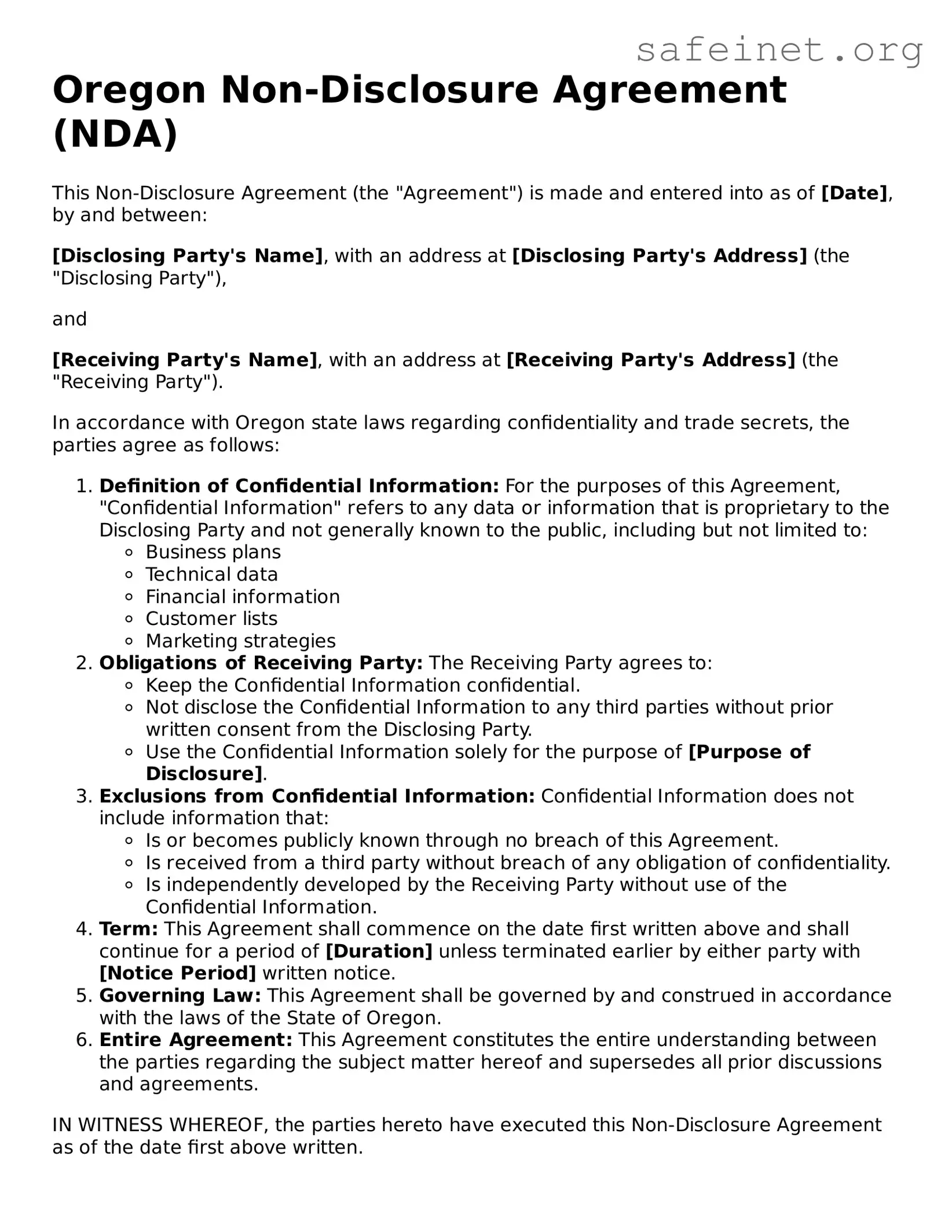
Oregon Non-Disclosure Agreement (NDA)
This Non-Disclosure Agreement (the "Agreement") is made and entered into as of [Date], by and between:
[Disclosing Party's Name], with an address at [Disclosing Party's Address] (the "Disclosing Party"),
and
[Receiving Party's Name], with an address at [Receiving Party's Address] (the "Receiving Party").
In accordance with Oregon state laws regarding confidentiality and trade secrets, the parties agree as follows:
IN WITNESS WHEREOF, the parties hereto have executed this Non-Disclosure Agreement as of the date first above written.
Disclosing Party:
_____________________________
[Name of Authorized Signatory]
[Title]
Receiving Party:
_____________________________
[Name of Authorized Signatory]
[Title]
| Fact Name | Description |
|---|---|
| Purpose | The Oregon Non-disclosure Agreement (NDA) is designed to protect confidential information shared between parties. |
| Governing Law | The NDA is governed by the laws of the State of Oregon, ensuring that any disputes are resolved under Oregon law. |
| Duration | Typically, the NDA specifies a duration during which the information must remain confidential, often ranging from one to five years. |
| Enforceability | For the NDA to be enforceable, it must be clear, reasonable in scope, and signed by all parties involved. |
Filling out the Oregon Non-disclosure Agreement form is an important step in protecting sensitive information. Once you have completed the form, you will be ready to move forward with your business arrangements while ensuring confidentiality.
What is a Non-disclosure Agreement (NDA) in Oregon?
A Non-disclosure Agreement (NDA) is a legal contract designed to protect confidential information shared between parties. In Oregon, an NDA ensures that sensitive information, such as trade secrets, business plans, or proprietary data, remains confidential. By signing this agreement, both parties commit to not disclosing the information to unauthorized individuals or entities. This helps foster trust and encourages open communication during business discussions or collaborations.
Who should use an NDA in Oregon?
Any individual or business that plans to share confidential information should consider using an NDA. This includes entrepreneurs discussing potential partnerships, employers sharing sensitive company information with employees, or businesses negotiating contracts with vendors. An NDA is particularly important in competitive industries where the risk of information leaks could harm a business's reputation or financial standing.
What should be included in an Oregon NDA?
An effective NDA should clearly outline the definition of confidential information, the obligations of both parties, and the duration of the confidentiality requirement. It should specify what information is protected and any exceptions, such as information that becomes public knowledge through no fault of the receiving party. Additionally, the agreement should include provisions for dispute resolution and the governing law, which, in this case, would be Oregon law.
What are the consequences of violating an NDA in Oregon?
Violating an NDA can lead to serious consequences. The party that discloses confidential information may face legal action, resulting in potential financial penalties, damages, or injunctions to prevent further disclosures. In some cases, the harmed party may seek compensation for losses incurred due to the breach. It’s essential to take the terms of an NDA seriously, as they are legally binding and designed to protect both parties' interests.
Failing to read the entire document before signing. Many individuals rush through the agreement, which can lead to misunderstandings about their obligations.
Not specifying the duration of the confidentiality obligation. It's important to clearly state how long the information must remain confidential.
Omitting details about the information being protected. A vague description can create confusion about what exactly is considered confidential.
Using unclear language or terms. Legal jargon can lead to misinterpretation, so it's best to use straightforward language.
Neglecting to include the names of all parties involved. All parties must be clearly identified to ensure everyone understands their responsibilities.
Forgetting to outline the consequences of a breach. Including specific penalties can help deter violations of the agreement.
Not considering exceptions to confidentiality. It's useful to define situations where disclosure might be permissible, such as legal requirements.
Failing to date the agreement. An undated document can lead to disputes about when the obligations began.
Not having the agreement reviewed by a legal professional. Seeking legal advice can help ensure that the document is enforceable and meets specific needs.
Ignoring the need for signatures from all parties. A lack of signatures can render the agreement unenforceable.
When entering into a Non-disclosure Agreement (NDA) in Oregon, several other forms and documents may accompany it to ensure a comprehensive understanding of the parties' obligations and rights. Each of these documents serves a specific purpose, helping to clarify expectations and protect sensitive information.
These documents, when used in conjunction with an Oregon Non-disclosure Agreement, help create a more robust framework for protecting confidential information. Understanding each of these forms is essential for anyone involved in business dealings that require discretion and trust.
A Mutual Non-Disclosure Agreement (MNDA) is similar to the Oregon Non-Disclosure Agreement. Both documents protect confidential information shared between two parties. The MNDA allows both parties to disclose sensitive information while ensuring that it remains protected. This agreement is often used in business partnerships where both sides may share proprietary information, making it essential for mutual protection.
A Confidentiality Agreement (CA) is another document that serves a similar purpose. Like the Oregon Non-Disclosure Agreement, a CA is designed to safeguard sensitive information from being disclosed to unauthorized parties. It can be used in various contexts, such as employment or business negotiations, where one party needs to ensure that their confidential information remains private.
An Employment Non-Disclosure Agreement is specifically tailored for the employer-employee relationship. It shares similarities with the Oregon Non-Disclosure Agreement in that it aims to protect the employer’s confidential information from being disclosed by the employee. This document often includes clauses about what constitutes confidential information and the consequences of breaching the agreement.
A Non-Circumvention Agreement is another related document. While it primarily prevents one party from bypassing another in a business deal, it also includes confidentiality clauses similar to those found in the Oregon Non-Disclosure Agreement. This ensures that sensitive information shared during negotiations is not disclosed to third parties or used to undermine the original party.
A Proprietary Information Agreement (PIA) focuses on the protection of proprietary information, much like the Oregon Non-Disclosure Agreement. This document is commonly used in industries where trade secrets or proprietary processes are involved. It specifies what information is considered proprietary and outlines the obligations of the parties to keep that information confidential.
An Intellectual Property Non-Disclosure Agreement protects intellectual property rights while sharing information. Similar to the Oregon Non-Disclosure Agreement, it helps prevent the unauthorized use or disclosure of ideas, inventions, or designs. This type of agreement is crucial for inventors or creators who want to share their work without risking theft or misuse.
A Business Partnership Agreement often includes confidentiality provisions akin to those in the Oregon Non-Disclosure Agreement. While its primary focus is on the terms of the partnership, it also addresses the handling of confidential information exchanged between partners. This ensures that sensitive business information remains protected throughout the partnership.
A Vendor Non-Disclosure Agreement is used when businesses engage with vendors or contractors. It shares similarities with the Oregon Non-Disclosure Agreement in that it protects the confidential information of the business while allowing vendors to access necessary data to perform their services. This type of agreement helps maintain trust and security in business relationships.
A License Agreement may also contain confidentiality clauses similar to those in the Oregon Non-Disclosure Agreement. This document allows one party to use another party's intellectual property under specific conditions while ensuring that any sensitive information shared during the licensing process is kept confidential. It is essential for protecting the interests of both parties involved.
When filling out the Oregon Non-disclosure Agreement form, it's important to keep a few key points in mind. Here’s a list of things you should and shouldn't do:
Following these guidelines will help ensure that your Non-disclosure Agreement is filled out correctly and serves its intended purpose.
There are several misconceptions about the Oregon Non-disclosure Agreement (NDA) form. Understanding these can help you navigate the process more effectively. Here’s a list of common misunderstandings:
By clearing up these misconceptions, you can approach NDAs with more confidence and clarity.
When filling out and using the Oregon Non-disclosure Agreement (NDA) form, there are several important points to keep in mind. Here are some key takeaways:
By following these guidelines, you can effectively use the Oregon NDA to protect your sensitive information.