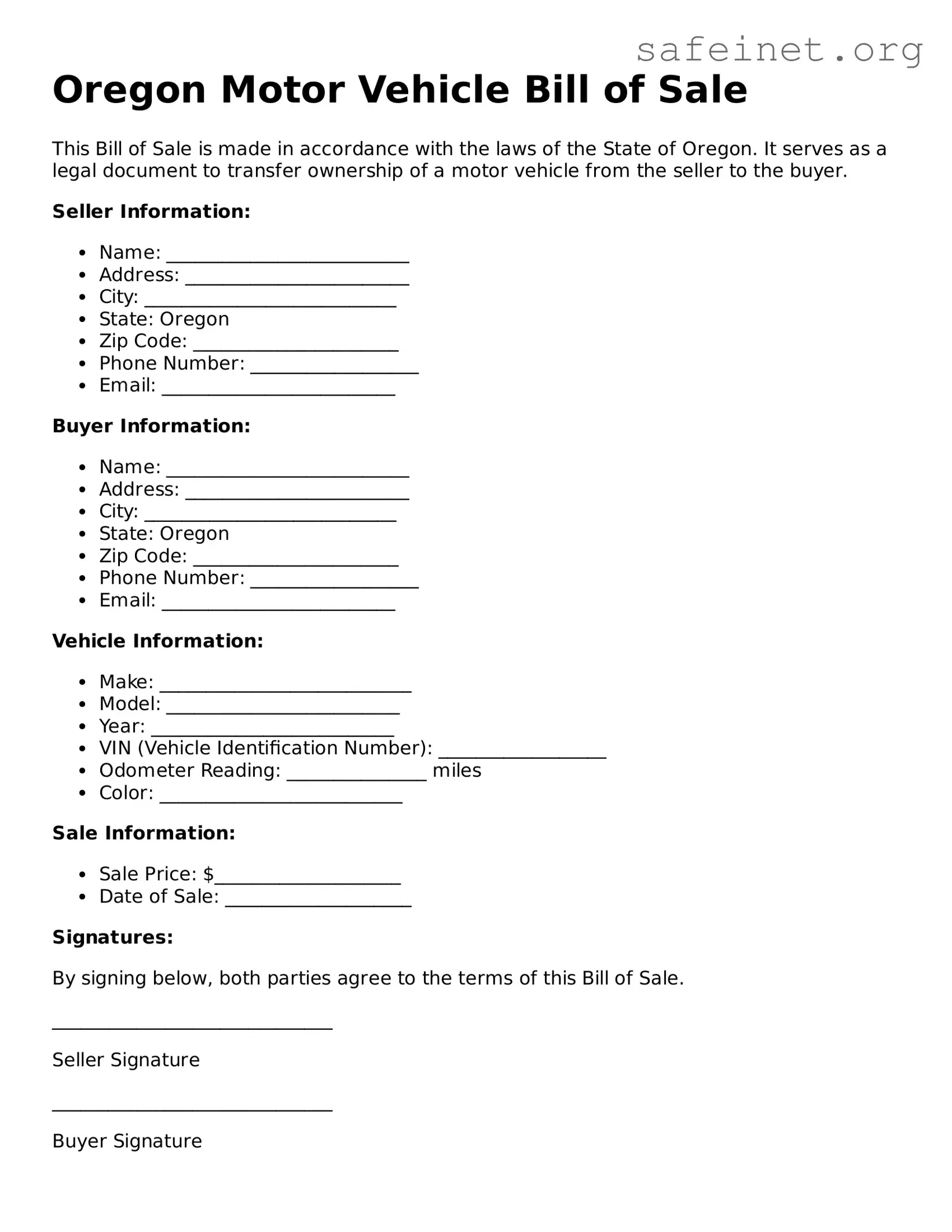
When it comes to buying or selling a vehicle in Oregon, the Motor Vehicle Bill of Sale form plays a crucial role in ensuring a smooth transaction. This document serves as a formal record of the sale, providing essential details that protect both the buyer and the seller. Key components of the form include the names and addresses of both parties, a description of the vehicle, including its make, model, year, and Vehicle Identification Number (VIN), and the sale price. Additionally, the form may require information about the vehicle's current registration status and any outstanding liens. By completing this form, both parties acknowledge the transfer of ownership, which is vital for the buyer's future registration and for the seller's records. Understanding the importance of this document can help facilitate a transparent and efficient exchange, minimizing the potential for disputes and ensuring compliance with state regulations.
Oregon Motor Vehicle Bill of Sale
This Bill of Sale is made in accordance with the laws of the State of Oregon. It serves as a legal document to transfer ownership of a motor vehicle from the seller to the buyer.
Seller Information:
Buyer Information:
Vehicle Information:
Sale Information:
Signatures:
By signing below, both parties agree to the terms of this Bill of Sale.
______________________________
Seller Signature
______________________________
Buyer Signature
This document should be retained by both parties for their records. It is advisable to have this Bill of Sale notarized to ensure its authenticity.
| Fact Name | Details |
|---|---|
| Purpose | The Oregon Motor Vehicle Bill of Sale form is used to document the sale of a vehicle between a buyer and a seller. |
| Governing Law | This form is governed by the Oregon Revised Statutes, specifically ORS 803.095. |
| Required Information | The form must include details such as the vehicle's make, model, year, VIN, and the sale price. |
| Signature Requirement | Both the seller and buyer must sign the form to validate the transaction. |
Once you have your Oregon Motor Vehicle Bill of Sale form ready, it’s time to fill it out accurately. This document is essential for transferring ownership of a vehicle. Make sure you have all necessary information at hand before you begin.
What is the purpose of the Oregon Motor Vehicle Bill of Sale form?
The Oregon Motor Vehicle Bill of Sale serves as a legal document that records the transfer of ownership of a vehicle from one party to another. This form provides essential details, such as the vehicle's make, model, year, and Vehicle Identification Number (VIN). It also includes the names and signatures of both the buyer and the seller, ensuring that the transaction is documented and recognized by the state. This form is particularly important for registering the vehicle in the new owner's name and can also serve as proof of purchase for tax purposes.
Do I need to have the Bill of Sale notarized?
In Oregon, notarization of the Bill of Sale is not required for the document to be valid. However, having it notarized can add an extra layer of authenticity, which may be beneficial in case of disputes or for personal records. It is advisable to check with the local Department of Motor Vehicles (DMV) for any specific requirements that may apply to your situation.
What information is required on the Bill of Sale?
The Oregon Motor Vehicle Bill of Sale must include several key pieces of information. This includes the full names and addresses of both the buyer and the seller, the vehicle's make, model, year, VIN, and the sale price. Additionally, the date of the sale should be noted. Both parties must sign the document to validate the transaction. Providing accurate information helps prevent any future complications regarding ownership or registration.
Is there a fee associated with using the Bill of Sale?
While there is no fee specifically for creating a Bill of Sale in Oregon, there may be fees associated with registering the vehicle with the DMV after the sale. These fees can vary based on the vehicle's value and other factors. It is important to check with the DMV for the most current fee schedule and any additional requirements that may apply when transferring ownership.
Can I use a Bill of Sale for a vehicle purchased out of state?
Yes, a Bill of Sale can be used for vehicles purchased out of state, provided it meets the necessary requirements of the state where the vehicle will be registered. It is essential to ensure that the Bill of Sale includes all required information, such as the vehicle's details and the buyer and seller's information. When registering the vehicle in Oregon, the buyer may also need to provide additional documentation, such as the previous title and proof of residency.
What should I do after completing the Bill of Sale?
After completing the Oregon Motor Vehicle Bill of Sale, both the buyer and seller should keep a copy for their records. The seller should also provide the buyer with the vehicle's title, signed over to the new owner. The buyer must then take the Bill of Sale and the signed title to the DMV to register the vehicle in their name. It is advisable to complete this process promptly to avoid any issues with vehicle registration or ownership verification in the future.
Not including all required information. It's essential to fill out all sections of the form. Missing details can lead to delays in processing.
Failing to sign the document. Both the seller and buyer must sign the Bill of Sale for it to be valid. Without signatures, the document holds no legal weight.
Using incorrect vehicle identification numbers (VINs). Double-check the VIN on the vehicle against what is written on the form. An error can cause complications with registration.
Not including the sale date. It's crucial to note when the transaction took place. This date is important for both parties for record-keeping purposes.
Leaving out the purchase price. The amount paid for the vehicle must be clearly stated. This is necessary for tax purposes and future reference.
Not providing the correct odometer reading. Accurately recording the mileage is essential to avoid any disputes later on. It protects both the buyer and seller.
Neglecting to keep a copy. After filling out the form, both parties should retain a copy for their records. This can be crucial if any issues arise in the future.
Overlooking state-specific requirements. Each state may have unique rules regarding Bill of Sale forms. Ensure you are aware of Oregon's specific requirements to avoid mistakes.
When buying or selling a vehicle in Oregon, several forms and documents may accompany the Motor Vehicle Bill of Sale. These documents help ensure a smooth transaction and provide necessary information for both parties involved. Below is a list of commonly used forms that are important in this process.
Having these documents ready can simplify the buying or selling process, ensuring that both parties have the necessary information to complete the transaction legally and efficiently. Always check with local regulations or the DMV for any specific requirements related to your situation.
The Oregon Motor Vehicle Bill of Sale form is similar to the Vehicle Title Transfer form. Both documents serve to officially transfer ownership of a vehicle from one party to another. The Vehicle Title Transfer form is typically required by the state to update the vehicle's registration records. It includes details about the vehicle, such as its VIN, make, model, and year, as well as the names and signatures of both the seller and buyer. This form ensures that the transaction is recorded and legally recognized by the Department of Motor Vehicles (DMV).
Another document that resembles the Oregon Motor Vehicle Bill of Sale is the Purchase Agreement. This agreement outlines the terms of the sale, including the purchase price, payment method, and any conditions related to the sale. While the Purchase Agreement is often more detailed and may include additional clauses regarding warranties or conditions of the vehicle, it serves a similar purpose in documenting the transaction and protecting both parties' interests.
The Odometer Disclosure Statement is also comparable to the Bill of Sale. This document is required by federal law when a vehicle is sold, and it provides a record of the vehicle's mileage at the time of sale. Both the seller and buyer must sign this statement to confirm the accuracy of the odometer reading. This helps prevent fraud and ensures that the buyer is aware of the vehicle's usage history.
A similar document is the Vehicle Registration Application. This form is used to register a vehicle with the state after purchase. While the Bill of Sale serves as proof of ownership transfer, the Vehicle Registration Application is necessary for obtaining a license plate and officially recording the vehicle in the state's system. Both documents are essential for legal vehicle operation.
The Affidavit of Heirship can also be compared to the Bill of Sale, particularly in cases where a vehicle is inherited. This affidavit serves to establish the rightful ownership of a vehicle when it is passed down through inheritance. Like the Bill of Sale, it requires signatures from parties involved and may need to be notarized to ensure its validity.
Lastly, the Insurance Declaration Page is similar in that it documents important information about the vehicle and its coverage. While this page is primarily focused on insurance details, it often includes the vehicle's VIN, make, and model, similar to the Bill of Sale. Both documents are crucial for ensuring that the vehicle is legally covered and that the buyer has the necessary information to maintain insurance.
When filling out the Oregon Motor Vehicle Bill of Sale form, it's important to follow specific guidelines to ensure accuracy and compliance. Here are four things you should do and four things you should avoid.
The Oregon Motor Vehicle Bill of Sale form is an important document for anyone buying or selling a vehicle in the state. However, several misconceptions can lead to confusion. Here are four common misunderstandings:
Understanding these misconceptions can help ensure a smooth transaction when buying or selling a vehicle in Oregon.
When filling out and using the Oregon Motor Vehicle Bill of Sale form, keep these key takeaways in mind: