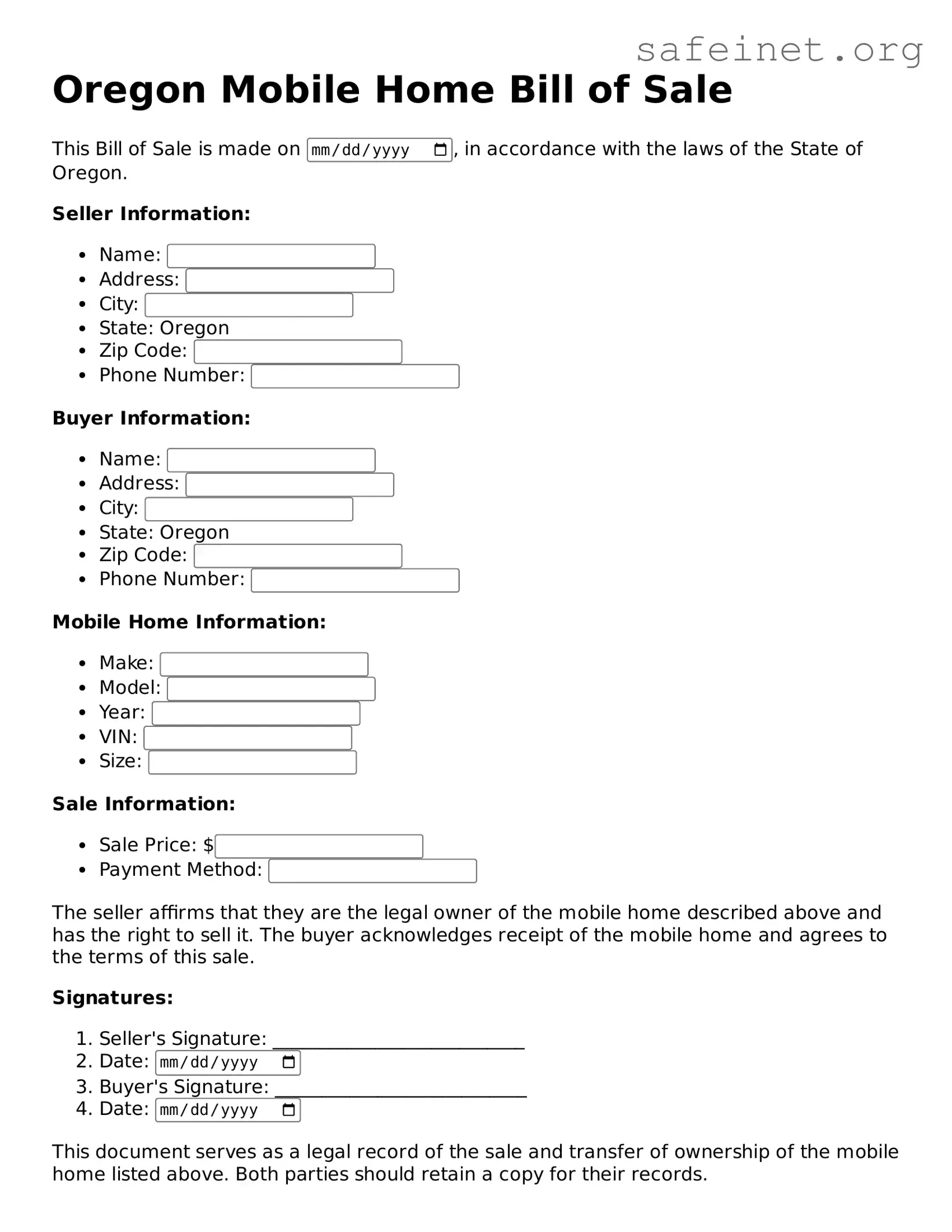
When it comes to buying or selling a mobile home in Oregon, having the right documentation is essential for a smooth transaction. The Oregon Mobile Home Bill of Sale form serves as a critical tool in this process, providing a clear record of the sale and outlining the responsibilities of both the buyer and the seller. This form typically includes important details such as the names and addresses of both parties, a description of the mobile home being sold—including its make, model, year, and vehicle identification number (VIN)—and the agreed-upon sale price. Additionally, the form may also encompass information regarding any warranties or disclosures related to the mobile home, ensuring that both parties are fully informed. By using this form, buyers can gain peace of mind knowing that their purchase is legally documented, while sellers can protect themselves from future disputes. Understanding how to properly complete and utilize this form can make the difference between a successful transaction and potential legal complications down the line.
Oregon Mobile Home Bill of Sale
This Bill of Sale is made on , in accordance with the laws of the State of Oregon.
Seller Information:
Buyer Information:
Mobile Home Information:
Sale Information:
The seller affirms that they are the legal owner of the mobile home described above and has the right to sell it. The buyer acknowledges receipt of the mobile home and agrees to the terms of this sale.
Signatures:
This document serves as a legal record of the sale and transfer of ownership of the mobile home listed above. Both parties should retain a copy for their records.
| Fact Name | Description |
|---|---|
| Purpose | The Oregon Mobile Home Bill of Sale is used to transfer ownership of a mobile home from one party to another. |
| Governing Law | This form is governed by Oregon state law, specifically ORS 446.003 to ORS 446.200. |
| Parties Involved | The document requires the names and addresses of both the seller and the buyer. |
| Mobile Home Details | Information about the mobile home, including make, model, year, and VIN, must be included. |
| Purchase Price | The agreed-upon purchase price must be clearly stated in the bill of sale. |
| Signatures | Both the seller and buyer must sign the document to validate the sale. |
| Witness Requirement | While not mandatory, having a witness sign can add an extra layer of validation. |
| Notarization | Notarization is not required but can provide additional legal protection for both parties. |
| Record Keeping | It is advisable for both parties to keep a copy of the signed bill of sale for their records. |
After obtaining the Oregon Mobile Home Bill of Sale form, you will need to fill it out accurately. This form serves as a record of the sale and transfer of ownership for a mobile home. Follow these steps to ensure all necessary information is included.
Once completed, keep a copy for your records and provide the original to the buyer. This document will be important for future registration and ownership verification.
What is a Mobile Home Bill of Sale in Oregon?
A Mobile Home Bill of Sale is a legal document that records the transfer of ownership of a mobile home from one party to another in Oregon. It serves as proof of the transaction and includes important details about the mobile home, such as its make, model, year, and identification number.
Why do I need a Mobile Home Bill of Sale?
This document is essential for both the buyer and the seller. For the seller, it provides evidence that the mobile home has been sold, protecting them from future claims. For the buyer, it serves as proof of ownership, which is necessary for registering the mobile home with the state and for obtaining insurance.
What information is required on the form?
The form typically requires the names and addresses of both the seller and the buyer, a description of the mobile home (including make, model, year, and identification number), the sale price, and the date of the sale. Both parties should also sign the document to make it legally binding.
Is the Mobile Home Bill of Sale required by law?
While it is not legally mandated to use a Bill of Sale for every mobile home transaction, it is highly recommended. Having this document protects both parties and helps avoid disputes in the future.
Can I create my own Mobile Home Bill of Sale?
Yes, you can create your own Bill of Sale as long as it includes all necessary information and is signed by both parties. However, using a standard form can help ensure that you include all required details and comply with state laws.
Do I need to have the Bill of Sale notarized?
Notarization is not typically required for a Mobile Home Bill of Sale in Oregon. However, having the document notarized can add an extra layer of authenticity and may be helpful in case of disputes.
What should I do with the completed Bill of Sale?
Once the Bill of Sale is completed and signed, both the buyer and seller should keep a copy for their records. The buyer should also take the document to the local Department of Motor Vehicles (DMV) or appropriate agency to register the mobile home in their name.
What if the mobile home has liens or loans against it?
If there are liens or loans on the mobile home, it is crucial to address these before completing the sale. The seller should disclose any outstanding debts, and the buyer should ensure that these are resolved to avoid complications in ownership transfer.
Incomplete Information: One of the most common mistakes is failing to provide all necessary details. Buyers and sellers must fill in their names, addresses, and contact information completely. Missing even one piece of information can lead to complications later.
Incorrect Mobile Home Identification: It is crucial to accurately identify the mobile home being sold. This includes the make, model, year, and Vehicle Identification Number (VIN). Errors in this section can create confusion and legal issues during the transfer of ownership.
Omitting Signatures: Both parties must sign the form for it to be legally binding. Forgetting to include one or both signatures can invalidate the bill of sale. This mistake can cause delays in the transfer process.
Not Including Sale Price: The sale price of the mobile home must be clearly stated. Failing to do so can lead to misunderstandings about the terms of the sale and may affect tax obligations.
Neglecting to Date the Document: A date is essential for establishing when the transaction took place. Without a date, it may be difficult to prove the timeline of the sale, which can be important for legal and tax purposes.
Forgetting to Keep Copies: After completing the form, both parties should retain a copy for their records. This ensures that both the buyer and seller have proof of the transaction should any disputes arise in the future.
When buying or selling a mobile home in Oregon, the Mobile Home Bill of Sale form is an essential document. However, several other forms and documents may also be required to ensure a smooth transaction. Here’s a list of some commonly used documents that often accompany the Mobile Home Bill of Sale.
Having these documents ready can facilitate a smoother transaction process. It's always wise to consult with a professional to ensure you have all the necessary paperwork in order.
The Oregon Mobile Home Bill of Sale form shares similarities with the traditional Vehicle Bill of Sale. Both documents serve as proof of ownership transfer between a seller and a buyer. Just like in a vehicle transaction, the Bill of Sale for a mobile home includes essential details such as the make, model, and identification numbers. This ensures that all parties have a clear understanding of what is being sold and helps prevent disputes down the line.
Another document that parallels the Mobile Home Bill of Sale is the Boat Bill of Sale. When purchasing a boat, buyers and sellers also need to document the transfer of ownership. This form typically includes information about the boat's specifications, registration details, and the parties involved. Similar to the mobile home process, this helps establish a legal record that protects both the buyer and seller.
The Real Estate Purchase Agreement is yet another document that shares common ground with the Mobile Home Bill of Sale. While the latter is specific to mobile homes, both agreements outline the terms of the sale, including the purchase price and any contingencies. They also require signatures from both parties, ensuring that everyone is on the same page regarding the transaction.
The Rental Agreement can also be likened to the Mobile Home Bill of Sale, particularly when it comes to mobile homes that are rented out. Both documents detail the rights and responsibilities of the parties involved. While a Bill of Sale transfers ownership, a rental agreement establishes terms for occupancy, payment, and maintenance, creating a framework for the relationship between landlord and tenant.
Another comparable document is the Personal Property Bill of Sale. This form is used for various personal items, including furniture, electronics, and yes, mobile homes. Like the Mobile Home Bill of Sale, it includes information about the item being sold, the purchase price, and the identities of the buyer and seller. This ensures that the transfer of ownership is clear and legally recognized.
Lastly, the Manufactured Home Affidavit of Affixation is relevant when discussing mobile homes. This document is used when a mobile home is permanently affixed to land, converting it into real property. While the Mobile Home Bill of Sale focuses on the transfer of ownership, the Affidavit of Affixation provides legal recognition of the home as part of the real estate, ensuring that all legal implications are properly addressed.
When filling out the Oregon Mobile Home Bill of Sale form, it is crucial to ensure accuracy and completeness. Here are some essential dos and don'ts to guide you through the process:
Following these guidelines will help ensure a smooth transaction. It is vital to handle this paperwork with care to avoid potential issues in the future.
When it comes to the Oregon Mobile Home Bill of Sale form, several misconceptions can lead to confusion for buyers and sellers alike. Understanding the truth behind these myths can help ensure a smooth transaction. Here are eight common misconceptions:
By debunking these misconceptions, individuals can navigate the process of buying or selling a mobile home in Oregon with greater confidence and clarity. Understanding the requirements ensures that all parties are protected and that the transaction proceeds smoothly.
When dealing with the Oregon Mobile Home Bill of Sale form, there are several important aspects to keep in mind. Here are some key takeaways to guide you through the process:
By following these takeaways, you can navigate the process of filling out and using the Oregon Mobile Home Bill of Sale form with confidence.