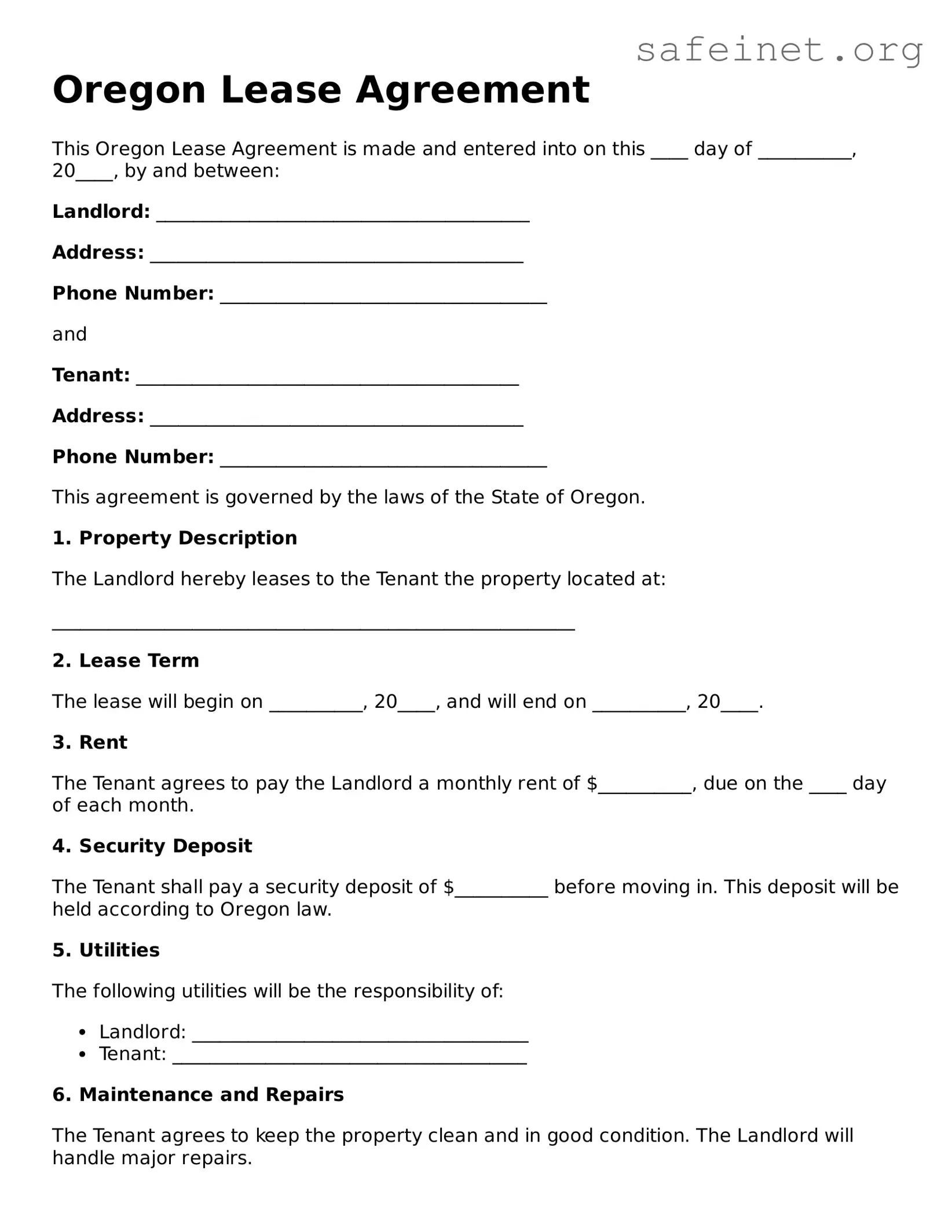
When entering into a rental agreement in Oregon, understanding the Oregon Lease Agreement form is crucial for both landlords and tenants. This document outlines the terms and conditions of the lease, including the duration of the rental period, the amount of rent due, and the responsibilities of both parties. Essential details such as security deposits, maintenance obligations, and rules regarding pets and guests are also clearly defined. Additionally, the form addresses the process for renewing or terminating the lease, ensuring that both parties are aware of their rights and obligations. By having a comprehensive lease agreement in place, potential disputes can be minimized, fostering a positive rental experience for everyone involved.
Oregon Lease Agreement
This Oregon Lease Agreement is made and entered into on this ____ day of __________, 20____, by and between:
Landlord: ________________________________________
Address: ________________________________________
Phone Number: ___________________________________
and
Tenant: _________________________________________
Address: ________________________________________
Phone Number: ___________________________________
This agreement is governed by the laws of the State of Oregon.
1. Property Description
The Landlord hereby leases to the Tenant the property located at:
________________________________________________________
2. Lease Term
The lease will begin on __________, 20____, and will end on __________, 20____.
3. Rent
The Tenant agrees to pay the Landlord a monthly rent of $__________, due on the ____ day of each month.
4. Security Deposit
The Tenant shall pay a security deposit of $__________ before moving in. This deposit will be held according to Oregon law.
5. Utilities
The following utilities will be the responsibility of:
6. Maintenance and Repairs
The Tenant agrees to keep the property clean and in good condition. The Landlord will handle major repairs.
7. Termination
Either party may terminate this lease by providing written notice at least ____ days before the intended termination date.
8. Governing Law
This agreement will be governed by the laws of the State of Oregon.
9. Signatures
By signing below, both parties agree to the terms of this lease:
Landlord Signature: ___________________________ Date: _______________
Tenant Signature: ____________________________ Date: _______________
This lease agreement is a legally binding document. Both parties should keep a copy for their records.
| Fact Name | Details |
|---|---|
| Governing Law | The Oregon Lease Agreement is governed by the Oregon Revised Statutes, specifically ORS Chapter 90. |
| Required Information | The form must include the names of the landlord and tenant, property address, lease term, and rent amount. |
| Security Deposit | Oregon law limits the security deposit to one month's rent unless otherwise agreed upon. |
| Disclosure Requirements | Landlords must disclose certain information, such as the presence of lead-based paint in properties built before 1978. |
Completing the Oregon Lease Agreement form is essential for establishing a clear understanding between landlords and tenants. This document outlines the terms and conditions of the rental arrangement. Ensure all information is accurate and complete to avoid any potential disputes.
What is an Oregon Lease Agreement form?
An Oregon Lease Agreement form is a legal document that outlines the terms and conditions under which a landlord rents property to a tenant. It details the rights and responsibilities of both parties, including rent amount, duration of the lease, and maintenance obligations.
Who needs to sign the Oregon Lease Agreement?
Both the landlord and tenant must sign the Oregon Lease Agreement. This ensures that both parties agree to the terms outlined in the document. Additional occupants may also need to be listed, depending on the landlord's requirements.
What information is typically included in the lease agreement?
The lease agreement usually includes the names of the landlord and tenant, the rental property's address, the lease term, rent amount, security deposit details, maintenance responsibilities, and rules regarding pets or smoking. It may also cover termination conditions and renewal options.
How long is an Oregon Lease Agreement valid?
The duration of an Oregon Lease Agreement can vary. It can be a fixed-term lease, typically lasting 6 or 12 months, or a month-to-month agreement. The lease automatically ends at the conclusion of the term unless renewed or extended by mutual consent.
Can a lease be terminated early?
Yes, a lease can be terminated early under certain conditions. Both parties must agree to the termination, or the tenant may have legal grounds to break the lease, such as unsafe living conditions. It's important to review the lease for any specific early termination clauses.
What happens if the tenant fails to pay rent?
If a tenant fails to pay rent, the landlord may issue a notice to pay or vacate. If the tenant does not comply, the landlord can initiate eviction proceedings. The lease agreement should outline the specific steps and timelines for dealing with late payments.
Are verbal agreements enforceable in Oregon?
While verbal agreements can be enforceable, they are difficult to prove. It is always recommended to have a written lease agreement to clarify the terms and protect both parties. Written agreements provide a clear record of the expectations and obligations.
Is a security deposit required?
A security deposit is typically required in Oregon. The amount cannot exceed one month's rent for most residential leases. The lease agreement should specify the amount, conditions for its return, and any deductions that may be made at the end of the tenancy.
Incomplete Information: One common mistake is failing to fill out all required fields. Each section of the lease agreement serves a purpose, and missing information can lead to misunderstandings or disputes later on.
Incorrect Dates: Entering the wrong lease start and end dates can create confusion. It is crucial to double-check these dates to ensure both parties have a clear understanding of the lease term.
Neglecting to Review Terms: Some individuals rush through the agreement without thoroughly reading the terms and conditions. Understanding the obligations and rights outlined in the lease is essential for a smooth landlord-tenant relationship.
Forgetting Signatures: A lease agreement is not legally binding without the signatures of all parties involved. Omitting a signature can render the document ineffective, so it is important to ensure that everyone has signed.
Not Keeping Copies: After completing the lease agreement, failing to make copies for all parties can lead to issues down the line. Each party should retain a signed copy for their records to reference in case of any disputes.
When entering into a rental agreement in Oregon, it is important to have a complete set of documents to ensure clarity and protection for both landlords and tenants. Below are five forms and documents that are often used alongside the Oregon Lease Agreement.
Having these documents prepared and understood can facilitate a smoother rental process. They provide both parties with clear expectations and protect their rights throughout the lease term.
The Oregon Rental Agreement is similar to a standard lease agreement used in many states. Both documents outline the terms and conditions under which a tenant can occupy a property. They typically include details such as the rental amount, duration of the lease, and responsibilities of both the landlord and tenant. The primary difference may lie in state-specific laws that govern rental agreements, which can affect things like security deposits and notice periods for termination.
A month-to-month rental agreement shares similarities with the Oregon Lease Agreement, particularly in terms of outlining rental terms. Both documents specify the rent amount and the responsibilities of the parties involved. However, the month-to-month agreement allows for more flexibility, as it can be terminated with shorter notice. This is beneficial for tenants who may not want to commit to a long-term lease.
The commercial lease agreement is another document that resembles the Oregon Lease Agreement. Both types of agreements lay out the terms for renting a space, but a commercial lease is specifically for business purposes. Key similarities include the need for clear terms regarding rent, duration, and maintenance responsibilities. However, commercial leases often have more complex terms due to the nature of business operations.
A sublease agreement also shares characteristics with the Oregon Lease Agreement. Both documents establish the rights and responsibilities of the parties involved. In a sublease, a tenant rents out their leased space to another person, which requires the original lease terms to be honored. The sublease must include provisions that align with the main lease, ensuring compliance with the landlord's rules.
The lease-to-own agreement is similar in that it outlines the terms of renting a property, but it includes an option for the tenant to purchase the property at a later date. Both agreements specify rental payments and responsibilities. The lease-to-own agreement often includes terms regarding how rental payments can be applied toward the purchase price, making it distinct yet related to the Oregon Lease Agreement.
Finally, the room rental agreement is akin to the Oregon Lease Agreement, especially in how it details the rental terms. This type of agreement is often used when renting a single room within a larger property. Both documents cover essential elements like rent, duration, and shared responsibilities. However, room rental agreements may also include specific rules regarding shared spaces, which are less common in standard lease agreements.
When filling out the Oregon Lease Agreement form, it is important to follow certain guidelines to ensure accuracy and compliance. Here is a list of things to do and avoid:
Following these guidelines can help ensure that the lease agreement is filled out correctly and can prevent potential disputes in the future.
Understanding the Oregon Lease Agreement form can be challenging, and several misconceptions often arise. Here are six common misunderstandings:
Being informed about these misconceptions can help both landlords and tenants navigate their rights and responsibilities more effectively.
When filling out and using the Oregon Lease Agreement form, several important points should be considered to ensure clarity and compliance. Here are key takeaways:
By paying attention to these key aspects, both landlords and tenants can create a clear and effective lease agreement that protects their rights and responsibilities.