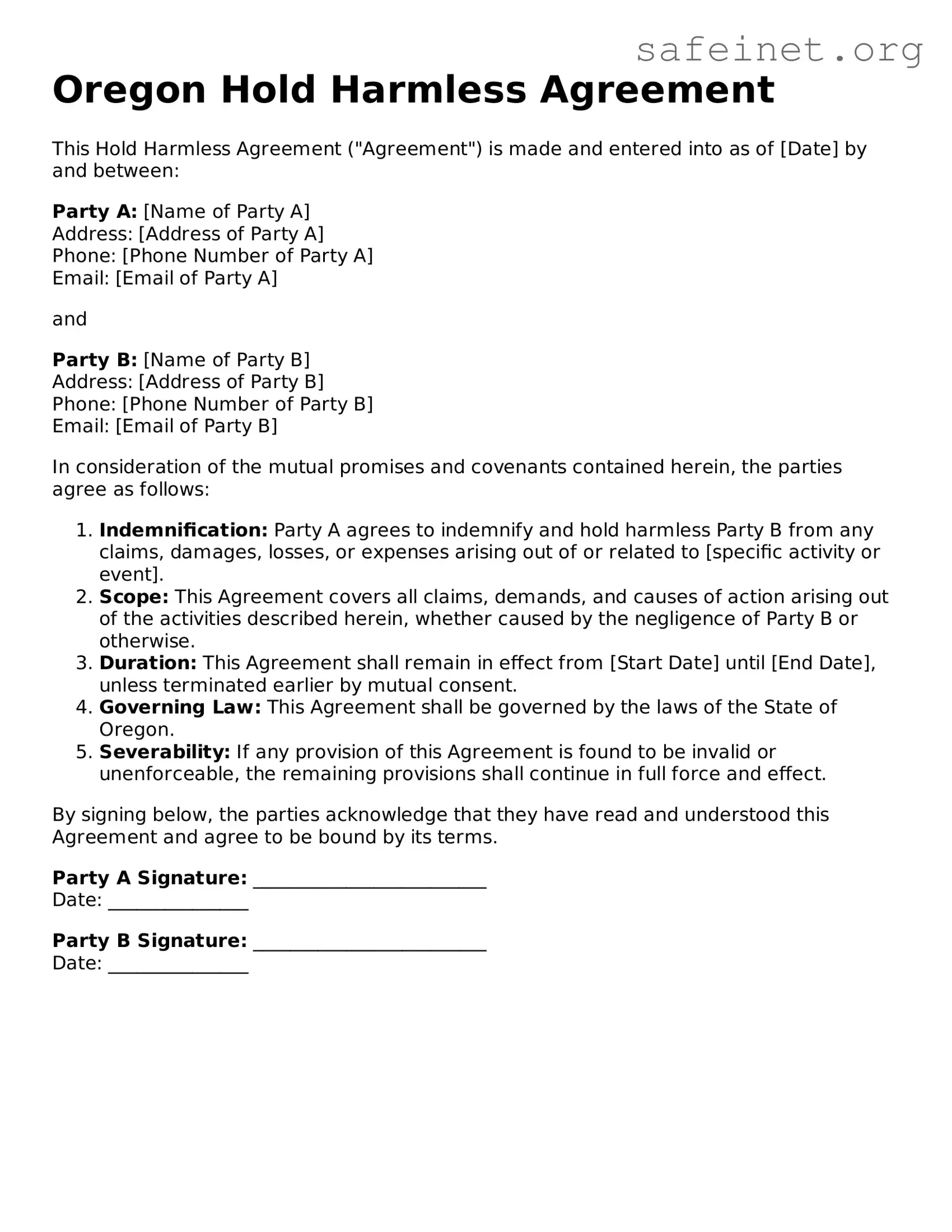
The Oregon Hold Harmless Agreement form serves as a crucial legal document that outlines the responsibilities and liabilities of parties involved in various activities, particularly in contexts such as property use, events, or services. This agreement is designed to protect one party from legal claims or financial losses that may arise from the actions or negligence of another party. Key elements of the form include clear identification of the parties involved, a detailed description of the activities or services covered, and explicit language stating that one party agrees to indemnify and hold the other harmless. By signing this agreement, individuals and organizations can mitigate risks and clarify expectations, thereby fostering a more secure environment for all parties. Understanding the implications of this document is essential for anyone engaging in agreements that involve potential liabilities, making it a vital tool in both personal and professional settings.
Oregon Hold Harmless Agreement
This Hold Harmless Agreement ("Agreement") is made and entered into as of [Date] by and between:
Party A: [Name of Party A]
Address: [Address of Party A]
Phone: [Phone Number of Party A]
Email: [Email of Party A]
and
Party B: [Name of Party B]
Address: [Address of Party B]
Phone: [Phone Number of Party B]
Email: [Email of Party B]
In consideration of the mutual promises and covenants contained herein, the parties agree as follows:
By signing below, the parties acknowledge that they have read and understood this Agreement and agree to be bound by its terms.
Party A Signature: _________________________
Date: _______________
Party B Signature: _________________________
Date: _______________
| Fact Name | Description |
|---|---|
| Purpose | The Oregon Hold Harmless Agreement is designed to protect one party from liability for damages or injuries incurred by another party. |
| Governing Law | This agreement is governed by the laws of the State of Oregon. |
| Parties Involved | The agreement typically involves at least two parties: the indemnitor (the party providing protection) and the indemnitee (the party being protected). |
| Scope of Agreement | The agreement can cover various activities, including events, property use, and services. |
| Liability Limitations | It may limit liability to certain types of damages or injuries, depending on the terms agreed upon by the parties. |
| Enforceability | For the agreement to be enforceable, it must be clear, unambiguous, and voluntarily signed by both parties. |
| Legal Advice | It is advisable for parties to seek legal advice before signing the agreement to fully understand their rights and obligations. |
| Common Uses | This form is commonly used in recreational activities, construction projects, and rental agreements to mitigate risk. |
After obtaining the Oregon Hold Harmless Agreement form, you will need to fill it out accurately to ensure that all necessary information is included. This process is straightforward, but careful attention to detail is essential to avoid any potential issues later on.
What is a Hold Harmless Agreement in Oregon?
A Hold Harmless Agreement is a legal document designed to protect one party from liability for any injuries or damages that may occur during a specific activity or event. In Oregon, this agreement is often used in various contexts, such as rental agreements, construction projects, and recreational activities. By signing this document, one party agrees not to hold the other party responsible for certain risks associated with the activity, thereby providing a level of protection for both parties involved.
Who typically needs a Hold Harmless Agreement?
Individuals or organizations that are hosting events, renting property, or engaging in activities that involve potential risks often require a Hold Harmless Agreement. For example, property owners may ask tenants to sign this agreement to mitigate liability for injuries that could occur on their premises. Similarly, event organizers might use it to ensure that participants acknowledge the risks involved and agree not to hold the organizers liable for any accidents.
What should be included in a Hold Harmless Agreement?
A comprehensive Hold Harmless Agreement should clearly outline the parties involved, the specific activity or event, and the scope of liability being waived. It should also include language that specifies the risks associated with the activity and state that the signer understands and accepts these risks. Furthermore, it may be beneficial to include a clause that addresses any potential legal fees or costs that may arise from disputes related to the agreement.
Is a Hold Harmless Agreement enforceable in Oregon?
Yes, a Hold Harmless Agreement can be enforceable in Oregon, provided that it is drafted clearly and complies with state laws. However, certain limitations exist. For instance, the agreement cannot protect a party from liability for gross negligence or willful misconduct. Courts may also scrutinize the agreement to ensure that it is fair and that both parties fully understood the terms before signing.
How can I ensure my Hold Harmless Agreement is valid?
To ensure the validity of a Hold Harmless Agreement, it is crucial to have it in writing and signed by all parties involved. Each party should have the opportunity to review the document and seek legal advice if needed. Additionally, using clear and straightforward language helps prevent misunderstandings. It is also advisable to keep a copy of the signed agreement for your records, as this can serve as evidence in case of any disputes in the future.
Failing to read the entire agreement thoroughly. Many people skim through the document, missing important details that could affect their rights and responsibilities.
Not understanding the legal implications of the agreement. It is crucial to grasp what it means to hold someone harmless, as this can significantly impact liability.
Leaving out necessary personal information. Ensure that all required fields, such as names and addresses, are completed accurately.
Neglecting to date the agreement. A missing date can lead to confusion about when the agreement was made and its relevance.
Using vague language. Be specific about the activities or events covered by the agreement to avoid misunderstandings later.
Not consulting with a legal professional. Seeking guidance can help clarify any uncertainties and ensure that the agreement meets legal standards.
Overlooking the need for witnesses or notarization. Some agreements may require additional verification to be legally binding.
Assuming that the agreement is one-size-fits-all. Tailor the agreement to fit the specific circumstances and parties involved.
Forgetting to keep a copy of the signed agreement. Always retain a copy for your records to reference in the future.
The Oregon Hold Harmless Agreement is often used in various contexts to protect one party from liability for certain actions or events. Along with this agreement, several other forms and documents may be necessary to ensure clarity and legal protection. Here is a list of commonly used documents that may accompany the Hold Harmless Agreement:
Using these documents together with the Oregon Hold Harmless Agreement can help clarify responsibilities and protect against potential legal issues. It is essential to ensure that all parties involved understand the terms and implications of each document.
The Indemnity Agreement is quite similar to the Oregon Hold Harmless Agreement. Both documents serve to protect one party from legal liabilities that may arise due to the actions or negligence of another party. In essence, if an individual or organization is sued because of something that another party did, the indemnity agreement ensures that the responsible party will cover the costs associated with that legal action, much like the hold harmless agreement. This creates a safety net for the party seeking protection.
The Waiver of Liability is another document that shares similarities with the Oregon Hold Harmless Agreement. This waiver is often used in situations where an individual agrees to relinquish their right to sue for injuries or damages that may occur during a specific activity, such as sports or recreational events. Like the hold harmless agreement, it aims to minimize the risk of legal claims against the organizers or facilitators, thereby protecting them from potential lawsuits.
The Release of Liability form also aligns closely with the Oregon Hold Harmless Agreement. This document is typically signed by participants in activities, acknowledging that they understand the risks involved and agree not to hold the organizers responsible for any injuries. Both documents are designed to limit legal exposure and ensure that participants take personal responsibility for their actions.
The Service Agreement can also bear similarities to the Oregon Hold Harmless Agreement. This document outlines the terms and conditions between a service provider and a client, often including clauses that address liability. Just like the hold harmless agreement, a service agreement may include provisions that protect the service provider from claims arising from the services rendered, thereby ensuring both parties understand their responsibilities.
The Lease Agreement often contains hold harmless clauses, making it another similar document. In rental situations, landlords may require tenants to agree to hold them harmless from any claims related to injuries or damages occurring on the property. This protects the landlord from potential lawsuits while clarifying the tenant's responsibilities regarding safety and maintenance.
The Partnership Agreement can also include hold harmless provisions, especially when partners are concerned about liability arising from their business operations. Such agreements outline the roles and responsibilities of each partner, including how they will handle legal claims. This ensures that partners are protected from each other’s actions, similar to the protections offered in a hold harmless agreement.
The Event Liability Insurance Waiver is another document that parallels the hold harmless agreement. Event organizers often require participants to sign this waiver, acknowledging the risks involved in the event. By doing so, participants agree not to hold the organizers liable for any accidents or injuries, similar to the protections established in a hold harmless agreement.
The Confidentiality Agreement, while primarily focused on protecting sensitive information, can also include hold harmless clauses. In situations where sharing confidential information could lead to legal repercussions, this agreement ensures that the party disclosing information is protected from claims that might arise from its misuse. This aligns with the overarching goal of minimizing liability found in hold harmless agreements.
Finally, the Memorandum of Understanding (MOU) can include hold harmless provisions when two or more parties collaborate on a project. An MOU outlines the intentions and responsibilities of each party, and by including hold harmless language, it ensures that parties are protected from liabilities arising from the partnership, much like the Oregon Hold Harmless Agreement.
When filling out the Oregon Hold Harmless Agreement form, it’s essential to approach the task with care. This document serves to protect parties from liability, so accuracy and attention to detail are crucial. Here’s a list of things you should and shouldn’t do:
By following these guidelines, you can ensure that your Hold Harmless Agreement is filled out correctly and serves its intended purpose. Remember, clarity and precision are your best allies in legal matters.
When dealing with legal documents, misunderstandings are common. The Oregon Hold Harmless Agreement form is no exception. Here are five misconceptions that people often have about this form:
Many believe that signing a Hold Harmless Agreement will shield them from any and all legal responsibility. In reality, while it can limit liability in certain situations, it does not protect against gross negligence or intentional misconduct.
Some think that only businesses need a Hold Harmless Agreement. However, individuals participating in activities that involve risk, such as sports or community events, can also benefit from this form.
People often assume that a standard Hold Harmless Agreement will suffice for any situation. Each agreement should be tailored to fit the specific circumstances and parties involved to ensure it is effective.
Another common belief is that a Hold Harmless Agreement is final and unchangeable. In fact, parties can negotiate terms and modify the agreement as long as all involved consent to the changes.
Some individuals think that signing this agreement means they do not need insurance. While it can reduce liability, having insurance is still important for comprehensive protection against unforeseen events.
Understanding these misconceptions can help individuals and organizations use the Oregon Hold Harmless Agreement more effectively and responsibly.
When using the Oregon Hold Harmless Agreement form, there are several important points to keep in mind. These takeaways will help ensure that the form is filled out correctly and used effectively.