Creating an effective employee handbook is essential for any organization in Oregon. The Oregon Employee Handbook form serves as a crucial tool for employers, providing clear guidelines on workplace policies, employee rights, and expectations. This form typically includes sections on topics such as anti-discrimination policies, workplace conduct, attendance requirements, and benefits. Additionally, it addresses important legal obligations, ensuring compliance with state and federal regulations. By outlining procedures for reporting grievances and disciplinary actions, the handbook fosters a transparent work environment. Employers can customize the handbook to reflect their unique culture while adhering to the legal framework. In this article, we will explore the key components of the Oregon Employee Handbook form, its significance in promoting a positive workplace culture, and practical tips for implementation.
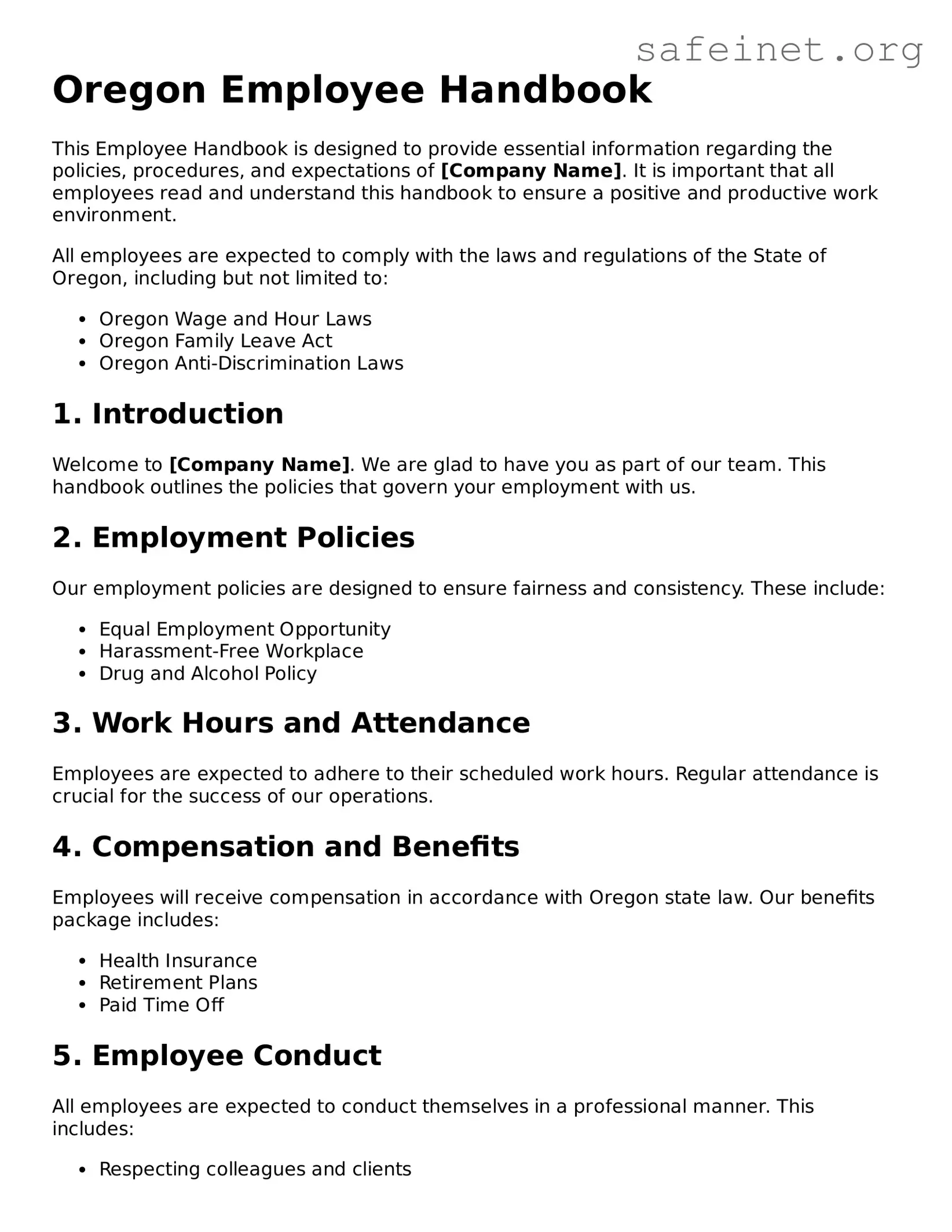
Oregon Employee Handbook
This Employee Handbook is designed to provide essential information regarding the policies, procedures, and expectations of [Company Name]. It is important that all employees read and understand this handbook to ensure a positive and productive work environment.
All employees are expected to comply with the laws and regulations of the State of Oregon, including but not limited to:
1. Introduction
Welcome to [Company Name]. We are glad to have you as part of our team. This handbook outlines the policies that govern your employment with us.
2. Employment Policies
Our employment policies are designed to ensure fairness and consistency. These include:
3. Work Hours and Attendance
Employees are expected to adhere to their scheduled work hours. Regular attendance is crucial for the success of our operations.
4. Compensation and Benefits
Employees will receive compensation in accordance with Oregon state law. Our benefits package includes:
5. Employee Conduct
All employees are expected to conduct themselves in a professional manner. This includes:
6. Grievance Procedures
If you have concerns or grievances, please follow the steps outlined below:
7. Acknowledgment of Receipt
All employees are required to sign an acknowledgment form confirming they have received and understood this handbook.
For any questions regarding this handbook or its contents, please contact [HR Contact Name] at [HR Contact Email].
| Fact Name | Description |
|---|---|
| Purpose | The Oregon Employee Handbook serves as a guide for employees regarding company policies, procedures, and expectations. |
| Legal Requirement | Oregon law does not mandate an employee handbook, but having one can help clarify workplace policies. |
| Content Guidelines | Handbooks should include topics such as anti-discrimination policies, workplace conduct, and benefits information. |
| At-Will Employment | It is advisable to include a statement that employment is at-will, meaning either party can terminate employment at any time. |
| Compliance with Laws | Employers must ensure the handbook complies with federal and state laws, including the Fair Labor Standards Act and Oregon's employment regulations. |
| Employee Acknowledgment | Employees should sign an acknowledgment form to confirm they have received and understood the handbook. |
| Updates and Revisions | Regular updates to the handbook are essential to reflect changes in laws or company policies. |
| Distribution | The handbook should be distributed to all employees, ideally during onboarding and whenever updates occur. |
| Accessibility | Employers should ensure the handbook is accessible to all employees, including those with disabilities. |
Completing the Oregon Employee Handbook form is a straightforward process. Once filled out, this form will help ensure that you understand the policies and procedures of your workplace. Follow the steps below to accurately complete the form.
What is the Oregon Employee Handbook form?
The Oregon Employee Handbook form is a document designed to help employers create a comprehensive handbook for their employees. It serves as a guide to company policies, procedures, and expectations, ensuring that all employees are informed about their rights and responsibilities within the workplace.
Why is an employee handbook important?
An employee handbook is essential for setting clear guidelines and expectations. It helps protect both the employer and employees by outlining workplace policies on issues like harassment, leave, and disciplinary actions. Having a handbook can also reduce misunderstandings and provide a reference point for employees.
Who should use the Oregon Employee Handbook form?
This form is intended for employers in Oregon who wish to develop or update their employee handbooks. It is suitable for businesses of all sizes, from small startups to larger organizations, and can be tailored to fit specific company needs.
What topics should be included in the employee handbook?
Common topics include company values, code of conduct, anti-discrimination policies, leave policies, benefits, and procedures for reporting issues. Employers may also include information about workplace safety, dress code, and performance evaluations to provide a well-rounded overview.
How often should the employee handbook be updated?
It is advisable to review and update the employee handbook at least annually. Changes in laws, company policies, or workplace culture may necessitate updates. Regular reviews ensure that the handbook remains relevant and compliant with current regulations.
Can employees provide input on the handbook?
Yes, involving employees in the handbook development process can be beneficial. Gathering feedback can help ensure that the policies are clear and address the concerns of the workforce. This collaborative approach can also enhance employee buy-in and adherence to the policies.
What should employers do after creating the handbook?
Once the handbook is finalized, employers should distribute it to all employees and ensure that they acknowledge receipt. It’s also important to provide training or information sessions to explain the handbook's contents and answer any questions employees may have.
Is the Oregon Employee Handbook form legally binding?
The handbook itself is not a legally binding contract, but it can have legal implications if policies are not followed consistently. Employers should make it clear that the handbook is a guide and that they retain the right to modify policies as needed. It’s wise to consult with a legal professional to ensure compliance with state and federal laws.
Failing to read the entire handbook thoroughly. Many employees skim through the handbook without understanding the policies and procedures. This can lead to confusion later on.
Not updating personal information. When employees change addresses, phone numbers, or emergency contacts, they often forget to update this information in the handbook.
Ignoring deadlines for submission. Some employees may overlook the importance of submitting the handbook form by the required deadline, which can result in delays in processing.
Overlooking the signature requirement. It's crucial to sign the form. Some individuals may forget this step, thinking that completing the form is sufficient.
Misunderstanding the policies. Employees sometimes misinterpret the rules outlined in the handbook, leading to mistakes in how they fill out the form.
Not asking questions. If something is unclear, employees might hesitate to seek clarification. This can lead to incorrect information being provided.
Providing incomplete information. Employees may skip sections or provide vague answers, which can cause issues later on.
Failing to keep a copy for personal records. After submitting the handbook form, some employees do not keep a copy for their own records, which can lead to difficulties if questions arise later.
When creating an employee handbook in Oregon, several other forms and documents may complement it. These documents help clarify workplace policies, ensure compliance with state and federal laws, and enhance communication between employers and employees. Here is a list of commonly used forms:
These documents work together with the employee handbook to create a comprehensive framework for workplace policies and practices. By utilizing these forms, employers can foster a transparent and organized work environment that benefits both the organization and its employees.
The Oregon Employee Handbook form is similar to the Employee Manual. Both documents serve as a guide for employees, outlining company policies, procedures, and expectations. The Employee Manual typically includes sections on workplace conduct, benefits, and disciplinary actions. Like the Employee Handbook, it aims to provide clarity and consistency in how employees should behave and what they can expect from their employer.
Another document that shares similarities is the Company Policy Guide. This guide focuses on specific policies within the workplace, such as attendance, leave, and workplace safety. While the Employee Handbook provides a broader overview of employment terms, the Company Policy Guide dives deeper into particular areas. Both documents are essential for helping employees understand their rights and responsibilities.
The Orientation Packet is also comparable to the Employee Handbook. This packet is often provided to new hires and includes essential information about the company culture, benefits, and key contacts. While the Employee Handbook may be more comprehensive, the Orientation Packet serves as an introduction, ensuring that new employees have the necessary information to start their roles effectively.
Lastly, the Workplace Safety Manual is another document that aligns with the Employee Handbook. This manual specifically addresses safety procedures and protocols within the workplace. It is crucial for promoting a safe working environment. While the Employee Handbook covers general employment topics, the Workplace Safety Manual focuses on health and safety regulations, ensuring that employees are informed about safe practices at work.
When filling out the Oregon Employee Handbook form, consider the following guidelines:
When it comes to the Oregon Employee Handbook form, several misconceptions can lead to confusion for employers and employees alike. Understanding these myths is essential for creating a clear and effective handbook. Here are eight common misconceptions:
This is not true. While there are common elements, each handbook should reflect the unique culture and policies of the organization.
In reality, handbooks should be living documents. Regular updates are necessary to stay compliant with changing laws and company policies.
Every business, regardless of size, can benefit from having an employee handbook. It helps set clear expectations and guidelines.
While they outline policies, handbooks typically do not create a contractual obligation unless explicitly stated.
It’s a misconception that all employees will take the time to read the handbook. Regular training and discussions can help ensure understanding.
Input from various departments can provide valuable insights. Collaboration helps ensure the handbook is comprehensive and relevant.
While clarity is important, a friendly and approachable tone can make the handbook more engaging and easier to understand.
Distributing the handbook is just the beginning. Ongoing communication and training are essential for reinforcing its content.
By addressing these misconceptions, employers can create a more effective and user-friendly employee handbook that supports a positive workplace environment.
When filling out and using the Oregon Employee Handbook form, keep these key takeaways in mind: