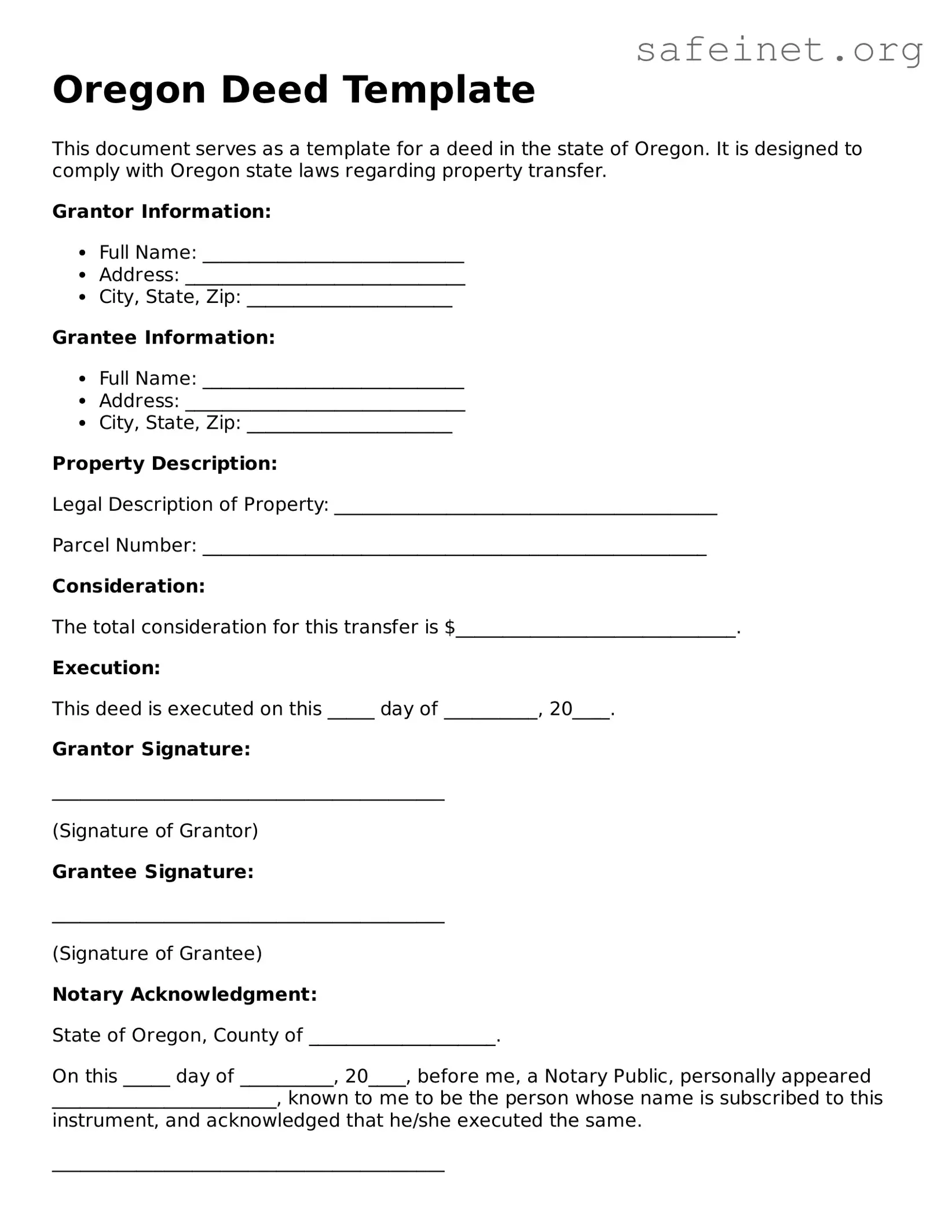
When engaging in real estate transactions in Oregon, understanding the Oregon Deed form is essential for both buyers and sellers. This form serves as a legal document that facilitates the transfer of property ownership, ensuring that the transaction is recorded and recognized by the state. Key aspects of the Oregon Deed include the identification of the grantor (the seller) and the grantee (the buyer), a clear description of the property being transferred, and the necessary signatures to validate the agreement. Additionally, the form may include details about any encumbrances, such as mortgages or liens, that could affect the property. It is important to note that the Oregon Deed must be properly executed and filed with the county clerk’s office to ensure that the transfer is legally binding. Understanding these components is crucial for anyone involved in a property transaction in Oregon, as it helps protect the interests of both parties and provides clarity throughout the process.
Oregon Deed Template
This document serves as a template for a deed in the state of Oregon. It is designed to comply with Oregon state laws regarding property transfer.
Grantor Information:
Grantee Information:
Property Description:
Legal Description of Property: _________________________________________
Parcel Number: ______________________________________________________
Consideration:
The total consideration for this transfer is $______________________________.
Execution:
This deed is executed on this _____ day of __________, 20____.
Grantor Signature:
__________________________________________
(Signature of Grantor)
Grantee Signature:
__________________________________________
(Signature of Grantee)
Notary Acknowledgment:
State of Oregon, County of ____________________.
On this _____ day of __________, 20____, before me, a Notary Public, personally appeared ________________________, known to me to be the person whose name is subscribed to this instrument, and acknowledged that he/she executed the same.
__________________________________________
(Notary Public Signature)
My commission expires: ________________.
| Fact Name | Description |
|---|---|
| Governing Law | The Oregon Deed form is governed by Oregon state law, specifically ORS Chapter 93. |
| Types of Deeds | Common types include Warranty Deed, Quitclaim Deed, and Grant Deed. |
| Required Signatures | All parties involved in the transfer must sign the deed for it to be valid. |
| Notarization | A notary public must witness the signatures for the deed to be legally binding. |
| Recording | The deed must be recorded with the county clerk’s office in the county where the property is located. |
| Legal Description | A clear legal description of the property must be included in the deed. |
| Consideration | The deed should state the consideration (payment) involved in the property transfer. |
| Transfer Tax | Oregon may impose a transfer tax on the property transfer, which must be paid at the time of recording. |
Once you have the Oregon Deed form ready, you will need to fill it out carefully to ensure all necessary information is accurately provided. After completing the form, it will need to be signed and recorded with the appropriate county office to finalize the transfer of property.
What is an Oregon Deed form?
An Oregon Deed form is a legal document used to transfer ownership of real property in the state of Oregon. This form serves as proof of the transfer and is essential for recording the transaction with the county clerk's office. Different types of deeds exist, including warranty deeds and quitclaim deeds, each serving a specific purpose in property transactions.
Who needs to use an Oregon Deed form?
What information is required on the Oregon Deed form?
How do I complete the Oregon Deed form?
Is a notary required for the Oregon Deed form?
Where do I file the Oregon Deed form?
Can I use a generic deed template for Oregon?
What happens if I don’t file the Oregon Deed form?
Are there any taxes associated with filing an Oregon Deed form?
Can I get help with the Oregon Deed form?
Incorrect Property Description: Many people fail to provide a complete and accurate description of the property. This includes not including the legal description or using vague terms. Always ensure the property is described clearly to avoid future disputes.
Missing Signatures: It is crucial to have all required signatures on the deed. Sometimes, individuals overlook the need for all owners or parties involved to sign. Ensure every necessary person signs the document before submission.
Improper Notarization: Notarization is often overlooked or done incorrectly. Some people forget to have the deed notarized, while others may not use an authorized notary. Always check that the notary’s information is complete and accurate.
Failure to Include the Date: A common mistake is neglecting to include the date of execution. This detail is essential for legal purposes and can affect the validity of the deed. Always double-check that the date is clearly stated.
Ignoring Local Filing Requirements: Each county may have specific requirements for filing a deed. Some individuals do not research these local rules and submit their documents incorrectly. Always verify the requirements for your specific county to ensure compliance.
When dealing with property transactions in Oregon, several forms and documents accompany the Oregon Deed form. Each of these documents serves a specific purpose and helps ensure a smooth transfer of ownership. Below is a list of commonly used documents.
Understanding these documents can help streamline the property transfer process. Each serves a vital role in protecting the interests of all parties involved, ensuring that the transaction is clear and legally sound.
The Oregon Deed form shares similarities with the Warranty Deed. A Warranty Deed guarantees that the seller holds clear title to the property and has the right to sell it. This document provides assurances to the buyer that there are no outstanding claims against the property. Like the Oregon Deed, it requires signatures from both parties and is typically recorded with the county to establish public ownership records.
Another document akin to the Oregon Deed is the Quitclaim Deed. A Quitclaim Deed transfers whatever interest the seller has in the property without any warranties. This means the seller does not guarantee that they own the property outright. While it is simpler and faster to execute, it does not provide the same level of protection to the buyer as the Oregon Deed or Warranty Deed.
The Special Purpose Deed is also similar to the Oregon Deed. This type of deed is used for specific purposes, such as transferring property between family members or in divorce settlements. Like the Oregon Deed, it must be executed properly and recorded to ensure the transfer is legally recognized. However, it may not offer the same protections or warranties as a Warranty Deed.
The Bargain and Sale Deed resembles the Oregon Deed in that it transfers ownership of property but does not include warranties against claims. This type of deed implies that the seller has the right to sell the property but does not guarantee that the title is clear. Buyers should be cautious, as this document may leave them vulnerable to potential title issues.
The Grant Deed is another document similar to the Oregon Deed. A Grant Deed conveys property ownership and includes implied warranties that the seller has not transferred the title to anyone else. While it provides some assurances to the buyer, it is not as comprehensive as a Warranty Deed. The Oregon Deed, like the Grant Deed, requires recording to establish ownership officially.
The Trustee's Deed can also be compared to the Oregon Deed. This document is used when property is transferred by a trustee, often in the context of a trust or foreclosure. It conveys title to the property but may come with limitations based on the terms of the trust. The Oregon Deed, while more straightforward, serves a similar purpose in transferring ownership.
Lastly, the Executor's Deed is similar to the Oregon Deed in that it is used to transfer property from a deceased person's estate. This document is executed by the executor of the estate and provides proof of ownership transfer. Like the Oregon Deed, it must be recorded to ensure the new ownership is recognized legally. Both documents serve to clarify and formalize property ownership transitions.
When filling out the Oregon Deed form, it's important to follow certain guidelines to ensure the document is completed correctly. Here are six things you should and shouldn't do:
Following these guidelines can help facilitate a smooth process when filing your Oregon Deed form.
When it comes to the Oregon Deed form, several misconceptions can lead to confusion among property owners and buyers. Understanding these misconceptions is crucial for anyone involved in real estate transactions in Oregon.
By clarifying these misconceptions, individuals can approach property transactions in Oregon with greater confidence and understanding.
When filling out and using the Oregon Deed form, there are several important points to consider. Here are some key takeaways to keep in mind:
By following these guidelines, you can help ensure a smoother process when using the Oregon Deed form.