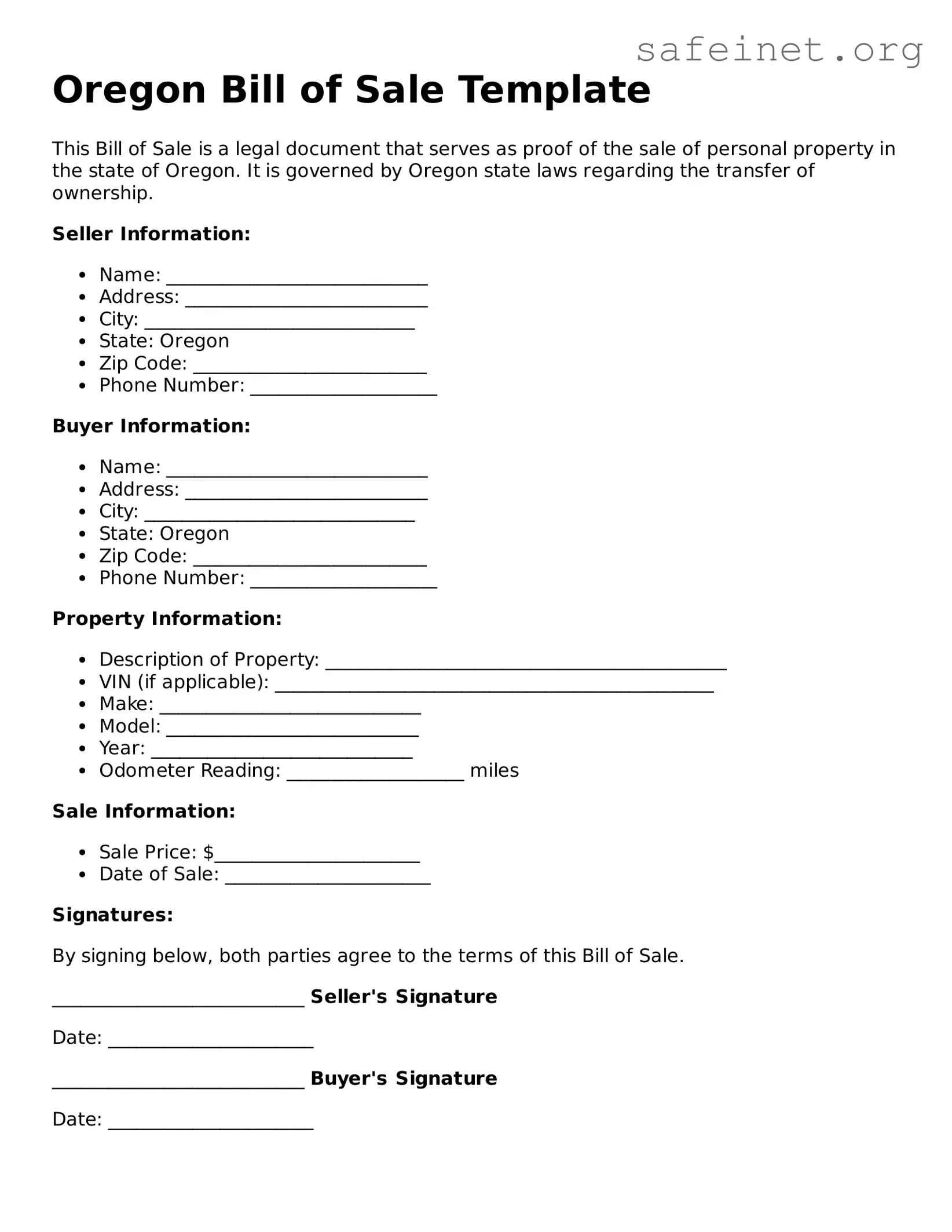
The Oregon Bill of Sale form is an essential document for anyone involved in the sale or transfer of personal property in the state. This form serves as proof of the transaction, detailing important information about the buyer, seller, and the item being sold. It typically includes the names and addresses of both parties, a description of the item, and the sale price. Additionally, the form may outline any warranties or conditions agreed upon during the transaction. By using this document, both buyers and sellers can ensure that their rights are protected and that the sale is legally recognized. Understanding the key components of the Oregon Bill of Sale is crucial for a smooth transaction, whether you're selling a vehicle, equipment, or other personal items.
Oregon Bill of Sale Template
This Bill of Sale is a legal document that serves as proof of the sale of personal property in the state of Oregon. It is governed by Oregon state laws regarding the transfer of ownership.
Seller Information:
Buyer Information:
Property Information:
Sale Information:
Signatures:
By signing below, both parties agree to the terms of this Bill of Sale.
___________________________ Seller's Signature
Date: ______________________
___________________________ Buyer's Signature
Date: ______________________
This document is effective upon signing by both parties. It is recommended to keep a copy for your records.
| Fact Name | Description |
|---|---|
| Purpose | The Oregon Bill of Sale form is used to document the transfer of ownership of personal property from one party to another. |
| Governing Law | This form is governed by the Oregon Revised Statutes, specifically ORS Chapter 646. |
| Types of Property | The form can be used for various types of personal property, including vehicles, boats, and equipment. |
| Notarization | Notarization is not required for the Bill of Sale in Oregon, but it is recommended for added security. |
| Seller and Buyer Information | Both the seller and buyer must provide their names, addresses, and signatures on the form. |
| Sales Price | The form must include the sales price of the property being sold, ensuring clarity in the transaction. |
| As-Is Condition | The Bill of Sale often includes a statement indicating that the property is sold "as-is," limiting seller liability. |
| Record Keeping | It is advisable for both parties to keep a copy of the completed Bill of Sale for their records. |
Filling out the Oregon Bill of Sale form is straightforward. This document is important for transferring ownership of a vehicle or other personal property. After completing the form, make sure to keep a copy for your records and provide the other party with their copy.
What is an Oregon Bill of Sale form?
The Oregon Bill of Sale form is a legal document that records the transfer of ownership of personal property from one party to another. It serves as proof of the transaction and includes important details such as the buyer, seller, and a description of the item being sold.
When do I need a Bill of Sale in Oregon?
A Bill of Sale is typically needed when you buy or sell personal property, such as vehicles, boats, or equipment. While it is not always required by law, having one can protect both the buyer and seller by providing evidence of the transaction.
What information should be included in the Oregon Bill of Sale?
Key information includes the names and addresses of the buyer and seller, a detailed description of the item (including make, model, and VIN for vehicles), the sale price, and the date of the transaction. It’s also helpful to include any warranties or conditions of the sale.
Is the Bill of Sale form required to be notarized?
In Oregon, notarization is not required for a Bill of Sale to be valid. However, having the document notarized can add an extra layer of authenticity and may be beneficial if any disputes arise in the future.
Can I create my own Bill of Sale?
Yes, you can create your own Bill of Sale. It is important to ensure that all necessary information is included and that the document is clear and accurate. Templates are available online to help guide you in creating one.
What happens if I lose my Bill of Sale?
If you lose your Bill of Sale, it may be challenging to prove ownership of the item. However, you can create a new Bill of Sale with the same information and have both parties sign it again. Keep a copy in a safe place to avoid future issues.
Do I need to file the Bill of Sale with any government agency?
Generally, you do not need to file the Bill of Sale with any government agency in Oregon. However, for vehicle sales, you must complete the title transfer with the Oregon DMV, which may require a copy of the Bill of Sale.
Is a Bill of Sale the same as a title?
No, a Bill of Sale is not the same as a title. The title is an official document that proves ownership of a vehicle or property, while the Bill of Sale is a record of the transaction. Both documents are important in the buying and selling process.
Can I use a Bill of Sale for a gift?
Yes, a Bill of Sale can be used for a gift, although it may be less common. It can help clarify the transfer of ownership and document the details of the gift. Just be sure to indicate that the item is being given as a gift and note any relevant details.
Failing to include complete seller and buyer information. This includes names, addresses, and contact details. Incomplete information can lead to confusion and potential disputes.
Neglecting to accurately describe the item being sold. A clear description, including make, model, year, and condition, is essential. Vague descriptions can result in misunderstandings about the transaction.
Not providing the correct date of sale. The date is crucial for establishing the timeline of the transaction and for any future reference.
Omitting the sale price. This figure should be clearly stated to avoid any ambiguity regarding the financial aspect of the transaction.
Forgetting to sign the document. Both parties must sign the Bill of Sale for it to be valid. Without signatures, the document holds no legal weight.
Using incorrect or outdated forms. Always ensure that the most current version of the Bill of Sale form is being used. Outdated forms may not comply with current regulations.
Not keeping a copy of the completed Bill of Sale. Both the seller and buyer should retain a copy for their records. This serves as proof of the transaction and can be important for future reference.
Ignoring state-specific requirements. Each state may have its own rules regarding what must be included in a Bill of Sale. It's important to be aware of and comply with Oregon's specific requirements.
When engaging in a transaction that involves the sale of property in Oregon, it's important to have the right documentation in place. While the Oregon Bill of Sale form is essential for transferring ownership, several other forms and documents can help ensure a smooth and legally sound transaction. Here’s a list of commonly used documents that complement the Bill of Sale.
Having these documents ready can streamline the transaction process and provide peace of mind for both buyers and sellers. Always consider consulting with a professional to ensure that all necessary paperwork is completed correctly and in accordance with Oregon law.
The Oregon Bill of Sale form is similar to a Vehicle Bill of Sale. Both documents serve as proof of transfer of ownership for a vehicle. They include essential details such as the buyer's and seller's information, vehicle identification number (VIN), make, model, and sale price. The Vehicle Bill of Sale is specifically tailored for motor vehicles, ensuring that all necessary information is captured for registration and title transfer purposes.
Another document akin to the Oregon Bill of Sale is the Personal Property Bill of Sale. This form is used for transferring ownership of personal items, such as furniture, electronics, or collectibles. Like the Oregon Bill of Sale, it includes the names of the buyer and seller, a description of the item, and the sale price. This document is crucial for establishing ownership and protecting both parties in the transaction.
The Equipment Bill of Sale is also similar, as it pertains to the sale of equipment, often used in business contexts. This document outlines the specifics of the equipment being sold, including make, model, and condition. It provides a clear record of the transaction, similar to how the Oregon Bill of Sale does for general sales, ensuring that both parties have agreed on the terms of the sale.
A Real Estate Bill of Sale is another related document. This form is used when personal property is included in the sale of real estate, such as appliances or fixtures. It details the items being sold alongside the property and serves to clarify what is included in the real estate transaction. While the Oregon Bill of Sale is more general, the Real Estate Bill of Sale has a specific focus on property transactions.
The Motorcycle Bill of Sale is yet another document that mirrors the Oregon Bill of Sale. This specific form is designed for the sale of motorcycles and includes similar information, such as the buyer's and seller's details, motorcycle make and model, and sale price. It ensures that ownership is transferred legally and provides a record for both parties involved.
The Gun Bill of Sale is also comparable, as it documents the sale of firearms. This form includes information about the firearm, such as its make, model, and serial number, along with the buyer's and seller's details. Just like the Oregon Bill of Sale, it serves as proof of the transaction and is important for legal compliance in firearm sales.
Lastly, the Boat Bill of Sale shares similarities with the Oregon Bill of Sale. This document is specifically for the sale of boats and includes information about the vessel, such as its registration number, make, model, and sale price. It acts as a formal record of the transaction, ensuring that both the buyer and seller are protected and that ownership is properly transferred.
When filling out the Oregon Bill of Sale form, it is crucial to follow certain guidelines to ensure the document is valid and effective. Here are ten important things to do and avoid:
The Oregon Bill of Sale form is a crucial document for anyone buying or selling personal property in the state. However, several misconceptions can lead to confusion. Here are four common misunderstandings:
Understanding these misconceptions can help ensure that buyers and sellers in Oregon navigate their transactions more smoothly and with greater confidence.
When filling out and using the Oregon Bill of Sale form, there are several important points to keep in mind. Understanding these can help ensure a smooth transaction and provide necessary legal protection. Here are key takeaways:
By following these key points, you can effectively use the Oregon Bill of Sale form to facilitate a secure and legally sound transaction.