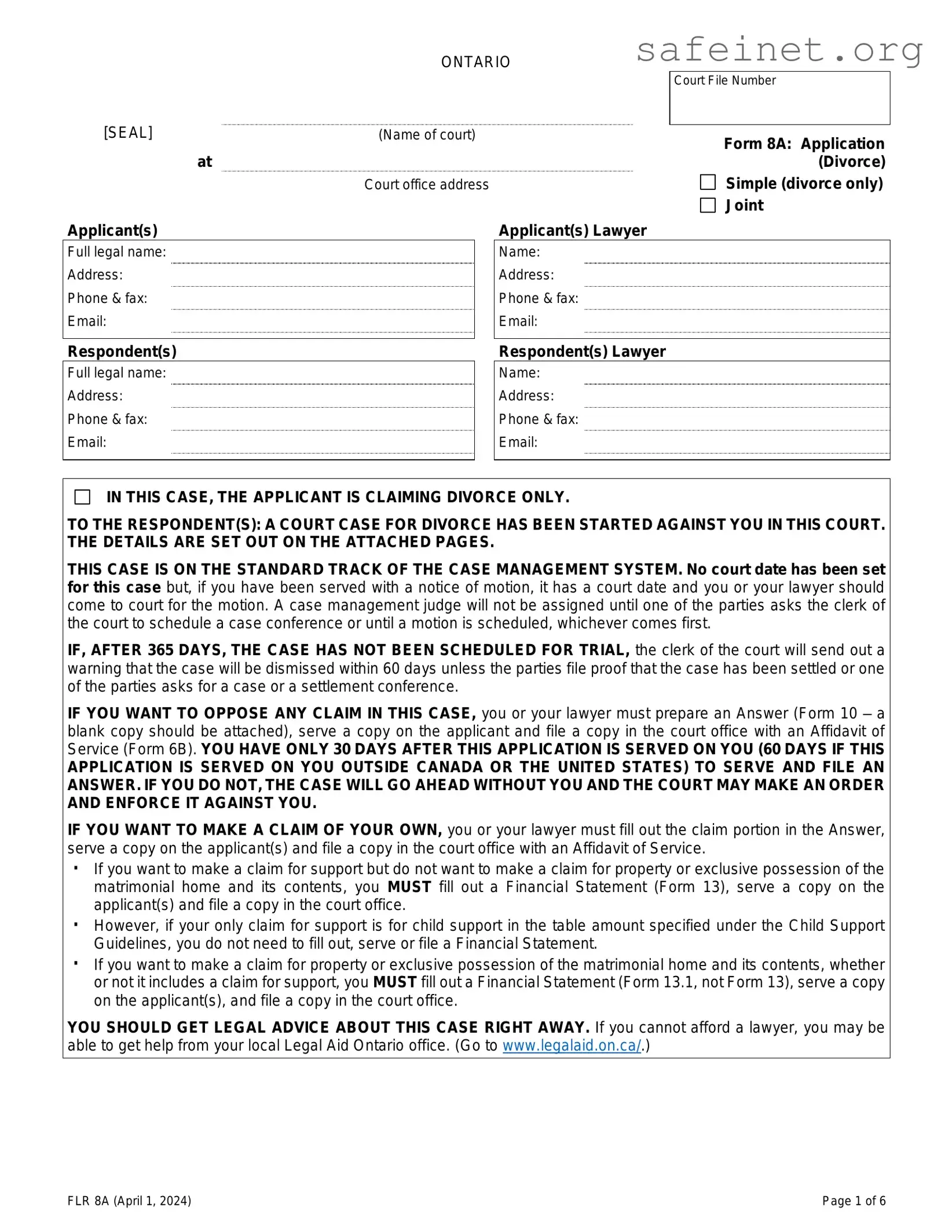
The Ontario Divorce 8A form serves as a crucial document in the divorce process, specifically designed for individuals seeking a straightforward divorce without additional claims. This form is utilized in both simple and joint applications for divorce, allowing applicants to detail essential information about themselves, their spouse, and any children involved. It requires the full legal names, addresses, and contact information of both the applicant and respondent, ensuring that all parties are adequately identified. The form also outlines the claims being made, which may include divorce, child support, or spousal support, among others. Importantly, the document emphasizes the necessity of legal advice and outlines the timelines within which parties must respond to the application. If a respondent wishes to oppose the divorce or make their own claims, they must file an Answer within a specified period. The 8A form thus acts as a foundational element in the divorce proceedings, guiding parties through the necessary steps while underscoring the importance of compliance with court requirements.
ONTARIO
[SEAL] |
(Name of court) |
at
Court office address
Court File Number
Form 8A: Application
(Divorce)
Simple (divorce only)
Joint
Applicant(s)
Full legal name: Address: Phone & fax: Email:
Applicant(s) Lawyer
Name:
Address:
Phone & fax:
Email:
Respondent(s)
Full legal name: Address: Phone & fax: Email:
Respondent(s) Lawyer
Name:
Address:
Phone & fax:
Email:
IN THIS CASE, THE APPLICANT IS CLAIMING DIVORCE ONLY.
TO THE RESPONDENT(S): A COURT CASE FOR DIVORCE HAS BEEN STARTED AGAINST YOU IN THIS COURT. THE DETAILS ARE SET OUT ON THE ATTACHED PAGES.
THIS CASE IS ON THE STANDARD TRACK OF THE CASE MANAGEMENT SYSTEM. No court date has been set for this case but, if you have been served with a notice of motion, it has a court date and you or your lawyer should come to court for the motion. A case management judge will not be assigned until one of the parties asks the clerk of the court to schedule a case conference or until a motion is scheduled, whichever comes first.
IF, AFTER 365 DAYS, THE CASE HAS NOT BEEN SCHEDULED FOR TRIAL, the clerk of the court will send out a warning that the case will be dismissed within 60 days unless the parties file proof that the case has been settled or one of the parties asks for a case or a settlement conference.
IF YOU WANT TO OPPOSE ANY CLAIM IN THIS CASE, you or your lawyer must prepare an Answer (Form 10 – a blank copy should be attached), serve a copy on the applicant and file a copy in the court office with an Affidavit of Service (Form 6B). YOU HAVE ONLY 30 DAYS AFTER THIS APPLICATION IS SERVED ON YOU (60 DAYS IF THIS
APPLICATION IS SERVED ON YOU OUTSIDE CANADA OR THE UNITED STATES) TO SERVE AND FILE AN ANSWER. IF YOU DO NOT, THE CASE WILL GO AHEAD WITHOUT YOU AND THE COURT MAY MAKE AN ORDER AND ENFORCE IT AGAINST YOU.
IF YOU WANT TO MAKE A CLAIM OF YOUR OWN, you or your lawyer must fill out the claim portion in the Answer, serve a copy on the applicant(s) and file a copy in the court office with an Affidavit of Service.
·If you want to make a claim for support but do not want to make a claim for property or exclusive possession of the matrimonial home and its contents, you MUST fill out a Financial Statement (Form 13), serve a copy on the applicant(s) and file a copy in the court office.
·However, if your only claim for support is for child support in the table amount specified under the Child Support Guidelines, you do not need to fill out, serve or file a Financial Statement.
·If you want to make a claim for property or exclusive possession of the matrimonial home and its contents, whether or not it includes a claim for support, you MUST fill out a Financial Statement (Form 13.1, not Form 13), serve a copy on the applicant(s), and file a copy in the court office.
YOU SHOULD GET LEGAL ADVICE ABOUT THIS CASE RIGHT AWAY. If you cannot afford a lawyer, you may be able to get help from your local Legal Aid Ontario office. (Go to www.legalaid.on.ca/.)
FLR 8A (April 1, 2024) |
Page 1 of 6 |

Form 8A: Application (Divorce) |
(page 2) |
Court File Number
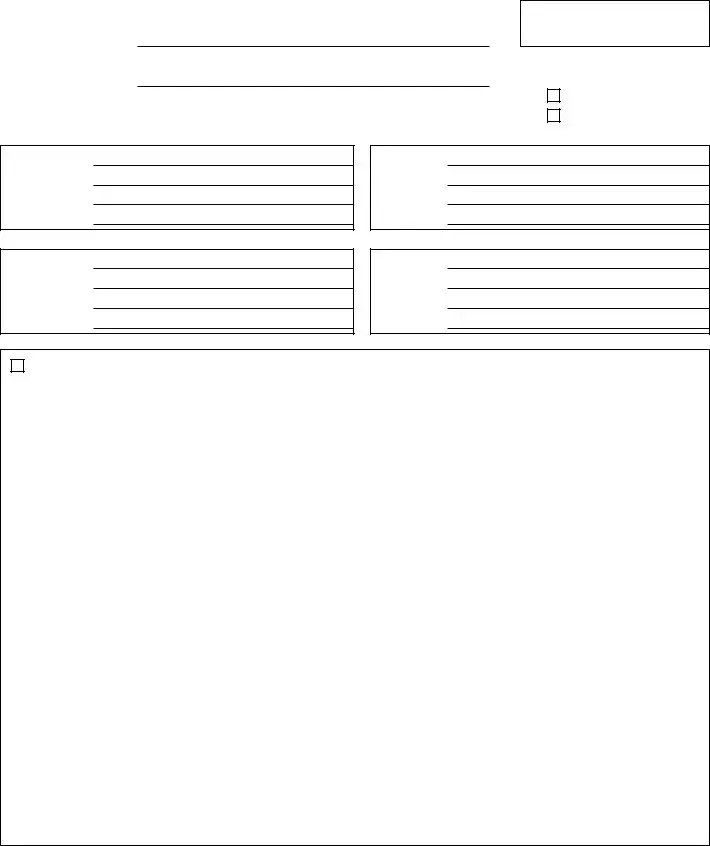
THIS CASE IS A JOINT APPLICATION FOR DIVORCE. THE DETAILS ARE SET OUT ON THE ATTACHED PAGES. The application and affidavits in support of the application will be presented to a judge when the materials have been checked for completeness.
If you are requesting anything other than a simple divorce, such as support or property or exclusive possession of the matrimonial home and its contents, then refer to page 1 for instructions regarding the Financial Statement you should file.
Date of issue |
Clerk of the court |
FLR 8A (April 1, 2024) |
Page 2 of 6 |
Form 8A: Application (Divorce) |
(page 3) |
Court file number
|
|
|
|
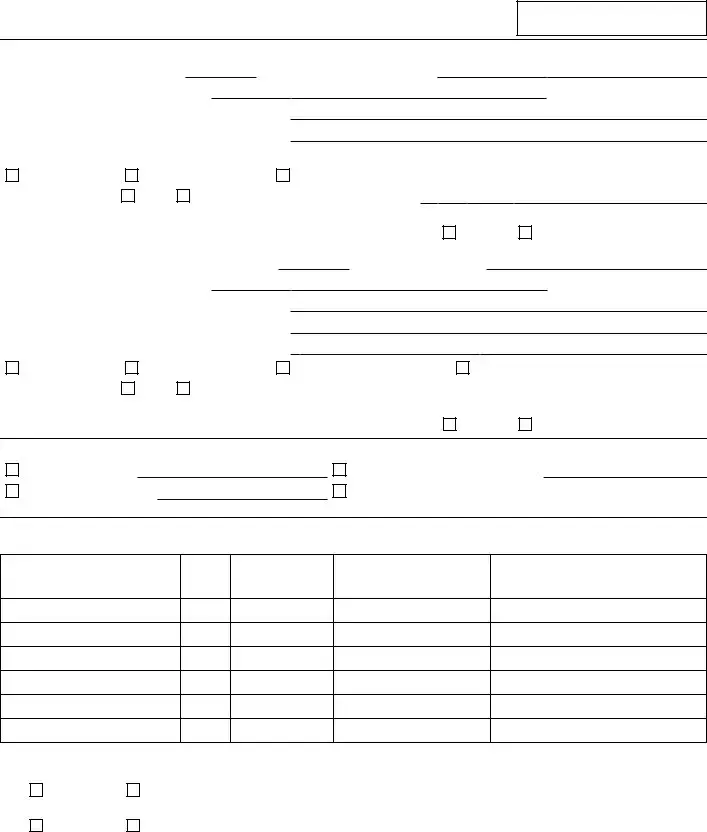
FAMILY HISTORY |
|
APPLICANT: |
Age: |
|
|
Birthdate: (d, m, y) |
|
Resident in (municipality & province) |
|
|
|
||
First name on the day before the marriage date: |
|
|
|||
Last name on the day before the marriage date: |
|
|
|||
Gender on the day before the marriage date: |
|
|
|||
Male |
Female |
|
|
Another gender |
|
Divorced before? |
No |
Yes (Place and date of previous divorce) |
|
||
Habitually resident in the province of Ontario for at least one year |
|
||||
immediately before this application was filed? |
No |
Yes |
|||
|
|
|
|
||
RESPONDENT/JOINT APPLICANT: |
Age: |
Birthdate: (d, m, y) |
|
||
Resident in (municipality & province)
First name on the day before the marriage date:
Last name on the day before the marriage date:
Gender on the day before the marriage date:
Male |
Female |
Another gender |
Divorced before? |
No |
Yes (Place and date of previous divorce) |
Habitually resident in the province of Ontario for at least one year immediately before this application was filed?
Gender information not available
NoYes
RELATIONSHIP DATES:
Married on (date) Separated on (date)
Started living together on (date) Never lived together
THE CHILD(REN)
List all children involved in this case, even if no claim is made for these children.
Full legal name
Age
Birthdate
(d,m,y)
Resident in
(municipality & province)
Now Living With
(name of person and relationship to
child)
|
PREVIOUS CASES OR AGREEMENTS |
Have the parties or the children been in a court case before? |
|
No |
Yes |
Have the parties made a written agreement dealing with any matter involved in this case? |
|
No |
Yes (Give date of agreement. Indicate which of its terms are in dispute. Attach an additional page if you |
|
need more space.) |
FLR 8A (April 1, 2024) |
Page 3 of 6 |
Form 8A: |
Application (Divorce) |
(page 4) |
Court file number
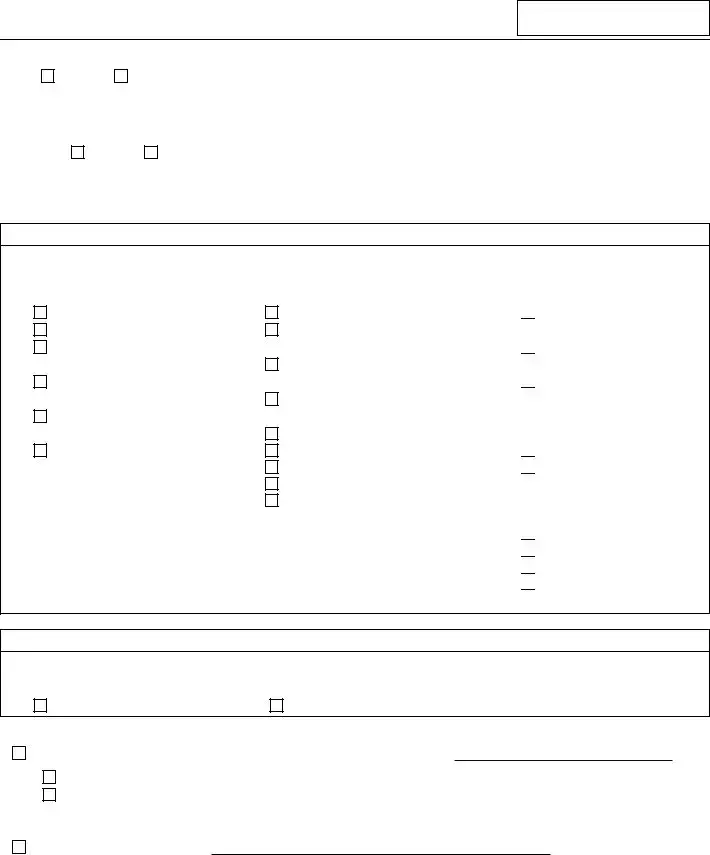
Has a Notice of Calculation and/or a Notice of Recalculation been issued by the online Child Support Service in this case?
No
Yes (Give date(s) of Notice(s) of Calculation or Recalculation.)
If yes, are you asking the court to make an order for child support that is different from the amount set out in the Notice?
No
Yes (Provide an explanation.)
CLAIMS
USE THIS FRAME ONLY IF THIS CASE IS A JOINT APPLICATION FOR DIVORCE
WE JOINTLY ASK THE COURT FOR THE FOLLOWING:
Claims under the Divorce Act |
Claims under the Family Law Act or |
|
Children’s Law Reform Act |
Claims relating to property
00
01
02
03
04
05
a divorce |
10 |
spousal support |
11 |
support for child(ren) – |
|
table amount |
12 |
support for child(ren) – |
|
other than table amount |
13 |
|
|
for child(ren) |
14 |
parenting time with child(ren) |
15 |
|
16 |
17
18
spousal support
support for child(ren) – table amount
support for child(ren) – other than table amount
parenting time with child(ren)
guardianship over child’s property
20 equalization of net family properties
21 exclusive possession of matrimonial home
22 exclusive possession of contents of matrimonial home
23 freezing assets
24 sale of family property
Other claims
30 costs
31 annulment of marriage
32 prejudgment interest
50 Other (Specify)
USE THIS FRAME ONLY IF THE APPLICANT’S ONLY CLAIM IN THIS CASE IS FOR DIVORCE.
I ASK THE COURT FOR:
(Check if applicable.)
00
a divorce |
30 |
costs
IMPORTANT FACTS SUPPORTING THE CLAIM FOR DIVORCE
Separation: The spouses have lived separate and apart since (date) |
and |
have not lived together again since that date in an unsuccessful attempt to reconcile.
have lived together again during the following periods(s) in an unsuccessful attempt to reconcile: (Give dates.)
Adultery: (Name of spouse) |
has committed adultery. |
(Give details. It is not necessary to name any other person involved but if you do name the other person, then you must serve this application on the other person.)
FLR 8A (April 1, 2024) |
Page 4 of 6 |
Form 8A: |
Application (Divorce) |
(page 5) |
Court File Number
Cruelty: (Name of spouse) |
has treated (name of |
spouse) |
with physical or mental cruelty of such a kind as to |
make continued cohabitation intolerable. (Give details.) |
|
USE THIS FRAME ONLY IF THIS CASE IS A JOINT APPLICATION FOR DIVORCE.
The details of the other order(s) that we jointly ask the court to make are as follows: (Include any amounts of support and the names of the children for whom support,
IMPORTANT FACTS SUPPORTING OUR CLAIM(S)
(Set out the facts that form the legal basis for your claim(s). Attach an additional page if you need more space.)
APPLICANT’S CERTIFICATE
(Your lawyer, if you are represented, must complete the Lawyer’s Certificate below.)
Sections 7.1 to 7.5 of the Divorce Act and section 33.1 of the Children’s Law Reform Act require you and the other party to:
Exercise your
Protect the child from conflict arising from this case, to the best of your ability;
Try to resolve your family law issues by using
Provide complete, accurate, and
Comply with any orders made in this case.
We/I certify that we are/I am aware of these duties under the Divorce Act and the Children’s Law Reform Act.
Complete this section if your only claim is for a divorce. Your lawyer, if you are represented, must complete the Lawyer’s Certificate below.
Date of signature |
Signature of applicant |
|
|
Complete this section if you are making a joint application for divorce. |
|
|
|
Date of signature |
Signature of joint applicant |
|
|
Date of signature |
Signature of joint applicant |
FLR 8A (April 1, 2024) |
Page 5 of 6 |
Form 8A: |
Application (Divorce) |
(page 6) |
Court File Number
LAWYER’S CERTIFICATE
My name is:
and I am the applicant’s lawyer in this case. I certify that I have complied with the requirements of section 7.7 of the Divorce Act and section 33.2 of the Children’s Law Reform Act regarding reconciliation and the duty to discuss and inform.
Date |
Lawyer’s signature |
My name is:
and I am the applicant’s lawyer in this case. I certify that I have complied with the requirements of section 7.7 of the Divorce Act and section 33.2 of the Children’s Law Reform Act regarding reconciliation and the duty to discuss and inform.
Date |
Lawyer’s signature |
FLR 8A (April 1, 2024) |
Page 6 of 6 |
| Fact Name | Description |
|---|---|
| Form Purpose | The Ontario Divorce Form 8A is used to apply for a divorce in Ontario, specifically for simple divorce cases without additional claims. |
| Governing Laws | This form is governed by the Divorce Act and the Family Law Rules in Ontario. |
| Filing Requirements | Applicants must provide full legal names, addresses, and contact information for themselves and the respondent(s) when submitting the form. |
| Response Time | The respondent has 30 days to file an Answer after being served with the application, or 60 days if served outside Canada or the U.S. |
| Case Management | This case is placed on the standard track of the case management system until a case conference or motion is scheduled. |
| Legal Advice | It is highly recommended to seek legal advice immediately, and if financial constraints exist, applicants can contact Legal Aid Ontario for assistance. |
Filling out the Ontario Divorce 8A form is a crucial step in the divorce process. This form serves as the application for divorce and requires specific information about both parties involved. Accuracy and completeness are essential, as any errors could delay the proceedings. Follow the steps below to ensure you fill out the form correctly.
After completing the form, review it for accuracy and ensure all necessary information is provided. Once finalized, the form should be filed with the appropriate court office, along with any required attachments or supporting documents. Following this, the case will proceed through the court system as outlined in the accompanying materials.
What is the purpose of the Ontario Divorce 8A form?
The Ontario Divorce 8A form serves as an official application for divorce in Ontario. This document is essential for individuals seeking a divorce, as it outlines the details of the marriage, the parties involved, and the claims being made. It is specifically designed for cases where the applicant is claiming divorce only, without additional claims for support or property. Completing this form initiates the legal process of divorce, allowing the court to review the application and make the necessary decisions regarding the dissolution of the marriage.
How do I fill out the Ontario Divorce 8A form correctly?
Filling out the Ontario Divorce 8A form requires careful attention to detail. Start by entering the court file number and the name of the court at the top of the form. Next, provide full legal names, addresses, and contact information for both the applicant and the respondent. It is crucial to accurately state the dates of marriage and separation, as well as any relevant details about children involved in the case. If there have been previous court cases or agreements, those must be disclosed as well. Ensure that all sections are completed thoroughly to avoid delays in processing your application.
What happens if I do not respond to the Divorce 8A application?
If you have been served with the Divorce 8A application and do not respond within the specified time frame, significant consequences may arise. You have only 30 days to file an Answer if you reside in Canada or the United States; this period extends to 60 days if you are outside these regions. Failing to respond means the case will proceed without your input, and the court may issue an order that could be enforced against you. Therefore, it is essential to take action promptly if you wish to contest the divorce or make any claims of your own.
Should I seek legal advice when filling out the Divorce 8A form?
Incomplete Information: Many applicants fail to fill in all required fields, such as full legal names, addresses, or contact details. Missing information can delay the process.
Incorrect Dates: Providing wrong dates for marriage, separation, or previous divorces can lead to complications. Ensure all dates are accurate and formatted correctly.
Neglecting to List Children: Some applicants forget to include all children involved in the case, even if no claims are made for them. This oversight can affect child support and custody arrangements.
Failure to Attach Required Documents: Not attaching necessary forms, such as the Financial Statement when applicable, can result in the application being deemed incomplete.
Ignoring Legal Advice: Many individuals proceed without consulting a lawyer. Legal guidance is crucial to navigate the complexities of divorce proceedings effectively.
Missing Deadlines: Applicants often overlook critical timelines, such as the 30-day period to file an Answer. Missing these deadlines can have serious consequences, including losing the right to contest the application.
When navigating the process of obtaining a divorce in Ontario, several forms and documents may accompany the Ontario Divorce 8A form. Each of these documents serves a specific purpose and helps to ensure that the divorce proceedings are handled efficiently and in accordance with the law. Understanding these documents can provide clarity and facilitate a smoother divorce process.
These forms and documents play a vital role in the divorce process in Ontario. By understanding their functions, individuals can better prepare for the proceedings and ensure that their rights and interests are adequately represented. It is often beneficial to seek legal advice to navigate this complex area effectively.
The Ontario Divorce 8A form shares similarities with the Application for Divorce (Form 8) in that both documents initiate the divorce process in Ontario. Like the 8A form, the Application for Divorce is used to formally request a divorce from the court. However, the 8 form can be more comprehensive, allowing applicants to include additional claims such as child support or property division. Both forms require detailed information about the parties involved, including their contact details and the nature of their relationship.
Another document that resembles the Ontario Divorce 8A form is the Answer (Form 10). This form is filed by the respondent when they wish to contest the claims made in the divorce application. Similar to the 8A form, the Answer requires the respondent to provide personal information and details about their position regarding the divorce. Both documents are essential in ensuring that both parties have the opportunity to present their sides to the court.
The Financial Statement (Form 13) is also comparable to the Ontario Divorce 8A form, especially when financial matters are involved in the divorce proceedings. Both forms collect detailed financial information about the parties, including income, expenses, and assets. The Financial Statement is specifically required when one party is seeking support or making claims regarding property, similar to the disclosures that may be necessary in the 8A form when additional claims are made.
Form 13.1, the Financial Statement for Property Claims, is another document that shares similarities with the Ontario Divorce 8A form. This form is specifically used when a party is making claims related to property division during the divorce. Like the 8A form, it requires comprehensive financial disclosures and helps the court understand each party's financial situation, ensuring a fair resolution of property claims.
The Case Conference Brief is another document that bears a resemblance to the Ontario Divorce 8A form. This brief is prepared for a case conference, which is an early meeting between the parties and the judge to discuss the issues in the divorce. Both documents serve to outline the parties' positions and facilitate a more efficient court process. The Case Conference Brief provides a platform for the parties to clarify their claims and negotiate potential settlements, similar to the initial claims outlined in the 8A form.
The Notice of Motion is also akin to the Ontario Divorce 8A form in that it initiates a request for the court to make a specific order. While the 8A form requests a divorce, a Notice of Motion can address various issues, such as child support or property division. Both documents require clear articulation of the requests being made to the court, ensuring that all parties are informed of the proceedings.
The Parenting Plan is another document that can be compared to the Ontario Divorce 8A form, particularly when children are involved. Both documents aim to outline the arrangements for children post-divorce. While the 8A form may touch on parenting arrangements, a Parenting Plan provides a more detailed framework for decision-making and parenting time, focusing on the best interests of the child.
The Separation Agreement is also similar to the Ontario Divorce 8A form, as it is a legal document that outlines the terms of separation between spouses. While the 8A form initiates the divorce process, a Separation Agreement can address various issues such as support, property division, and child custody. Both documents require careful consideration of the parties' rights and responsibilities, promoting a fair resolution.
Lastly, the Affidavit of Service (Form 6B) is closely related to the Ontario Divorce 8A form, as it serves to confirm that the divorce application has been properly served to the respondent. Both documents are integral to the legal process, ensuring that all parties are aware of the proceedings. The Affidavit of Service provides proof to the court that the respondent has been notified, which is a crucial step in moving forward with the divorce process.
When filling out the Ontario Divorce 8A form, it is essential to approach the process with care and attention to detail. Here are some guidelines to follow and avoid:
By adhering to these dos and don'ts, individuals can navigate the Ontario Divorce 8A form process more effectively, helping to ensure a smoother experience during a challenging time.
Misconception 1: The 8A form is only for simple divorces.
Many people believe that the Ontario Divorce 8A form is exclusively for simple divorces. In reality, while it is designed for straightforward divorce applications, it can also be used in joint applications that may involve additional claims, such as spousal support or child custody. The form accommodates various situations, making it versatile for different divorce scenarios.
Misconception 2: You don’t need to respond if you receive the 8A form.
Some individuals think that they can ignore the 8A form if they disagree with the divorce. This is a dangerous misconception. If you have been served with this application, it is crucial to respond within the specified timeframe. Failing to do so may result in a court ruling made without your input, which could have significant consequences.
Misconception 3: Legal representation is not necessary for filing the 8A form.
While it's possible to file the form without a lawyer, many underestimate the complexities involved in divorce proceedings. Having legal representation can provide valuable guidance and ensure that your rights are protected throughout the process. If cost is a concern, options like Legal Aid Ontario may be available to assist you.
Misconception 4: The 8A form guarantees a quick divorce.
People often assume that completing the 8A form will lead to a swift divorce. However, the timeline for a divorce can vary significantly based on numerous factors, including court schedules and whether any disputes arise. It's essential to understand that submitting the form is just one step in a potentially lengthy process.
Misconception 5: You can make claims for property without additional forms.
Many individuals mistakenly believe that they can make claims for property or exclusive possession of the matrimonial home using just the 8A form. This is incorrect. If you wish to make such claims, you must complete a Financial Statement (Form 13.1) and follow the proper procedures to ensure your claims are recognized by the court.
The Ontario Divorce 8A form is used for applying for a divorce in Ontario. It is essential to complete this form accurately to initiate the divorce process.
Ensure that you provide full legal names, addresses, and contact information for both the applicant(s) and respondent(s). This information is crucial for court communications.
If you are the respondent and wish to oppose the application, you must file an Answer (Form 10) within 30 days of being served, or 60 days if served outside Canada or the U.S.
Legal advice is highly recommended. If you cannot afford a lawyer, consider reaching out to Legal Aid Ontario for assistance.
In cases where support or property claims are involved, additional forms such as the Financial Statement (Form 13 or 13.1) must be completed and filed.
Make sure to list all children involved in the case, even if no claims are made for them. This information is necessary for the court's understanding of the family situation.
If the case is not scheduled for trial within 365 days, the court may dismiss it unless proof of settlement or a request for a conference is filed.
After submitting the form, keep a copy for your records and ensure that all parties involved receive the necessary documents to avoid delays.