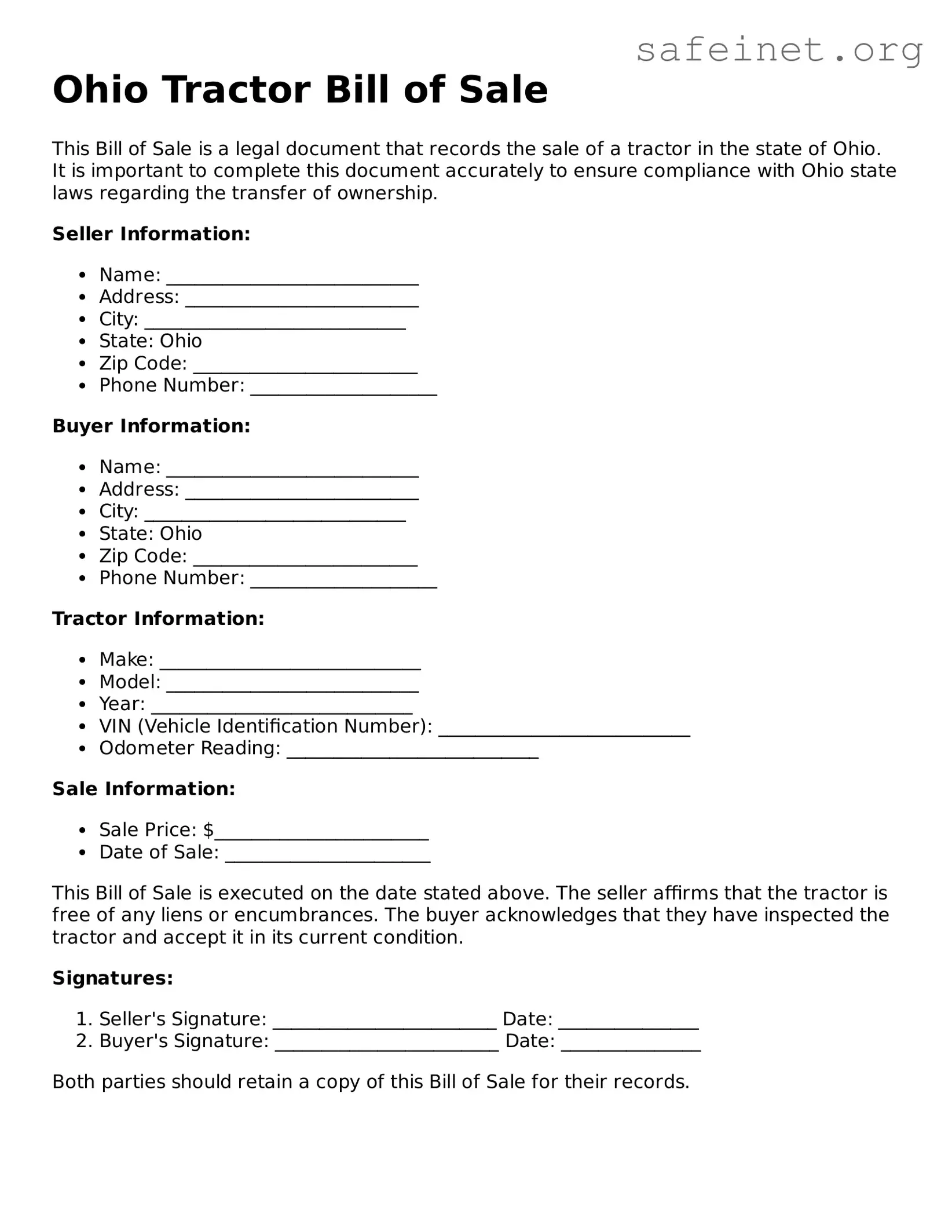
When purchasing or selling a tractor in Ohio, having a proper bill of sale is essential for both parties involved in the transaction. This document serves as a formal record of the sale, detailing important information such as the names and addresses of the buyer and seller, the make and model of the tractor, its identification number, and the sale price. It is not just a simple receipt; it provides legal protection by clearly outlining the terms of the sale, ensuring that both the buyer and seller are on the same page. Additionally, the bill of sale may include any warranties or representations made by the seller regarding the condition of the tractor. By completing this form, individuals can avoid potential disputes in the future and ensure a smooth transfer of ownership. Understanding the nuances of the Ohio Tractor Bill of Sale form can help facilitate a hassle-free transaction, making it a vital component of any agricultural equipment exchange.
Ohio Tractor Bill of Sale
This Bill of Sale is a legal document that records the sale of a tractor in the state of Ohio. It is important to complete this document accurately to ensure compliance with Ohio state laws regarding the transfer of ownership.
Seller Information:
Buyer Information:
Tractor Information:
Sale Information:
This Bill of Sale is executed on the date stated above. The seller affirms that the tractor is free of any liens or encumbrances. The buyer acknowledges that they have inspected the tractor and accept it in its current condition.
Signatures:
Both parties should retain a copy of this Bill of Sale for their records.
| Fact Name | Description |
|---|---|
| Purpose | The Ohio Tractor Bill of Sale form is used to document the sale of a tractor between a buyer and a seller, ensuring a clear transfer of ownership. |
| Legal Requirement | While not mandatory, it is highly recommended to have a bill of sale for tax purposes and to protect both parties in the transaction. |
| Governing Law | The sale of tractors in Ohio is governed by the Ohio Revised Code, specifically under Title 45, which covers vehicles and their transactions. |
| Essential Information | The form typically includes details such as the buyer's and seller's names, contact information, tractor description, sale price, and date of sale. |
| Notarization | Although notarization is not required, having the bill of sale notarized can add an extra layer of security and authenticity to the document. |
After obtaining the Ohio Tractor Bill of Sale form, you will need to provide specific information to complete it. This document serves as a record of the sale and will be important for both the buyer and the seller.
What is a Tractor Bill of Sale in Ohio?
A Tractor Bill of Sale is a legal document used to transfer ownership of a tractor from one party to another in Ohio. This form includes essential details about the tractor, such as its make, model, year, and Vehicle Identification Number (VIN). It serves as proof of the transaction and can be important for registration and tax purposes.
Why is a Tractor Bill of Sale important?
The Tractor Bill of Sale is important because it provides a record of the transaction between the buyer and seller. It protects both parties by documenting the terms of the sale, including the purchase price and any conditions of the sale. Additionally, it may be required for registering the tractor with the Ohio Bureau of Motor Vehicles.
What information is required on the Ohio Tractor Bill of Sale?
The Ohio Tractor Bill of Sale typically requires the following information: the names and addresses of both the buyer and seller, the date of the sale, a description of the tractor (including make, model, year, and VIN), the purchase price, and any warranties or conditions of the sale. Both parties should sign the document to validate the transaction.
Is the Tractor Bill of Sale required to register a tractor in Ohio?
Yes, a Tractor Bill of Sale is often required to register a tractor in Ohio. The Ohio Bureau of Motor Vehicles may ask for this document to verify ownership and ensure that the transaction is legitimate. It is advisable to keep a copy of the bill of sale for personal records as well.
Can I create my own Tractor Bill of Sale?
Yes, you can create your own Tractor Bill of Sale. However, it is essential to ensure that it includes all necessary information and complies with Ohio laws. Many templates are available online, but it is wise to review them for accuracy and completeness before use.
Do I need a notary for the Tractor Bill of Sale in Ohio?
A notary is not required for a Tractor Bill of Sale in Ohio; however, having the document notarized can add an extra layer of authenticity. This may be beneficial if there are disputes regarding the transaction in the future. Notarization can help verify the identities of the parties involved.
What should I do after completing the Tractor Bill of Sale?
After completing the Tractor Bill of Sale, both the buyer and seller should keep a signed copy for their records. The buyer should then take the bill of sale to the Ohio Bureau of Motor Vehicles to register the tractor. It is also advisable for the seller to notify their local tax authority of the sale to ensure proper tax records are maintained.
Incomplete Information: One common mistake is leaving out essential details. For instance, the seller's name, address, and contact information must be included. Additionally, the buyer's information should also be complete. Omitting any of these can lead to confusion or disputes later on.
Incorrect Vehicle Identification Number (VIN): The VIN is crucial for identifying the tractor. If the number is incorrect or mistyped, it could cause issues with registration or ownership verification. Always double-check the VIN against the tractor's title or registration documents.
Failure to Sign: Both the seller and the buyer must sign the bill of sale. If either party neglects to sign, the document may not be considered valid. Remember, signatures are a confirmation of the agreement and are legally required.
Not Keeping Copies: After completing the bill of sale, some individuals forget to make copies for their records. Keeping a copy is essential for both parties. This helps in case of future disputes or when proof of sale is needed for registration purposes.
When completing a transaction involving the sale of a tractor in Ohio, several additional forms and documents may be necessary to ensure a smooth process. Each of these documents serves a specific purpose, providing clarity and protection for both the buyer and the seller. Below is a list of commonly used forms that complement the Ohio Tractor Bill of Sale.
Each of these documents plays a crucial role in the transaction process. Ensuring that all necessary forms are completed accurately can help prevent legal issues and provide peace of mind for both parties involved. By being thorough and organized, buyers and sellers can navigate the sale of a tractor with confidence.
The Ohio Boat Bill of Sale serves a similar purpose to the Tractor Bill of Sale. Both documents are essential for transferring ownership of a vehicle, whether it be a tractor or a boat. They typically include details such as the buyer's and seller's information, a description of the item being sold, and the sale price. This ensures that both parties have a clear understanding of the transaction and protects them in case of disputes. Just like the Tractor Bill of Sale, the Boat Bill of Sale may also require signatures from both parties to validate the agreement.
The Ohio Motorcycle Bill of Sale is another document that mirrors the Tractor Bill of Sale in its function. When purchasing or selling a motorcycle, this document outlines the essential details of the transaction, including the vehicle identification number (VIN), make, model, and year of the motorcycle. Just as with the Tractor Bill of Sale, it serves as proof of ownership transfer and may include warranty disclaimers or any conditions of the sale. Both documents help facilitate a smooth transition of ownership while providing legal protection to the parties involved.
When filling out the Ohio Tractor Bill of Sale form, it's important to follow specific guidelines to ensure accuracy and compliance. Here are five things to do and five things to avoid:
Things to Do:
Things to Avoid:
Understanding the Ohio Tractor Bill of Sale form can be challenging. Here are seven common misconceptions about this document, along with clarifications.
Some individuals believe that a bill of sale is necessary for every transaction. However, in Ohio, a bill of sale is not legally required for all sales, but it is highly recommended for documentation purposes.
Some think that only businesses or professional dealers must complete this form. In reality, private sellers and buyers also benefit from using the bill of sale to protect their interests.
Many believe that notarization is mandatory for the bill of sale to be valid. While notarization can add an extra layer of authenticity, it is not a legal requirement in Ohio.
This form is often mistaken for a title transfer document. However, the bill of sale is separate from the title and does not serve to transfer ownership of the tractor by itself.
Some individuals think a verbal agreement suffices. While verbal agreements may hold weight, having a written bill of sale is always more reliable and can prevent disputes.
There is a misconception that this form is only necessary for used tractors. New tractor sales can also benefit from a bill of sale for record-keeping and proof of purchase.
Many assume that the bill of sale is complicated. In fact, it is a straightforward document that typically includes basic information about the buyer, seller, and the tractor itself.
When completing the Ohio Tractor Bill of Sale form, there are several important points to keep in mind. Understanding these key takeaways can help ensure a smooth transaction.
Following these guidelines can help ensure that the transaction is clear and legally sound for both the seller and the buyer.