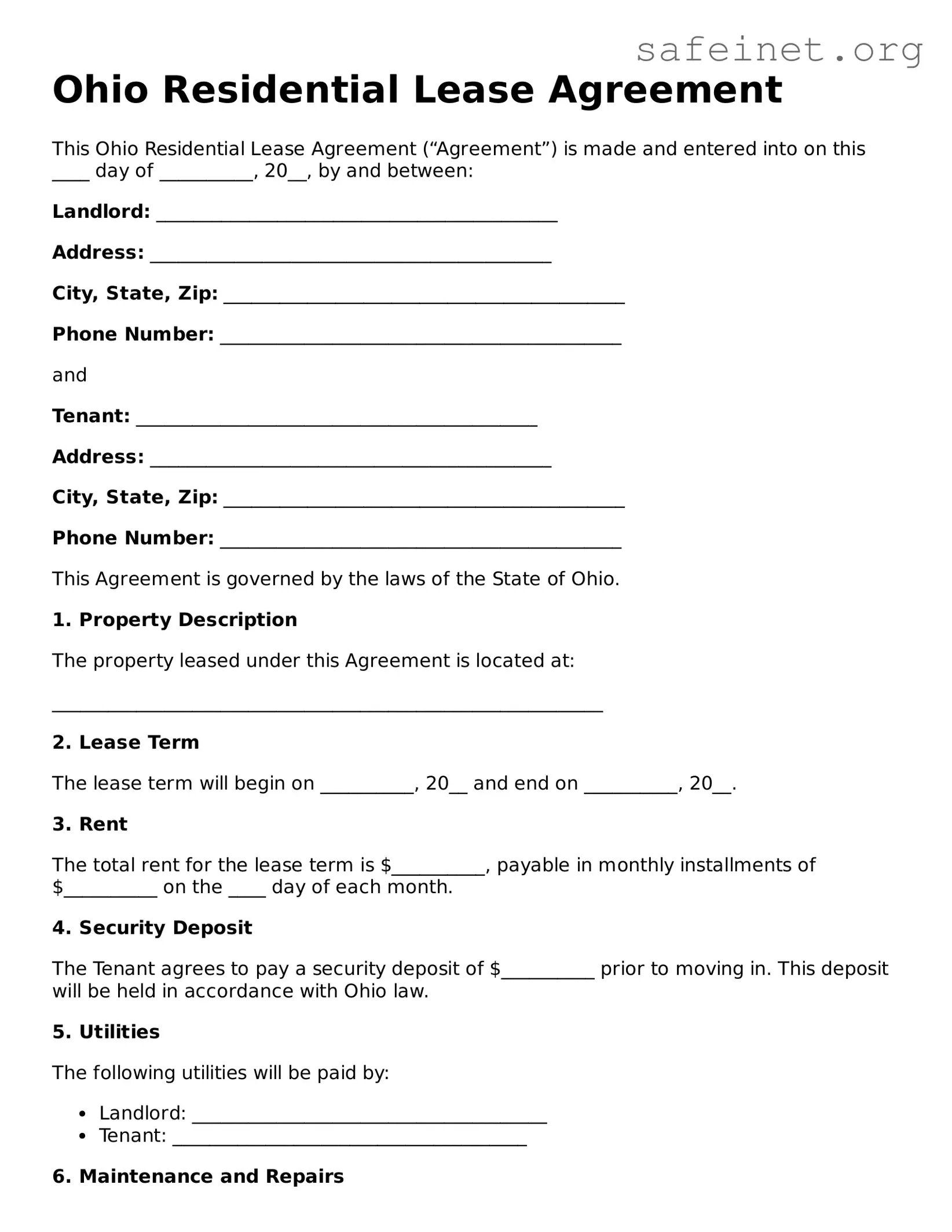
The Ohio Residential Lease Agreement form serves as a crucial document for both landlords and tenants, outlining the terms and conditions of renting a residential property. This agreement typically includes essential details such as the names of the parties involved, the address of the rental property, and the duration of the lease. Additionally, it specifies the amount of rent, payment due dates, and any security deposit requirements. Important clauses regarding maintenance responsibilities, utilities, and rules concerning pets may also be included. Both parties benefit from a clear understanding of their rights and obligations, which can help prevent misunderstandings and disputes during the rental period. By adhering to the guidelines set forth in this agreement, landlords and tenants can foster a more harmonious rental experience.
Ohio Residential Lease Agreement
This Ohio Residential Lease Agreement (“Agreement”) is made and entered into on this ____ day of __________, 20__, by and between:
Landlord: ___________________________________________
Address: ___________________________________________
City, State, Zip: ___________________________________________
Phone Number: ___________________________________________
and
Tenant: ___________________________________________
Address: ___________________________________________
City, State, Zip: ___________________________________________
Phone Number: ___________________________________________
This Agreement is governed by the laws of the State of Ohio.
1. Property Description
The property leased under this Agreement is located at:
___________________________________________________________
2. Lease Term
The lease term will begin on __________, 20__ and end on __________, 20__.
3. Rent
The total rent for the lease term is $__________, payable in monthly installments of $__________ on the ____ day of each month.
4. Security Deposit
The Tenant agrees to pay a security deposit of $__________ prior to moving in. This deposit will be held in accordance with Ohio law.
5. Utilities
The following utilities will be paid by:
6. Maintenance and Repairs
The Tenant agrees to maintain the property in good condition. Any necessary repairs should be reported to the Landlord promptly.
7. Termination
Upon expiration of the lease term, either party may terminate this Agreement by providing written notice at least ____ days in advance.
8. Governing Law
This Agreement shall be governed by the laws of the State of Ohio.
IN WITNESS WHEREOF, the parties hereto have executed this Ohio Residential Lease Agreement as of the date first above written.
Landlord Signature: ___________________________
Date: ___________________________
Tenant Signature: ___________________________
Date: ___________________________
| Fact Name | Details |
|---|---|
| Governing Law | The Ohio Residential Lease Agreement is governed by Ohio Revised Code Chapter 5321. |
| Parties Involved | The agreement typically involves a landlord and a tenant, both of whom must sign the document. |
| Lease Duration | The lease can be for a fixed term or month-to-month, depending on the agreement of both parties. |
| Security Deposit | Landlords may require a security deposit, which cannot exceed one month's rent, as per Ohio law. |
| Rent Payment | The lease must specify the amount of rent due, the payment method, and the due date. |
| Utilities | The agreement should outline which utilities are the responsibility of the tenant and which are covered by the landlord. |
| Maintenance Responsibilities | Both parties have specific responsibilities for maintenance and repairs, which should be clearly defined. |
| Termination Clause | The lease should include conditions under which either party can terminate the agreement. |
| Pet Policy | Landlords can specify pet policies, including whether pets are allowed and any associated fees. |
| Dispute Resolution | The lease may include a clause outlining how disputes will be resolved, such as mediation or arbitration. |
Completing the Ohio Residential Lease Agreement form is essential for establishing a rental agreement between a landlord and tenant. Follow these steps carefully to ensure all necessary information is accurately provided.
Once the form is completed, both parties should retain a copy for their records. This ensures that everyone is aware of their rights and responsibilities under the lease agreement.
What is an Ohio Residential Lease Agreement?
An Ohio Residential Lease Agreement is a legal document that outlines the terms and conditions under which a tenant agrees to rent a residential property from a landlord. This agreement typically includes details such as the duration of the lease, the amount of rent due, payment methods, security deposits, maintenance responsibilities, and rules regarding the use of the property. It serves to protect both parties by clearly defining their rights and obligations during the rental period.
What should I include in an Ohio Residential Lease Agreement?
When drafting an Ohio Residential Lease Agreement, it’s essential to include several key components. Start with the names of the landlord and tenant, followed by the property address. Specify the lease term, whether it’s a fixed-term lease or a month-to-month arrangement. Clearly state the rent amount, due dates, and acceptable payment methods. Include information about security deposits, maintenance responsibilities, and any restrictions or rules regarding pets, smoking, or alterations to the property. Lastly, outline the process for terminating the lease and any applicable penalties for breaking the agreement.
How does the Ohio Residential Lease Agreement protect tenants?
The Ohio Residential Lease Agreement offers several protections for tenants. It ensures that tenants have a clear understanding of their rights and responsibilities. For instance, it typically requires landlords to maintain the property in a habitable condition, addressing necessary repairs in a timely manner. The agreement may also stipulate that landlords cannot evict tenants without proper notice and legal justification. Additionally, tenants can refer to the lease if disputes arise, providing a documented basis for their claims and expectations.
Can a landlord change the terms of the lease during the rental period?
Generally, a landlord cannot unilaterally change the terms of a lease during the rental period without the tenant's consent. Any modifications to the lease must be agreed upon by both parties and documented in writing. This includes changes to rent amounts, lease duration, or rules regarding property use. If a landlord wishes to make changes, they should communicate clearly with the tenant and seek mutual agreement to avoid potential disputes.
Failing to include all required tenant information. Each tenant's full name, contact details, and social security number should be clearly stated.
Not specifying the lease term. Clearly outline the start and end dates to avoid confusion later.
Neglecting to detail the rent amount. The exact monthly rent, payment due date, and acceptable payment methods must be included.
Forgetting to include security deposit terms. Specify the amount, conditions for return, and any deductions that may apply.
Leaving out maintenance responsibilities. Clearly define who is responsible for repairs and maintenance of the property.
Not addressing pet policies. If pets are allowed, include any related fees or restrictions.
Overlooking the inclusion of utilities. Specify which utilities are covered by the landlord and which are the tenant's responsibility.
Failing to outline the process for lease termination. Include notice periods and procedures for both tenants and landlords.
Not having both parties sign the agreement. Ensure that all tenants and the landlord sign and date the lease to make it legally binding.
When entering into a rental agreement in Ohio, there are several important forms and documents that can complement the Residential Lease Agreement. These documents help clarify the terms of the lease, protect both parties, and ensure a smooth rental experience. Below is a list of commonly used forms that are often associated with the Ohio Residential Lease Agreement.
Utilizing these documents in conjunction with the Ohio Residential Lease Agreement can help create a clear understanding between landlords and tenants. Each form plays a specific role in ensuring that both parties are protected and aware of their rights and responsibilities throughout the rental process.
The Ohio Residential Lease Agreement is similar to the Rental Agreement. Both documents outline the terms and conditions under which a tenant can occupy a property. They detail the rental amount, payment due dates, and responsibilities for maintenance. While a lease typically covers a longer term, a rental agreement may be more flexible, often used for month-to-month arrangements. Understanding these differences can help both landlords and tenants choose the right document for their situation.
Another document that resembles the Ohio Residential Lease Agreement is the Commercial Lease Agreement. This type of lease is used for business properties and includes terms specific to commercial use, such as zoning laws and business operations. Like the residential lease, it outlines rent, duration, and responsibilities for repairs. Both documents protect the rights of the parties involved, but the commercial lease includes additional clauses that cater to business needs.
The Sublease Agreement also shares similarities with the Ohio Residential Lease Agreement. A sublease occurs when a tenant rents out their leased property to another person. This document outlines the terms under which the subtenant will occupy the property, including rent payments and duration. Both agreements ensure that the original tenant remains responsible for the lease's obligations, maintaining a clear line of accountability between all parties involved.
Lastly, the Month-to-Month Lease Agreement is akin to the Ohio Residential Lease Agreement. This document allows tenants to occupy a property on a month-to-month basis, providing flexibility for both landlords and tenants. Similar to a standard lease, it includes terms related to rent and maintenance responsibilities. However, it typically requires a shorter notice period for termination, making it an attractive option for those who may need to move quickly.
When filling out the Ohio Residential Lease Agreement form, it’s important to approach the process carefully. Here are some essential do's and don'ts to keep in mind:
Understanding the Ohio Residential Lease Agreement is crucial for both landlords and tenants. However, several misconceptions can lead to confusion. Here are nine common misconceptions clarified:
While it is advisable to have a written lease for clarity, oral agreements can also be legally binding in Ohio. However, proving the terms of an oral agreement can be challenging.
While many terms can be negotiated, some aspects, such as security deposit limits and habitability standards, are governed by state law and cannot be altered.
Landlords must provide reasonable notice before entering a tenant's property, except in emergencies. This protects the tenant's right to privacy.
Tenants may only withhold rent under specific circumstances, such as failure to maintain the property or significant repairs not being made. Legal advice is recommended before taking this action.
While security deposits are often refundable, landlords can deduct costs for damages beyond normal wear and tear or unpaid rent. Documentation is essential for both parties.
Not all leases automatically renew. Some may require written notice for renewal, while others may end on a specified date. Tenants should check the lease terms carefully.
Landlords must follow legal procedures, which typically require providing notice before eviction proceedings can begin. This ensures that tenants have an opportunity to address any issues.
Lease agreements can vary significantly. Each agreement should be tailored to the specific rental situation, including property type, rental duration, and specific rules.
Ohio law provides various protections for tenants, including regulations on security deposits, eviction processes, and the right to a habitable living environment.
Clarifying these misconceptions can lead to a better understanding of rights and responsibilities under the Ohio Residential Lease Agreement. Both landlords and tenants benefit from being well-informed about the terms and conditions of their lease.
Filling out the Ohio Residential Lease Agreement form can seem daunting, but understanding its key components can simplify the process. Here are some essential takeaways to keep in mind:
By keeping these key points in mind, both landlords and tenants can navigate the Ohio Residential Lease Agreement with confidence and clarity.