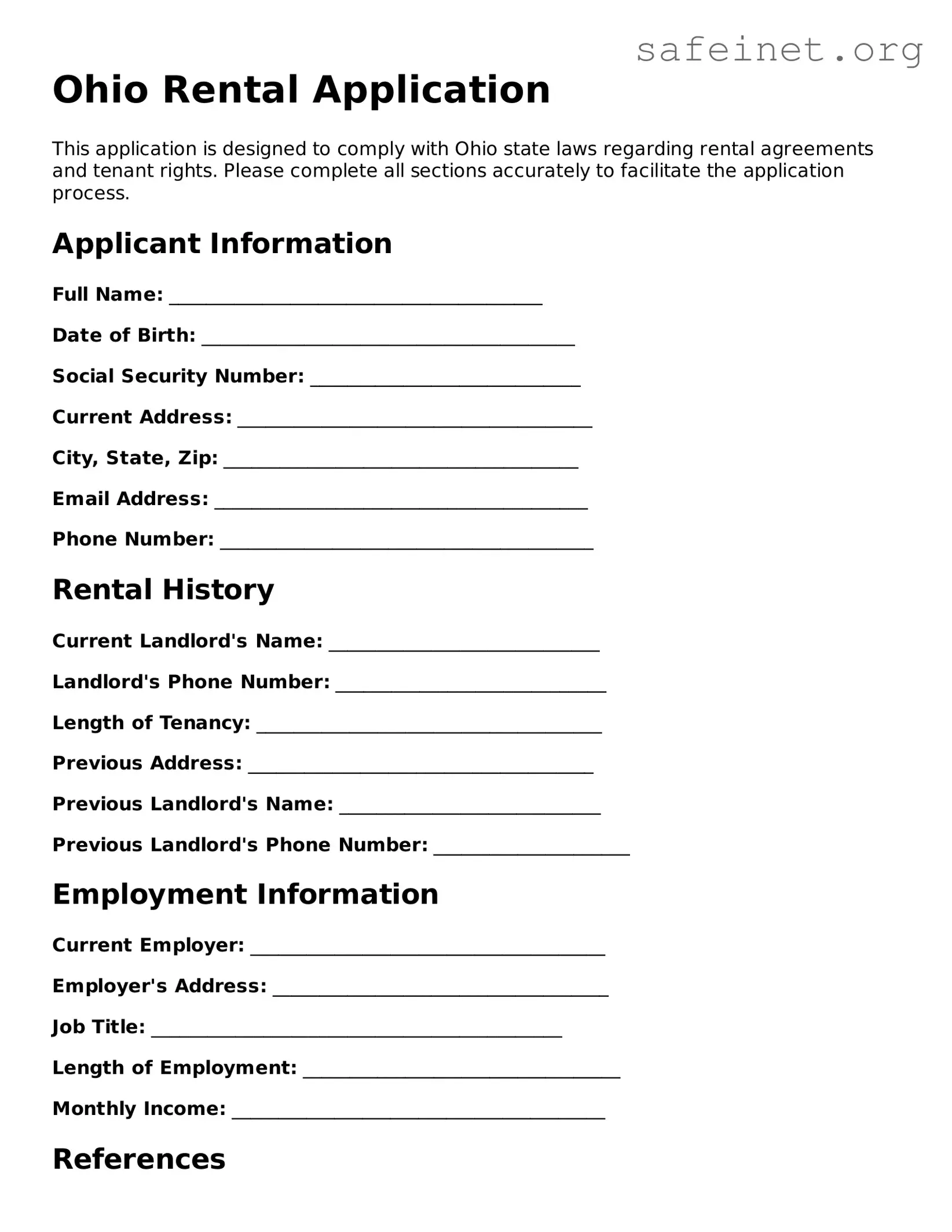
When seeking a new place to live in Ohio, understanding the rental application form is essential for both tenants and landlords. This form serves as a crucial first step in the rental process, gathering important information from prospective tenants. Key aspects include personal details such as name, contact information, and social security number, which help landlords verify identity and run background checks. Employment history and income verification are also typically required, allowing landlords to assess financial stability. Additionally, references from previous landlords can provide insight into a tenant's rental history and reliability. The application may also include questions about pets, smoking habits, and the number of occupants, ensuring that both parties are aligned on expectations. Completing this form accurately and thoroughly can significantly impact the chances of securing a desired rental property.
Ohio Rental Application
This application is designed to comply with Ohio state laws regarding rental agreements and tenant rights. Please complete all sections accurately to facilitate the application process.
Applicant Information
Full Name: ________________________________________
Date of Birth: ________________________________________
Social Security Number: _____________________________
Current Address: ______________________________________
City, State, Zip: ______________________________________
Email Address: ________________________________________
Phone Number: ________________________________________
Rental History
Current Landlord's Name: _____________________________
Landlord's Phone Number: _____________________________
Length of Tenancy: _____________________________________
Previous Address: _____________________________________
Previous Landlord's Name: ____________________________
Previous Landlord's Phone Number: _____________________
Employment Information
Current Employer: ______________________________________
Employer's Address: ____________________________________
Job Title: ____________________________________________
Length of Employment: __________________________________
Monthly Income: ________________________________________
References
Personal Reference Name: _____________________________
Relationship: __________________________________________
Phone Number: ________________________________________
Additional Information
Have you ever been evicted? Yes / No
If yes, please explain: __________________________________
Consent
By signing below, you consent to a background and credit check as part of the rental application process.
Applicant's Signature: ___________________________________
Date: _________________________________________________
Application Fee
A non-refundable application fee of $______ is required. Please make checks payable to [Landlord/Property Management Name].
Important Notes
| Fact Name | Description |
|---|---|
| Purpose | The Ohio Rental Application form is used by landlords to screen potential tenants for rental properties. |
| Information Required | The application typically requires personal details, rental history, employment information, and references. |
| Application Fee | Landlords may charge an application fee to cover the costs of background checks and processing the application. |
| Fair Housing Laws | The application process must comply with federal and state fair housing laws, ensuring no discrimination based on protected classes. |
| Governing Law | Ohio Revised Code Section 5321 governs rental agreements and tenant-landlord relationships in the state. |
| Approval Process | After submission, landlords review applications and may conduct background checks before making a decision. |
After obtaining the Ohio Rental Application form, you will need to provide accurate and complete information to facilitate the application process. Follow these steps to fill out the form correctly.
What is the purpose of the Ohio Rental Application form?
The Ohio Rental Application form is designed to collect essential information from potential tenants. Landlords use this form to evaluate applicants based on their rental history, creditworthiness, and personal background. By gathering this information, landlords can make informed decisions about who to rent their property to, ensuring a good fit for both parties.
What information do I need to provide on the application?
When filling out the Ohio Rental Application, you will typically need to provide personal details such as your full name, current address, and contact information. Additionally, you may be asked for your employment history, income details, and references. Some applications may also require your Social Security number and consent for a background check. Be prepared to provide accurate and complete information to avoid delays in the application process.
Is there a fee associated with the rental application?
Many landlords charge an application fee to cover the costs of processing your application. This fee can vary widely depending on the property and the landlord. It’s important to ask about any fees upfront. In Ohio, landlords are generally required to inform you about the fee amount and what it covers. Remember, this fee is often non-refundable, even if your application is denied.
How long does the application process take?
The duration of the application process can differ based on various factors, including the landlord's policies and the number of applications they receive. Typically, you can expect to hear back within a few days to a week. However, if the landlord needs to conduct thorough background checks or contact references, it might take longer. It’s a good idea to follow up if you haven’t received a response after a week.
What happens if my application is denied?
If your application is denied, the landlord is required to provide you with a reason for the denial. Common reasons include poor credit history, insufficient income, or negative rental history. If you believe the denial was based on incorrect information, you have the right to request a copy of your credit report and dispute any inaccuracies. It’s also helpful to ask the landlord if there are any steps you can take to improve your chances in the future.
Can I appeal a rental application denial?
Yes, you can appeal a rental application denial. If you receive a denial, it’s beneficial to ask the landlord for specific reasons. Understanding the basis for the denial can help you address any issues. You may also provide additional documentation or references to support your case. While there’s no formal appeal process, open communication with the landlord can sometimes lead to reconsideration.
Incomplete Information: Many applicants forget to fill out all required fields. Missing details can lead to delays or even rejection of the application.
Incorrect Contact Information: Providing wrong phone numbers or email addresses can make it difficult for landlords to reach you. Always double-check this information.
Failure to Disclose Income: Some applicants do not fully disclose their income or employment history. This can raise red flags for landlords.
Omitting References: Not including personal or professional references can weaken your application. Landlords often want to see who can vouch for your reliability.
Neglecting to Sign: Forgetting to sign the application is a common mistake. Without a signature, the application is considered incomplete.
Ignoring the Application Fee: Some applicants overlook the need to include an application fee. Not paying this fee can result in the application not being processed.
When applying for a rental property in Ohio, the rental application form is just one piece of the puzzle. Several other documents can support the application process, helping landlords make informed decisions. Here are four common forms and documents that often accompany the Ohio Rental Application.
By providing these additional documents, applicants can strengthen their rental applications and increase their chances of securing the desired property. Understanding the importance of each document can make the application process smoother and more successful.
The Ohio Rental Application form is similar to the tenant screening application used in many states. Both documents collect essential information about potential tenants, such as their employment history, income, and rental history. This allows landlords to assess the suitability of applicants for their properties. The tenant screening application often includes a consent section for background checks, mirroring the provisions found in the Ohio Rental Application form.
Another comparable document is the lease application form. Like the Ohio Rental Application, the lease application gathers personal and financial details about prospective tenants. It serves as a preliminary step before signing a lease agreement. Both documents aim to ensure that landlords can make informed decisions about whom they choose to rent to.
The background check authorization form shares similarities with the Ohio Rental Application. This document specifically focuses on obtaining permission to conduct background checks on applicants. While the rental application may include a section for this purpose, the background check authorization form is often a standalone document that emphasizes the tenant's consent to review their criminal and credit history.
The employment verification form is another document that complements the Ohio Rental Application. This form is used to confirm an applicant's employment status and income level. Landlords often request this information to ensure that tenants can meet their rent obligations. Both forms work together to provide a complete picture of the applicant's financial stability.
The pet application form is similar in that it addresses specific tenant needs and requirements. For landlords who allow pets, this form collects information about the pet, including breed, size, and vaccination status. While the Ohio Rental Application may include a section for pets, the pet application form provides more detailed insights into the applicant's pet ownership.
The roommate application form is another relevant document. This form is used when multiple tenants plan to share a rental property. It collects similar information as the Ohio Rental Application but focuses on each roommate's financial and personal details. This ensures that all individuals living in the property are vetted appropriately.
The rental history verification form is closely related to the Ohio Rental Application. This document seeks to confirm the applicant's previous rental experiences. Landlords use it to contact former landlords and verify the applicant's reliability as a tenant. Both forms aim to provide a comprehensive understanding of the applicant's past rental behavior.
The credit application form also bears similarities to the Ohio Rental Application. This document specifically focuses on the applicant's credit history and financial responsibility. While the rental application may request basic financial information, the credit application delves deeper into the applicant's credit score and outstanding debts, providing landlords with additional insights into their financial reliability.
The guarantor application form can be compared to the Ohio Rental Application as well. This form is used when a tenant requires a guarantor to co-sign the lease. It collects similar information about the guarantor’s financial status and creditworthiness. This ensures that landlords have a backup option for rent payments if the primary tenant is unable to fulfill their obligations.
Lastly, the move-in checklist is related to the Ohio Rental Application in that it documents the condition of the property before a tenant moves in. While the rental application focuses on tenant qualifications, the move-in checklist ensures that both parties agree on the property's condition at the start of the lease. This helps prevent disputes over damages when the tenant moves out.
Filling out a rental application can feel overwhelming, but being mindful of certain practices can make the process smoother. Here are some important dos and don’ts to consider when completing the Ohio Rental Application form.
By following these guidelines, you can improve your chances of securing the rental you desire while maintaining a respectful and transparent relationship with potential landlords.
Misconceptions about the Ohio Rental Application form can lead to confusion for both landlords and prospective tenants. Understanding the realities of this form is essential for a smooth rental process. Below are four common misconceptions.
When filling out and using the Ohio Rental Application form, there are several important points to keep in mind. Here are some key takeaways:
By keeping these points in mind, you can navigate the Ohio Rental Application process more effectively and increase your chances of securing a rental property.