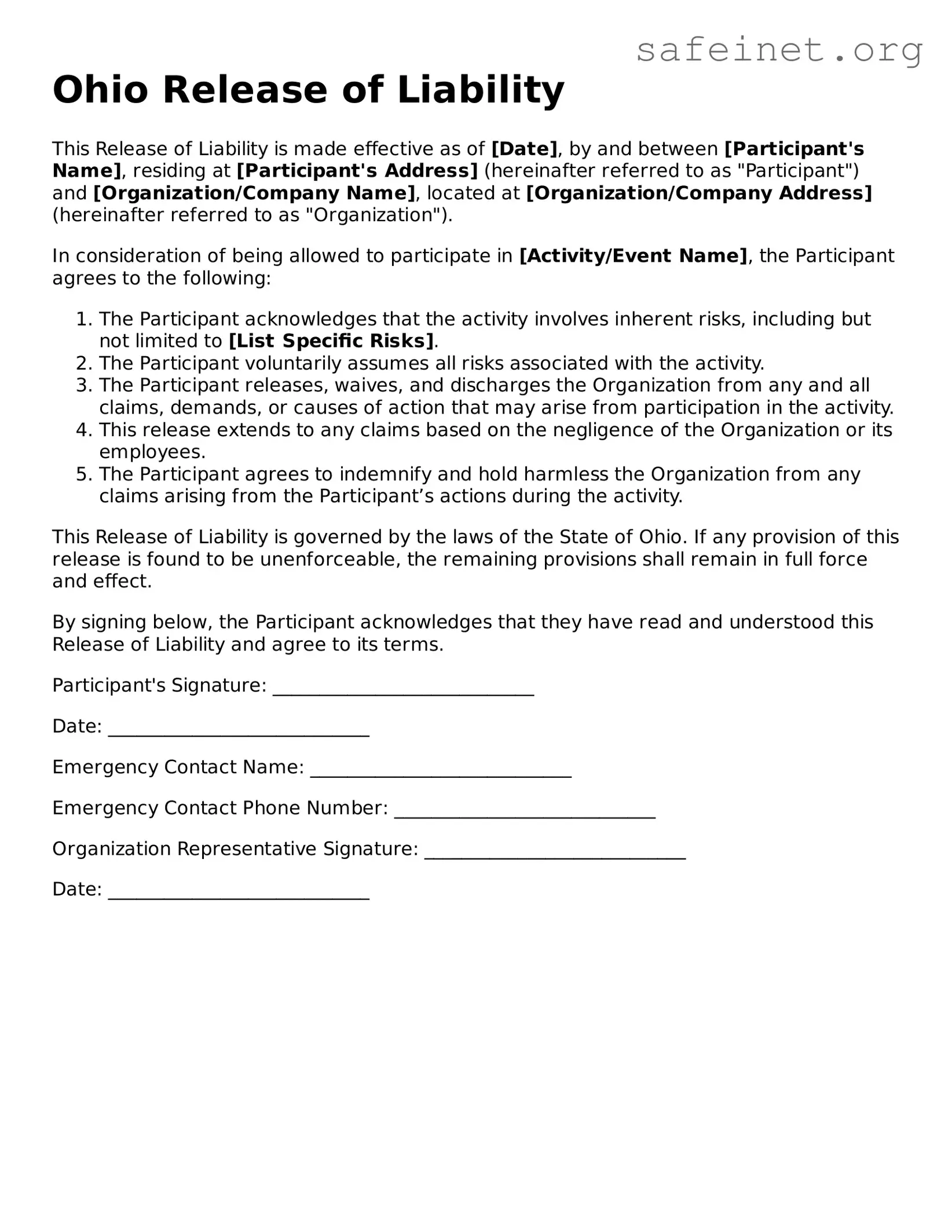
In the realm of personal activities, particularly those that involve some level of risk, understanding the Ohio Release of Liability form is crucial for both participants and organizers. This document serves as a protective measure, allowing individuals to acknowledge the inherent risks associated with specific activities, such as sports, recreational events, or even volunteer work. By signing this form, participants agree to waive their right to hold organizers responsible for injuries or damages that may occur during these activities. It's important to note that while this form can offer significant legal protection to organizers, it must be clear and comprehensive to be enforceable. Key elements typically included in the form are a detailed description of the activity, a statement of risk acknowledgment, and a signature line for the participant. Understanding these components can help ensure that all parties involved are aware of their rights and responsibilities, fostering a safer environment for everyone.
Ohio Release of Liability
This Release of Liability is made effective as of [Date], by and between [Participant's Name], residing at [Participant's Address] (hereinafter referred to as "Participant") and [Organization/Company Name], located at [Organization/Company Address] (hereinafter referred to as "Organization").
In consideration of being allowed to participate in [Activity/Event Name], the Participant agrees to the following:
This Release of Liability is governed by the laws of the State of Ohio. If any provision of this release is found to be unenforceable, the remaining provisions shall remain in full force and effect.
By signing below, the Participant acknowledges that they have read and understood this Release of Liability and agree to its terms.
Participant's Signature: ____________________________
Date: ____________________________
Emergency Contact Name: ____________________________
Emergency Contact Phone Number: ____________________________
Organization Representative Signature: ____________________________
Date: ____________________________
| Fact Name | Description |
|---|---|
| Purpose | The Ohio Release of Liability form is used to protect individuals or organizations from legal claims related to injuries or damages that may occur during an activity. |
| Governing Law | This form is governed by Ohio law, specifically under the principles of contract law and liability waivers. |
| Usage | It is commonly used in various activities such as sports, recreational events, and other activities where there is a risk of injury. |
| Signatures | Both parties must sign the form to ensure that the release is valid and enforceable. |
Filling out the Ohio Release of Liability form is a straightforward process. Once you have the form in hand, you’ll need to provide some essential information to ensure everything is completed correctly. Follow these steps carefully to make sure you fill out the form accurately.
Once you have completed the form, it’s important to keep a copy for your records. You may need to submit the original to the organization or individual requiring the release. Ensure that you do this promptly to avoid any issues related to your participation in the event or activity.
What is an Ohio Release of Liability form?
An Ohio Release of Liability form is a legal document that allows one party to release another party from liability for certain risks associated with an activity or event. It is commonly used in situations involving recreational activities, sports, or events where there may be a risk of injury or damage. By signing this form, participants acknowledge the risks and agree not to hold the other party responsible for any accidents or injuries that may occur.
When should I use a Release of Liability form?
You should use a Release of Liability form whenever you are organizing an event or activity that involves potential risks. This includes sports events, outdoor activities, workshops, or any situation where participants might be exposed to hazards. It is a good practice to have participants sign this form to protect yourself or your organization from legal claims related to injuries or accidents.
Who should sign the Release of Liability form?
Is a Release of Liability form legally binding in Ohio?
Can I modify the Release of Liability form?
What happens if someone is injured despite signing the Release of Liability?
Do I need a witness or notarization for the form?
How long is a Release of Liability form valid?
Where can I obtain an Ohio Release of Liability form?
Failing to read the entire form thoroughly. Many individuals skip sections, which can lead to misunderstandings about the terms and conditions.
Not providing accurate personal information. Errors in names, addresses, or contact details can cause issues if the form needs to be referenced later.
Ignoring the instructions. Each form comes with specific guidelines that should be followed closely to ensure it is valid.
Not signing the form. Some people forget to sign, which renders the document ineffective.
Using a date that is not current. It is important to date the form at the time of signing to establish a clear timeline.
Overlooking the importance of witnesses. Some forms require a witness signature to be legally binding.
Assuming the form covers all potential liabilities. Participants should be aware that not all risks may be included in the release.
Failing to ask questions. If there is any uncertainty about the form, individuals should seek clarification before signing.
Neglecting to keep a copy of the signed form. Retaining a copy is crucial for personal records and future reference.
When engaging in activities that involve some level of risk, it’s crucial to have the right documentation in place. The Ohio Release of Liability form is an important tool for protecting individuals and organizations from legal claims. However, it is often accompanied by other forms and documents that further clarify responsibilities and expectations. Below is a list of related documents that you may encounter.
Using these documents in conjunction with the Ohio Release of Liability form can help create a safer environment for all involved. It’s essential to ensure that everyone understands their rights and responsibilities before participating in any potentially risky activities. By being proactive, you can minimize misunderstandings and protect yourself and others.
The Waiver of Liability form is similar to the Ohio Release of Liability form in that both documents are designed to protect an organization from legal claims arising from injuries or damages that may occur during an activity. A Waiver of Liability typically requires participants to acknowledge the risks involved and agree not to hold the organization responsible for any accidents. This document is often used in sports, recreational activities, and events where participants may be exposed to potential hazards.
The Indemnification Agreement serves a similar purpose by ensuring that one party agrees to compensate another for any losses or damages incurred. Like the Ohio Release of Liability, this agreement is often used in situations where one party may be exposed to liability due to the actions of another. Indemnification Agreements are common in business contracts, rental agreements, and service contracts, providing an added layer of protection against unforeseen liabilities.
The Hold Harmless Agreement is closely related to the Ohio Release of Liability form. It is designed to protect one party from being held liable for any injuries or damages that may occur during a specific event or activity. This agreement shifts the responsibility for any claims to the other party, ensuring that the organizer or host is not financially responsible for unforeseen incidents.
The Participant Agreement is another document that functions similarly to the Ohio Release of Liability. This agreement outlines the terms and conditions that participants must adhere to while engaging in an activity. It often includes a release of liability clause, ensuring that participants understand the risks involved and agree not to hold the organizers accountable for any injuries sustained during the activity.
The Event Liability Waiver is a specific type of release form used for events, such as festivals, concerts, or sporting events. Like the Ohio Release of Liability, it protects the event organizers from claims related to injuries or damages that may occur during the event. Participants typically sign this waiver upon entry, acknowledging the risks and agreeing not to pursue legal action against the organizers.
Lastly, the Volunteer Release form is akin to the Ohio Release of Liability, specifically for individuals volunteering for an organization. This document protects the organization from claims arising from any injuries volunteers may sustain while performing their duties. It emphasizes the importance of understanding the risks involved in volunteering and ensures that volunteers cannot hold the organization liable for accidents that may occur during their service.
When filling out the Ohio Release of Liability form, it is important to follow certain guidelines to ensure the process goes smoothly. Here are ten recommendations to consider.
Following these guidelines can help ensure that the form is filled out correctly and that your rights are protected.
Understanding the Ohio Release of Liability form is crucial for anyone involved in activities that may pose risks. However, several misconceptions can lead to confusion. Here’s a list of ten common misunderstandings about this form:
By understanding these misconceptions, individuals can make informed decisions when it comes to participating in activities that require a Release of Liability form in Ohio.
Filling out and using the Ohio Release of Liability form is an important step for anyone looking to protect themselves from legal claims. Here are some key takeaways to consider: