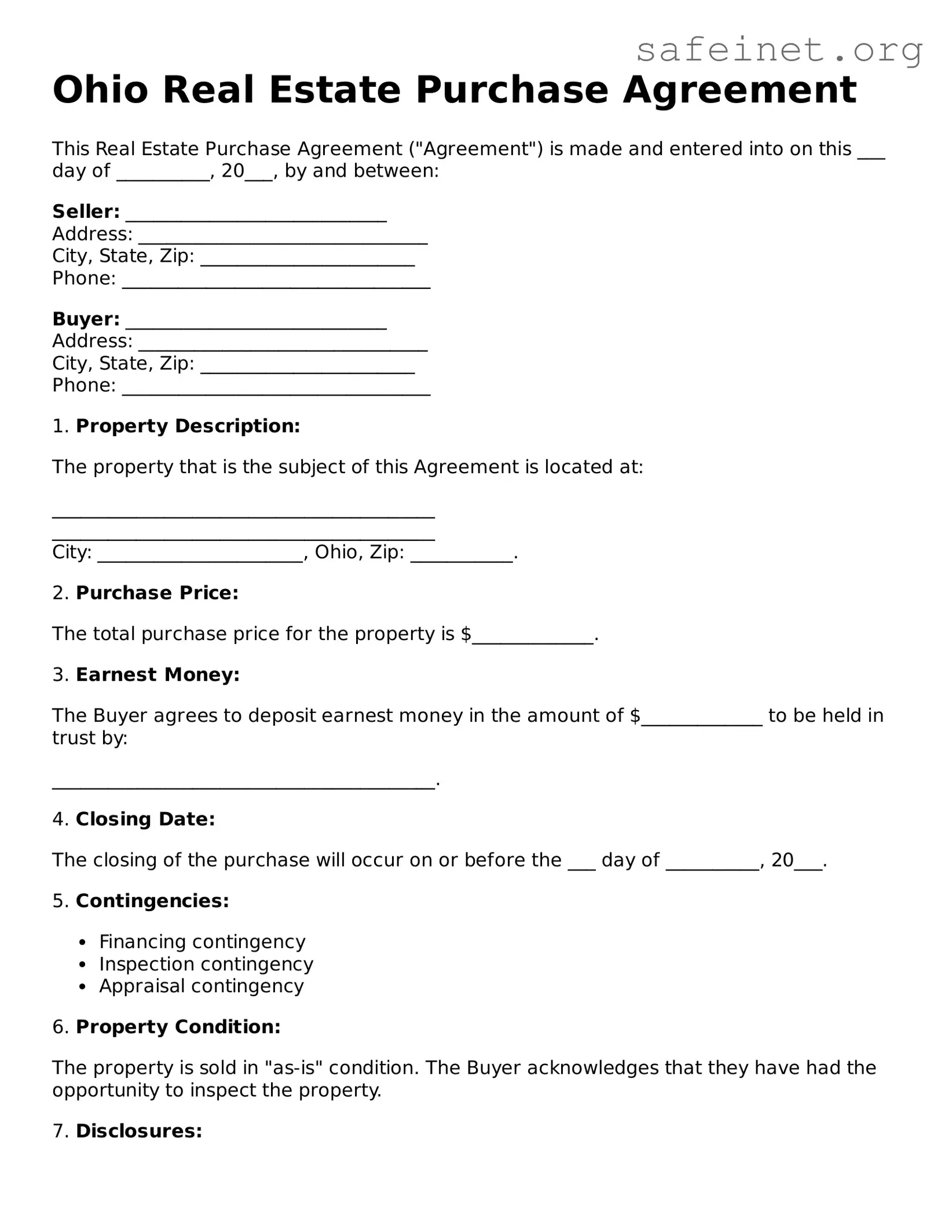
The Ohio Real Estate Purchase Agreement form is a crucial document in the home buying process, serving as the foundation for a successful transaction between buyers and sellers. This form outlines essential details such as the purchase price, property description, and closing date, ensuring that both parties are on the same page. It also includes important contingencies, like financing and inspection clauses, which protect the interests of the buyer. In addition, the agreement addresses the allocation of closing costs and any necessary disclosures regarding the property's condition. By clearly defining the terms of the sale, this form helps prevent misunderstandings and provides a roadmap for the transaction, making it easier for everyone involved to navigate the complexities of real estate dealings in Ohio.
Ohio Real Estate Purchase Agreement
This Real Estate Purchase Agreement ("Agreement") is made and entered into on this ___ day of __________, 20___, by and between:
Seller: ____________________________
Address: _______________________________
City, State, Zip: _______________________
Phone: _________________________________
Buyer: ____________________________
Address: _______________________________
City, State, Zip: _______________________
Phone: _________________________________
1. Property Description:
The property that is the subject of this Agreement is located at:
_________________________________________
_________________________________________
City: ______________________, Ohio, Zip: ___________.
2. Purchase Price:
The total purchase price for the property is $_____________.
3. Earnest Money:
The Buyer agrees to deposit earnest money in the amount of $_____________ to be held in trust by:
_________________________________________.
4. Closing Date:
The closing of the purchase will occur on or before the ___ day of __________, 20___.
5. Contingencies:
6. Property Condition:
The property is sold in "as-is" condition. The Buyer acknowledges that they have had the opportunity to inspect the property.
7. Disclosures:
The Seller agrees to provide all required disclosures under Ohio law, including but not limited to:
8. Signatures:
By signing below, both parties agree to the terms of this Agreement.
__________________________
Seller's Signature
Date: ____________________
__________________________
Buyer's Signature
Date: ____________________
| Fact Name | Description |
|---|---|
| Governing Law | The Ohio Real Estate Purchase Agreement is governed by Ohio state law. |
| Parties Involved | The agreement typically involves a buyer and a seller. |
| Property Description | A detailed description of the property being sold is required. |
| Purchase Price | The total purchase price must be clearly stated in the agreement. |
| Earnest Money | The agreement often includes a provision for earnest money, which shows the buyer's commitment. |
| Contingencies | Common contingencies include financing, inspections, and appraisals. |
| Closing Date | The agreement specifies a closing date for the transaction to be finalized. |
| Signatures | Both parties must sign the agreement for it to be legally binding. |
Completing the Ohio Real Estate Purchase Agreement form is an essential step in the home buying process. After filling out this form, you will have a clear understanding of the terms of the sale, including the purchase price, contingencies, and other important details. This document serves as a binding contract between the buyer and seller, outlining the responsibilities of each party.
Once the form is filled out and signed, it can be submitted to the appropriate parties for further processing. This may include real estate agents, attorneys, or title companies, depending on the specifics of the transaction.
What is the Ohio Real Estate Purchase Agreement form?
The Ohio Real Estate Purchase Agreement form is a legal document used in real estate transactions. It outlines the terms and conditions under which a buyer agrees to purchase property from a seller. This form helps to ensure that both parties understand their rights and obligations throughout the transaction process.
Who should use the Ohio Real Estate Purchase Agreement form?
This form is intended for use by individuals or entities involved in buying or selling real estate in Ohio. Buyers and sellers, as well as their respective agents, should utilize this document to facilitate a clear and organized transaction.
What key elements are included in the agreement?
The Ohio Real Estate Purchase Agreement typically includes the following key elements: the purchase price, property description, closing date, contingencies, earnest money deposit, and any additional terms or conditions agreed upon by both parties. These elements are crucial for defining the expectations of both the buyer and seller.
Is the Ohio Real Estate Purchase Agreement legally binding?
Yes, once both parties sign the Ohio Real Estate Purchase Agreement, it becomes a legally binding contract. This means that both the buyer and seller are obligated to adhere to the terms outlined in the agreement, provided that all legal requirements are met.
Can the agreement be modified after it is signed?
Yes, the Ohio Real Estate Purchase Agreement can be modified after it is signed, but both parties must agree to the changes. Any modifications should be documented in writing and signed by both the buyer and seller to ensure clarity and enforceability.
What happens if one party fails to fulfill their obligations?
If one party fails to fulfill their obligations as outlined in the agreement, the other party may have the right to seek legal remedies. This could include seeking damages or specific performance, which means asking the court to enforce the terms of the agreement. It is advisable to consult a legal professional for guidance in such situations.
Are there contingencies that can be included in the agreement?
Yes, contingencies are common in real estate agreements and can be included in the Ohio Real Estate Purchase Agreement. These may include financing contingencies, inspection contingencies, or appraisal contingencies. Contingencies allow buyers to back out of the agreement without penalty if certain conditions are not met.
Where can I obtain the Ohio Real Estate Purchase Agreement form?
The Ohio Real Estate Purchase Agreement form can be obtained from various sources, including real estate agents, legal professionals, or online legal document services. It is important to ensure that the form is up-to-date and complies with Ohio state laws.
Failing to include all necessary parties. It's essential to list all buyers and sellers accurately. Omitting a party can lead to legal complications later.
Not specifying the purchase price clearly. The purchase price should be stated explicitly to avoid misunderstandings.
Ignoring the importance of contingencies. Buyers should include contingencies such as financing, inspections, or appraisal to protect their interests.
Neglecting to provide a complete property description. A detailed description helps ensure that both parties understand exactly what is being sold.
Using vague or ambiguous language. Clarity is crucial in legal documents. Ambiguities can lead to disputes down the line.
Overlooking deadlines. Timelines for inspections, financing, and closing must be clearly defined to avoid potential issues.
Failing to initial changes. Any modifications made to the agreement should be initialed by all parties to confirm acceptance.
Not seeking legal advice when needed. Consulting with a real estate attorney can provide valuable insights and help avoid mistakes.
When engaging in real estate transactions in Ohio, several documents accompany the Ohio Real Estate Purchase Agreement. Each of these forms serves a specific purpose in ensuring a smooth transaction process. Below is a list of commonly used documents.
These documents play crucial roles in the real estate transaction process. Understanding each one can help all parties involved navigate their responsibilities and rights effectively.
The Ohio Residential Purchase Agreement is similar to the Purchase and Sale Agreement commonly used in many states. Both documents outline the terms and conditions under which a buyer agrees to purchase real estate from a seller. They detail important elements such as the purchase price, closing date, and contingencies. Both agreements serve as a binding contract once signed by both parties, ensuring that each party understands their rights and obligations in the transaction.
Another document comparable to the Ohio Residential Purchase Agreement is the Offer to Purchase Real Estate. This document is often the initial step in the buying process. It expresses the buyer's intent to purchase and includes key details like the offer price and any contingencies. Once the seller accepts the offer, it can evolve into a more comprehensive purchase agreement, similar to the Ohio form.
The Lease with Option to Purchase Agreement also shares similarities with the Ohio Purchase Agreement. This document allows a tenant to rent a property with the option to buy it later. It outlines the terms of the lease, the purchase price, and the duration of the option period. Like the Ohio agreement, it provides a framework for the parties involved and establishes clear expectations for both the landlord and the tenant.
The Exclusive Right to Sell Agreement is another related document. This agreement is typically used by real estate agents when representing sellers. It grants the agent the exclusive right to sell the property for a specified period. While it focuses on the seller's obligations to the agent, it complements the Ohio Purchase Agreement by establishing the groundwork for a sale that may eventually lead to a purchase agreement.
Lastly, the Real Estate Listing Agreement is similar in that it details the terms under which a property will be marketed for sale. This document outlines the responsibilities of the seller and the real estate agent, including commission rates and marketing strategies. While it does not directly involve the buyer, it plays a crucial role in the overall transaction process, ultimately leading to the creation of a Purchase Agreement like the one used in Ohio.
When filling out the Ohio Real Estate Purchase Agreement form, attention to detail is crucial. Here is a list of things you should and shouldn't do to ensure a smooth transaction.
By following these guidelines, you can help ensure that your Ohio Real Estate Purchase Agreement is filled out correctly and efficiently.
Understanding the Ohio Real Estate Purchase Agreement form is essential for anyone looking to buy or sell property in the state. However, there are several misconceptions surrounding this important document. Here are ten common misunderstandings:
By understanding these misconceptions, buyers and sellers can navigate the Ohio Real Estate Purchase Agreement with greater confidence and clarity.
Filling out the Ohio Real Estate Purchase Agreement form requires attention to detail and understanding of the key components involved in the transaction. Here are some important takeaways: