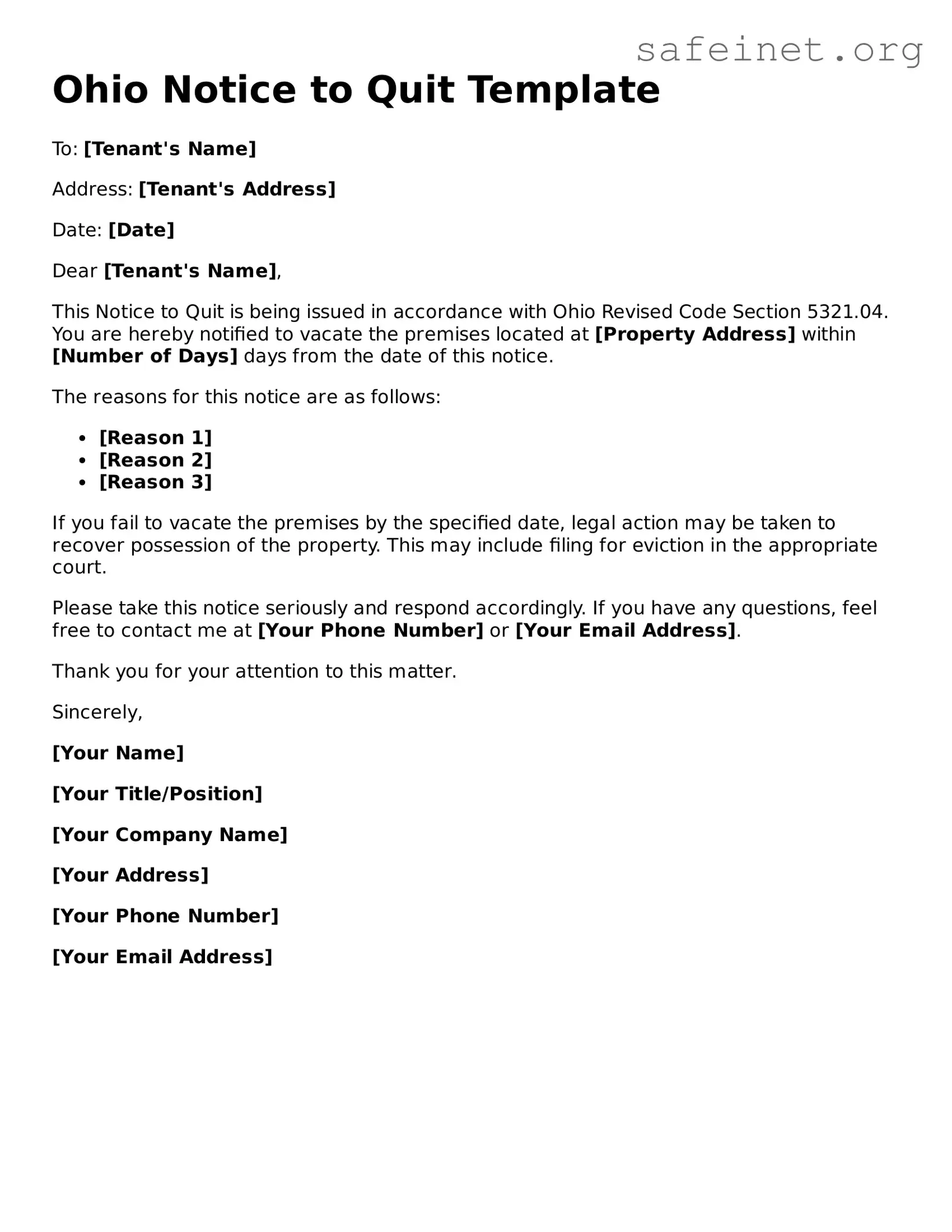
In Ohio, the Notice to Quit form serves as a crucial document in the landlord-tenant relationship, particularly when disputes arise over lease agreements. This form is typically utilized when a landlord seeks to terminate a rental agreement due to a tenant's failure to comply with the terms, such as non-payment of rent or other lease violations. The Notice to Quit outlines the specific reasons for the termination and provides the tenant with a clear timeframe to either remedy the situation or vacate the premises. Understanding this form is essential for both landlords and tenants, as it helps ensure that the eviction process is conducted legally and fairly. Additionally, the form must adhere to Ohio's legal requirements, including proper delivery methods and content specifications, to be effective. By familiarizing themselves with the Notice to Quit, both parties can navigate the complexities of eviction and lease termination with greater confidence and clarity.
Ohio Notice to Quit Template
To: [Tenant's Name]
Address: [Tenant's Address]
Date: [Date]
Dear [Tenant's Name],
This Notice to Quit is being issued in accordance with Ohio Revised Code Section 5321.04. You are hereby notified to vacate the premises located at [Property Address] within [Number of Days] days from the date of this notice.
The reasons for this notice are as follows:
If you fail to vacate the premises by the specified date, legal action may be taken to recover possession of the property. This may include filing for eviction in the appropriate court.
Please take this notice seriously and respond accordingly. If you have any questions, feel free to contact me at [Your Phone Number] or [Your Email Address].
Thank you for your attention to this matter.
Sincerely,
[Your Name]
[Your Title/Position]
[Your Company Name]
[Your Address]
[Your Phone Number]
[Your Email Address]
| Fact Name | Description |
|---|---|
| Purpose | The Ohio Notice to Quit form is used by landlords to inform tenants that they must vacate the rental property. |
| Governing Law | This form is governed by the Ohio Revised Code, specifically sections 1923.04 to 1923.06. |
| Notice Period | Typically, landlords must provide a notice period of 3 days for non-payment of rent. |
| Delivery Methods | The notice can be delivered in person, by certified mail, or by posting it on the property. |
| Tenant Rights | Tenants have the right to contest the notice in court if they believe it is unjustified. |
| Consequences of Non-Compliance | If tenants fail to vacate, landlords can proceed with eviction proceedings in court. |
After obtaining the Ohio Notice to Quit form, it is important to complete it accurately. This form serves as a formal notification and must be filled out with care to ensure that all necessary information is provided. Following the steps below will help in completing the form correctly.
What is an Ohio Notice to Quit form?
The Ohio Notice to Quit form is a legal document used by landlords to inform tenants that they must vacate the rental property. This notice typically arises when a tenant has violated the terms of their lease agreement or has failed to pay rent. The form serves as a formal request for the tenant to leave the premises, providing them with a specified timeframe to do so.
How long does a tenant have to respond to a Notice to Quit in Ohio?
The response time for a tenant can vary based on the reason for the notice. If the notice is related to non-payment of rent, Ohio law generally requires a tenant to respond within three days. For other lease violations, the tenant may have a longer period to address the issue, often ranging from 30 days to cure the violation, depending on the lease terms.
Can a landlord file for eviction without serving a Notice to Quit?
No, a landlord must serve a Notice to Quit before proceeding with eviction. This document is a critical step in the eviction process, as it provides the tenant with an opportunity to rectify the situation or vacate the property. Skipping this step can lead to delays in the eviction process and may result in the landlord's case being dismissed in court.
What information should be included in the Notice to Quit?
The Notice to Quit should include several key pieces of information. It must clearly state the tenant's name and address, the reason for the notice, and the date by which the tenant must vacate the property. Additionally, it should provide details about any lease violations and specify any amounts owed if applicable. Clarity is essential to avoid confusion and ensure the tenant understands the requirements.
What happens if a tenant ignores the Notice to Quit?
If a tenant ignores the Notice to Quit, the landlord may proceed with filing an eviction lawsuit in court. The court will then review the case, and if the landlord has followed the proper legal procedures, a judgment may be issued in favor of the landlord. This could result in the tenant being ordered to vacate the property and may lead to additional consequences, such as damage to their rental history.
Is it necessary to use a specific form for the Notice to Quit in Ohio?
While there is no specific state-mandated form for the Notice to Quit in Ohio, it is essential that the notice contains all required information and follows state guidelines. Many landlords choose to use templates or legal forms that comply with Ohio law to ensure that they are providing the necessary information and protecting their rights. Using a well-structured form can help avoid legal complications in the future.
Failing to include the correct tenant's name. Ensure that the name matches the one on the lease agreement.
Not providing the full address of the rental property. The address should include the street number, street name, city, and zip code.
Leaving out the date of the notice. Always include the date when the notice is issued to establish a timeline.
Not specifying the reason for the notice. Clearly state why the notice is being issued, such as non-payment of rent or lease violations.
Using unclear or vague language. Be direct and specific in your wording to avoid confusion.
Failing to sign the notice. The notice must be signed by the landlord or their authorized agent to be valid.
Not providing the required time frame for the tenant to respond. Include the number of days the tenant has to remedy the situation or vacate.
Neglecting to send the notice properly. Ensure you follow the correct delivery method, whether it’s personal delivery or certified mail.
When dealing with landlord-tenant issues in Ohio, the Notice to Quit form is just one of several important documents that may come into play. Understanding these forms can help both landlords and tenants navigate the process more effectively. Below is a list of other common forms and documents that are often used alongside the Ohio Notice to Quit form.
Familiarity with these documents can empower both landlords and tenants, ensuring that everyone understands their rights and responsibilities throughout the rental process. Whether you are initiating an eviction or responding to one, having the right forms on hand is crucial for effective communication and resolution.
The Ohio Notice to Quit form is similar to the eviction notice, which is commonly used in many states. An eviction notice informs a tenant that they must vacate the rental property by a specific date. Like the Notice to Quit, it outlines the reasons for the eviction, such as non-payment of rent or lease violations. Both documents serve as formal communication from the landlord to the tenant, setting a timeline for vacating the premises.
Another document similar to the Ohio Notice to Quit is the demand for possession. This document is often issued when a landlord wants to regain possession of their property due to a tenant's failure to comply with the lease terms. It specifies the reasons for the demand, much like the Notice to Quit. Both documents aim to notify the tenant of their obligations and the potential consequences of not addressing the issues raised.
The lease termination letter also shares similarities with the Ohio Notice to Quit. This letter is used when a landlord or tenant wishes to end a rental agreement. It typically includes the end date of the lease and any necessary actions to take before moving out. Both documents communicate the intent to terminate the rental relationship, ensuring that all parties are aware of the timeline and responsibilities involved.
A notice of non-renewal is another document that resembles the Ohio Notice to Quit. This notice is given when a landlord decides not to renew a lease agreement at the end of its term. It informs the tenant that they must vacate the property by a specified date. Both documents serve to provide clear communication regarding the end of a tenancy, allowing tenants to prepare for their next steps.
Finally, the notice of lease violation is similar to the Ohio Notice to Quit in that it addresses issues related to the tenant's behavior. This notice details specific violations of the lease agreement, such as unauthorized pets or excessive noise. It gives the tenant a chance to correct the issue before further action is taken. Both documents emphasize the importance of adhering to lease terms and provide a framework for resolving disputes.
When filling out the Ohio Notice to Quit form, there are important dos and don'ts to keep in mind. This form is essential for landlords seeking to terminate a rental agreement. Here’s a straightforward list to guide you.
Following these guidelines will help ensure that your Notice to Quit is effective and legally sound.
The Ohio Notice to Quit form is often misunderstood, leading to confusion for both landlords and tenants. Below are eight common misconceptions about this important document.
Many people believe that a Notice to Quit automatically means a tenant is being evicted. In reality, it is simply a formal request for the tenant to vacate the premises, often due to non-payment of rent or lease violations. Eviction proceedings must still be initiated in court.
Some think that landlords can issue a Notice to Quit at any time and for any reason. However, Ohio law requires specific grounds for serving this notice, such as non-payment of rent or lease violations.
While personal delivery is one method, the Notice to Quit can also be sent via certified mail or posted on the rental property. Landlords have options for how they can serve this notice.
Ignoring the notice does not make it go away. Tenants are encouraged to respond and address the issues raised in the Notice to Quit, as failure to do so may lead to eviction proceedings.
The timeframe to vacate depends on the type of Notice to Quit issued. For example, a 3-day notice for non-payment of rent requires tenants to leave within three days, while other notices may have different timelines.
Issuing a Notice to Quit does not give landlords the right to unilaterally change lease terms. The original lease agreement remains in effect until legally modified or terminated.
A Notice to Quit is not the same as terminating a lease. It is a request for the tenant to leave, while lease termination involves a formal ending of the rental agreement, which may require additional steps.
Tenants have the right to contest a Notice to Quit in court. They can present their case and any defenses they may have during eviction proceedings, ensuring their voice is heard.
Filling out and using the Ohio Notice to Quit form is an important step for landlords seeking to terminate a tenancy. Here are some key takeaways to consider:
By keeping these takeaways in mind, landlords can effectively use the Ohio Notice to Quit form and ensure compliance with state laws.