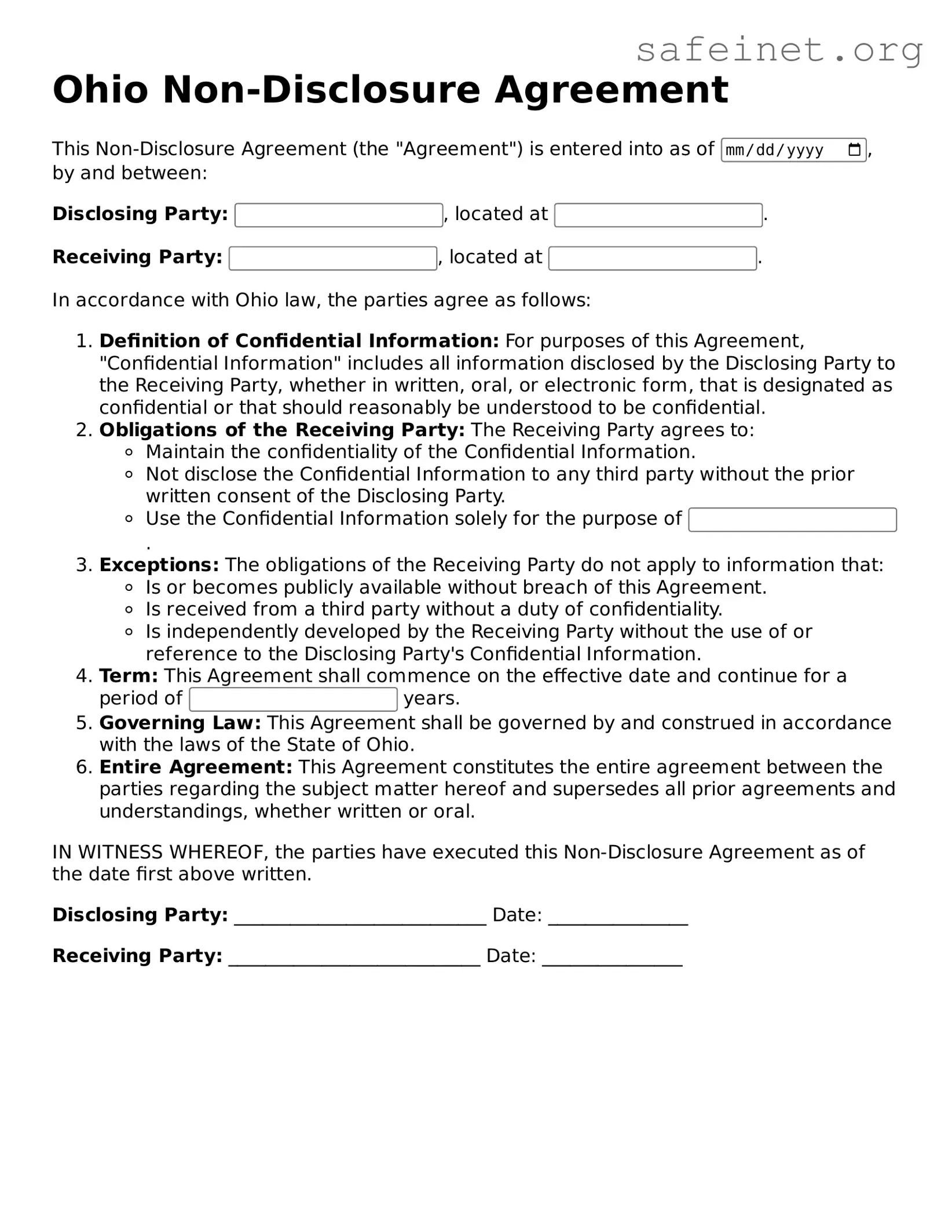
In Ohio, the Non-disclosure Agreement (NDA) form serves as a crucial tool for individuals and businesses seeking to protect sensitive information from unauthorized disclosure. This legally binding document outlines the obligations of the parties involved, ensuring that confidential information remains secure. Typically, an NDA specifies what constitutes confidential information, the duration of the confidentiality obligation, and the consequences of any breach. It is essential for various scenarios, including employment relationships, business partnerships, and when sharing proprietary information with potential investors or clients. By clearly defining the terms of confidentiality, the Ohio NDA form helps to foster trust and collaboration while safeguarding intellectual property and trade secrets. Understanding the key components of this agreement can empower parties to navigate their professional interactions with confidence and clarity.
Ohio Non-Disclosure Agreement
This Non-Disclosure Agreement (the "Agreement") is entered into as of , by and between:
Disclosing Party: , located at .
Receiving Party: , located at .
In accordance with Ohio law, the parties agree as follows:
IN WITNESS WHEREOF, the parties have executed this Non-Disclosure Agreement as of the date first above written.
Disclosing Party: ___________________________ Date: _______________
Receiving Party: ___________________________ Date: _______________
| Fact Name | Description |
|---|---|
| Definition | An Ohio Non-disclosure Agreement (NDA) is a legal contract designed to protect confidential information shared between parties. |
| Purpose | NDAs are commonly used to safeguard trade secrets, proprietary information, and sensitive business data. |
| Governing Law | The NDA is governed by Ohio state law, specifically under the Ohio Revised Code. |
| Parties Involved | Typically, the agreement involves a disclosing party and a receiving party, both of whom are bound by the terms. |
| Duration | The duration of confidentiality obligations can vary, but it is often specified in the agreement. |
| Enforceability | Ohio courts generally enforce NDAs, provided they are reasonable in scope and duration. |
Once you have the Ohio Non-disclosure Agreement form in front of you, it's time to fill it out. Follow these steps carefully to ensure that all necessary information is provided accurately.
After completing the form, review it for accuracy. Ensure that all sections are filled out correctly before finalizing the document with signatures.
What is a Non-disclosure Agreement (NDA) in Ohio?
A Non-disclosure Agreement, or NDA, is a legal contract that protects confidential information shared between parties. In Ohio, it ensures that sensitive information remains private and is not disclosed to unauthorized individuals or entities. NDAs are commonly used in business settings to safeguard trade secrets, proprietary information, and other confidential data.
When should I use an NDA?
You should consider using an NDA when sharing confidential information with potential partners, employees, or contractors. If you are discussing business plans, financial data, or any proprietary information that you do not want to be disclosed, an NDA can help protect your interests.
What are the key components of an Ohio NDA?
An effective NDA typically includes the following components: a definition of confidential information, obligations of the receiving party, the duration of confidentiality, and any exclusions from confidentiality. It’s important to clearly outline what information is protected and the responsibilities of each party.
How long does the confidentiality obligation last?
The duration of confidentiality can vary based on the agreement. In Ohio, parties can specify how long the NDA remains in effect. This period can range from a few years to indefinitely, depending on the nature of the information and the needs of the parties involved.
Can I enforce an NDA in Ohio?
Yes, you can enforce an NDA in Ohio if it is properly drafted and executed. If one party breaches the agreement, the other party may seek legal remedies, which could include monetary damages or injunctive relief. It’s crucial to ensure that the NDA is clear and unambiguous to support enforcement efforts.
Are there any limitations to what can be protected under an NDA?
Yes, not all information can be protected under an NDA. Publicly available information, information already known to the receiving party, or information independently developed by the receiving party typically cannot be covered. Additionally, NDAs cannot be used to protect illegal activities or information that violates public policy.
Do I need a lawyer to draft an NDA in Ohio?
While it is not legally required to have a lawyer draft an NDA, it is highly recommended. A legal professional can ensure that the agreement is comprehensive, enforceable, and tailored to your specific needs. This can help prevent potential disputes and misunderstandings in the future.
What should I do if someone breaches an NDA?
If you believe someone has breached an NDA, first review the agreement to understand your rights and the remedies available. You may want to contact the other party to discuss the issue. If necessary, consult with a lawyer to explore your options for enforcing the NDA and seeking damages.
Failing to read the entire agreement carefully. Many individuals skim through the document, missing important clauses that could affect their rights.
Not identifying all parties involved. It's crucial to list every individual or entity that will have access to the confidential information.
Omitting the definition of confidential information. Without a clear definition, it can lead to misunderstandings about what information is protected.
Neglecting to specify the duration of confidentiality. An indefinite term can be problematic, while a term that is too short may not offer adequate protection.
Using vague language. Ambiguities can create loopholes that may be exploited later, so clarity is essential.
Not including the consequences of breach. Outlining potential penalties can deter parties from violating the agreement.
Forgetting to date the agreement. A missing date can lead to confusion about when the obligations begin and end.
Not having the agreement signed by all parties. An unsigned document may not hold up in court, so signatures are vital.
Assuming verbal agreements are sufficient. Relying on spoken promises can lead to disputes; written agreements provide clear evidence.
When entering into a Non-disclosure Agreement (NDA) in Ohio, several other forms and documents may be relevant to ensure that all parties are protected and informed. These documents help clarify the terms of the agreement and outline the responsibilities of each party. Below is a list of commonly used documents that often accompany an NDA.
Understanding these documents can help ensure that all parties are on the same page regarding confidentiality and protection of sensitive information. By being informed about these forms, individuals and businesses can better navigate their agreements and safeguard their interests.
The Confidentiality Agreement is similar to the Ohio Non-disclosure Agreement in that both documents aim to protect sensitive information. They establish a legal framework that prevents parties from disclosing proprietary or confidential information to unauthorized individuals. This agreement is often used in business partnerships, ensuring that trade secrets and other critical data remain secure during negotiations and collaborations.
The Proprietary Information Agreement serves a similar purpose as the Ohio Non-disclosure Agreement. It focuses on safeguarding proprietary information shared between parties. This document outlines what constitutes proprietary information and stipulates the obligations of each party regarding its use and protection. Both agreements emphasize the importance of confidentiality in business dealings.
The Employee Non-disclosure Agreement is specifically tailored for employer-employee relationships. It ensures that employees do not disclose confidential company information during or after their employment. This agreement aligns closely with the Ohio Non-disclosure Agreement by focusing on the protection of sensitive information within a workplace context.
The Non-circumvention Agreement shares similarities with the Ohio Non-disclosure Agreement, particularly in its focus on protecting business relationships. This document prevents one party from bypassing another to engage directly with clients or partners, thereby safeguarding the interests of the original party. Both agreements are crucial in maintaining trust and confidentiality in business arrangements.
The Non-disclosure Agreement for Startups is a specialized version that caters to new businesses. It protects the innovative ideas and sensitive information that startups often possess. Like the Ohio Non-disclosure Agreement, it establishes clear guidelines on what information is confidential and how it should be handled, ensuring that startups can operate without fear of idea theft.
The Vendor Non-disclosure Agreement is similar to the Ohio Non-disclosure Agreement in that it protects sensitive information exchanged between a business and its vendors. This agreement ensures that vendors do not disclose confidential data related to products, services, or business operations, fostering a secure environment for collaboration.
The Licensing Agreement often includes non-disclosure provisions similar to those found in the Ohio Non-disclosure Agreement. When licensing intellectual property, parties may share sensitive information. This document ensures that the licensee does not disclose or misuse the licensor’s proprietary information, maintaining the integrity of the intellectual property involved.
The Technology Transfer Agreement has similarities with the Ohio Non-disclosure Agreement, especially when it comes to sharing technical information. This agreement governs the transfer of technology between parties and includes clauses that protect confidential information. Both documents are essential in ensuring that sensitive technological data is not disclosed to unauthorized parties.
Lastly, the Settlement Agreement may also include non-disclosure provisions similar to those in the Ohio Non-disclosure Agreement. When parties settle disputes, they often agree to keep the terms confidential. This protects the parties involved and helps maintain their reputations, echoing the confidentiality goals of the Ohio Non-disclosure Agreement.
When filling out the Ohio Non-disclosure Agreement form, it is essential to follow specific guidelines to ensure that the document is completed correctly. Here are five things to do and five things to avoid.
Things You Should Do:
Things You Shouldn't Do:
Non-disclosure agreements (NDAs) are essential tools for protecting confidential information in various situations. However, several misconceptions surround the Ohio Non-disclosure Agreement form. Understanding these misconceptions can help individuals and businesses navigate the complexities of confidentiality agreements more effectively.
Understanding these misconceptions is crucial for anyone considering using a Non-disclosure Agreement in Ohio. Properly structured NDAs can be valuable tools for safeguarding sensitive information.
When filling out and using the Ohio Non-disclosure Agreement (NDA) form, there are several important points to keep in mind. Below are key takeaways that will help ensure you understand the process and its implications.
Following these takeaways will help you navigate the process of filling out and utilizing the Ohio Non-disclosure Agreement effectively. Remember, protecting sensitive information is crucial in any business relationship.