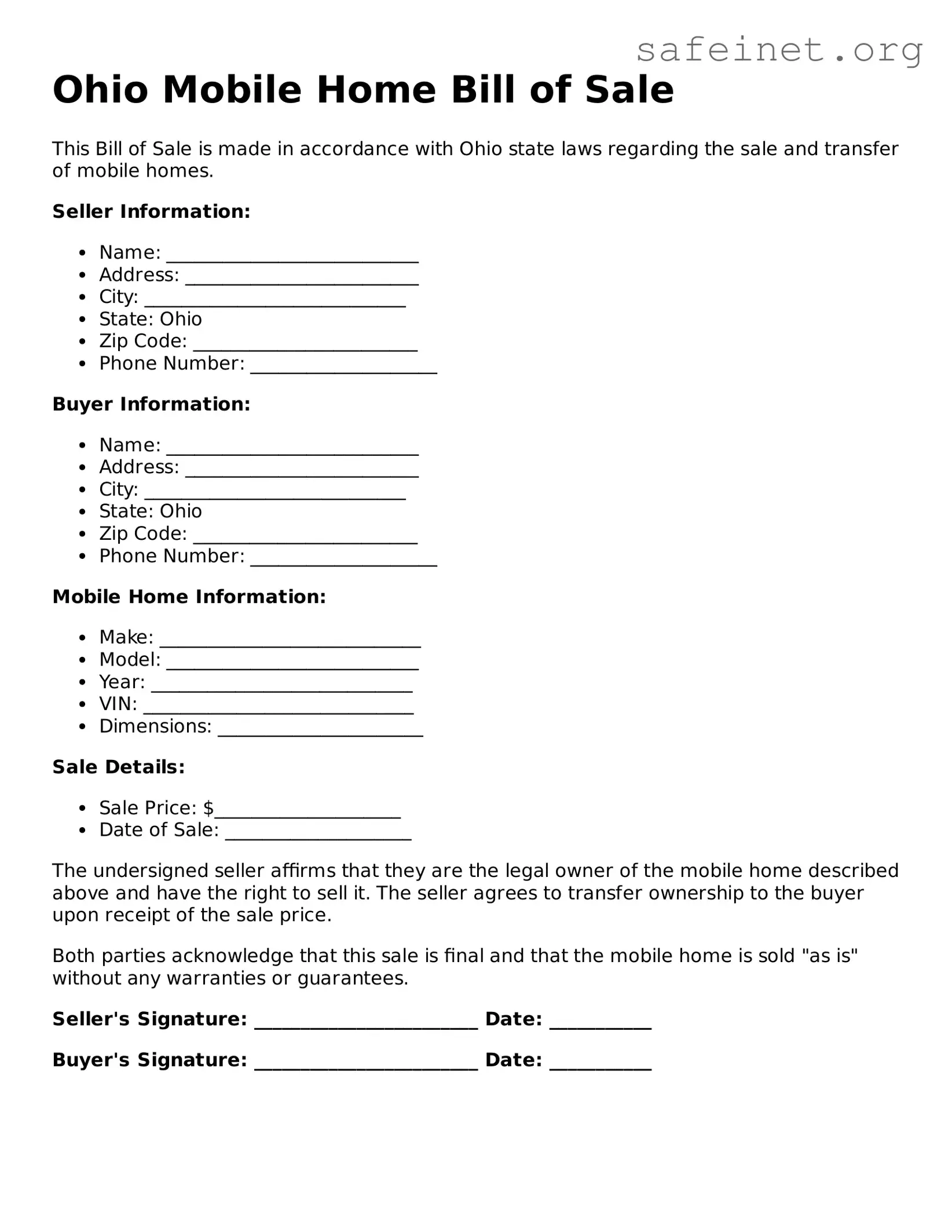
In the realm of mobile home transactions in Ohio, the Mobile Home Bill of Sale form serves as a crucial document that facilitates the transfer of ownership from one party to another. This form is designed to capture essential details such as the names and addresses of both the seller and buyer, thereby establishing a clear record of the transaction. Additionally, it includes vital information about the mobile home itself, including its make, model, year, and identification number, ensuring that both parties are on the same page regarding the specific property being sold. The form also outlines the sale price, which is fundamental for both parties’ financial records, and may incorporate terms regarding any warranties or conditions tied to the sale. By providing a structured and legally recognized means of documenting the transfer, the Mobile Home Bill of Sale not only protects the interests of both the seller and the buyer but also helps to streamline the process of ownership transfer, making it a key element in mobile home transactions throughout the state.
Ohio Mobile Home Bill of Sale
This Bill of Sale is made in accordance with Ohio state laws regarding the sale and transfer of mobile homes.
Seller Information:
Buyer Information:
Mobile Home Information:
Sale Details:
The undersigned seller affirms that they are the legal owner of the mobile home described above and have the right to sell it. The seller agrees to transfer ownership to the buyer upon receipt of the sale price.
Both parties acknowledge that this sale is final and that the mobile home is sold "as is" without any warranties or guarantees.
Seller's Signature: ________________________ Date: ___________
Buyer's Signature: ________________________ Date: ___________
| Fact Name | Details |
|---|---|
| Purpose | The Ohio Mobile Home Bill of Sale form is used to document the sale of a mobile home between a seller and a buyer. |
| Governing Law | The form is governed by Ohio Revised Code § 4505.11, which outlines the requirements for the sale and transfer of mobile homes. |
| Parties Involved | The form requires the names and addresses of both the seller and the buyer. |
| Mobile Home Description | A detailed description of the mobile home, including make, model, year, and Vehicle Identification Number (VIN), must be included. |
| Purchase Price | The agreed-upon purchase price for the mobile home must be clearly stated on the form. |
| Signatures | Both the seller and the buyer must sign the form to validate the sale. |
| Date of Sale | The date of the transaction should be recorded on the form to establish when the sale took place. |
| Notarization | While notarization is not required, it is recommended to add an extra layer of authenticity to the document. |
| Transfer of Title | The Bill of Sale is necessary for the buyer to apply for a new title in their name with the Ohio Bureau of Motor Vehicles. |
| Record Keeping | Both parties should keep a copy of the Bill of Sale for their records, as it serves as proof of the transaction. |
Once you have the Ohio Mobile Home Bill of Sale form, you will need to provide specific information to complete it accurately. This form is essential for transferring ownership of a mobile home and requires details about both the seller and the buyer, as well as the mobile home itself.
After completing the form, ensure that both parties retain a copy for their records. This will be important for future reference and any potential legal requirements related to the sale.
What is an Ohio Mobile Home Bill of Sale?
An Ohio Mobile Home Bill of Sale is a legal document that records the transfer of ownership of a mobile home from one party to another. It serves as proof of the sale and outlines the details of the transaction, including the parties involved, the purchase price, and a description of the mobile home.
Do I need a Bill of Sale for a mobile home in Ohio?
Yes, a Bill of Sale is important in Ohio. It provides legal protection for both the buyer and the seller. This document helps ensure that the transaction is documented and can be referenced in the future if any disputes arise regarding ownership or payment.
What information is required on the Bill of Sale?
The Bill of Sale should include the names and addresses of both the buyer and seller, the purchase price, the date of the sale, a detailed description of the mobile home (including make, model, year, and VIN), and any terms or conditions of the sale. Both parties should sign the document to validate it.
Is a Bill of Sale sufficient to transfer ownership?
While the Bill of Sale is an important document, it is not the only step needed to transfer ownership. You must also complete the title transfer with the Ohio Bureau of Motor Vehicles (BMV). The Bill of Sale will be required when you submit the title transfer application.
Can I create my own Bill of Sale?
Yes, you can create your own Bill of Sale, but it must include all the necessary information to be legally binding. There are also templates available online that you can use to ensure you include everything required by Ohio law.
Do I need to have the Bill of Sale notarized?
Notarization is not required for the Bill of Sale in Ohio, but having it notarized can add an extra layer of protection. It verifies the identities of the parties involved and can help prevent disputes in the future.
What if the mobile home is financed?
If the mobile home is financed, you must check with your lender before selling it. The lender may have specific requirements for the sale, including paying off the loan before transferring ownership. The Bill of Sale should reflect any agreements made with the lender.
How do I register the mobile home after the sale?
After the sale, the buyer must take the signed Bill of Sale and the completed title to the local BMV office to register the mobile home. This process includes paying any applicable fees and taxes. The buyer will receive a new title in their name once the registration is complete.
What if there are issues after the sale?
If issues arise after the sale, such as undisclosed damages or title disputes, the Bill of Sale can serve as evidence in resolving the matter. It’s crucial to keep a copy of the document for your records. If necessary, seek legal advice to address any complications.
Incomplete Information: One common mistake is failing to provide all necessary details. This includes the names and addresses of both the buyer and seller, as well as the mobile home's identification number. Omitting any of this information can lead to complications in the future.
Incorrect Identification Number: The mobile home identification number, often referred to as the VIN, must be accurate. Mistakes in this number can create issues with registration and ownership verification.
Not Including Purchase Price: It's essential to specify the purchase price clearly. Without this information, the transaction may be considered incomplete, and it can affect tax obligations.
Failure to Sign: Both parties must sign the document for it to be legally binding. Forgetting to sign can render the bill of sale invalid, leaving both the buyer and seller vulnerable to disputes.
Neglecting to Date the Document: A date is crucial on the bill of sale. It establishes when the transaction occurred, which is important for legal and tax purposes. Failing to include a date can lead to confusion later on.
When you are buying or selling a mobile home in Ohio, the Mobile Home Bill of Sale form is a crucial document. However, there are several other forms and documents that may accompany this transaction to ensure everything is legally sound and properly documented. Below is a list of related forms you might encounter.
Utilizing these forms and documents alongside the Ohio Mobile Home Bill of Sale will help facilitate a smoother transaction. Being prepared with the right paperwork can save time and prevent misunderstandings, making the process more efficient for everyone involved.
The Ohio Mobile Home Bill of Sale form shares similarities with a Vehicle Bill of Sale. Both documents serve as a record of the transfer of ownership from one party to another. They typically include details such as the buyer's and seller's names, addresses, and signatures. Additionally, these forms often require information about the item being sold, such as its identification number, which helps to confirm ownership and prevent disputes in the future.
Another document that resembles the Mobile Home Bill of Sale is the Boat Bill of Sale. Like the mobile home bill, this form also facilitates the transfer of ownership. It contains similar essential information, such as the buyer and seller's details, a description of the boat, and any relevant identification numbers. Both documents serve to protect the interests of both parties by providing proof of the transaction.
A Real Estate Purchase Agreement is also comparable to the Mobile Home Bill of Sale. While this agreement typically deals with real property rather than movable items, it still outlines the terms of sale, including the purchase price and any contingencies. Both documents aim to ensure that the buyer and seller are clear on the terms of the transaction, helping to minimize misunderstandings.
The Motorcycle Bill of Sale is another document that shares features with the Mobile Home Bill of Sale. Both forms capture the essential details of the sale, such as the parties involved and the item description. They also serve as proof of ownership transfer, making them important for registration and title purposes. This helps both buyers and sellers maintain a clear record of their transactions.
A Trailer Bill of Sale is similar as well. This document outlines the sale of a trailer, much like the Mobile Home Bill of Sale does for mobile homes. It includes the necessary details about the seller, buyer, and the trailer itself. Both forms are crucial for establishing ownership and ensuring that all legal requirements are met during the transfer process.
The Lease Agreement can also be likened to the Mobile Home Bill of Sale, although it is used for different purposes. While the Mobile Home Bill of Sale is about transferring ownership, a Lease Agreement outlines the terms under which one party rents property from another. Both documents require clear terms and signatures, ensuring that all parties understand their rights and responsibilities.
The Equipment Bill of Sale is another related document. This form is used for the sale of machinery or equipment, and it includes similar details to the Mobile Home Bill of Sale. Both documents provide a clear record of the transaction, protecting the interests of both the buyer and seller. They also help in establishing ownership, which is crucial for future transactions.
Lastly, a Personal Property Bill of Sale is comparable to the Mobile Home Bill of Sale. This document is used for the sale of various types of personal property, including furniture or electronics. Like the mobile home bill, it includes buyer and seller information, a description of the item, and the sale price. Both forms serve as legal proof of the transaction and help to clarify ownership rights.
When completing the Ohio Mobile Home Bill of Sale form, it is essential to follow certain guidelines to ensure accuracy and compliance. Here is a list of things to do and avoid:
When it comes to the Ohio Mobile Home Bill of Sale form, several misconceptions can lead to confusion. Understanding these misconceptions can help ensure a smoother transaction process. Here are nine common misunderstandings:
Some people believe that a Bill of Sale is optional for mobile home transactions. However, it is crucial for establishing ownership and protecting both the buyer and seller.
While notarization is not always required, having a notary public witness the signing can add an extra layer of legitimacy and security to the document.
Using a generic template may not meet Ohio's specific legal requirements. It is important to use a form that complies with state laws to avoid potential issues.
Both the buyer and seller should sign the document. This ensures that both parties agree to the terms of the sale and provides a record of the transaction.
In addition to the Bill of Sale, other documents may be necessary, such as the title transfer and any applicable tax forms. Always check local regulations to ensure compliance.
While signing the Bill of Sale is a significant step, it is important to complete all required paperwork, including title transfer, to finalize the sale legally.
Buyers should always inspect the mobile home before completing the sale. This helps avoid unexpected repairs and ensures satisfaction with the purchase.
It is best practice to complete the Bill of Sale at the time of the transaction. This provides a clear record and helps prevent disputes in the future.
In Ohio, mobile homes must be registered with the state. This process typically involves submitting the Bill of Sale along with the title to the appropriate authorities.
By addressing these misconceptions, individuals can navigate the process of buying or selling a mobile home in Ohio with greater confidence and clarity.
When filling out and using the Ohio Mobile Home Bill of Sale form, it is important to keep several key points in mind. These takeaways will help ensure the process goes smoothly.
Following these guidelines can help ensure that the sale of a mobile home is conducted properly and legally in Ohio.