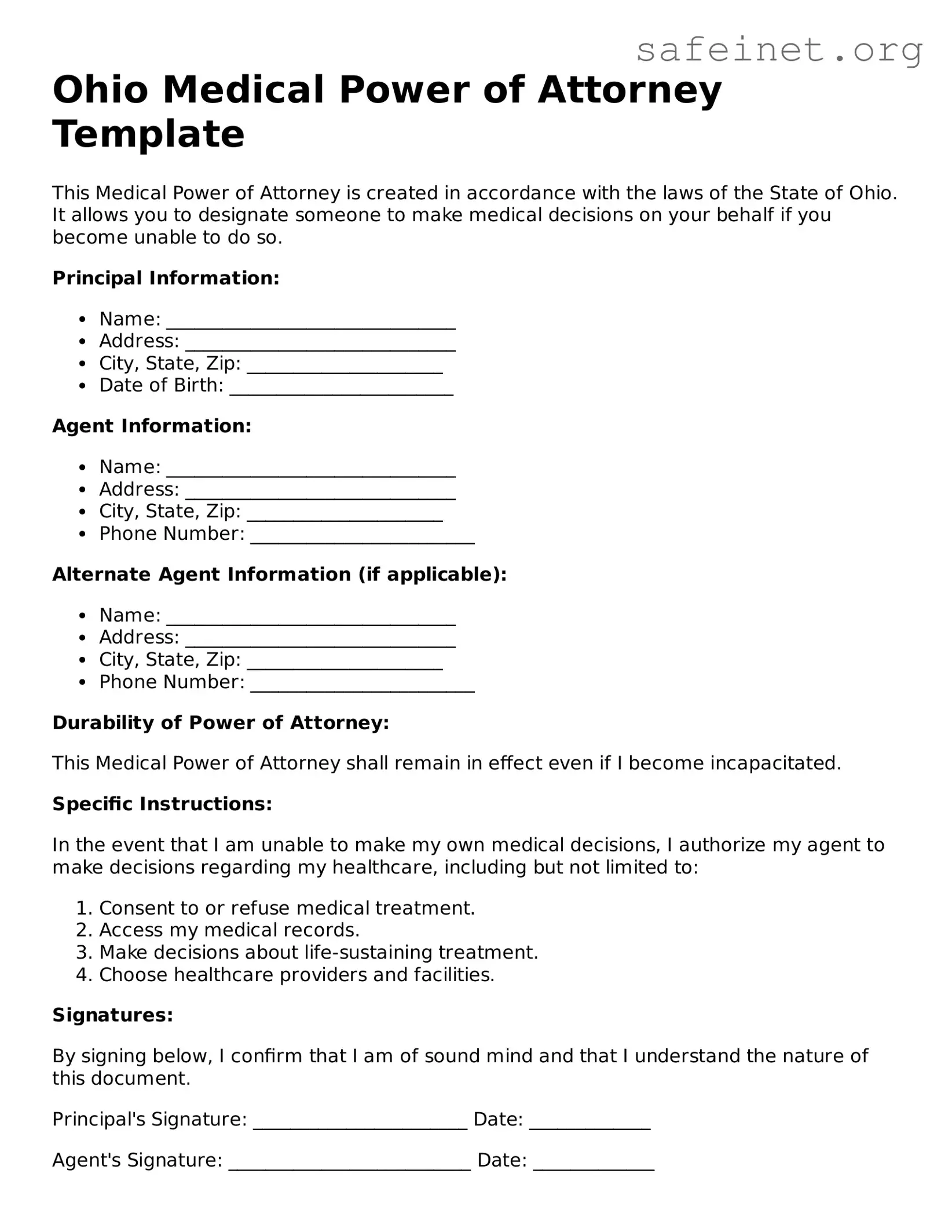
The Ohio Medical Power of Attorney form is a vital document that allows individuals to designate someone they trust to make medical decisions on their behalf if they become unable to do so. This form is particularly important for ensuring that a person's healthcare preferences are honored during critical times. It covers various aspects, including the designation of an agent, the specific powers granted to that agent, and any limitations on those powers. The form also allows individuals to express their wishes regarding medical treatments and interventions, ensuring that their values and preferences guide their care. By completing this document, individuals can provide clarity and direction to their loved ones and healthcare providers, helping to alleviate the stress of decision-making in challenging situations. Understanding the key elements of the Ohio Medical Power of Attorney form can empower individuals to take control of their healthcare decisions and ensure their wishes are respected.
Ohio Medical Power of Attorney Template
This Medical Power of Attorney is created in accordance with the laws of the State of Ohio. It allows you to designate someone to make medical decisions on your behalf if you become unable to do so.
Principal Information:
Agent Information:
Alternate Agent Information (if applicable):
Durability of Power of Attorney:
This Medical Power of Attorney shall remain in effect even if I become incapacitated.
Specific Instructions:
In the event that I am unable to make my own medical decisions, I authorize my agent to make decisions regarding my healthcare, including but not limited to:
Signatures:
By signing below, I confirm that I am of sound mind and that I understand the nature of this document.
Principal's Signature: _______________________ Date: _____________
Agent's Signature: __________________________ Date: _____________
Witnesses:
This document must be signed in the presence of two witnesses, who are not related to the principal or the agent.
Witness 1 Signature: _______________________ Date: _____________
Witness 2 Signature: _______________________ Date: _____________
Notary Public:
State of Ohio
County of ____________________________
Subscribed and sworn before me on this ______ day of ____________, 20__.
Notary Public Signature: _______________________ My Commission Expires: _____________
| Fact Name | Details |
|---|---|
| Definition | An Ohio Medical Power of Attorney allows a person to appoint someone else to make medical decisions on their behalf if they are unable to do so. |
| Governing Law | The Ohio Revised Code, specifically Section 1337.11, governs the Medical Power of Attorney in Ohio. |
| Requirements | The form must be signed by the principal and witnessed by two individuals or notarized to be valid. |
| Durability | This document remains effective even if the principal becomes incapacitated, unless revoked. |
| Agent's Authority | The appointed agent can make a wide range of medical decisions, including those related to life-sustaining treatment. |
| Revocation | The principal can revoke the Medical Power of Attorney at any time, as long as they are competent to do so. |
Filling out the Ohio Medical Power of Attorney form is an important step in ensuring your healthcare wishes are respected. Once you have completed the form, you will need to sign it in front of a witness or a notary public, depending on your preferences. This will help ensure that the document is legally valid.
What is a Medical Power of Attorney in Ohio?
A Medical Power of Attorney is a legal document that allows you to appoint someone to make healthcare decisions on your behalf if you become unable to make those decisions yourself. This person is often referred to as your "agent" or "attorney-in-fact." They will have the authority to make choices about your medical treatment, including surgeries, medications, and end-of-life care, based on your wishes.
Who can be appointed as my agent in a Medical Power of Attorney?
You can choose anyone you trust to be your agent, as long as they are at least 18 years old and mentally competent. This could be a family member, friend, or even a trusted advisor. It’s important to discuss your wishes with them beforehand to ensure they understand your preferences regarding medical treatment.
How do I create a Medical Power of Attorney in Ohio?
To create a Medical Power of Attorney, you need to fill out a specific form that complies with Ohio law. This form can typically be found online or through healthcare providers. After completing the form, you must sign it in the presence of a notary public or two witnesses. The witnesses cannot be your agent or related to you by blood, marriage, or adoption.
Can I revoke my Medical Power of Attorney?
Yes, you can revoke your Medical Power of Attorney at any time, as long as you are mentally competent. To revoke it, you should notify your agent and any healthcare providers who have a copy of the document. It’s advisable to put your revocation in writing to avoid any confusion.
What happens if I don’t have a Medical Power of Attorney?
If you do not have a Medical Power of Attorney and become incapacitated, your family may face challenges in making healthcare decisions on your behalf. In such cases, the court may need to appoint a guardian, which can be a lengthy and costly process. Having a Medical Power of Attorney ensures that your wishes are respected and that someone you trust is making decisions for you.
Is a Medical Power of Attorney the same as a Living Will?
No, a Medical Power of Attorney and a Living Will serve different purposes. A Medical Power of Attorney appoints someone to make decisions for you, while a Living Will outlines your preferences for medical treatment in specific situations, such as end-of-life care. Many people choose to have both documents to ensure comprehensive coverage of their healthcare wishes.
Can I update my Medical Power of Attorney?
Yes, you can update your Medical Power of Attorney whenever you wish. If your circumstances change, such as a change in your health, relationships, or preferences, it’s a good idea to review and potentially revise your document. Just remember to follow the same procedures for signing and witnessing as you did with the original document.
Failing to clearly identify the principal. It is crucial to provide the full legal name of the individual granting the power of attorney.
Not specifying the agent's authority. The form must explicitly state what medical decisions the agent is authorized to make on behalf of the principal.
Overlooking the witness requirement. Ohio law mandates that the form be signed in the presence of two witnesses or notarized.
Neglecting to date the document. A date is essential for determining the validity and relevance of the power of attorney.
Using outdated forms. It is important to ensure that the form used is the most current version to comply with Ohio laws.
Not discussing the document with the agent. The principal should have a conversation with the chosen agent about their wishes and expectations.
Failing to keep copies. After the form is completed, the principal should retain copies and provide them to relevant parties, including the agent and healthcare providers.
Ignoring state-specific requirements. Different states have varying rules; it is vital to adhere to Ohio’s specific regulations.
Not reviewing the document periodically. Situations and preferences may change, so regular reviews of the power of attorney are advisable.
The Ohio Medical Power of Attorney form allows individuals to designate someone to make healthcare decisions on their behalf if they become unable to do so. This document is an essential part of advance care planning. However, it is often accompanied by other important forms and documents that help ensure a comprehensive approach to healthcare decision-making.
These documents work together to create a robust framework for healthcare decision-making. Individuals should consider completing these forms to ensure their preferences are respected and their loved ones are empowered to act on their behalf when necessary.
The Ohio Medical Power of Attorney form is similar to the Living Will, which allows individuals to express their wishes regarding medical treatment in the event they become incapacitated. While the Medical Power of Attorney appoints someone to make healthcare decisions on your behalf, the Living Will focuses on specific medical procedures you want or do not want, such as life-sustaining treatments. Both documents ensure that your healthcare preferences are respected when you cannot communicate them yourself, but they serve different purposes in the realm of medical decision-making.
Another document that shares similarities is the Durable Power of Attorney. This form grants someone the authority to make financial and legal decisions on your behalf if you become unable to do so. While the Medical Power of Attorney is limited to healthcare decisions, the Durable Power of Attorney covers a broader scope, including managing your finances, property, and other legal matters. Both documents emphasize the importance of appointing a trusted individual to act in your best interests when you cannot do so yourself.
The Advance Directive is also akin to the Ohio Medical Power of Attorney. This document combines elements of both the Living Will and the Medical Power of Attorney. It allows you to specify your medical treatment preferences while also designating someone to make healthcare decisions for you. The Advance Directive serves as a comprehensive guide for your loved ones and healthcare providers, ensuring that your wishes are honored during critical moments when you cannot voice them.
A Do Not Resuscitate (DNR) order is another document that aligns with the intentions of the Medical Power of Attorney. A DNR instructs medical personnel not to perform cardiopulmonary resuscitation (CPR) if your heart stops or you stop breathing. While the Medical Power of Attorney appoints an agent to make decisions about your overall healthcare, a DNR focuses specifically on resuscitation efforts. Together, they provide a clearer picture of your healthcare preferences, especially in emergency situations.
Finally, the Healthcare Proxy is similar to the Ohio Medical Power of Attorney in that it designates an individual to make medical decisions on your behalf. The term "proxy" emphasizes the representative role of the appointed person, who acts as your voice in medical matters when you are unable to communicate. Like the Medical Power of Attorney, the Healthcare Proxy ensures that your healthcare preferences are respected, but it may not include specific instructions regarding treatment options, making it essential to have both documents in place for comprehensive healthcare planning.
When filling out the Ohio Medical Power of Attorney form, it’s important to follow certain guidelines to ensure your document is valid and reflects your wishes. Here are five things you should and shouldn’t do:
There are several misconceptions surrounding the Ohio Medical Power of Attorney form. Understanding these can help individuals make informed decisions regarding their healthcare choices. Below is a list of common misconceptions along with explanations.
By clarifying these misconceptions, individuals can better navigate their healthcare planning and ensure their wishes are respected.
Filling out and using the Ohio Medical Power of Attorney form is an important step in ensuring that your healthcare wishes are respected. Here are some key takeaways to keep in mind: