When couples in Ohio decide to live apart but do not wish to pursue a divorce immediately, a Marital Separation Agreement can serve as a vital tool to navigate this transitional period. This legally binding document outlines the rights and responsibilities of each spouse during the separation, addressing key issues such as child custody, child support, division of assets, and debt responsibilities. By clearly defining these terms, the agreement helps to minimize conflict and provides a framework for both parties to follow. Additionally, it can serve as a foundation for future divorce proceedings, should the couple choose to take that step. Understanding the intricacies of this form is essential, as it ensures that both parties are protected and aware of their obligations. The process of creating a Marital Separation Agreement can be straightforward, but it requires careful consideration of each spouse's needs and circumstances. With the right approach, this agreement can facilitate a smoother separation and lay the groundwork for a more amicable resolution in the future.
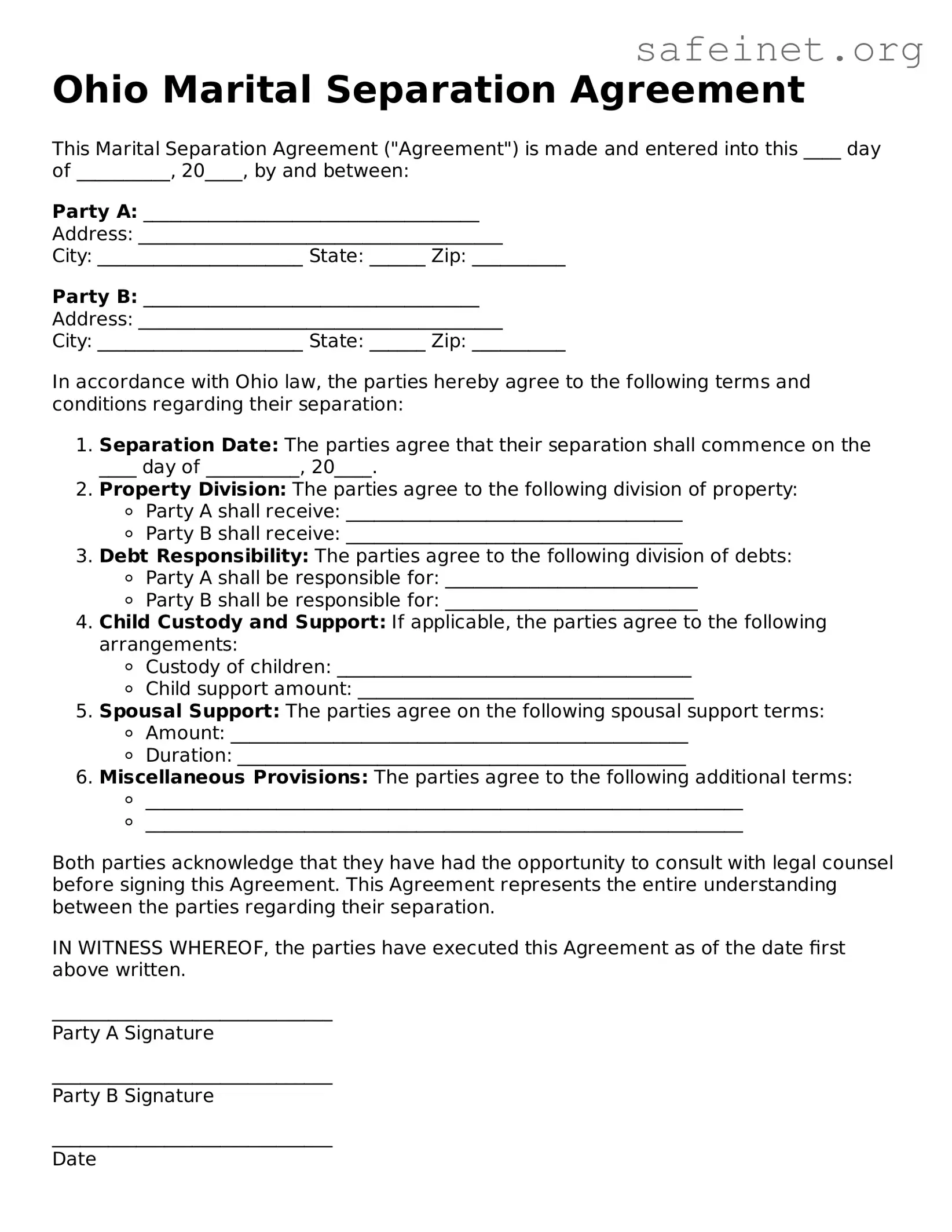
Ohio Marital Separation Agreement
This Marital Separation Agreement ("Agreement") is made and entered into this ____ day of __________, 20____, by and between:
Party A: ____________________________________
Address: _______________________________________
City: ______________________ State: ______ Zip: __________
Party B: ____________________________________
Address: _______________________________________
City: ______________________ State: ______ Zip: __________
In accordance with Ohio law, the parties hereby agree to the following terms and conditions regarding their separation:
Both parties acknowledge that they have had the opportunity to consult with legal counsel before signing this Agreement. This Agreement represents the entire understanding between the parties regarding their separation.
IN WITNESS WHEREOF, the parties have executed this Agreement as of the date first above written.
______________________________
Party A Signature
______________________________
Party B Signature
______________________________
Date
| Fact Name | Details |
|---|---|
| Definition | An Ohio Marital Separation Agreement is a legal document outlining the terms of a couple's separation. |
| Governing Law | The agreement is governed by Ohio Revised Code, specifically Chapter 3105. |
| Purpose | It helps clarify the rights and responsibilities of each spouse during the separation. |
| Content | The agreement typically includes provisions on child custody, support, property division, and debts. |
| Voluntary Nature | Both parties must willingly agree to the terms for the document to be valid. |
| Legal Advice | It is advisable for both spouses to seek independent legal advice before signing. |
| Filing | The agreement is not filed with the court unless it becomes part of a divorce proceeding. |
| Modification | Terms can be modified later if both parties agree and document the changes. |
| Enforcement | If disputes arise, the agreement can be enforced in court as a binding contract. |
After obtaining the Ohio Marital Separation Agreement form, you will need to complete it accurately to ensure it reflects your intentions and agreements. This document will then be submitted to the appropriate court for processing. Follow these steps carefully to fill out the form.
What is a Marital Separation Agreement in Ohio?
A Marital Separation Agreement is a legal document that outlines the terms and conditions agreed upon by spouses who wish to live separately while remaining legally married. This agreement typically addresses issues such as property division, child custody, child support, and spousal support. It serves to clarify the rights and responsibilities of each spouse during the separation period.
Is a Marital Separation Agreement legally binding in Ohio?
Yes, a Marital Separation Agreement is legally binding in Ohio once both parties sign it. The agreement can be enforced in court, meaning that if one party fails to comply with the terms, the other party can seek legal remedies. However, it is advisable for both parties to seek legal counsel before signing to ensure that their rights are protected.
How do I create a Marital Separation Agreement?
To create a Marital Separation Agreement, both spouses should discuss and negotiate the terms they wish to include. It is important to cover all relevant issues, such as property division, child custody, and support. Once the terms are agreed upon, the document should be drafted, ideally with the assistance of a legal professional, to ensure it meets all legal requirements. After both parties review and agree to the document, they should sign it in the presence of a notary public.
Can I modify the Marital Separation Agreement later?
Yes, a Marital Separation Agreement can be modified if both parties agree to the changes. It is important to document any modifications in writing and have both parties sign the revised agreement. In some cases, a court may need to approve the changes, especially if they relate to child custody or support.
What happens if one spouse does not follow the agreement?
If one spouse does not comply with the terms of the Marital Separation Agreement, the other spouse can take legal action. This may involve filing a motion in court to enforce the agreement. The court can order compliance or address any violations, which may include penalties or adjustments to the terms of the agreement.
Do I need an attorney to draft a Marital Separation Agreement?
While it is not legally required to have an attorney draft a Marital Separation Agreement, it is highly recommended. An attorney can help ensure that the agreement is comprehensive and legally enforceable. They can also provide valuable advice regarding your rights and obligations, which can help prevent future disputes.
What is the difference between a Marital Separation Agreement and a Divorce Agreement?
A Marital Separation Agreement is used when spouses choose to live apart but do not wish to divorce immediately. It outlines the terms of their separation. In contrast, a Divorce Agreement is finalized when the marriage is legally dissolved. While both agreements can cover similar topics, a Divorce Agreement results in the end of the marriage and is often part of the divorce proceedings.
Inaccurate Personal Information: One common mistake is providing incorrect or incomplete personal information. This includes names, addresses, and dates of birth. Ensure that all details are accurate to avoid complications later.
Neglecting to Address Assets and Debts: Failing to fully disclose all marital assets and debts can lead to disputes. It’s crucial to list everything, from bank accounts to real estate, to ensure a fair separation.
Overlooking Child Custody Arrangements: Parents often forget to specify custody arrangements and visitation rights. Clear agreements on these matters are essential for the well-being of the children involved.
Not Seeking Legal Advice: Many individuals attempt to fill out the form without consulting a lawyer. This can result in misunderstandings of legal rights and obligations. Seeking professional guidance can help avoid potential pitfalls.
When navigating a marital separation in Ohio, various documents may accompany the Marital Separation Agreement. Each of these documents serves a specific purpose and helps clarify the terms of the separation. Below is a list of commonly used forms and documents.
These documents work together to provide a comprehensive framework for a marital separation. Understanding each one can help individuals navigate the process more smoothly and ensure that their rights and responsibilities are clearly defined.
The Ohio Marital Separation Agreement is similar to a Divorce Settlement Agreement. Both documents outline the terms of how a couple will divide their assets, debts, and responsibilities after separation. While a Marital Separation Agreement is typically used when a couple intends to live apart without finalizing a divorce, a Divorce Settlement Agreement comes into play when the couple is officially ending their marriage. Each document serves to protect the interests of both parties, ensuring clarity and reducing potential conflicts in the future.
Another document that shares similarities is the Separation Agreement. This document is often used in various states, including Ohio, to formalize the terms of separation between spouses. Like the Marital Separation Agreement, it addresses issues such as child custody, support, and property division. However, the Separation Agreement may also include provisions for spousal support and other specific arrangements tailored to the couple's unique situation. Both documents aim to provide a clear framework for the couple's new living arrangements.
The Parenting Plan is also comparable, particularly when children are involved. This document focuses specifically on the care and custody of children following a separation. It outlines the parenting schedule, decision-making responsibilities, and any child support arrangements. While the Marital Separation Agreement may include general provisions regarding children, the Parenting Plan dives deeper into the specifics of co-parenting, ensuring that the children's best interests are prioritized.
Lastly, the Property Settlement Agreement shares common ground with the Ohio Marital Separation Agreement. This document specifically addresses the division of property and assets between spouses. While the Marital Separation Agreement may cover a broader range of topics, the Property Settlement Agreement hones in on the financial aspects of the separation. Both documents aim to provide a clear understanding of how property will be divided, which is crucial for preventing disputes down the line.
When filling out the Ohio Marital Separation Agreement form, it is important to approach the task thoughtfully. Here are some guidelines to consider:
Understanding the Ohio Marital Separation Agreement form can be challenging, and misconceptions can lead to confusion. Here are six common misconceptions about this form:
Many people believe that a marital separation agreement is equivalent to a divorce decree. However, a separation agreement is a temporary arrangement that outlines the rights and responsibilities of each spouse while they live apart. A divorce decree, on the other hand, is a legal termination of the marriage.
Some individuals think that signing a marital separation agreement means they are on the path to divorce. In reality, separation can be a step toward reconciliation, and couples may choose to remain separated without pursuing a divorce.
Another misconception is that a marital separation agreement is not legally enforceable. In Ohio, if properly executed, these agreements can be legally binding and enforceable in court, provided they meet certain requirements.
While a marital separation agreement can address child custody and support, it does not automatically establish these terms. Parents must specifically outline their arrangements in the agreement for them to be enforceable.
Some believe that only one spouse's signature is needed for the separation agreement to be valid. In fact, both spouses must agree to and sign the document for it to be effective.
Many think that once a marital separation agreement is signed, it cannot be changed. However, couples can modify the agreement if both parties agree to the changes and follow the proper legal procedures.
By clarifying these misconceptions, individuals can better understand the purpose and implications of the Ohio Marital Separation Agreement form.
When filling out and using the Ohio Marital Separation Agreement form, there are several important points to keep in mind. Below are key takeaways to ensure a smooth process.
By paying attention to these key points, individuals can navigate the separation process more effectively.