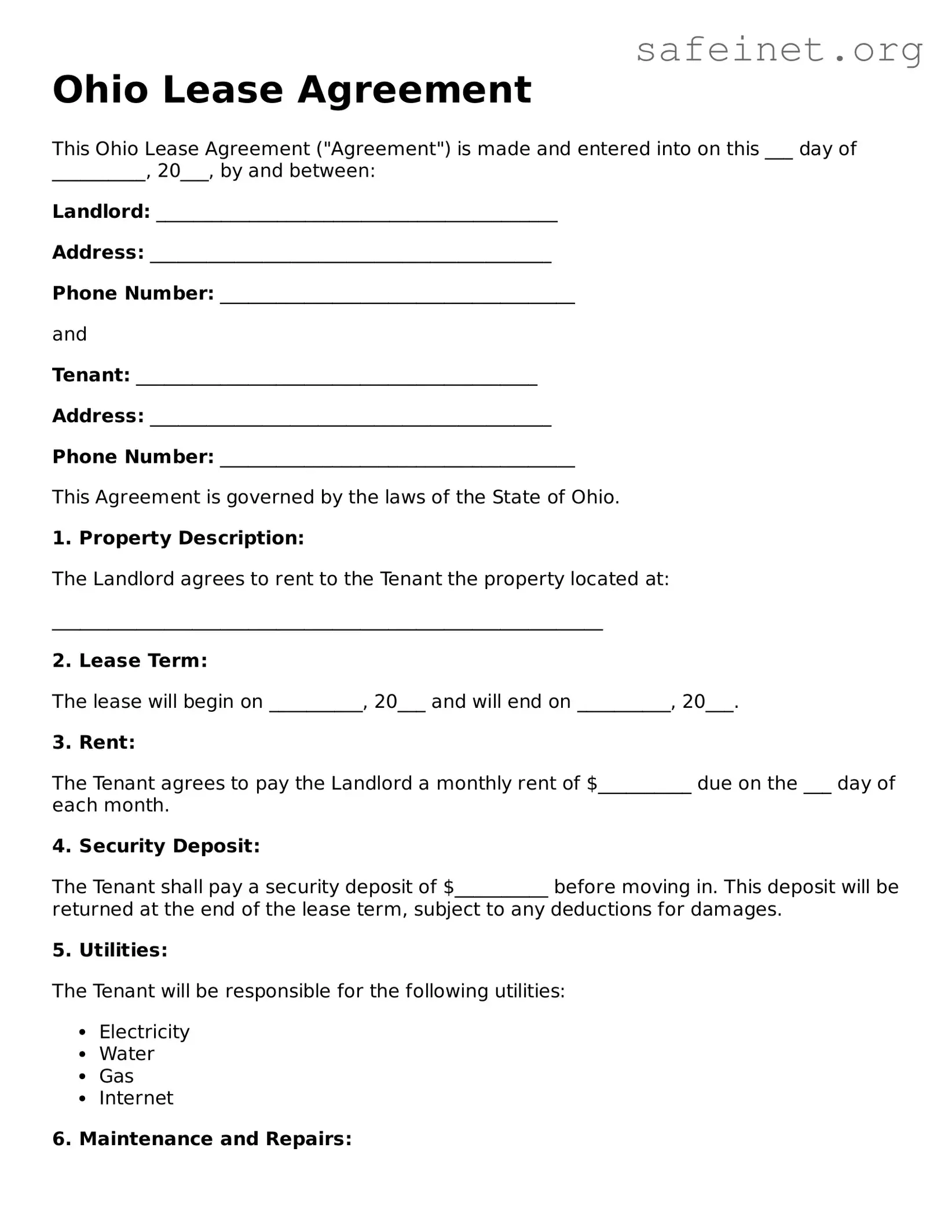
The Ohio Lease Agreement form serves as a crucial document in the rental process, outlining the rights and responsibilities of both landlords and tenants. This form typically includes essential details such as the duration of the lease, the rental amount, and payment terms, ensuring that both parties have a clear understanding of their obligations. Additionally, it often covers aspects like security deposits, maintenance responsibilities, and rules regarding property use, which help mitigate potential disputes. By specifying terms related to termination and renewal, the agreement provides a structured framework for the tenancy. Furthermore, compliance with local laws is essential, as the form must adhere to Ohio’s specific regulations regarding rental agreements. Overall, the Ohio Lease Agreement is designed to protect the interests of both parties while fostering a transparent rental relationship.
Ohio Lease Agreement
This Ohio Lease Agreement ("Agreement") is made and entered into on this ___ day of __________, 20___, by and between:
Landlord: ___________________________________________
Address: ___________________________________________
Phone Number: ______________________________________
and
Tenant: ___________________________________________
Address: ___________________________________________
Phone Number: ______________________________________
This Agreement is governed by the laws of the State of Ohio.
1. Property Description:
The Landlord agrees to rent to the Tenant the property located at:
___________________________________________________________
2. Lease Term:
The lease will begin on __________, 20___ and will end on __________, 20___.
3. Rent:
The Tenant agrees to pay the Landlord a monthly rent of $__________ due on the ___ day of each month.
4. Security Deposit:
The Tenant shall pay a security deposit of $__________ before moving in. This deposit will be returned at the end of the lease term, subject to any deductions for damages.
5. Utilities:
The Tenant will be responsible for the following utilities:
6. Maintenance and Repairs:
The Tenant agrees to keep the property in good condition. The Landlord will be responsible for major repairs unless damage is caused by the Tenant's negligence.
7. Termination:
Either party may terminate this Agreement by providing a written notice of ___ days prior to the end of the lease term.
8. Governing Law:
This Agreement shall be governed by the laws of the State of Ohio.
IN WITNESS WHEREOF, the parties have executed this Lease Agreement as of the date first above written.
Landlord Signature: _______________________________
Date: _________________________________________
Tenant Signature: _______________________________
Date: _________________________________________
| Fact Name | Description |
|---|---|
| Purpose | The Ohio Lease Agreement form is used to outline the terms and conditions of renting a residential property in Ohio. |
| Parties Involved | This agreement involves two main parties: the landlord and the tenant. |
| Duration | The lease can specify a fixed term, such as one year, or it can be month-to-month. |
| Governing Law | Ohio Revised Code, Chapter 5321 governs residential leases in the state. |
| Security Deposit | Ohio law allows landlords to collect a security deposit, typically equal to one month's rent. |
| Termination Notice | Tenants must provide a written notice of intent to vacate, usually 30 days in advance, depending on the lease terms. |
Filling out the Ohio Lease Agreement form is an important step in establishing a rental relationship. This process requires attention to detail to ensure that both parties understand their rights and responsibilities. Once the form is completed, it can be signed and dated to make the agreement official.
What is an Ohio Lease Agreement?
An Ohio Lease Agreement is a legally binding document between a landlord and a tenant. It outlines the terms and conditions of renting a residential or commercial property in Ohio. This agreement specifies rent amount, payment due dates, lease duration, and responsibilities of both parties.
What should be included in an Ohio Lease Agreement?
Essential elements of an Ohio Lease Agreement include the names of the landlord and tenant, property address, lease term (start and end dates), rent amount, payment method, security deposit details, maintenance responsibilities, and any rules regarding pets or smoking. Clear terms help prevent misunderstandings.
How long can a lease last in Ohio?
In Ohio, lease agreements can vary in length. They can be short-term (month-to-month) or long-term (yearly or longer). The duration must be clearly stated in the lease. Both parties should agree on the lease length before signing.
Can a lease be terminated early in Ohio?
Yes, a lease can be terminated early, but it typically requires mutual consent from both parties. If a tenant needs to break the lease, they may face penalties, such as losing their security deposit. It’s essential to review the lease terms for any specific early termination clauses.
What is a security deposit in an Ohio Lease Agreement?
A security deposit is a sum of money paid by the tenant to the landlord before moving in. It serves as protection for the landlord against potential damages or unpaid rent. In Ohio, the maximum amount for a security deposit is usually equivalent to one month’s rent, but this can vary.
What happens if a tenant does not pay rent?
If a tenant fails to pay rent, the landlord has the right to begin eviction proceedings after providing proper notice. Ohio law requires landlords to give a written notice, usually three days, before filing for eviction. It's crucial for tenants to communicate with landlords if they face financial difficulties.
Are there specific laws governing leases in Ohio?
Yes, Ohio has specific laws that govern lease agreements. These laws cover various aspects, including security deposits, eviction processes, and tenant rights. Both landlords and tenants should familiarize themselves with these laws to ensure compliance and protect their rights.
Can a landlord enter the rental property without permission?
In Ohio, landlords cannot enter a rental property without the tenant's permission, except in emergencies. Generally, landlords must provide at least 24 hours' notice before entering for repairs or inspections. Respecting privacy is important in maintaining a good landlord-tenant relationship.
What should a tenant do if they have a dispute with their landlord?
If a tenant has a dispute with their landlord, they should first try to resolve the issue through direct communication. If that fails, they can seek mediation or file a complaint with local housing authorities. Legal action may be considered as a last resort, depending on the situation.
Is it necessary to have a written lease agreement in Ohio?
While verbal agreements can be valid, having a written lease agreement is strongly recommended. A written document provides clear evidence of the terms agreed upon and protects both parties in case of disputes. It also helps clarify expectations and responsibilities.
Incomplete Tenant Information: Many people forget to fill in all required details about the tenants. Missing names, addresses, or contact numbers can lead to confusion later.
Incorrect Dates: It's crucial to check the lease start and end dates. Entering the wrong dates can cause misunderstandings regarding the lease term.
Omitting Rent Amount: Some individuals neglect to clearly state the monthly rent amount. This can create disputes over payment expectations.
Ignoring Security Deposit Details: Not specifying the security deposit amount or the conditions for its return can lead to issues when the lease ends.
Not Including Maintenance Responsibilities: Failing to outline who is responsible for maintenance and repairs can result in disagreements during the lease.
Forgetting to Sign: It may seem obvious, but some people forget to sign the lease. Without signatures, the agreement is not legally binding.
Leaving Out Pet Policies: If pets are allowed or restricted, this should be clearly stated. Omitting this information can lead to conflicts later.
Not Reviewing Local Laws: Some individuals fail to check local rental laws that might affect the lease agreement. This can lead to legal issues down the line.
When entering into a rental agreement in Ohio, several additional forms and documents may accompany the Ohio Lease Agreement. These documents help clarify responsibilities, protect the rights of both parties, and ensure a smooth rental experience. Below is a list of commonly used forms.
Utilizing these forms in conjunction with the Ohio Lease Agreement fosters clear communication and helps establish expectations between landlords and tenants. Proper documentation not only protects both parties but also contributes to a positive rental experience.
The Ohio Lease Agreement form shares similarities with the Rental Agreement. Both documents outline the terms under which a tenant may occupy a rental property. They typically include details such as the duration of the lease, the amount of rent due, and the responsibilities of both the landlord and tenant. While a lease often covers a longer term, a rental agreement can be for a shorter period, such as month-to-month. Despite this difference, the core elements remain consistent, focusing on the rights and obligations of each party involved.
Another document that resembles the Ohio Lease Agreement is the Sublease Agreement. This form is used when a tenant wishes to rent out their leased space to another individual, known as the subtenant. Like the lease agreement, it specifies terms such as rent payment, duration, and rules regarding property use. Both documents protect the interests of the original landlord, ensuring that the subtenant adheres to the same regulations set forth in the primary lease.
The Commercial Lease Agreement is also akin to the Ohio Lease Agreement but is tailored specifically for business properties. This document outlines the terms for renting commercial spaces, such as offices or retail locations. While both agreements include rental terms and responsibilities, a commercial lease often addresses unique factors like zoning laws, property modifications, and business operations. These distinctions ensure that the needs of a business tenant are met while maintaining the landlord's rights.
Similarly, the Month-to-Month Rental Agreement is another document that aligns with the Ohio Lease Agreement. This type of agreement allows tenants to occupy a property without a long-term commitment. Both agreements stipulate the rental amount, payment due dates, and notice periods for termination. However, the month-to-month arrangement provides flexibility for tenants who may not want to commit to a full lease term, making it suitable for those with uncertain housing needs.
Lastly, the Roommate Agreement bears resemblance to the Ohio Lease Agreement in that it governs the living arrangements between individuals sharing a rental property. This document outlines responsibilities such as rent payment, utility costs, and house rules. While the lease agreement typically involves a landlord and tenant, the roommate agreement focuses on the relationships between co-tenants, ensuring that all parties understand their obligations and expectations in a shared living environment.
When filling out the Ohio Lease Agreement form, there are important dos and don'ts to keep in mind. This will help ensure that the process goes smoothly and that your rights are protected.
Understanding the Ohio Lease Agreement form is essential for both landlords and tenants. However, several misconceptions can lead to confusion. Here are eight common misconceptions explained:
Many people believe that lease agreements are uniform across the board. In reality, each lease can be tailored to the specific needs of the landlord and tenant, reflecting unique terms and conditions.
Some think that a verbal agreement is enough to establish a lease. However, written agreements provide clear documentation and protection for both parties in case of disputes.
It is a common belief that security deposits cannot be refunded. In Ohio, tenants may receive their deposit back, minus any lawful deductions, if they meet the lease conditions.
Many tenants fear that landlords can access their rental unit whenever they wish. Ohio law requires landlords to provide notice before entering the property, except in emergencies.
While landlords are generally responsible for major repairs, tenants may also have obligations for minor repairs and maintenance, depending on the lease terms.
Some believe that once a lease is signed, it cannot be changed. In fact, both parties can agree to modifications, provided they are documented in writing.
Many tenants think they can leave a lease at any time without repercussions. Breaking a lease can lead to penalties or legal action, depending on the lease terms.
It is a misconception that landlords can raise rent whenever they choose. In Ohio, landlords must follow specific guidelines and provide notice before increasing rent.
Being informed about these misconceptions can help both landlords and tenants navigate their lease agreements more effectively.
When filling out and using the Ohio Lease Agreement form, there are several important points to keep in mind. These takeaways can help ensure that both landlords and tenants understand their rights and responsibilities.
By following these key points, landlords and tenants can foster a better understanding and smoother rental experience.