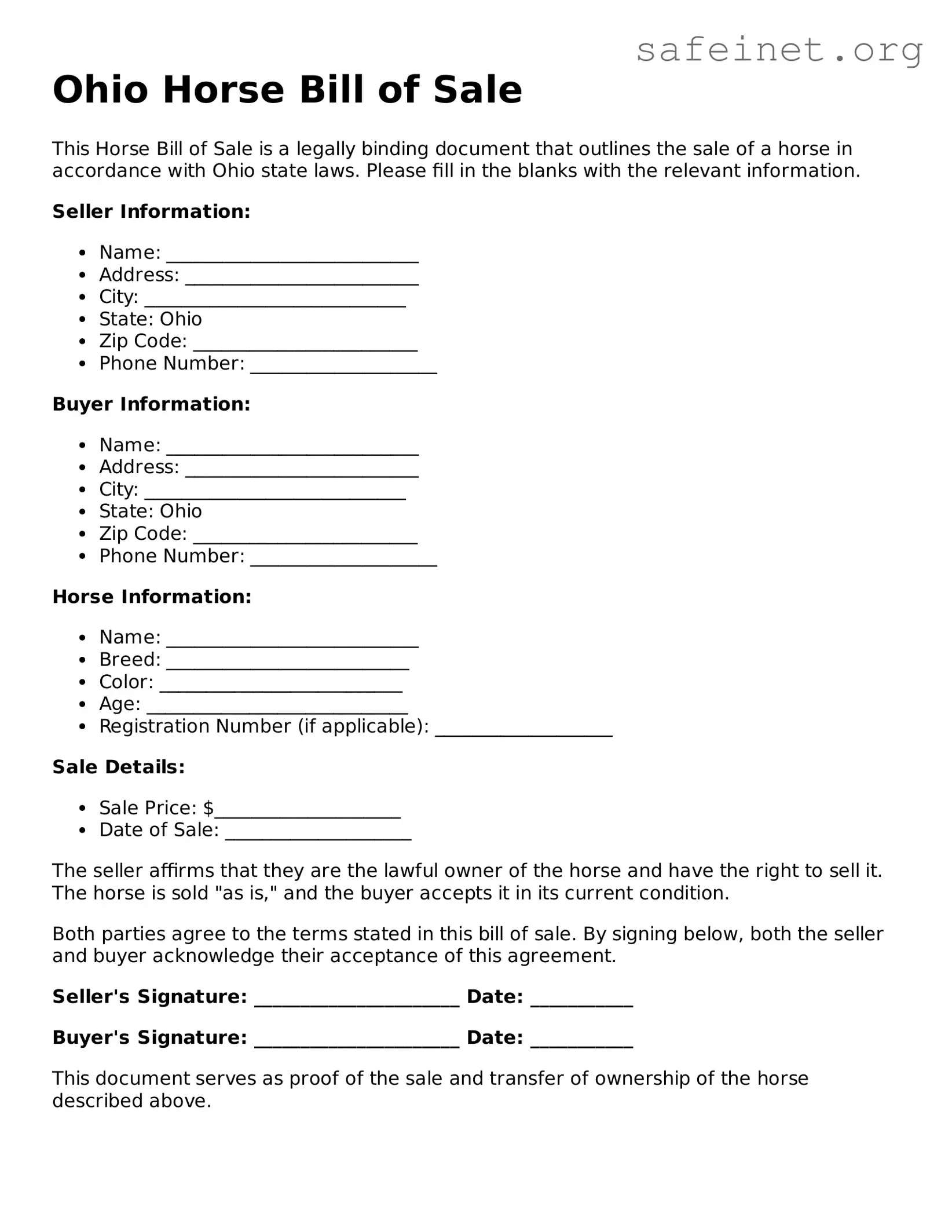
The Ohio Horse Bill of Sale form serves as a crucial document for anyone involved in the buying or selling of horses within the state. This form outlines essential details such as the horse's identification, including breed, age, and registration number, ensuring clarity in the transaction. It also specifies the sale price, payment terms, and any warranties or guarantees provided by the seller. By documenting the date of sale and the names and addresses of both the buyer and seller, this form helps establish a clear legal record of ownership transfer. Additionally, it may include sections for any disclosures regarding the horse's health or behavior, protecting both parties involved in the transaction. Understanding the components of this form is vital for ensuring a smooth and legally sound sale process, making it an indispensable tool for horse owners and enthusiasts alike.
Ohio Horse Bill of Sale
This Horse Bill of Sale is a legally binding document that outlines the sale of a horse in accordance with Ohio state laws. Please fill in the blanks with the relevant information.
Seller Information:
Buyer Information:
Horse Information:
Sale Details:
The seller affirms that they are the lawful owner of the horse and have the right to sell it. The horse is sold "as is," and the buyer accepts it in its current condition.
Both parties agree to the terms stated in this bill of sale. By signing below, both the seller and buyer acknowledge their acceptance of this agreement.
Seller's Signature: ______________________ Date: ___________
Buyer's Signature: ______________________ Date: ___________
This document serves as proof of the sale and transfer of ownership of the horse described above.
| Fact Name | Description |
|---|---|
| Purpose | The Ohio Horse Bill of Sale form is used to document the sale of a horse between a seller and a buyer. |
| Governing Laws | This form is governed by Ohio Revised Code § 1302, which outlines the requirements for sales of goods. |
| Information Required | The form typically requires details such as the horse's description, sale price, and the names and addresses of both parties. |
| Signatures | Both the seller and buyer must sign the form to make the sale legally binding. |
| Record Keeping | It is advisable for both parties to keep a copy of the completed form for their records. |
After obtaining the Ohio Horse Bill of Sale form, it is essential to complete it accurately to ensure a smooth transaction. This document will serve as a record of the sale and should be filled out carefully.
Once the form is completed, it is advisable to keep a copy for your records. The original document should be given to the buyer as proof of the transaction.
What is an Ohio Horse Bill of Sale?
An Ohio Horse Bill of Sale is a legal document that records the sale and transfer of ownership of a horse in the state of Ohio. This form serves as proof of the transaction between the buyer and the seller, outlining important details about the horse and the terms of the sale.
Why do I need a Horse Bill of Sale?
What information is included in the Horse Bill of Sale?
The Horse Bill of Sale typically includes the names and contact information of both the buyer and the seller, a description of the horse (including breed, age, color, and any identifying marks), the sale price, and the date of the transaction. It may also contain any warranties or representations made by the seller regarding the horse's health or performance.
Is the Horse Bill of Sale required by law in Ohio?
Can I create my own Horse Bill of Sale?
Do I need to have the Horse Bill of Sale notarized?
What if the horse has health issues?
Can the Horse Bill of Sale be used for other livestock?
What should I do after completing the Horse Bill of Sale?
Failing to include the seller's name and contact information. This information is crucial for establishing the identity of the seller.
Not providing the buyer's name and contact details. Just like the seller's information, the buyer's details are necessary for the transaction record.
Omitting the horse's description. A complete description should include the horse's breed, color, age, and any identifying marks.
Neglecting to state the sale price. The bill of sale must clearly indicate the amount for which the horse is being sold.
Not including the date of sale. This date is important for both parties and for any future reference.
Failing to obtain the seller's signature. Without this signature, the document may not be legally binding.
Not having the buyer's signature. Just as the seller's signature is necessary, the buyer's signature confirms acceptance of the sale.
Forgetting to keep a copy of the completed form. Both parties should retain a copy for their records.
Overlooking any state-specific requirements. It's essential to be aware of any additional regulations that may apply in Ohio.
When buying or selling a horse in Ohio, the Horse Bill of Sale form is essential for documenting the transaction. However, there are several other forms and documents that are often used in conjunction with this bill of sale to ensure a smooth and legally sound process. Below are some of the most common documents that may accompany the Horse Bill of Sale.
Using these additional documents alongside the Horse Bill of Sale can help clarify responsibilities and protect both parties involved in the transaction. Being thorough in documentation can prevent misunderstandings and provide peace of mind for everyone involved.
The Ohio Horse Bill of Sale form is similar to a vehicle bill of sale, which is commonly used when transferring ownership of a car or motorcycle. Both documents serve as proof of the transaction between a buyer and a seller, detailing essential information such as the buyer's and seller's names, the description of the vehicle or horse, and the sale price. Just as the horse bill of sale formalizes the transfer of a horse, the vehicle bill of sale finalizes the ownership transfer of a motor vehicle. Both documents may also include a section for signatures, indicating that both parties agree to the terms outlined within the document.
Another document that shares similarities with the Ohio Horse Bill of Sale is the pet adoption agreement. This agreement is typically used when an individual adopts a pet from a shelter or rescue organization. Like the horse bill of sale, it outlines the responsibilities of the new owner and may include information about the pet's health, breed, and any special needs. Both documents emphasize the importance of responsible ownership and often require the adopter or buyer to acknowledge their commitment to care for the animal. In both cases, the documents aim to protect the welfare of the animal while ensuring a clear transfer of ownership.
The Ohio Horse Bill of Sale also resembles a real estate purchase agreement, which is used when buying or selling property. Both documents require detailed information about the item being sold, whether it be a horse or a piece of land. They outline the terms of the sale, including the purchase price and any conditions that must be met before the transaction is finalized. Just as a real estate purchase agreement serves to protect both the buyer and seller, the horse bill of sale ensures that both parties are aware of their rights and responsibilities regarding the animal.
A rental agreement shares similarities with the Ohio Horse Bill of Sale in that both documents establish a legal relationship between two parties. While a rental agreement typically pertains to real property, such as an apartment or house, it also includes details about the rental terms, duration, and responsibilities of the tenant and landlord. In the context of horse ownership, a horse lease agreement can be viewed as a temporary transfer of rights, similar to how a rental agreement allows a tenant to use a property for a specified time. Both documents emphasize the importance of clear communication and mutual understanding between the involved parties.
Lastly, the Ohio Horse Bill of Sale is akin to a livestock bill of sale, which is used for the sale of various types of farm animals. Both documents provide a formal record of the sale, including the description of the animal, the sale price, and the signatures of both parties. They serve to protect the interests of both the seller and the buyer, ensuring that the transaction is documented and legally binding. Similar to the horse bill of sale, a livestock bill of sale may also include warranties or guarantees regarding the health and condition of the animal, further establishing trust in the transaction.
When completing the Ohio Horse Bill of Sale form, there are several important guidelines to follow. Adhering to these practices can help ensure a smooth transaction.
By following these dos and don'ts, you can help ensure that the transfer of ownership is clear and legally sound.
When it comes to the Ohio Horse Bill of Sale form, misunderstandings can lead to confusion for both buyers and sellers. Here are eight common misconceptions:
Understanding these misconceptions can help ensure a smoother transaction for both buyers and sellers in Ohio's equine market.
When filling out and using the Ohio Horse Bill of Sale form, it is important to keep the following key takeaways in mind: