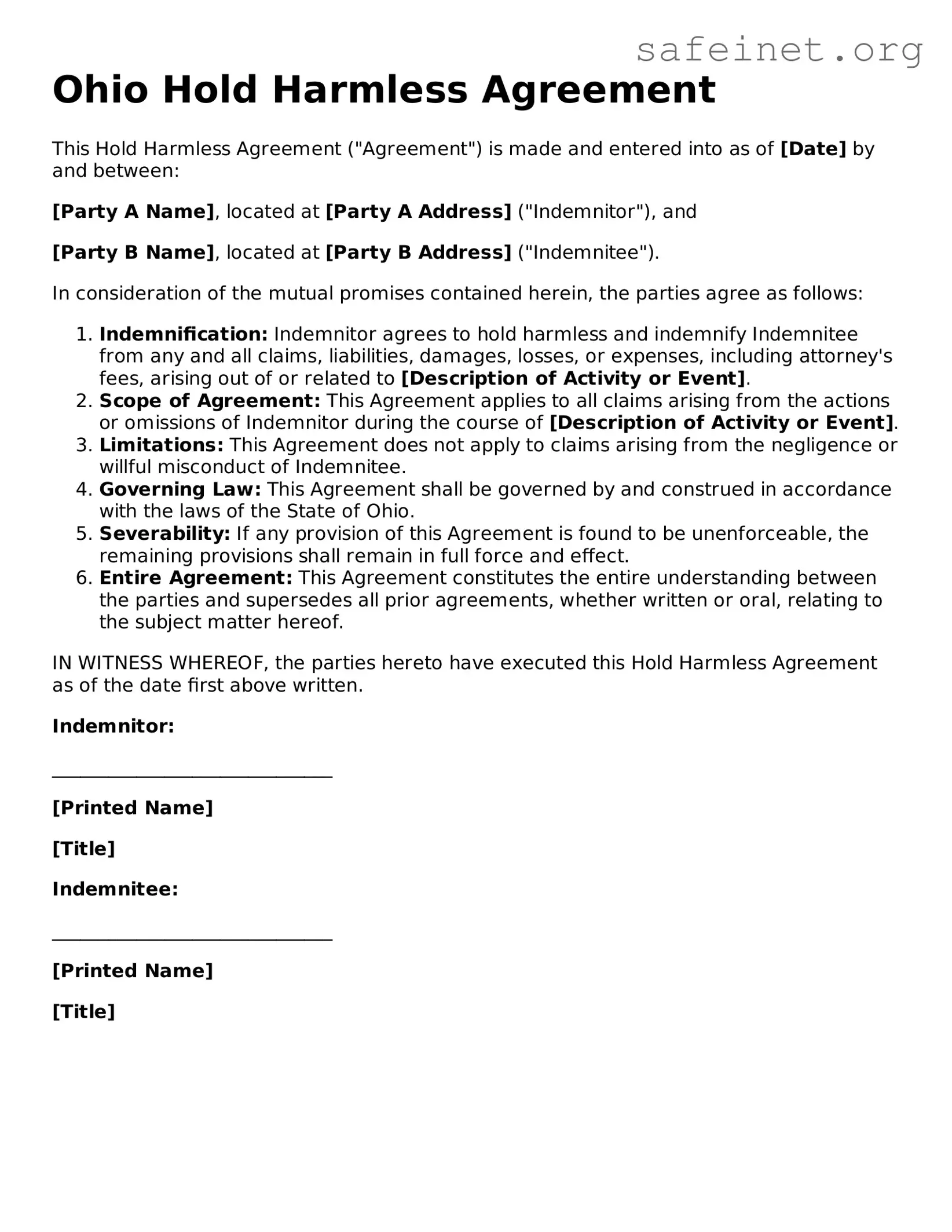
The Ohio Hold Harmless Agreement form serves as a crucial tool for individuals and organizations looking to manage liability risks associated with various activities. This form establishes a mutual understanding between parties, ensuring that one party agrees to protect the other from any claims or damages that may arise during the course of their engagement. It is commonly used in contexts such as events, construction projects, and rental agreements, where potential risks are present. By outlining the responsibilities and expectations of each party, the agreement fosters a sense of security and trust. Furthermore, it often includes specific details about the scope of the activities covered, the duration of the agreement, and any necessary insurance requirements. Understanding this form is essential for anyone involved in agreements that may expose them to legal or financial repercussions, making it a valuable asset in risk management strategies.
Ohio Hold Harmless Agreement
This Hold Harmless Agreement ("Agreement") is made and entered into as of [Date] by and between:
[Party A Name], located at [Party A Address] ("Indemnitor"), and
[Party B Name], located at [Party B Address] ("Indemnitee").
In consideration of the mutual promises contained herein, the parties agree as follows:
IN WITNESS WHEREOF, the parties hereto have executed this Hold Harmless Agreement as of the date first above written.
Indemnitor:
______________________________
[Printed Name]
[Title]
Indemnitee:
______________________________
[Printed Name]
[Title]
| Fact Name | Details |
|---|---|
| Definition | The Ohio Hold Harmless Agreement is a legal document that protects one party from liability or claims arising from the actions of another party. |
| Purpose | This agreement is commonly used in contracts, especially in construction and rental agreements, to limit liability. |
| Governing Law | The agreement is governed by Ohio state law, specifically under the Ohio Revised Code. |
| Key Parties | Typically involves at least two parties: the indemnitor (the party agreeing to hold harmless) and the indemnitee (the party being protected). |
| Enforceability | For the agreement to be enforceable, it must be clear, specific, and voluntarily agreed upon by all parties. |
| Limitations | The agreement cannot protect against gross negligence or willful misconduct. |
| Importance | Using this agreement can significantly reduce legal risks and financial exposure for businesses and individuals. |
Filling out the Ohio Hold Harmless Agreement form is straightforward. Once completed, this form will need to be submitted to the relevant party or organization for processing. Follow the steps below to ensure you fill out the form correctly.
Once you have completed these steps, make a copy for your records. Submit the original form to the appropriate party as required.
What is a Hold Harmless Agreement in Ohio?
A Hold Harmless Agreement is a legal document that protects one party from liability or claims that may arise from specific activities or situations. In Ohio, these agreements are often used in various contexts, such as rental agreements, event planning, and construction contracts. By signing this agreement, one party agrees to assume responsibility for any potential risks, ensuring the other party is shielded from lawsuits or damages.
Who typically uses a Hold Harmless Agreement?
Various individuals and organizations utilize Hold Harmless Agreements. Landlords may require tenants to sign one before moving in. Event organizers often ask participants to sign these agreements to mitigate risks associated with activities. Similarly, contractors and subcontractors use them to protect themselves from liability related to their work. Essentially, anyone involved in activities with potential risks can benefit from this agreement.
Is a Hold Harmless Agreement legally binding in Ohio?
Yes, a Hold Harmless Agreement can be legally binding in Ohio, provided it meets certain criteria. For it to be enforceable, the agreement must be clear, mutual, and voluntarily signed by both parties. It’s important to ensure that the language used in the agreement is straightforward and that both parties understand the terms. Ambiguities can lead to disputes over enforceability.
Can a Hold Harmless Agreement protect against all types of liability?
Not necessarily. While a Hold Harmless Agreement can provide significant protection, it may not cover all types of liability. For example, it typically cannot protect against gross negligence or intentional misconduct. Courts may also scrutinize the agreement if it attempts to waive liability for actions that are illegal or against public policy. Therefore, it’s crucial to understand the limitations of such agreements.
How do I create a Hold Harmless Agreement in Ohio?
Creating a Hold Harmless Agreement involves outlining the specific terms and conditions clearly. Start by identifying the parties involved and the activities covered by the agreement. Specify the scope of liability being waived and include any relevant dates. It’s wise to consult with a legal professional to ensure that the agreement complies with Ohio law and adequately protects your interests.
Do I need a lawyer to draft a Hold Harmless Agreement?
While it's possible to draft a Hold Harmless Agreement without legal assistance, consulting a lawyer is highly recommended. A legal professional can help ensure that the agreement is comprehensive, enforceable, and tailored to your specific needs. This can save you from potential disputes or misunderstandings down the line.
Can a Hold Harmless Agreement be revoked or modified?
Yes, a Hold Harmless Agreement can be revoked or modified, but both parties must agree to the changes. It’s important to document any modifications in writing to avoid confusion in the future. If either party wishes to revoke the agreement, they should communicate this clearly and ensure that all parties understand the implications of such a decision.
What should I do if someone refuses to sign a Hold Harmless Agreement?
If someone refuses to sign a Hold Harmless Agreement, it’s essential to assess the situation carefully. Consider discussing their concerns to understand why they are hesitant. In some cases, addressing their worries may lead to a resolution. However, if they remain unwilling, you may need to evaluate whether proceeding without the agreement is worth the potential risks involved.
Are there any specific laws in Ohio governing Hold Harmless Agreements?
Ohio does not have specific statutes that govern Hold Harmless Agreements universally. However, general contract law principles apply. Courts in Ohio will review these agreements based on the context in which they are used and the clarity of their terms. It’s crucial to draft them carefully to ensure they align with established legal standards.
What are the potential risks of not using a Hold Harmless Agreement?
Not using a Hold Harmless Agreement can expose you to significant risks. Without this protection, you may be liable for injuries, damages, or losses that occur during the activities covered by the agreement. This could lead to costly legal battles, financial strain, and damage to your reputation. Taking proactive steps to secure a Hold Harmless Agreement can safeguard your interests and provide peace of mind.
Not reading the entire form before signing. It is essential to understand all terms and conditions outlined in the agreement.
Failing to provide accurate personal information. This includes names, addresses, and contact details, which should be correct and up-to-date.
Overlooking the date of signing. Ensure that the date is filled in correctly, as this can impact the validity of the agreement.
Not understanding the scope of the agreement. Individuals should be aware of what liabilities they are agreeing to hold harmless.
Neglecting to include all necessary signatures. If there are multiple parties involved, ensure that everyone required has signed the document.
Using unclear language or terms. It is advisable to avoid ambiguous phrases that could lead to misunderstandings.
Not keeping a copy of the signed agreement. Retaining a copy is important for personal records and future reference.
Ignoring local regulations or requirements. Each jurisdiction may have specific rules regarding Hold Harmless Agreements that should be followed.
The Ohio Hold Harmless Agreement is a legal document that protects one party from liability for damages or injuries caused by another party. When using this agreement, several other forms and documents may be necessary to ensure comprehensive coverage and clarity in the arrangement. Below is a list of five commonly used documents that often accompany the Hold Harmless Agreement.
Each of these documents serves a specific purpose and can help clarify the responsibilities and protections of the parties involved. When used in conjunction with the Ohio Hold Harmless Agreement, they can create a more comprehensive legal framework that minimizes risks and enhances understanding among all parties.
The Release of Liability form is often considered similar to the Ohio Hold Harmless Agreement. Both documents serve to protect one party from legal claims that may arise from activities or events. When individuals sign a Release of Liability, they agree not to hold the other party responsible for any injuries or damages that occur. This creates a safeguard for businesses or individuals who offer services, ensuring they are not liable for unforeseen accidents.
The Indemnity Agreement is another document that shares similarities with the Hold Harmless Agreement. In an Indemnity Agreement, one party agrees to compensate the other for any losses or damages incurred. This can include legal fees, which may arise from claims made by third parties. Like the Hold Harmless Agreement, it aims to minimize risk and protect one party from financial burdens resulting from specific actions or events.
A Waiver of Liability is also closely related to the Hold Harmless Agreement. This document is typically used in recreational activities, where participants agree to waive their right to sue for injuries sustained while engaging in the activity. By signing a Waiver of Liability, participants acknowledge the inherent risks involved, similar to how a Hold Harmless Agreement protects against claims arising from those risks.
The Consent to Treat form is another document that bears resemblance to the Hold Harmless Agreement. Often used in medical settings, this form allows healthcare providers to treat a patient while protecting them from legal claims related to the treatment provided. Patients acknowledge that they understand the risks involved and agree not to hold the provider liable for any adverse outcomes, much like the protective nature of a Hold Harmless Agreement.
The Service Agreement can also be compared to the Ohio Hold Harmless Agreement. This document outlines the terms of service between two parties and often includes clauses that limit liability. By defining responsibilities and expectations, a Service Agreement helps to prevent misunderstandings and legal disputes, similar to how a Hold Harmless Agreement seeks to clarify liability issues.
The Non-Disclosure Agreement (NDA) may seem different at first glance, but it shares a protective purpose with the Hold Harmless Agreement. An NDA prevents parties from disclosing confidential information, safeguarding sensitive data from being shared. While it doesn’t directly address liability for physical harm, both documents aim to protect parties from potential legal issues that could arise from breaches of trust.
The Partnership Agreement is another document that can relate to the Hold Harmless Agreement. In a Partnership Agreement, parties outline their roles, responsibilities, and how liabilities will be handled within the partnership. This ensures that each partner understands their obligations and protects them from being held liable for the actions of others, much like the Hold Harmless Agreement seeks to limit liability in specific situations.
Lastly, the Employment Agreement can be likened to the Hold Harmless Agreement in that it often contains clauses that protect employers from liability related to employee actions. These agreements typically outline the expectations and responsibilities of employees, including how liability will be managed in the event of a workplace incident. This helps to create a clear understanding of roles and protects the employer from potential legal claims.
When completing the Ohio Hold Harmless Agreement form, it is essential to follow specific guidelines to ensure accuracy and compliance. Here is a list of things to do and avoid:
Understanding the Ohio Hold Harmless Agreement can be challenging, and several misconceptions often arise. Below are some common misunderstandings about this legal document.
Many people believe that signing a Hold Harmless Agreement completely removes any liability from the other party. In reality, while it does provide some level of protection, it does not shield a party from all forms of negligence or misconduct.
Another misconception is that Hold Harmless Agreements are exclusively for businesses. Individuals can also use these agreements in various situations, such as when participating in recreational activities or events.
Some assume that a standard template can be used for all situations. However, each agreement should be tailored to fit the specific circumstances and needs of the parties involved.
While the agreement can limit liability, it does not completely prevent legal action. Courts may still allow claims if they find that the agreement was not validly executed or if certain conditions apply.
Many think that Hold Harmless Agreements are only needed for activities like skydiving or extreme sports. In truth, they can be beneficial in a wide range of scenarios, including community events or even simple gatherings.
Some view these agreements as a way to exploit legal loopholes. However, they are legitimate legal tools designed to clarify responsibilities and expectations between parties.
Another misconception is that a Hold Harmless Agreement is set in stone once signed. In fact, parties can negotiate terms and amend the agreement as needed, provided all parties agree.
Many people believe they can draft and sign an agreement without consulting a lawyer. Seeking legal advice is wise to ensure the agreement is enforceable and meets specific legal standards.
Finally, some think that the Hold Harmless Agreement is relevant only within Ohio. While state laws may vary, the concept exists in many jurisdictions, and similar agreements can be found across the country.
By dispelling these misconceptions, individuals and organizations can better understand the importance and function of the Ohio Hold Harmless Agreement, ensuring they use it effectively and responsibly.
When filling out and using the Ohio Hold Harmless Agreement form, keep these key takeaways in mind: