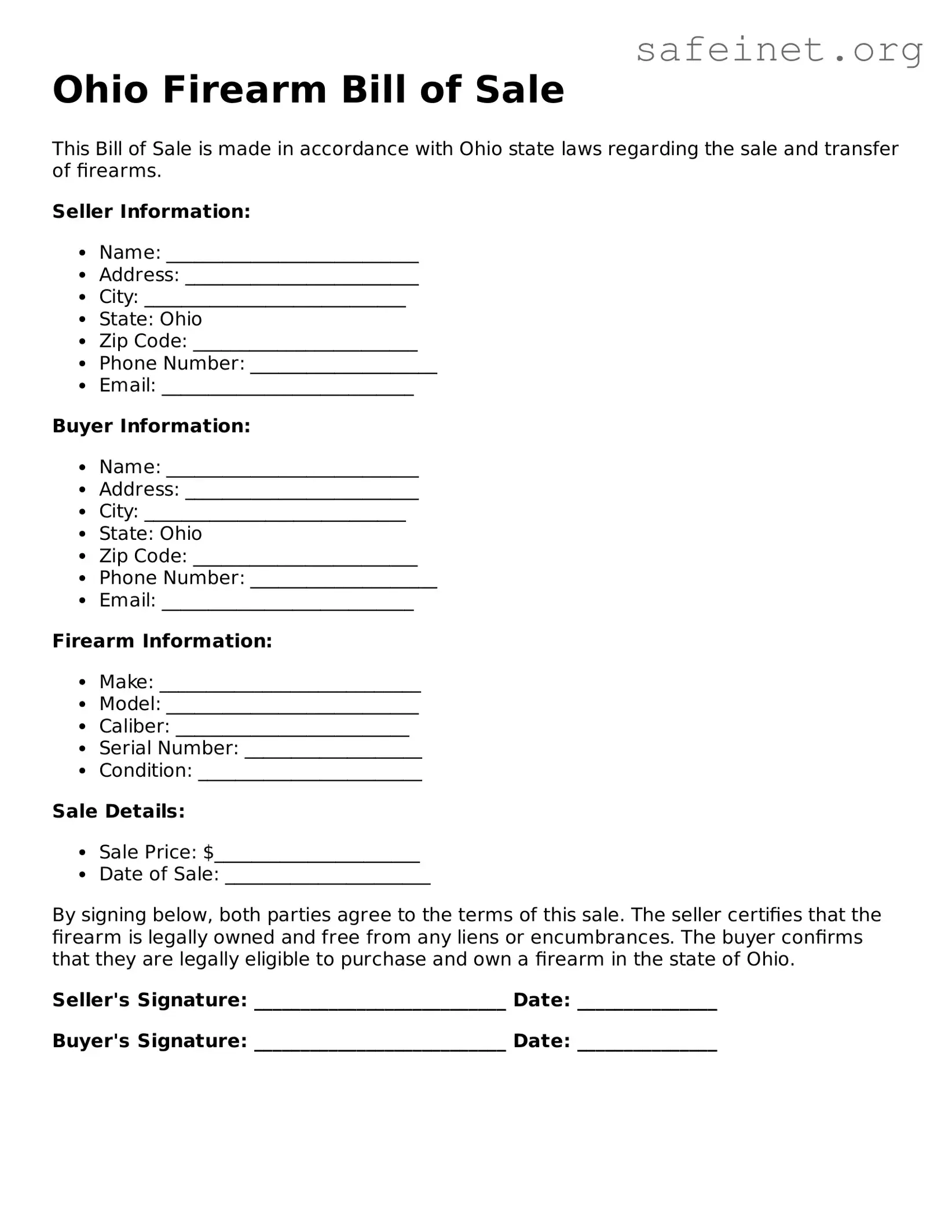
The Ohio Firearm Bill of Sale form serves as a crucial document in the process of transferring ownership of firearms between individuals. This form provides a written record of the transaction, ensuring that both the seller and buyer have a clear understanding of the terms involved. Key elements typically included in the form are the names and addresses of both parties, a detailed description of the firearm being sold, and the date of the transaction. Additionally, it may outline the purchase price and any conditions related to the sale. This document not only protects the interests of both parties but also helps to ensure compliance with state and federal laws regarding firearm ownership. By documenting the sale, the form can serve as proof of ownership for the buyer and as a safeguard for the seller, should any legal issues arise in the future. Understanding the importance of this form is essential for anyone looking to buy or sell a firearm in Ohio.
Ohio Firearm Bill of Sale
This Bill of Sale is made in accordance with Ohio state laws regarding the sale and transfer of firearms.
Seller Information:
Buyer Information:
Firearm Information:
Sale Details:
By signing below, both parties agree to the terms of this sale. The seller certifies that the firearm is legally owned and free from any liens or encumbrances. The buyer confirms that they are legally eligible to purchase and own a firearm in the state of Ohio.
Seller's Signature: ___________________________ Date: _______________
Buyer's Signature: ___________________________ Date: _______________
| Fact Name | Description |
|---|---|
| Purpose | The Ohio Firearm Bill of Sale form serves as a legal document to record the sale or transfer of a firearm between parties. |
| Governing Laws | This form is governed by Ohio Revised Code § 2923.12 and other relevant state laws regarding firearm transfers. |
| Requirements | Both the buyer and seller must provide their names and signatures to validate the transaction. |
| Record Keeping | It is advisable for both parties to keep a copy of the Bill of Sale for their records, ensuring proof of the transaction. |
Completing the Ohio Firearm Bill of Sale form is a straightforward process that requires careful attention to detail. After filling out the form, ensure that both the buyer and seller retain copies for their records. This document serves as proof of the transaction and can be important for legal purposes.
What is an Ohio Firearm Bill of Sale form?
The Ohio Firearm Bill of Sale form is a legal document that records the sale or transfer of a firearm between two parties. This form serves as proof of the transaction and includes important details such as the names and addresses of both the buyer and seller, the description of the firearm, and the date of the transaction. Although not required by law, having a bill of sale can help protect both parties in case of future legal issues regarding the firearm.
Is it mandatory to use a Bill of Sale when buying or selling a firearm in Ohio?
No, it is not mandatory to use a Bill of Sale when buying or selling a firearm in Ohio. However, it is highly recommended. Having a written record can provide clarity and protection for both the buyer and seller. In the event of a dispute or if the firearm is used in a crime, a Bill of Sale can serve as evidence that the firearm was legally transferred.
What information should be included in the Ohio Firearm Bill of Sale?
When creating an Ohio Firearm Bill of Sale, it is important to include specific information to ensure it is comprehensive. This should include the full names and addresses of both the buyer and seller, the make, model, and serial number of the firearm, the date of the transaction, and the purchase price. Additionally, both parties should sign and date the document to acknowledge the sale.
Can I create my own Bill of Sale for a firearm in Ohio?
Yes, you can create your own Bill of Sale for a firearm in Ohio. There are no specific state forms required, so you have the flexibility to draft your own document. Just make sure to include all necessary details to protect both parties. You can also find templates online that can be customized to meet your needs.
Do I need to have the Bill of Sale notarized?
No, notarization is not required for a Bill of Sale in Ohio. However, having the document notarized can add an extra layer of authenticity and may be beneficial in case of any future disputes. If both parties agree, they can choose to have the Bill of Sale notarized for added security.
What should I do if I lose my Bill of Sale?
If you lose your Bill of Sale, it is advisable to recreate the document if possible. You can contact the seller or buyer to obtain the necessary information again. If you cannot recreate it, keep records of any other documentation related to the purchase, such as receipts or emails. While losing the Bill of Sale may complicate matters, having other supporting documents can still provide some level of protection.
Incomplete Information: Failing to fill out all required fields can lead to confusion or disputes later. Make sure to provide all necessary details about both the buyer and seller.
Incorrect Firearm Description: Providing inaccurate details about the firearm, such as the make, model, or serial number, can render the bill of sale invalid. Double-check these details.
Not Including Date of Sale: Omitting the date can create issues regarding the timeline of the transaction. Always include the exact date when the sale occurs.
Missing Signatures: Both the buyer and seller must sign the document. A missing signature can invalidate the bill of sale, so ensure both parties sign before finalizing the transaction.
Not Keeping Copies: Failing to make copies of the completed bill of sale for both parties can lead to problems if disputes arise later. Always keep a copy for your records.
Ignoring State Laws: Not being aware of or disregarding Ohio laws regarding firearm sales can lead to legal issues. Research the regulations to ensure compliance.
Forgetting to Verify Buyer’s Eligibility: It’s essential to confirm that the buyer is legally allowed to purchase a firearm. This step is crucial to avoid potential legal repercussions.
Improper Payment Method: Using a non-secure payment method can lead to fraud. Choose a reliable payment option to protect both parties involved in the transaction.
Not Notarizing the Document: While notarization isn’t always required, having the bill of sale notarized can provide an extra layer of protection and validation.
Rushing the Process: Taking your time to carefully fill out the form can prevent mistakes. Rushing can lead to oversights that may complicate the transaction.
When completing a firearm transaction in Ohio, several other documents may be necessary or beneficial to ensure a smooth process. These documents help establish ownership, verify eligibility, and comply with state regulations. Here’s a list of common forms and documents used alongside the Ohio Firearm Bill of Sale:
Having these documents on hand can help facilitate a legal and hassle-free firearm transaction. Always ensure that all parties involved understand their rights and responsibilities during the sale.
The Ohio Firearm Bill of Sale form shares similarities with a general Bill of Sale. Both documents serve as proof of a transaction between a buyer and a seller. They detail the item being sold, the agreed-upon price, and the date of the transaction. Just like the firearm bill, a general Bill of Sale can be used for various items, such as vehicles or personal property, ensuring that both parties have a record of the sale. This helps protect the rights of both the buyer and the seller by documenting the transfer of ownership.
Another document akin to the Ohio Firearm Bill of Sale is the Vehicle Bill of Sale. This form is used when transferring ownership of a motor vehicle. Similar to the firearm bill, it includes essential details such as the vehicle identification number (VIN), make, model, and year of the vehicle. Both documents require signatures from the buyer and seller, providing legal proof of the transaction. They serve to clarify the responsibilities of each party involved in the sale.
A Lease Agreement is also comparable in its function of documenting an exchange of rights. While a Bill of Sale transfers ownership, a Lease Agreement outlines the terms under which one party can use another's property for a specified period. Both documents require clear identification of the parties involved and a description of the property. They protect the interests of both parties by clearly stating terms, conditions, and responsibilities, making them essential for legal protection.
The Rental Agreement is another document that shares similarities with the Ohio Firearm Bill of Sale. This agreement outlines the terms under which property, such as an apartment or house, is rented. Like the firearm bill, it includes the names of the parties involved, details about the property, and the agreed-upon price. Both documents serve to protect the rights of the parties involved, ensuring that everyone understands their obligations and the terms of the transaction.
The Power of Attorney document can also be likened to the Ohio Firearm Bill of Sale in terms of its legal significance. While a Bill of Sale transfers ownership of a specific item, a Power of Attorney grants one person the authority to act on behalf of another in legal matters. Both documents require careful consideration and clear terms to ensure that the rights and responsibilities of each party are well-defined. They are vital for protecting the interests of individuals in various transactions.
Another related document is the Affidavit of Ownership. This form is often used to declare ownership of property when no formal Bill of Sale exists. Similar to the firearm bill, it requires the owner to provide details about the item and may need to be notarized. Both documents serve as evidence of ownership and can be crucial in legal disputes or when proving ownership for registration purposes.
Lastly, a Trust Agreement can be compared to the Ohio Firearm Bill of Sale in that it outlines the management and distribution of assets, including firearms. While a Bill of Sale documents the transfer of ownership, a Trust Agreement establishes how property will be handled during and after a person's lifetime. Both documents require clear identification of the parties and the items involved, ensuring that the intentions of the individuals are respected and legally recognized.
When filling out the Ohio Firearm Bill of Sale form, it is essential to approach the task with care and attention to detail. Below are important guidelines to follow and avoid.
Understanding the Ohio Firearm Bill of Sale form is crucial for both buyers and sellers of firearms. However, several misconceptions can lead to confusion. Here are nine common misunderstandings:
While it is not mandatory to have a Bill of Sale in Ohio, having one is highly recommended. It serves as proof of the transaction and can protect both parties in case of future disputes.
Any private individual can create a Bill of Sale. It is not limited to licensed dealers, making it accessible for private transactions.
Notarization is not a requirement for a Bill of Sale in Ohio. However, having it notarized can add an extra layer of legitimacy and can be beneficial if disputes arise.
In Ohio, background checks are only required for transactions conducted through licensed dealers. Private sales do not require background checks, although they are encouraged for safety.
While it is helpful to include a description, the law does not specify that a detailed description is necessary. Basic information such as the make, model, and serial number is typically sufficient.
Sellers should be aware that they may still be held liable if the firearm is used in a crime shortly after the sale. Keeping a copy of the Bill of Sale can help mitigate this risk.
The Bill of Sale can be used for any type of firearm, including rifles and shotguns. It is not limited to handguns.
Ohio does not require firearm registration. Once a purchase is completed, the buyer does not need to register the firearm with the state.
A Bill of Sale can still be valid for interstate transactions, but additional laws and regulations may apply. Buyers and sellers should be aware of both Ohio laws and the laws of the buyer's home state.
By addressing these misconceptions, individuals can navigate firearm transactions in Ohio more effectively and responsibly.
Filling out and using the Ohio Firearm Bill of Sale form is an important step for anyone involved in the sale or transfer of firearms. Here are some key takeaways to keep in mind:
Understanding these key points can simplify the process and ensure that both parties are protected during the sale or transfer of firearms.