Creating a clear and comprehensive employee handbook is essential for any organization in Ohio. This handbook serves as a guide for employees, outlining company policies, procedures, and expectations. It typically covers critical topics such as workplace conduct, attendance policies, benefits, and safety procedures. Additionally, it addresses employee rights and responsibilities, ensuring that everyone understands their role within the company. By providing this information, the handbook fosters a positive work environment and helps prevent misunderstandings. Employers must ensure that the handbook complies with state and federal laws, protecting both the organization and its employees. A well-structured employee handbook can also be a valuable tool for onboarding new hires, setting the tone for their experience and integration into the company culture.
Ohio Employee Handbook Template
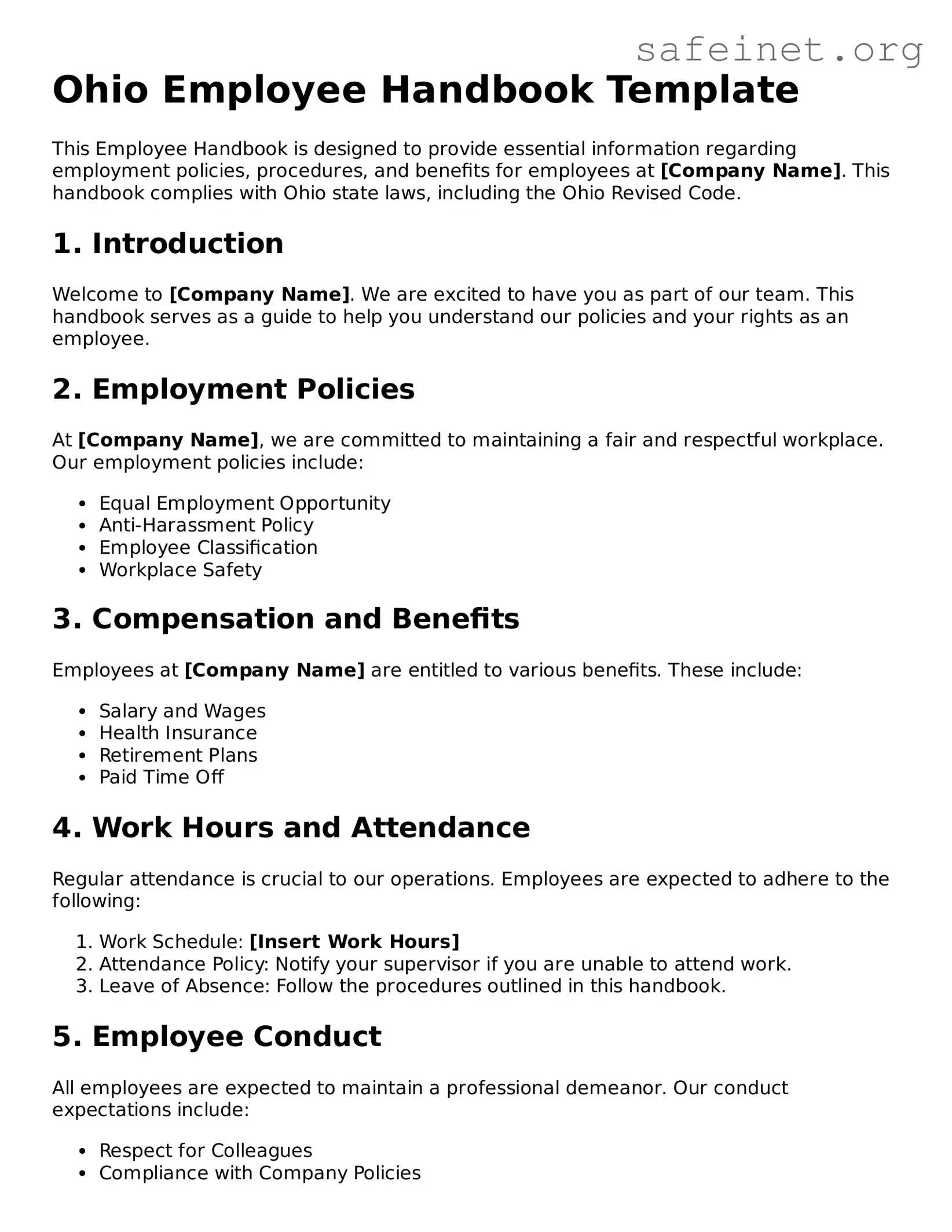
This Employee Handbook is designed to provide essential information regarding employment policies, procedures, and benefits for employees at [Company Name]. This handbook complies with Ohio state laws, including the Ohio Revised Code.
1. Introduction
Welcome to [Company Name]. We are excited to have you as part of our team. This handbook serves as a guide to help you understand our policies and your rights as an employee.
2. Employment Policies
At [Company Name], we are committed to maintaining a fair and respectful workplace. Our employment policies include:
3. Compensation and Benefits
Employees at [Company Name] are entitled to various benefits. These include:
4. Work Hours and Attendance
Regular attendance is crucial to our operations. Employees are expected to adhere to the following:
5. Employee Conduct
All employees are expected to maintain a professional demeanor. Our conduct expectations include:
6. Disciplinary Procedures
In the event of a policy violation, [Company Name] may take disciplinary action, which could include:
7. Acknowledgment of Receipt
Please sign below to acknowledge that you have received and read this Employee Handbook:
Employee Name: [Employee Name]
Employee Signature: [Signature]
Date: [Date]
| Fact Name | Description |
|---|---|
| Purpose | The Ohio Employee Handbook serves as a guide for employees, outlining company policies, procedures, and expectations. |
| Legal Requirement | While not legally required, having an employee handbook is strongly recommended to clarify workplace policies. |
| Governing Law | Ohio employment law, including the Ohio Revised Code and applicable federal laws, governs the content of the handbook. |
| Content Overview | Typical sections include workplace conduct, benefits, leave policies, and disciplinary procedures. |
| Employee Acknowledgment | Employees should sign an acknowledgment form indicating they have received and understood the handbook. |
| Updates | The handbook should be reviewed regularly and updated to reflect changes in laws or company policies. |
| Non-Discrimination Policy | It is essential to include a non-discrimination policy to comply with federal and state anti-discrimination laws. |
| At-Will Employment | Most Ohio handbooks clarify that employment is at-will, meaning either the employer or employee can terminate the relationship at any time. |
| Confidentiality Clause | A confidentiality clause may be included to protect sensitive company information from being disclosed. |
After obtaining the Ohio Employee Handbook form, you will need to complete it accurately to ensure compliance with company policies and regulations. Follow the steps below to fill out the form correctly.
What is the purpose of the Ohio Employee Handbook form?
The Ohio Employee Handbook form serves as a guide for employees regarding company policies, procedures, and expectations. It outlines important information about workplace rules, employee rights, and benefits. This document helps create a clear understanding between employers and employees, ensuring everyone is on the same page about workplace conduct and responsibilities.
Who needs to complete the Ohio Employee Handbook form?
All employees of a company in Ohio should receive and review the Employee Handbook. While the form itself may not require individual completion, it is essential for every employee to acknowledge their understanding of the handbook’s contents. This acknowledgment often helps protect both the employee's rights and the employer's interests.
How often should the Employee Handbook be updated?
It is advisable for employers to review and update the Employee Handbook at least once a year. Changes in laws, company policies, or workplace practices may necessitate updates. Regular reviews ensure that the handbook remains relevant and compliant with current regulations, providing employees with accurate information.
What should I do if I have questions about the Employee Handbook?
If you have questions about the Employee Handbook, you should reach out to your supervisor or the human resources department. They can provide clarification on specific policies or address any concerns you may have. Open communication is encouraged to ensure that you fully understand your rights and responsibilities as an employee.
Is it mandatory for employees to sign the Employee Handbook form?
While it is not legally required for employees to sign the Employee Handbook form, many employers request a signature to confirm that employees have received and read the handbook. This signature can serve as evidence that the employee is aware of the policies and procedures outlined in the handbook.
What happens if an employee violates a policy in the Employee Handbook?
If an employee violates a policy outlined in the Employee Handbook, the employer may take disciplinary action. This could range from a verbal warning to termination, depending on the severity of the violation and the company's disciplinary procedures. Consistency in enforcement is crucial to maintain fairness in the workplace.
Can the policies in the Employee Handbook change?
Yes, the policies in the Employee Handbook can change. Employers reserve the right to modify policies as needed, often in response to changes in law or business needs. When significant changes occur, employers should communicate these updates to employees promptly, ensuring everyone is aware of the new policies.
How can employees provide feedback on the Employee Handbook?
Employees are encouraged to provide feedback on the Employee Handbook. This can typically be done through a formal process, such as submitting suggestions to the human resources department. Constructive feedback helps improve the handbook and ensures that it meets the needs of all employees.
What should I do if I disagree with a policy in the Employee Handbook?
If you disagree with a policy in the Employee Handbook, it is important to address your concerns through the appropriate channels. Speak with your supervisor or human resources to express your views. Open dialogue can lead to better understanding and potential revisions to policies that may not serve the best interests of employees.
Incomplete Information: Many individuals fail to provide all required details. Missing sections can lead to delays in processing and confusion about employment status.
Incorrect Personal Details: Some people mistakenly enter wrong names, addresses, or contact numbers. This can result in miscommunication or issues with payroll.
Neglecting to Read Policies: A common oversight is not thoroughly reviewing the handbook policies before signing. Understanding the guidelines is crucial for compliance and avoiding future conflicts.
Failure to Update Information: When personal circumstances change, such as a new address or marital status, individuals often forget to update their information. This can create complications in benefits and communication.
Ignoring Signature Requirements: Some individuals overlook the necessity of signing the form. Without a signature, the form may be considered incomplete, leading to potential employment issues.
When developing a comprehensive employee handbook in Ohio, several other forms and documents may be necessary to ensure clarity and compliance with state and federal laws. Each of these documents serves a distinct purpose in the employment relationship, helping to outline policies, procedures, and expectations. Below is a list of commonly used forms and documents that often accompany the Ohio Employee Handbook.
Incorporating these forms and documents into the employment framework not only enhances communication but also helps to establish a clear understanding of rights and responsibilities for both employers and employees. This proactive approach can contribute to a more harmonious and productive workplace.
The Ohio Employee Handbook serves as a vital resource for both employers and employees, outlining workplace policies and expectations. Similar to this handbook is the Employee Manual, which provides a comprehensive guide to company policies, procedures, and employee rights. Like the Ohio Employee Handbook, an Employee Manual typically covers topics such as attendance, dress code, and disciplinary actions, ensuring that employees understand their responsibilities and the company’s expectations from the outset.
Another document akin to the Ohio Employee Handbook is the Orientation Guide. This guide is often provided to new hires during their onboarding process. It introduces employees to the company culture, mission, and values while summarizing key policies. Both documents aim to facilitate a smooth transition into the workplace and help new employees feel welcomed and informed about their roles.
The Policy Manual is yet another document that shares similarities with the Ohio Employee Handbook. This manual details specific policies regarding workplace behavior, safety protocols, and compliance with laws. While the Employee Handbook offers a broader overview, the Policy Manual dives deeper into particular areas, ensuring that employees have access to the specific rules that govern their work environment.
Job Descriptions also bear a resemblance to the Ohio Employee Handbook, as they outline the responsibilities and expectations for specific positions within a company. While the Employee Handbook provides a general overview of company policies, job descriptions detail the individual roles, helping employees understand what is expected of them in their day-to-day activities.
The Code of Conduct is another document that parallels the Ohio Employee Handbook. This code establishes the standards of behavior expected from employees. Like the handbook, the Code of Conduct emphasizes the importance of professionalism and ethical behavior, ensuring that all employees understand the values that the organization upholds.
Employee Agreements, which often accompany the Employee Handbook, outline the terms of employment between the employer and the employee. These agreements typically cover confidentiality, non-compete clauses, and other important legal considerations. Both documents work together to create a clear understanding of the expectations and obligations of both parties.
The Safety Manual is also similar to the Ohio Employee Handbook, focusing specifically on workplace safety and health regulations. This manual provides guidelines on how to maintain a safe work environment, reporting procedures for accidents, and emergency protocols. While the Employee Handbook may touch on safety, the Safety Manual offers a more detailed exploration of these critical topics.
Performance Evaluation Forms are another related document. These forms outline the criteria for assessing employee performance, including goals and expectations. Similar to the Employee Handbook, they help establish a framework for employee development and feedback, ensuring that employees understand how their performance will be evaluated over time.
Training Manuals, which are often provided alongside the Employee Handbook, serve as instructional guides for specific tasks or roles. These manuals provide detailed information on job functions, software usage, and best practices. Both documents aim to equip employees with the knowledge and skills necessary to succeed in their positions.
Lastly, the Exit Interview Form shares a connection with the Ohio Employee Handbook. This form is used when an employee leaves the company, allowing for feedback about their experience. While the Employee Handbook sets the stage for an employee's journey within the company, the Exit Interview Form provides valuable insights that can inform future policies and improve the workplace for remaining employees.
When filling out the Ohio Employee Handbook form, it’s important to approach the task with care. Here are some dos and don'ts to keep in mind:
When it comes to the Ohio Employee Handbook form, several misconceptions can lead to confusion for both employers and employees. Here are ten common myths, along with clarifications to help you understand the truth.
While having an employee handbook is beneficial, it is not a legal requirement for all employers in Ohio. However, it is highly recommended as it helps outline company policies and expectations.
Handbooks do not need to address every scenario. They should focus on key policies and procedures that are relevant to the workplace.
Policies and laws change over time. Regular updates ensure that the handbook remains relevant and compliant with current regulations.
While it is good practice to have employees acknowledge receipt of the handbook, a signature is not legally required. A simple acknowledgment can suffice.
An employee handbook does not create a contract for employment. Most handbooks include disclaimers stating that employment is at-will.
Each handbook can be tailored to fit the specific needs and culture of the organization. There is no one-size-fits-all approach.
While employers can update the handbook, it is best practice to inform employees of any changes. Transparency fosters trust and understanding.
While a well-crafted handbook can help mitigate risks, it does not provide absolute protection against legal claims. Compliance with laws and fair practices is still essential.
Small businesses can also benefit from having an employee handbook. It helps set clear expectations and can prevent misunderstandings.
Handbooks serve as a guide for both employees and management. They ensure everyone is on the same page regarding company policies and procedures.
Understanding these misconceptions can help create a more effective employee handbook that serves the needs of both employers and employees in Ohio.
Filling out and using the Ohio Employee Handbook form is crucial for both employers and employees. Here are some key takeaways to keep in mind: