The Ohio Commercial Lease Agreement form serves as a crucial document in the realm of commercial real estate, outlining the terms and conditions under which a landlord rents property to a business tenant. This form typically includes essential details such as the duration of the lease, the amount of rent due, and the responsibilities of both parties regarding maintenance and repairs. It addresses important aspects like security deposits, permitted uses of the property, and provisions for renewal or termination of the lease. Additionally, the agreement may outline specific clauses related to subleasing, insurance requirements, and dispute resolution procedures. Understanding these elements is vital for both landlords and tenants to ensure a smooth rental experience and to protect their respective rights and interests throughout the lease term.
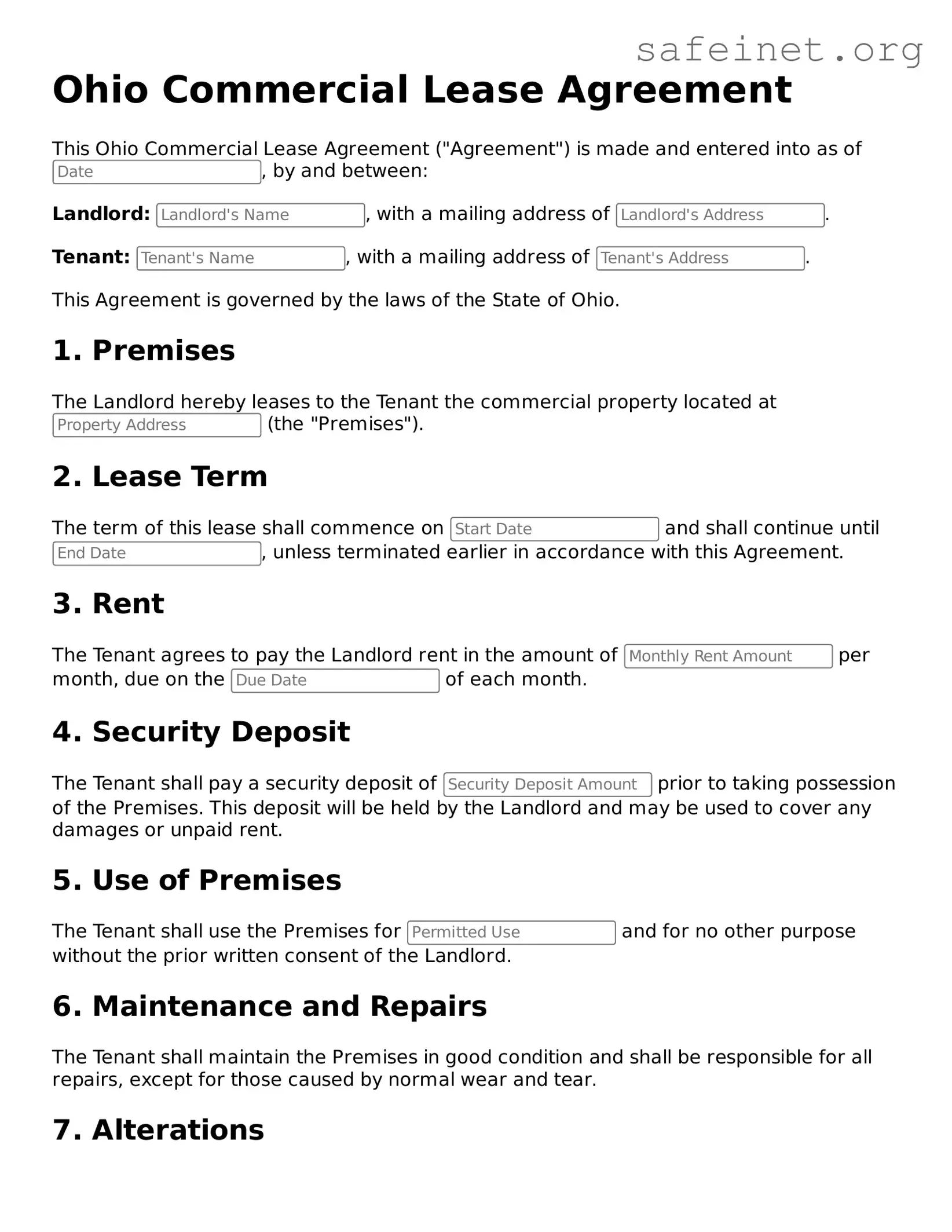
Ohio Commercial Lease Agreement
This Ohio Commercial Lease Agreement ("Agreement") is made and entered into as of , by and between:
Landlord: , with a mailing address of .
Tenant: , with a mailing address of .
This Agreement is governed by the laws of the State of Ohio.
1. Premises
The Landlord hereby leases to the Tenant the commercial property located at (the "Premises").
2. Lease Term
The term of this lease shall commence on and shall continue until , unless terminated earlier in accordance with this Agreement.
3. Rent
The Tenant agrees to pay the Landlord rent in the amount of per month, due on the of each month.
4. Security Deposit
The Tenant shall pay a security deposit of prior to taking possession of the Premises. This deposit will be held by the Landlord and may be used to cover any damages or unpaid rent.
5. Use of Premises
The Tenant shall use the Premises for and for no other purpose without the prior written consent of the Landlord.
6. Maintenance and Repairs
The Tenant shall maintain the Premises in good condition and shall be responsible for all repairs, except for those caused by normal wear and tear.
7. Alterations
The Tenant shall not make any alterations to the Premises without the prior written consent of the Landlord.
8. Termination
Either party may terminate this Agreement by providing written notice to the other party.
9. Governing Law
This Agreement shall be governed by and construed in accordance with the laws of the State of Ohio.
10. Signatures
IN WITNESS WHEREOF, the parties have executed this Agreement as of the date first above written.
Landlord Signature: ______________________ Date: ____________
Tenant Signature: ______________________ Date: ____________
| Fact Name | Description |
|---|---|
| Governing Law | The Ohio Commercial Lease Agreement is governed by the laws of the State of Ohio. |
| Parties Involved | This agreement typically involves a landlord (lessor) and a tenant (lessee). |
| Property Description | The lease must clearly identify the commercial property being leased. |
| Lease Term | The duration of the lease should be specified, including start and end dates. |
| Rent Payment | Details regarding the rent amount, due dates, and payment methods must be included. |
| Security Deposit | The agreement should outline the amount of the security deposit and conditions for its return. |
| Maintenance Responsibilities | Responsibilities for property maintenance and repairs should be clearly defined. |
| Termination Conditions | Conditions under which the lease can be terminated by either party must be stated. |
Filling out the Ohio Commercial Lease Agreement form is an important step in establishing the terms of a rental arrangement between a landlord and a tenant. This document lays out the rights and responsibilities of both parties, ensuring clarity and mutual understanding. Below are the steps to guide you through completing the form accurately.
By following these steps, you can complete the Ohio Commercial Lease Agreement form with confidence, ensuring that both parties are on the same page regarding the lease terms.
What is a Commercial Lease Agreement in Ohio?
A Commercial Lease Agreement in Ohio is a legally binding contract between a landlord and a business tenant. It outlines the terms under which the tenant can occupy and use a commercial property. This agreement typically includes details such as the rental amount, lease duration, and responsibilities of both parties.
What are the key components of an Ohio Commercial Lease Agreement?
Key components include the names of the landlord and tenant, a description of the property, the lease term, rent amount, payment due dates, security deposit details, maintenance responsibilities, and terms for lease termination. These elements ensure both parties understand their rights and obligations.
How long is a typical commercial lease in Ohio?
The duration of a commercial lease can vary widely. Common lease terms range from one to five years, but some agreements may extend longer. The length often depends on the type of business and the specific needs of the tenant and landlord.
Can I negotiate the terms of my commercial lease?
Yes, negotiating lease terms is quite common. Many landlords are open to discussions about rent, lease duration, and other conditions. It’s important to communicate your needs clearly and be prepared to compromise to reach a mutually beneficial agreement.
What happens if I need to break my lease early?
If you need to break your lease early, it’s crucial to review the lease agreement for any early termination clauses. Some leases may allow for early termination with proper notice or payment of a fee. Always communicate with your landlord to explore your options.
Are there any specific laws governing commercial leases in Ohio?
Yes, Ohio has specific laws that govern commercial leases, but they are less stringent than those for residential leases. It’s essential to understand state and local regulations that may affect your lease, including zoning laws and property use restrictions.
What should I do if there is a dispute with my landlord?
If a dispute arises, start by reviewing your lease agreement to understand your rights. Open communication with your landlord can often resolve issues. If necessary, consider mediation or legal advice to address more serious disputes.
Is a commercial lease agreement required to be in writing?
While oral agreements can be legally binding, having a written lease is highly recommended. A written agreement provides clarity and protection for both parties, detailing the terms and expectations clearly to avoid misunderstandings.
What is a security deposit, and how does it work in a commercial lease?
A security deposit is an upfront payment made by the tenant to cover potential damages or unpaid rent. In Ohio, there are no strict laws governing the amount of the security deposit, but it is typically one to three months' rent. The lease should specify how and when the deposit will be returned after the lease ends.
Can I sublease my commercial space?
Subleasing is often allowed but typically requires the landlord’s consent. The lease agreement should specify whether subleasing is permitted and under what conditions. Always seek approval from your landlord before proceeding with a sublease to avoid potential legal issues.
Incomplete Information: Many individuals fail to provide all required details. This includes names, addresses, and contact information for both the landlord and tenant. Ensure that every section is filled out completely to avoid future disputes.
Neglecting to Read Terms: Some people skip reading the lease terms thoroughly. It is crucial to understand the obligations and rights outlined in the agreement. Misunderstandings can lead to significant issues later.
Missing Signatures: A common oversight is not obtaining all necessary signatures. Both parties must sign the lease for it to be legally binding. Verify that all required signatures are present before finalizing the document.
Ignoring Additional Clauses: Often, individuals overlook additional clauses or amendments. These may include terms regarding maintenance, repairs, and alterations. Pay attention to these details as they can impact your rights and responsibilities.
Failing to Document Condition: Many tenants neglect to document the condition of the property before moving in. Take photographs and note any existing damages. This documentation can protect you from being held responsible for pre-existing issues.
When entering into a commercial lease agreement in Ohio, several other forms and documents may be required to ensure a smooth transaction. These documents help clarify responsibilities, outline terms, and protect the interests of both landlords and tenants. Below is a list of commonly used forms that complement the Ohio Commercial Lease Agreement.
Having these documents prepared and understood can greatly facilitate the leasing process. They not only protect the rights of both parties but also help in maintaining a clear line of communication throughout the lease term. Always consider consulting with a professional to ensure that all necessary forms are completed correctly.
The Ohio Residential Lease Agreement is similar to the Commercial Lease Agreement in that both documents outline the terms under which a property is rented. Each agreement details the responsibilities of both the landlord and the tenant, including payment terms, maintenance obligations, and duration of the lease. While the residential lease focuses on living spaces, the commercial lease is tailored for business use, addressing specific needs such as zoning and business operations. Both documents serve to protect the rights of the parties involved and provide a clear framework for the rental relationship.
The Ohio Retail Lease Agreement is another document closely related to the Commercial Lease Agreement. This type of lease is specifically designed for retail spaces, addressing unique considerations such as foot traffic, signage rights, and leasehold improvements. Just like the commercial lease, it outlines the terms of rent, duration, and responsibilities of the tenant and landlord. Both agreements emphasize the importance of location and how it impacts the business, ensuring that both parties understand their commitments and expectations.
The Ohio Office Lease Agreement shares similarities with the Commercial Lease Agreement as it pertains to the leasing of office spaces. It includes specific terms related to office usage, such as common area maintenance and utilities. Both agreements ensure that tenants can operate their businesses effectively while also detailing the responsibilities of the landlord in maintaining the property. The focus on business operations and tenant rights makes these documents essential for anyone renting commercial properties.
The Ohio Industrial Lease Agreement is another document that aligns with the Commercial Lease Agreement. This lease is tailored for industrial properties, such as warehouses or manufacturing facilities. It addresses specific concerns like equipment usage, loading docks, and safety regulations. Both agreements share the goal of defining the terms of occupancy and ensuring that both the landlord and tenant have a clear understanding of their rights and obligations. The industrial lease, like the commercial lease, is vital for facilitating smooth business operations.
Lastly, the Ohio Ground Lease Agreement is similar in nature to the Commercial Lease Agreement, as it involves leasing land for business purposes. In a ground lease, the tenant typically has the right to build on the property and may have a long-term commitment. Both agreements outline the terms of rent, use of the property, and responsibilities for maintenance. The ground lease allows for flexibility in business development, while still providing a structured legal framework for both parties involved.
When filling out the Ohio Commercial Lease Agreement form, it's important to follow certain guidelines to ensure accuracy and compliance. Here are ten things to keep in mind:
On the other hand, there are also things you should avoid:
Understanding the Ohio Commercial Lease Agreement form is crucial for both landlords and tenants. However, several misconceptions can lead to confusion. Here are four common misconceptions:
Many believe that all commercial leases follow a standard template. In reality, each lease can vary significantly based on the specific terms negotiated between the parties involved.
Some individuals think that a signed lease is set in stone. However, leases can be amended if both parties agree to the changes in writing.
There is a misconception that only the rental price can be negotiated. In fact, many other terms, such as maintenance responsibilities, lease duration, and renewal options, can also be subject to negotiation.
Some tenants and landlords believe they can navigate the lease without legal assistance. Seeking legal advice can help clarify complex terms and protect the interests of both parties.
When completing and utilizing the Ohio Commercial Lease Agreement form, it is important to understand several key aspects. Here are nine essential takeaways:
By paying attention to these key points, both landlords and tenants can create a clear and effective commercial lease agreement in Ohio.