When engaging in the sale or transfer of personal property in Ohio, a Bill of Sale form becomes an essential document to facilitate the transaction. This legal instrument serves as a written record that outlines the details of the sale, including the identities of the buyer and seller, a description of the item being sold, and the agreed-upon purchase price. It not only provides proof of ownership transfer but also protects both parties by clearly stating the terms of the agreement. Additionally, the Ohio Bill of Sale form can be tailored for various types of transactions, whether it involves vehicles, boats, or general personal property. By utilizing this form, individuals can ensure that they have a comprehensive account of the sale, minimizing potential disputes and misunderstandings in the future. Understanding the key components and requirements of the Ohio Bill of Sale is crucial for anyone looking to engage in a smooth and legally sound transaction.
Ohio Bill of Sale Template
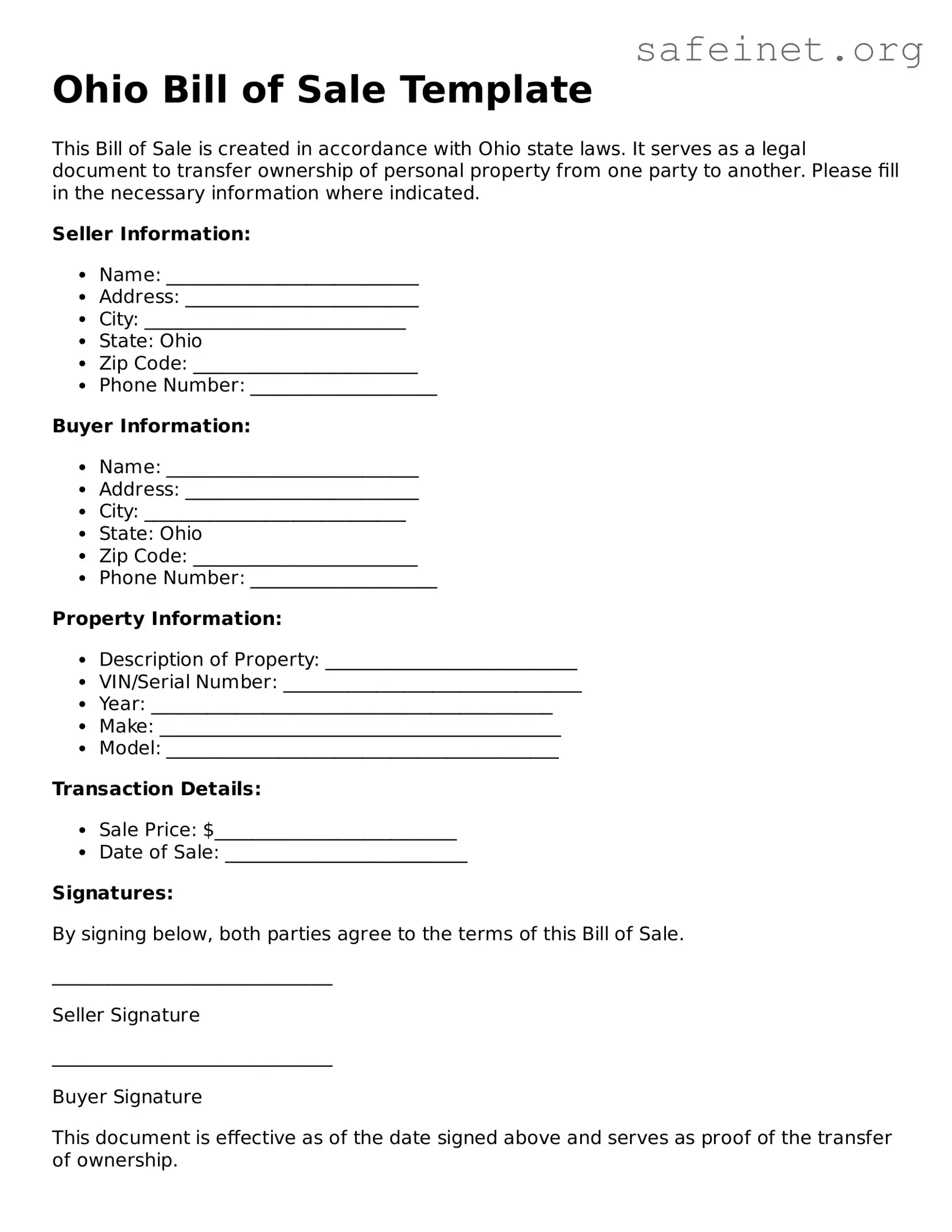
This Bill of Sale is created in accordance with Ohio state laws. It serves as a legal document to transfer ownership of personal property from one party to another. Please fill in the necessary information where indicated.
Seller Information:
Buyer Information:
Property Information:
Transaction Details:
Signatures:
By signing below, both parties agree to the terms of this Bill of Sale.
______________________________
Seller Signature
______________________________
Buyer Signature
This document is effective as of the date signed above and serves as proof of the transfer of ownership.
| Fact Name | Description |
|---|---|
| Purpose | The Ohio Bill of Sale form serves as a legal document to transfer ownership of personal property from one individual to another. |
| Governing Law | This form is governed by Ohio Revised Code Section 4505.06, which outlines the requirements for vehicle sales and transfers. |
| Types of Property | It can be used for various types of personal property, including vehicles, boats, and equipment. |
| Notarization | While notarization is not always required, it is highly recommended to add an extra layer of authenticity to the document. |
| Buyer and Seller Information | The form must include the full names and addresses of both the buyer and the seller to ensure clear identification. |
| Consideration | The Bill of Sale should specify the amount of money or other consideration exchanged for the property. |
| As-Is Condition | It is common to include a clause stating that the property is sold "as-is," which limits liability for the seller regarding the condition of the item. |
| Record Keeping | Both parties should keep a copy of the Bill of Sale for their records, as it serves as proof of the transaction. |
Once you have the Ohio Bill of Sale form ready, you can begin filling it out. This document will serve as a record of the transaction between the buyer and the seller. Make sure to have all necessary information on hand to complete the form accurately.
After completing the form, both parties should keep a copy for their records. This will help in case any questions arise in the future regarding the transaction.
What is a Bill of Sale in Ohio?
A Bill of Sale is a legal document that serves as proof of a transaction between a buyer and a seller. In Ohio, this form is often used for the sale of personal property, such as vehicles, boats, or equipment. It outlines the details of the sale, including the items sold, the purchase price, and the date of the transaction. Having this document can protect both parties in case of disputes or misunderstandings in the future.
Do I need a Bill of Sale for every transaction in Ohio?
While a Bill of Sale is not always required by law for every transaction, it is highly recommended. For certain items, like vehicles, a Bill of Sale is often necessary to register the item with the state. Even for smaller transactions, having a Bill of Sale can provide clarity and serve as a record of the agreement between the buyer and seller.
What information should be included in an Ohio Bill of Sale?
An effective Bill of Sale should include several key pieces of information. This includes the names and addresses of both the buyer and the seller, a description of the item being sold (such as make, model, and VIN for vehicles), the purchase price, and the date of the transaction. Additionally, it's wise to include any warranties or conditions related to the sale to avoid potential disputes later on.
Is a Bill of Sale legally binding in Ohio?
Yes, a Bill of Sale is legally binding in Ohio as long as it contains all the necessary information and is signed by both parties. This document acts as a contract that can be enforced in court if either party fails to uphold their end of the agreement. It’s important to keep a copy for your records, as it serves as evidence of the transaction.
Can I create my own Bill of Sale in Ohio?
Absolutely! You can create your own Bill of Sale in Ohio, as long as it includes all the required information. There are many templates available online that can help you get started. Just make sure that the document is clear, concise, and includes the signatures of both the buyer and seller to ensure its validity.
Failing to include accurate vehicle information. This includes the make, model, year, and VIN. Missing details can lead to confusion or disputes later.
Not providing seller and buyer information. Both parties must include their full names and addresses. Omitting this information can complicate ownership transfer.
Forgetting to include the sale date. The date of the transaction is crucial for record-keeping and legal purposes.
Neglecting to specify the purchase price. Clearly stating the amount paid ensures transparency and helps prevent future disputes.
Not signing the document. Both the seller and buyer must sign the Bill of Sale. Without signatures, the document may not be legally binding.
Using incorrect or outdated forms. Always ensure you are using the latest version of the Ohio Bill of Sale form to avoid issues.
Leaving out notarization when required. Some transactions may need notarization for added legal protection. Check the requirements based on the sale type.
Failing to keep a copy of the Bill of Sale. Both parties should retain a copy for their records. This serves as proof of the transaction.
Overlooking state-specific requirements. Ohio may have unique regulations regarding Bill of Sale forms. Familiarize yourself with these to ensure compliance.
The Ohio Bill of Sale form is an important document for transferring ownership of personal property, such as vehicles, boats, or equipment. However, several other forms and documents may accompany it to ensure a smooth transaction. Below is a list of commonly used documents that can complement the Ohio Bill of Sale.
Having these documents ready can facilitate a smoother transaction and provide both parties with the necessary protection and clarity. Always ensure that all forms are completed accurately and retained for future reference.
The Vehicle Title Transfer form serves a similar purpose to the Ohio Bill of Sale. This document is essential when transferring ownership of a vehicle. It includes details about the seller, buyer, and the vehicle itself, such as the VIN, make, model, and year. Both documents provide legal proof of the transaction and help protect the interests of both parties involved.
The Equipment Bill of Sale is another document that parallels the Ohio Bill of Sale. This form is used when selling or buying equipment, such as machinery or tools. It outlines the specifics of the equipment, including condition, price, and any warranties. Just like the Ohio Bill of Sale, it serves as a record of the transaction and can be crucial for tax purposes or future disputes.
A Boat Bill of Sale is also akin to the Ohio Bill of Sale. When purchasing or selling a boat, this document captures the essential details of the transaction, including the boat's identification number and registration information. It ensures that both the seller and buyer have clear evidence of the sale, making it easier to transfer ownership legally.
The Firearm Bill of Sale is another relevant document. This form is used in the sale of firearms and includes information about the buyer and seller, as well as details about the firearm itself. Similar to the Ohio Bill of Sale, it provides legal documentation of the transaction, which can be important for compliance with state and federal laws.
The Personal Property Bill of Sale is comparable as well. This document is used for the sale of personal items, such as furniture, electronics, or collectibles. It details the items being sold and the agreed-upon price, ensuring that both parties have a clear understanding of the transaction. Like the Ohio Bill of Sale, it serves as proof of ownership transfer.
The Motorcycle Bill of Sale shares similarities with the Ohio Bill of Sale too. When buying or selling a motorcycle, this document outlines critical details such as the motorcycle's VIN, make, model, and sale price. It acts as a formal record of the sale, protecting both the buyer and seller in case of future disputes.
The Livestock Bill of Sale is another document that functions similarly. This form is used when buying or selling livestock, such as cattle or horses. It includes information about the animals, such as breed and health status, and serves as proof of the transaction, much like the Ohio Bill of Sale.
The Mobile Home Bill of Sale can also be compared to the Ohio Bill of Sale. This document is used when transferring ownership of a mobile home. It details the specifics of the mobile home and the sale, providing a legal record that protects both parties involved in the transaction.
The Business Bill of Sale is another relevant document. This form is used when selling or buying a business. It outlines the assets being transferred, such as inventory and equipment, and establishes the terms of the sale. Like the Ohio Bill of Sale, it provides legal protection and clarity for both the buyer and seller.
Lastly, the Real Estate Purchase Agreement is similar in that it formalizes the sale of real property. While it is more comprehensive than the Ohio Bill of Sale, it serves the same fundamental purpose: documenting the transfer of ownership. It includes terms of sale, property details, and obligations of both parties, ensuring a clear understanding of the transaction.
When filling out the Ohio Bill of Sale form, it's important to follow certain guidelines to ensure accuracy and compliance. Here’s a list of things to do and avoid:
Understanding the Ohio Bill of Sale form is essential for anyone involved in buying or selling personal property. However, several misconceptions can lead to confusion. Here are eight common misunderstandings:
This is incorrect. A Bill of Sale can be used for various types of personal property, including boats, furniture, and equipment.
Even for low-value items, having a Bill of Sale provides proof of the transaction and protects both parties.
While both documents are important in a sale, a Bill of Sale serves as a receipt, whereas a title transfer is necessary for registering ownership, especially for vehicles.
A valid Bill of Sale must include details such as the buyer's and seller's names, a description of the item, and the sale price.
In Ohio, notarization is not mandatory for a Bill of Sale, but it can add an extra layer of authenticity.
While it is best to create an accurate document from the start, both parties can agree to amend the Bill of Sale if necessary.
Even in transactions involving dealers or businesses, a Bill of Sale can be useful for record-keeping and proof of purchase.
A receipt is not a substitute for a Bill of Sale. The latter provides more detailed information about the transaction and can be used in legal situations.
Being aware of these misconceptions can help ensure smoother transactions when buying or selling property in Ohio.
When filling out and using the Ohio Bill of Sale form, there are several important points to keep in mind. This document serves as a legal record of the transaction and helps protect both the buyer and seller. Here are some key takeaways:
By keeping these key points in mind, you can ensure that the Bill of Sale process in Ohio goes smoothly and provides the necessary legal protection for both parties involved.